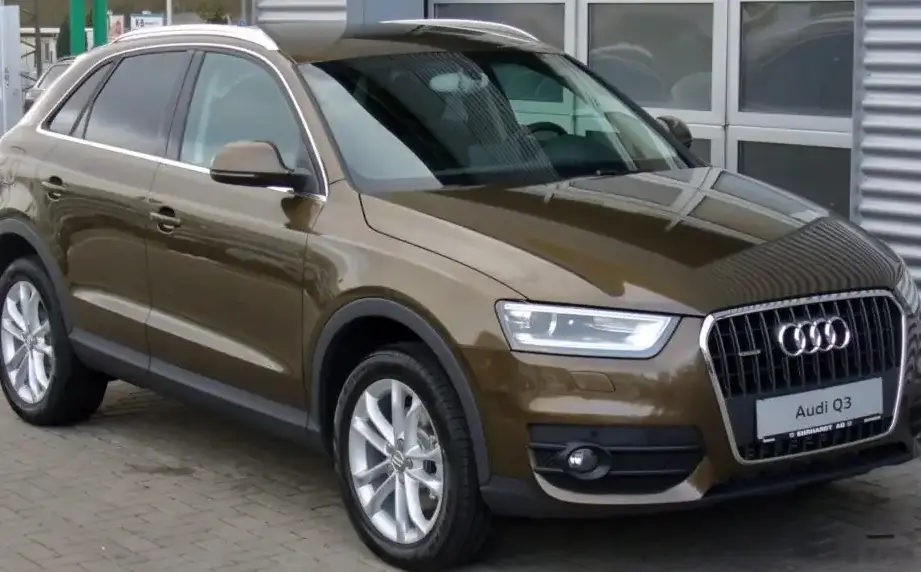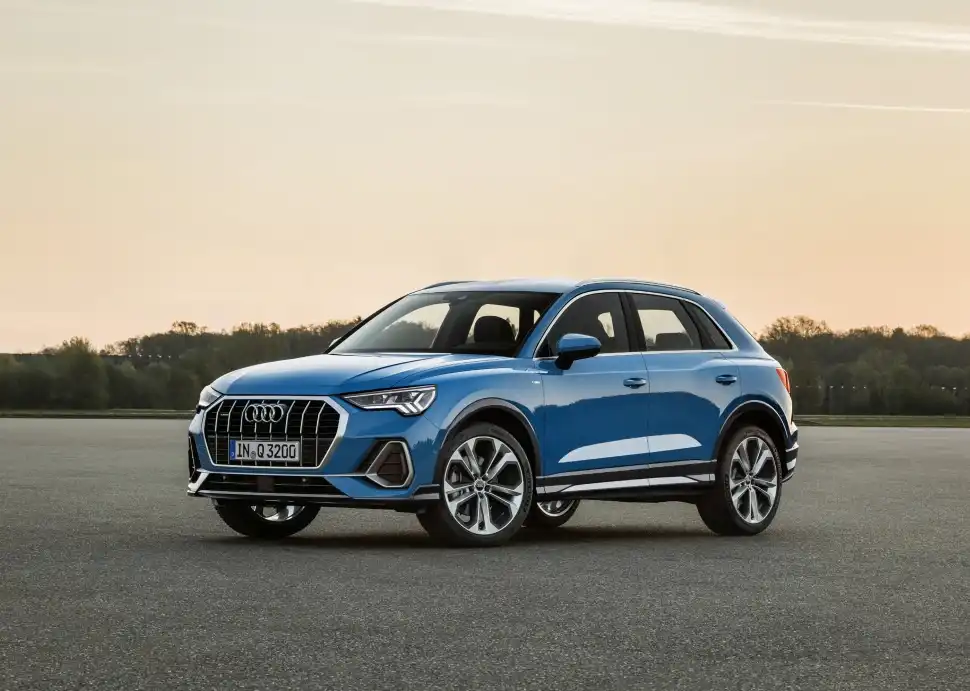
The Audi Q3 II (F3) 40 TDI quattro S tronic represents a significant iteration in Audi’s compact luxury SUV lineup. Produced from 2018 to 2020, this variant occupied a key position within the F3 generation, offering a blend of performance, efficiency, and all-weather capability. It was primarily marketed in Europe and other global markets where diesel engines remained popular, serving as a compelling alternative to gasoline-powered Q3 models and competitors like the BMW X3 and Mercedes-Benz GLA. This specific configuration – the 2.0-liter TDI engine paired with the seven-speed S tronic dual-clutch transmission and quattro all-wheel drive – aimed to deliver a refined driving experience with respectable fuel economy.
Technical Specifications
| Brand | Audi |
| Model | Q3 |
| Generation | Q3 II (F3) |
| Type (Engine) | 40 TDI (190 Hp) quattro S tronic |
| Start of production | 2018 year |
| End of production | 2020 year |
| Powertrain Architecture | Internal Combustion engine |
| Body type | SUV |
| Seats | 5 |
| Doors | 5 |
| Combined fuel consumption (WLTP) | 7.0-7.5 l/100 km (33.6 – 31.4 US mpg, 40.4 – 37.7 UK mpg, 14.3 – 13.3 km/l) |
| CO2 emissions (WLTP) | 183-197 g/km |
| Fuel consumption (economy) – urban | 6.4 l/100 km (36.8 US mpg, 44.1 UK mpg, 15.6 km/l) |
| Fuel consumption (economy) – extra urban | 5.0-5.2 l/100 km (47 – 45.2 US mpg, 56.5 – 54.3 UK mpg, 20 – 19.2 km/l) |
| Fuel consumption (economy) – combined | 5.5-5.6 l/100 km (42.8 – 42 US mpg, 51.4 – 50.4 UK mpg, 18.2 – 17.9 km/l) |
| CO2 emissions | 145-148 g/km |
| Fuel Type | Diesel |
| Acceleration 0 – 100 km/h | 8 sec |
| Acceleration 0 – 62 mph | 8 sec |
| Acceleration 0 – 60 mph | 7.6 sec |
| Maximum speed | 221 km/h (137.32 mph) |
| Emission standard | Euro 6d – TEMP |
| Weight-to-power ratio | 8.9 kg/Hp, 112.1 Hp/tonne |
| Weight-to-torque ratio | 4.2 kg/Nm, 236 Nm/tonne |
| Power | 190 Hp @ 3500-4000 rpm |
| Torque | 400 Nm @ 1750-3250 rpm (295.02 lb.-ft. @ 1750-3250 rpm) |
| Engine layout | Front, Transverse |
| Engine Model/Code | EA288 / DFHA |
| Engine displacement | 1968 cm3 (120.09 cu. in.) |
| Number of cylinders | 4 |
| Engine configuration | Inline |
| Cylinder Bore | 81 mm (3.19 in.) |
| Piston Stroke | 95.5 mm (3.76 in.) |
| Compression ratio | 15.5:1 |
| Number of valves per cylinder | 4 |
| Fuel injection system | Diesel Commonrail |
| Engine aspiration | Turbocharger, Intercooler |
| Engine oil capacity | 4.7 l (4.97 US qt | 4.14 UK qt) |
| Coolant | 8 l (8.45 US qt | 7.04 UK qt) |
| Kerb Weight | 1695 kg (3736.84 lbs.) |
| Max. weight | 2225 kg (4905.29 lbs.) |
| Max load | 530 kg (1168.45 lbs.) |
| Trunk (boot) space – minimum | 530 l (18.72 cu. ft.) |
| Trunk (boot) space – maximum | 1525 l (53.85 cu. ft.) |
| Fuel tank capacity | 63 l (16.64 US gal | 13.86 UK gal) |
| AdBlue tank | 18 l (4.76 US gal | 3.96 UK gal) |
| Max. roof load | 75 kg (165.35 lbs.) |
| Permitted trailer load with brakes (8%) | 2200 kg (4850.17 lbs.) |
| Permitted trailer load with brakes (12%) | 2200 kg (4850.17 lbs.) |
| Permitted trailer load without brakes | 750 kg (1653.47 lbs.) |
| Permitted towbar download | 90 kg (198.42 lbs.) |
| Length | 4484 mm (176.54 in.) |
| Width | 1856 mm (73.07 in.) |
| Width including mirrors | 2024 mm (79.69 in.) |
| Height | 1616 mm (63.62 in.) |
| Wheelbase | 2680 mm (105.51 in.) |
| Front track | 1584 mm (62.36 in.) |
| Rear (Back) track | 1576 mm (62.05 in.) |
| Front overhang | 896 mm (35.28 in.) |
| Rear overhang | 908 mm (35.75 in.) |
| Drag coefficient (Cd) | 0.32 |
| Minimum turning circle (turning diameter) | 11.8 m (38.71 ft.) |
| Drive wheel | All wheel drive (4×4) |
| Number of gears and type of gearbox | 7 gears, automatic transmission S tronic |
| Front suspension | Independent type McPherson |
| Rear suspension | Independent multi-link suspension |
| Front brakes | Ventilated discs |
| Rear brakes | Disc |
Powertrain & Engine Architecture
The heart of the Q3 40 TDI is the Volkswagen Group’s EA288 2.0-liter inline-four diesel engine, specifically the DFHA variant. This engine is a common sight in various VW, Audi, Skoda, and SEAT models. It utilizes a common-rail direct injection system, delivering fuel at extremely high pressures for optimized combustion. The engine also features a turbocharger with an intercooler, boosting power and torque output. The EA288 engine is known for its robust construction and relatively straightforward maintenance. The S tronic seven-speed dual-clutch transmission (DCT) is a key component of this variant. This transmission offers quick and smooth gear changes, contributing to a more engaging driving experience compared to a traditional torque-converter automatic. The quattro all-wheel-drive system employs a multi-plate clutch to distribute torque between the front and rear axles, providing enhanced traction and stability, particularly in adverse weather conditions.
Driving Characteristics
The 190 horsepower and 400 Nm (295 lb-ft) of torque delivered by the 40 TDI powertrain provide adequate performance for everyday driving. Acceleration from 0 to 60 mph takes around 7.6 seconds, and the car feels responsive in most situations. Compared to the higher-output Q3 variants (like the 45 TFSI with its petrol engine), the 40 TDI prioritizes fuel efficiency and low-end torque. The S tronic transmission contributes to a seamless driving experience, although some drivers may find the shift logic slightly conservative. The quattro all-wheel drive system provides a secure and planted feel, especially on slippery surfaces. The gear ratios are tuned for a balance between acceleration and fuel economy, with taller gears for highway cruising.
Equipment & Trim Levels
The Q3 40 TDI quattro S tronic typically came well-equipped, even in base trim. Standard features often included Audi’s MMI infotainment system with a 7-inch touchscreen display, automatic climate control, and a suite of safety features like lane departure warning and automatic emergency braking. Interior upholstery was typically cloth, with leather options available as upgrades. Higher trim levels added features like a larger infotainment screen, a digital instrument cluster (Audi Virtual Cockpit), and premium sound systems. Optional extras included a panoramic sunroof, adaptive cruise control, and various driver-assistance packages.
Chassis & Braking
The Q3 II (F3) utilizes a MacPherson strut front suspension and a multi-link rear suspension, providing a comfortable and controlled ride. The suspension tuning is geared towards everyday usability rather than outright sportiness. The braking system consists of ventilated discs at the front and solid discs at the rear. ABS (Anti-lock Braking System) and electronic stability control are standard features. The chassis is designed to accommodate the added weight of the diesel engine and all-wheel-drive system, with reinforced components and optimized suspension geometry.
Market Reception & Comparison
The Audi Q3 40 TDI quattro S tronic was generally well-received by automotive critics. It was praised for its refined engine, comfortable ride, and practical interior. Fuel economy was a strong point, with real-world figures often exceeding the official WLTP ratings. Compared to the petrol-powered Q3 variants, the 40 TDI offered better fuel efficiency and a more relaxed driving experience. However, some critics noted that the diesel engine could be slightly noisy under hard acceleration. Reliability was generally good, although diesel particulate filter (DPF) issues could occur with infrequent long-distance driving.
Legacy
The EA288 engine, found in the Q3 40 TDI, has proven to be a durable and reliable powerplant when properly maintained. The S tronic transmission, while generally robust, requires regular servicing to ensure optimal performance. In the used car market, the Q3 40 TDI quattro S tronic remains a popular choice for buyers seeking a compact luxury SUV with good fuel economy and all-weather capability. Its reputation for reliability and practicality continues to make it a competitive option in its segment. However, potential buyers should be aware of the potential for DPF issues and ensure that the vehicle has been regularly serviced according to Audi’s recommendations.