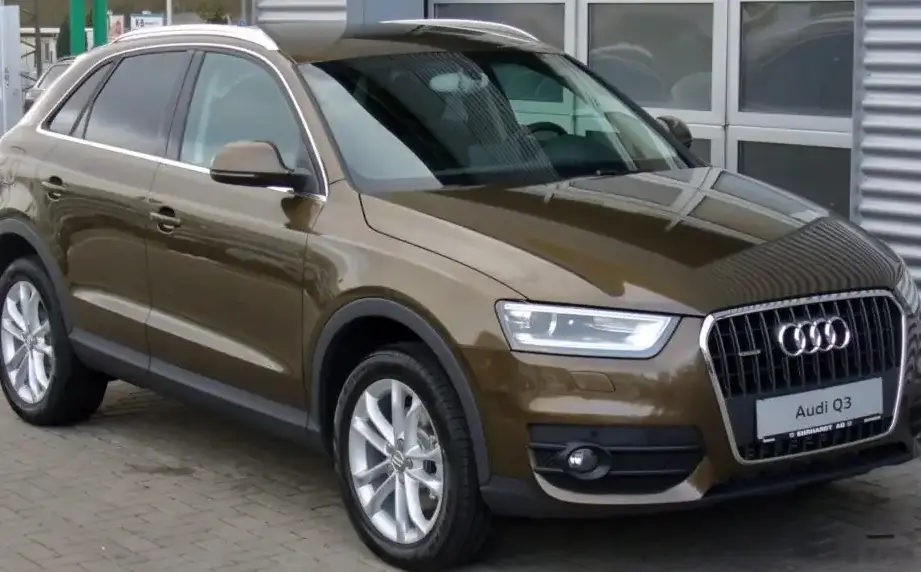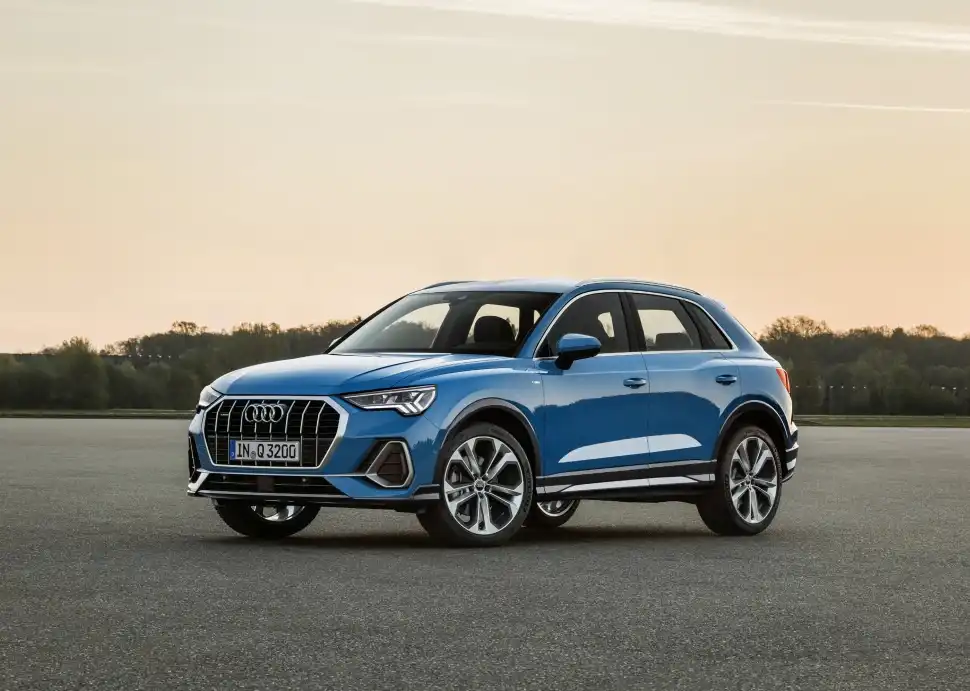
The Audi Q3 II (F3) 40 TFSI quattro tiptronic is a compact luxury crossover SUV produced by the German manufacturer Audi from 2019 to 2025. Positioned as a mid-range offering within the second-generation Q3 lineup (F3), it combines a 2.0-liter turbocharged four-cylinder engine with Audi’s quattro all-wheel-drive system and an eight-speed automatic transmission. This variant aimed to balance performance, fuel efficiency, and all-weather capability for buyers seeking a premium SUV experience. It sits within the Volkswagen Group’s broader strategy of offering a diverse range of Q3 models to cater to varying customer preferences.
Technical Specifications
| Brand | Audi |
| Model | Q3 |
| Generation | Q3 II (F3) |
| Type (Engine) | 40 TFSI (184 Hp) quattro tiptronic |
| Start of production | 2019 |
| End of production | 2025 |
| Powertrain Architecture | Internal Combustion engine |
| Body type | SUV |
| Seats | 5 |
| Doors | 5 |
| Fuel consumption (economy) – urban (EPA) | 10.7 l/100 km (22 US mpg, 26.4 UK mpg, 9.3 km/l) |
| Fuel consumption (economy) – extra urban (EPA) | 7.8-8.1 l/100 km (30.2 – 29 US mpg, 36.2 – 34.9 UK mpg, 12.8 – 12.3 km/l) |
| Fuel consumption (economy) – combined (EPA) | 9.4 l/100 km (25 US mpg, 30.1 UK mpg, 10.6 km/l) |
| Fuel Type | Petrol (Gasoline) |
| Acceleration 0 – 100 km/h | 9.1 sec |
| Acceleration 0 – 62 mph | 9.1 sec |
| Acceleration 0 – 60 mph | 8.6 sec |
| Maximum speed | 210 km/h (130.49 mph) – Electronically limited |
| Weight-to-power ratio | 9.6 kg/Hp, 104 Hp/tonne |
| Weight-to-torque ratio | 5.9 kg/Nm, 169.5 Nm/tonne |
| Power | 184 Hp |
| Power per litre | 92.7 Hp/l |
| Torque | 300 Nm (221.27 lb.-ft.) |
| Engine layout | Front, Transverse |
| Engine Model/Code | EA888 / CZRA, DSPA |
| Engine displacement | 1984 cm3 (121.07 cu. in.) |
| Number of cylinders | 4 |
| Engine configuration | Inline |
| Cylinder Bore | 82.5 mm (3.25 in.) |
| Piston Stroke | 92.8 mm (3.65 in.) |
| Compression ratio | 12.2:1 |
| Number of valves per cylinder | 4 |
| Fuel injection system | Direct injection |
| Engine aspiration | Turbocharger, Intercooler |
| Valvetrain | DOHC |
| Engine oil capacity | 5.7 l (6.02 US qt | 5.02 UK qt) |
| Coolant | 10 l (10.57 US qt | 8.8 UK qt) |
| Kerb Weight | 1770 kg (3902.18 lbs.) |
| Trunk (boot) space – minimum | 530 l (18.72 cu. ft.) |
| Trunk (boot) space – maximum | 1525 l (53.85 cu. ft.) |
| Fuel tank capacity | 60 l (15.85 US gal | 13.2 UK gal) |
| Max. roof load | 75 kg (165.35 lbs.) |
| Permitted trailer load with brakes (12%) | 680 kg (1499.14 lbs.) |
| Permitted towbar download | 70 kg (154.32 lbs.) |
| Length | 4485 mm (176.57 in.) |
| Width | 1849 mm (72.8 in.) |
| Width including mirrors | 2024 mm (79.69 in.) |
| Height | 1598 mm (62.91 in.) |
| Wheelbase | 2680 mm (105.51 in.) |
| Front track | 1580 mm (62.2 in.) |
| Rear (Back) track | 1572 mm (61.89 in.) |
| Front overhang | 896 mm (35.28 in.) |
| Rear overhang | 908 mm (35.75 in.) |
| Drag coefficient (Cd) | 0.36 |
| Minimum turning circle (turning diameter) | 11.7 m (38.39 ft.) |
| Drivetrain Architecture | All wheel drive (4×4). ICE drives front wheels, rear wheels driven via clutch. |
| Number of gears and type of gearbox | 8 gears, automatic transmission tiptronic |
| Front suspension | Independent, McPherson with coil spring and anti-roll bar |
| Rear suspension | Independent multi-link spring suspension with stabilizer |
| Front brakes | Ventilated discs, 340 mm |
| Rear brakes | Disc, 300 mm |
| Tires size | 235/55 R18; 235/50 R19 |
| Wheel rims size | 7J x 18; 7J x 19 |
INTRODUCTION
The Audi Q3 II (F3) 40 TFSI quattro tiptronic, launched in 2019, represents the second generation of Audi’s popular compact SUV. Built on the Volkswagen Group’s MQB Evo platform (specifically the 1HX0/A3 variant), the F3 Q3 aimed to offer a more refined and technologically advanced package than its predecessor. The “40 TFSI” designation indicates the engine’s power output within Audi’s naming convention. This particular configuration, paired with the quattro all-wheel-drive system and an eight-speed tiptronic automatic transmission, was a popular choice for buyers seeking a balance of performance, practicality, and all-weather confidence. It was positioned as a step up from the base 35 TFSI model, offering more power and standard features.
Powertrain & Engine Architecture
At the heart of the Q3 40 TFSI lies the EA888 2.0-liter turbocharged four-cylinder engine, specifically the CZRA engine code variant. This engine is a direct-injection gasoline engine featuring a single twin-scroll turbocharger and intercooler. The engine utilizes a DOHC (Dual Overhead Camshaft) valvetrain with four valves per cylinder, optimizing airflow for improved performance. The direct injection system delivers fuel directly into the combustion chamber, enhancing efficiency and reducing emissions. The eight-speed tiptronic automatic transmission is a torque-converter type, known for its smooth shifting and responsiveness. It features a manual shift mode, allowing drivers to select gears for more control. The quattro all-wheel-drive system employs a multi-plate clutch to distribute torque between the front and rear axles as needed, providing enhanced traction and stability.
Driving Characteristics
The Q3 40 TFSI quattro tiptronic delivers a composed and refined driving experience. The 184 horsepower and 300 Nm (221 lb-ft) of torque provide adequate acceleration, with a 0-60 mph time of around 8.6 seconds. While not a sports SUV, the engine offers sufficient power for everyday driving and highway overtaking. The eight-speed transmission contributes to smooth gear changes and helps keep the engine in its optimal power band. The quattro all-wheel-drive system provides excellent grip in various weather conditions, enhancing stability and confidence. Compared to the base 35 TFSI model, the 40 TFSI offers noticeably quicker acceleration and a more responsive feel. However, it doesn’t match the performance of the more powerful 45 TFSI variant. The gear ratios are tuned for a balance of fuel efficiency and performance, prioritizing comfortable cruising over outright acceleration.
Equipment & Trim Levels
The Q3 40 TFSI quattro tiptronic typically came well-equipped as standard. Common features included Audi’s MMI touch response infotainment system with a 10.1-inch touchscreen display, Audi virtual cockpit (digital instrument cluster), leather upholstery, heated front seats, and a panoramic sunroof. Standard safety features included Audi pre sense basic, lane departure warning, and automatic emergency braking. Optional extras included adaptive cruise control, a Bang & Olufsen sound system, and a head-up display. Trim levels varied by market, but generally offered packages that added features like upgraded interior trim, larger wheels, and advanced driver-assistance systems. The interior design focused on a modern and minimalist aesthetic, with high-quality materials and a user-friendly layout.
Chassis & Braking
The Q3 40 TFSI utilizes an independent suspension setup at all four corners. The front suspension employs a McPherson strut design with coil springs and an anti-roll bar, while the rear suspension features a multi-link setup, also with coil springs and a stabilizer bar. This configuration provides a comfortable ride and good handling characteristics. Braking duties are handled by ventilated discs at the front and solid discs at the rear. The braking system is assisted by ABS (Anti-lock Braking System) and electronic stability control. The chassis is designed to provide a balance between comfort and agility, offering a stable and predictable driving experience.
Market Reception & Comparison
The Audi Q3 40 TFSI quattro tiptronic was generally well-received by automotive critics. Reviewers praised its refined interior, comfortable ride, and capable all-wheel-drive system. The 2.0-liter engine was considered adequate for most drivers, although some noted that it wasn’t as powerful as competitors’ offerings. Fuel economy was generally considered competitive for its class, averaging around 25 US mpg in combined driving. Compared to the 35 TFSI model, the 40 TFSI offered a worthwhile performance upgrade for a relatively modest price increase. Compared to the 45 TFSI, it represented a more affordable option for buyers who didn’t require the extra power. Reliability reports have been generally positive, with few major issues reported.
Legacy
The Audi Q3 II (F3) 40 TFSI quattro tiptronic has proven to be a reliable and popular choice in the used car market. The EA888 engine is known for its durability, and the eight-speed tiptronic transmission has a good track record. Regular maintenance, including oil changes and timing belt replacements (where applicable), is crucial for long-term reliability. The quattro all-wheel-drive system requires periodic servicing to ensure optimal performance. As of 2024, these models continue to hold their value reasonably well, appealing to buyers seeking a premium compact SUV with all-weather capability and a comfortable driving experience. The F3 Q3 represents a significant step forward in terms of technology and refinement compared to the first-generation model, solidifying its position as a competitive offering in the luxury crossover segment.