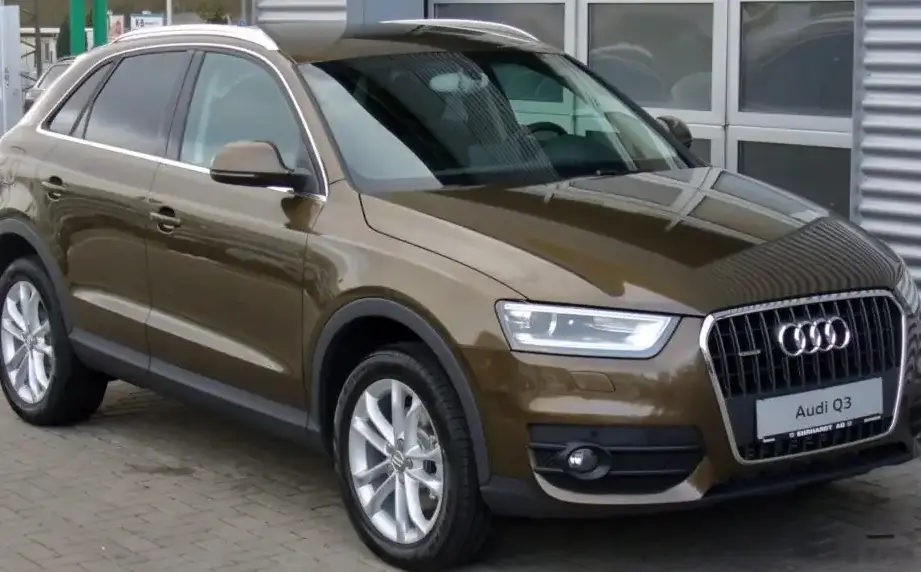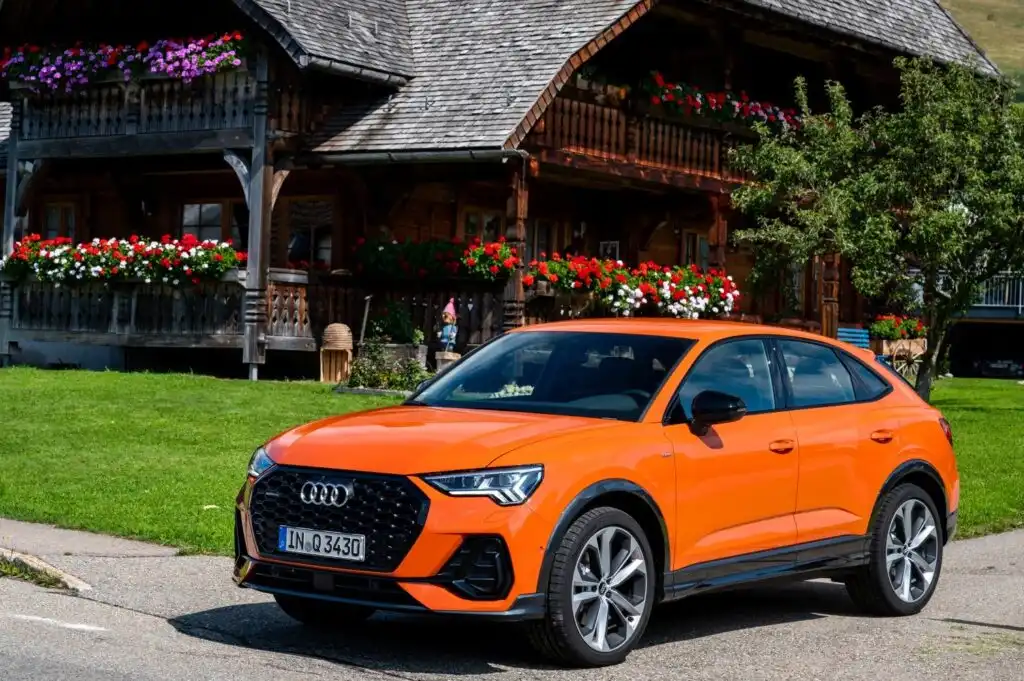
The Audi Q3 II Sportback (F3) 35 TDI, produced from 2020 to 2024, represents a compelling entry point into Audi’s compact luxury crossover segment. Positioned as a more style-focused alternative to the standard Q3, the Sportback features a sloping roofline and coupe-like silhouette. This variant, equipped with the 2.0-liter TDI engine producing 150 horsepower, aimed to balance fuel efficiency with acceptable performance for everyday driving. It occupied the lower-mid range of the Q3 Sportback lineup, slotting below the more powerful 40 TDI and 45 TFSI models. The F3 generation Q3, and by extension the Sportback, is built on the Volkswagen Group’s MQB platform, shared with models like the Volkswagen Tiguan and Skoda Karoq.
Technical Specifications
| Brand | Audi |
| Model | Q3 |
| Generation | Q3 II Sportback (F3) |
| Type (Engine) | 35 TDI (150 Hp) |
| Start of production | 2020 |
| End of production | 2024 |
| Powertrain Architecture | Internal Combustion engine |
| Body type | Coupe, SUV |
| Seats | 5 |
| Doors | 5 |
| Combined fuel consumption (WLTP) | 5.1-5.5 l/100 km (46.1 – 42.8 US mpg, 55.4 – 51.4 UK mpg, 19.6 – 18.2 km/l) |
| CO2 emissions (WLTP) | 133-144 g/km |
| Fuel consumption (urban) | 5.8-5.9 l/100 km (40.6 – 39.9 US mpg, 48.7 – 47.9 UK mpg, 17.2 – 16.9 km/l) |
| Fuel consumption (extra urban) | 3.9-4.1 l/100 km (60.3 – 57.4 US mpg, 72.4 – 68.9 UK mpg, 25.6 – 24.4 km/l) |
| Fuel consumption (combined) | 4.6-4.7 l/100 km (51.1 – 50 US mpg, 61.4 – 60.1 UK mpg, 21.7 – 21.3 km/l) |
| CO2 emissions (NEDC) | 121-125 g/km |
| Fuel Type | Diesel |
| Acceleration 0 – 100 km/h | 9.4 sec |
| Acceleration 0 – 62 mph | 9.4 sec |
| Acceleration 0 – 60 mph | 8.9 sec |
| Maximum speed | 200 km/h (124.27 mph) |
| Emission standard | Euro 6d-ISC-FCM |
| Weight-to-power ratio | 10.4 kg/Hp, 96.5 Hp/tonne |
| Weight-to-torque ratio | 4.6 kg/Nm, 218.6 Nm/tonne |
| Power | 150 Hp @ 3250-4200 rpm |
| Torque | 340 Nm @ 1600-3000 rpm (250.77 lb.-ft. @ 1600-3000 rpm) |
| Engine layout | Front, Transverse |
| Engine Model/Code | EA288 evo / DTSA |
| Engine displacement | 1968 cm3 (120.09 cu. in.) |
| Number of cylinders | 4 |
| Engine configuration | Inline |
| Cylinder Bore | 81 mm (3.19 in.) |
| Piston Stroke | 95.5 mm (3.76 in.) |
| Compression ratio | 16:1 |
| Number of valves per cylinder | 4 |
| Fuel injection system | Diesel Commonrail |
| Engine aspiration | Turbocharger, Intercooler |
| Valvetrain | DOHC |
| Engine oil capacity | 5.5 l (5.81 US qt | 4.84 UK qt) |
| Coolant capacity | 12.9 l (13.63 US qt | 11.35 UK qt) |
| Kerb Weight | 1555 kg (3428.19 lbs.) |
| Max. weight | 2130 kg (4695.85 lbs.) |
| Max load | 575 kg (1267.66 lbs.) |
| Trunk (boot) space – minimum | 530 l (18.72 cu. ft.) |
| Trunk (boot) space – maximum | 1400 l (49.44 cu. ft.) |
| Fuel tank capacity | 58 l (15.32 US gal | 12.76 UK gal) |
| AdBlue tank | 18 l (4.76 US gal | 3.96 UK gal) |
| Max. roof load | 75 kg (165.35 lbs.) |
| Permitted trailer load with brakes (8%) | 2000 kg (4409.25 lbs.) |
| Permitted trailer load with brakes (12%) | 2000 kg (4409.25 lbs.) |
| Permitted trailer load without brakes | 750 kg (1653.47 lbs.) |
| Permitted towbar download | 90 kg (198.42 lbs.) |
| Length | 4500 mm (177.17 in.) |
| Width | 1843 mm (72.56 in.) |
| Width including mirrors | 2022 mm (79.61 in.) |
| Height | 1567 mm (61.69 in.) |
| Wheelbase | 2680 mm (105.51 in.) |
| Front track | 1584 mm (62.36 in.) |
| Rear track | 1576 mm (62.05 in.) |
| Front overhang | 905 mm (35.63 in.) |
| Rear overhang | 915 mm (36.02 in.) |
| Drag coefficient (Cd) | 0.33 |
| Minimum turning circle | 11.8 m (38.71 ft.) |
| Approach angle | 19.9° |
| Departure angle | 16.7° |
| Drivetrain Architecture | Front wheel drive |
| Number of gears | 6 |
| Type of gearbox | Manual transmission |
Powertrain & Engine Architecture
The heart of the Q3 Sportback 35 TDI is the Volkswagen Group’s EA288 evo 2.0-liter four-cylinder diesel engine, specifically the DTSA code variant. This engine is a turbocharged, common-rail direct injection diesel, known for its relatively refined operation and fuel efficiency. The engine utilizes a single turbocharger with variable geometry turbine (VGT) technology to optimize boost across the rev range. The common-rail system, operating at very high pressures, ensures precise fuel delivery and contributes to reduced emissions. The engine features a Dual Overhead Camshaft (DOHC) valvetrain with four valves per cylinder, enhancing breathing and power output. The 6-speed manual transmission was standard, offering a traditional driving experience. The engine’s layout is transverse, meaning it’s mounted sideways in the engine bay, driving the front wheels.
Driving Characteristics
The 150 horsepower and 340 Nm (250 lb-ft) of torque delivered by the 35 TDI engine provide adequate, though not exhilarating, performance. Acceleration from 0-60 mph takes around 8.9 seconds, and top speed is limited to 124 mph. The engine’s torque curve is relatively flat, providing good responsiveness in everyday driving situations. The manual transmission, while engaging, has relatively long throws. Compared to the more powerful 40 TDI variant, the 35 TDI feels noticeably less potent, particularly during overtaking maneuvers. However, it offers a more economical driving experience, with combined fuel consumption figures ranging from 5.1 to 5.5 liters per 100 kilometers (46.1 to 42.8 US mpg).
Equipment & Trim Levels
The Q3 Sportback 35 TDI typically came equipped with a generous amount of standard features, including Audi’s MMI infotainment system with a 10.1-inch touchscreen display, Apple CarPlay and Android Auto integration, automatic climate control, and a suite of driver-assistance systems such as lane departure warning and forward collision warning. Interior upholstery was typically cloth, with leather options available as an upgrade. Optional extras included a panoramic sunroof, adaptive cruise control, a premium sound system, and various styling packages. Trim levels varied slightly depending on the market, but generally followed a progressive structure with increasing levels of luxury and technology.
Chassis & Braking
The Q3 Sportback 35 TDI utilizes an independent suspension setup at all four corners. The front suspension employs McPherson struts with coil springs and an anti-roll bar, while the rear features a multi-link suspension system, also with a stabilizer bar. This setup provides a comfortable ride quality and decent handling characteristics. Braking duties are handled by ventilated discs at the front and solid discs at the rear. ABS (Anti-lock Braking System) is standard, along with electronic stability control. The steering is electrically assisted, providing a light and precise feel.
Market Reception & Comparison
The Q3 Sportback 35 TDI was generally well-received by automotive critics, who praised its stylish design, comfortable interior, and fuel efficiency. However, some reviewers noted that the 150 horsepower engine felt underpowered for a vehicle of its size and weight. Compared to the 40 TDI, the 35 TDI offered a more affordable entry point into the Q3 Sportback range, but at the expense of performance. Fuel economy was a strong point, consistently exceeding expectations in real-world testing. Reliability has been generally good, with few widespread issues reported.
Legacy
The EA288 engine family, including the DTSA variant found in the Q3 Sportback 35 TDI, has proven to be a durable and reliable powertrain. While diesel engines have faced increasing scrutiny in recent years, the EA288 continues to be a popular choice for those seeking fuel efficiency and long-term dependability. On the used car market, the Q3 Sportback 35 TDI represents a good value proposition, offering a stylish and well-equipped crossover at a competitive price. Maintenance costs are generally reasonable, although diesel-specific components such as the particulate filter and AdBlue system require periodic attention.