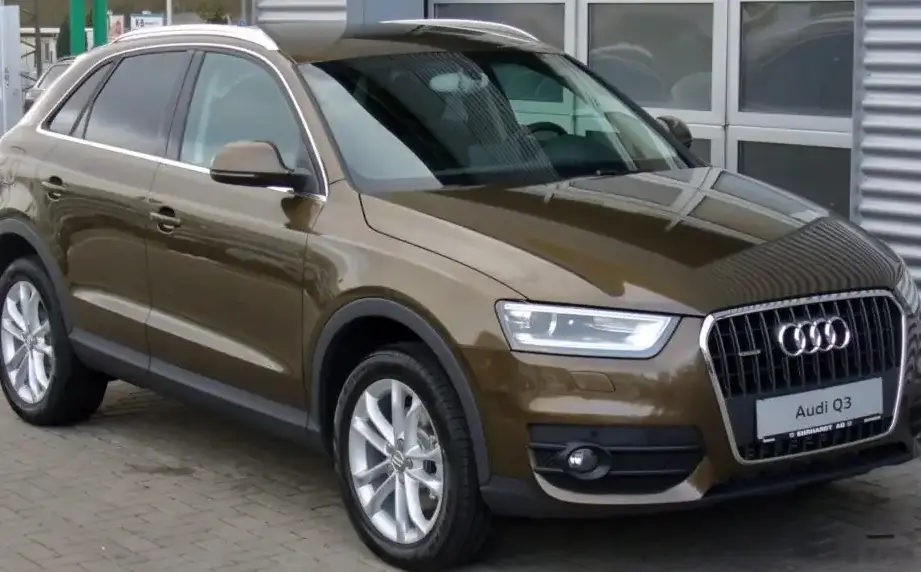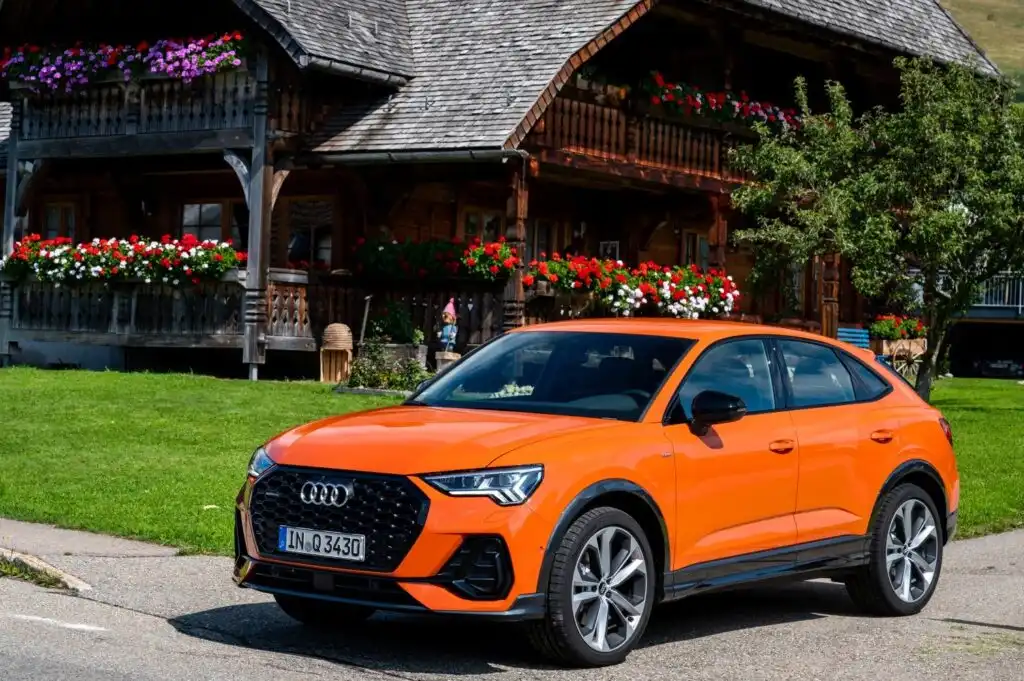
The Audi Q3 II Sportback (F3) 35 TDI quattro S tronic, produced from 2020 to 2025, represents a compelling blend of compact SUV practicality and Audi’s signature refinement. Positioned as a mid-range offering within the second-generation Q3 Sportback lineup, this variant caters to buyers seeking a balance between fuel efficiency, all-weather capability, and a more dynamic driving experience than the base models. It slots in below the more powerful 40 TDI and 45 TFSI versions, offering a more accessible entry point into the Sportback range. The Q3 Sportback, distinguished by its sloping roofline, is a coupe-SUV derivative of the standard Q3, aimed at a more style-conscious consumer.
Technical Specifications
| Brand | Audi |
| Model | Q3 |
| Generation | Q3 II Sportback (F3) |
| Type (Engine) | 35 TDI (150 Hp) quattro S tronic |
| Start of production | 2020 year |
| End of production | 2025 year |
| Powertrain Architecture | Internal Combustion engine |
| Body type | Coupe, SUV |
| Seats | 5 |
| Doors | 5 |
| Combined fuel consumption (WLTP) | 6.0-6.4 l/100 km (39.2 – 36.8 US mpg, 47.1 – 44.1 UK mpg, 16.7 – 15.6 km/l) |
| CO2 emissions (WLTP) | 157-168 g/km |
| Fuel consumption (economy) – urban (NEDC, WLTP equivalent) | 5.7-5.8 l/100 km (41.3 – 40.6 US mpg, 49.6 – 48.7 UK mpg, 17.5 – 17.2 km/l) |
| Fuel consumption (economy) – extra urban (NEDC, WLTP equivalent) | 4.6-4.8 l/100 km (51.1 – 49 US mpg, 61.4 – 58.9 UK mpg, 21.7 – 20.8 km/l) |
| Fuel consumption (economy) – combined (NEDC, WLTP equivalent) | 5.0-5.1 l/100 km (47 – 46.1 US mpg, 56.5 – 55.4 UK mpg, 20 – 19.6 km/l) |
| CO2 emissions (NEDC, WLTP equivalent) | 131-135 g/km |
| Fuel Type | Diesel |
| Acceleration 0 – 100 km/h | 9.6 sec |
| Acceleration 0 – 62 mph | 9.6 sec |
| Acceleration 0 – 60 mph | 9.1 sec |
| Maximum speed | 201 km/h (124.9 mph) |
| Emission standard | Euro 6d-ISC-FCM |
| Weight-to-power ratio | 11.1 kg/Hp, 90.4 Hp/tonne |
| Weight-to-torque ratio | 4.6 kg/Nm, 216.9 Nm/tonne |
| Power | 150 Hp @ 3000-4200 rpm |
| Power per litre | 76.2 Hp/l |
| Torque | 360 Nm @ 1600-2750 rpm (265.52 lb.-ft. @ 1600-2750 rpm) |
| Engine layout | Front, Transverse |
| Engine Model/Code | EA288 evo / DTSB |
| Engine displacement | 1968 cm3 (120.09 cu. in.) |
| Number of cylinders | 4 |
| Engine configuration | Inline |
| Cylinder Bore | 81 mm (3.19 in.) |
| Piston Stroke | 95.5 mm (3.76 in.) |
| Compression ratio | 16:1 |
| Number of valves per cylinder | 4 |
| Fuel injection system | Diesel Commonrail |
| Engine aspiration | Turbocharger, Intercooler |
| Engine oil capacity | 5.5 l (5.81 US qt | 4.84 UK qt) |
| Coolant | 8 l (8.45 US qt | 7.04 UK qt) |
| Kerb Weight | 1660 kg (3659.67 lbs.) |
| Max. weight | 2250 kg (4960.4 lbs.) |
| Max load | 590 kg (1300.73 lbs.) |
| Trunk (boot) space – minimum | 530 l (18.72 cu. ft.) |
| Fuel tank capacity | 60 l (15.85 US gal | 13.2 UK gal) |
| AdBlue tank | 18 l (4.76 US gal | 3.96 UK gal) |
| Max. roof load | 75 kg (165.35 lbs.) |
| Permitted trailer load with brakes (8%) | 2200 kg (4850.17 lbs.) |
| Permitted trailer load with brakes (12%) | 2200 kg (4850.17 lbs.) |
| Permitted trailer load without brakes | 750 kg (1653.47 lbs.) |
| Permitted towbar download | 90 kg (198.42 lbs.) |
| Length | 4500 mm (177.17 in.) |
| Width | 1843 mm (72.56 in.) |
| Width including mirrors | 2022 mm (79.61 in.) |
| Height | 1567 mm (61.69 in.) |
| Wheelbase | 2680 mm (105.51 in.) |
| Front track | 1584 mm (62.36 in.) |
| Rear (Back) track | 1576 mm (62.05 in.) |
| Front overhang | 905 mm (35.63 in.) |
| Rear overhang | 915 mm (36.02 in.) |
| Drag coefficient (Cd) | 0.33 |
| Minimum turning circle (turning diameter) | 11.8 m (38.71 ft.) |
| Drivetrain Architecture | The Internal combustion engine (ICE) drives the front wheels permanently, and the rear wheels are driven through an electrically or mechanically operated clutch if necessary. |
| Drive wheel | All wheel drive (4×4) |
| Number of gears and type of gearbox | 7 gears, automatic transmission S tronic |
| Front suspension | Independent type McPherson |
| Rear suspension | Independent multi-link suspension |
| Front brakes | Ventilated discs |
| Rear brakes | Disc |
| Assisting systems | ABS (Anti-lock braking system) |
| Steering type | Steering rack and pinion |
| Power steering | Electric Steering |
| Tires size | 215/65 R17 |
| Wheel rims size | 7 J x 17 |
Powertrain & Engine Architecture
The heart of the Q3 Sportback 35 TDI is the Volkswagen Group’s EA288 evo 2.0-liter inline-four cylinder diesel engine, specifically the DTSB variant. This engine is a common sight in various VW, Audi, SEAT, and Skoda models. It utilizes a common-rail direct injection system, delivering fuel at extremely high pressures for optimized combustion. The engine features a single turbocharger with an intercooler, boosting power and torque. The EA288 evo is known for its relatively quiet operation and improved refinement compared to earlier iterations. The engine produces 150 horsepower at 3000-4200 rpm and 360 Nm (265.52 lb-ft) of torque between 1600-2750 rpm. This torque band provides strong low-end and mid-range acceleration. The engine is paired with Audi’s seven-speed S tronic dual-clutch transmission (DCT). This transmission offers quick, smooth shifts and contributes to the vehicle’s overall efficiency. The quattro all-wheel-drive system is standard, utilizing a multi-plate clutch to distribute power between the front and rear axles as needed, enhancing traction and stability.
Driving Characteristics
The 150 hp/360 Nm output, coupled with the S tronic transmission and quattro all-wheel drive, delivers a composed and capable driving experience. Acceleration from 0-60 mph takes approximately 9.1 seconds, and the car reaches a top speed of 124.9 mph. While not overtly sporty, the Q3 Sportback 35 TDI offers sufficient power for everyday driving and highway overtaking. The S tronic transmission is a key contributor to the driving experience, providing rapid gear changes and a responsive feel. The quattro system provides excellent grip in various conditions, inspiring confidence on wet or slippery roads. Compared to the more powerful 40 TDI, the 35 TDI feels less urgent in its acceleration, but the difference is often negligible in real-world driving. The automatic transmission, while efficient, may not offer the same level of driver engagement as a manual gearbox.
Equipment & Trim Levels
The Q3 Sportback 35 TDI typically came well-equipped, even in base trim. Standard features often included Audi’s MMI infotainment system with a touchscreen display, Apple CarPlay and Android Auto integration, automatic climate control, and a suite of driver-assistance systems such as lane departure warning and forward collision warning. Interior upholstery was typically cloth, with leather options available as upgrades. Optional extras included a panoramic sunroof, upgraded sound system, navigation system, and adaptive cruise control. Trim levels varied by market, but generally offered increasing levels of luxury and technology.
Chassis & Braking
The Q3 Sportback 35 TDI utilizes a McPherson strut front suspension and a multi-link rear suspension, providing a comfortable and controlled ride. The suspension is tuned to prioritize comfort over outright sportiness, but still offers decent handling characteristics. The braking system consists of ventilated discs at the front and solid discs at the rear. ABS (Anti-lock Braking System) is standard, along with electronic stability control. The steering is electrically assisted, providing a light and precise feel.
Market Reception & Comparison
The Q3 Sportback 35 TDI was generally well-received by automotive critics. It was praised for its stylish design, comfortable interior, and efficient engine. Fuel economy figures of 6.0-6.4 l/100 km (39.2 – 36.8 US mpg) were considered competitive for its class. Compared to the 40 TDI, the 35 TDI offered a more affordable entry point into the Q3 Sportback range, but with a slight compromise in performance. The 35 TDI also offered better fuel economy than the petrol-powered 45 TFSI variant. Reliability reports have been generally positive, with the EA288 engine proving to be a robust and dependable unit.
Legacy
The Audi Q3 II Sportback 35 TDI quattro S tronic has established itself as a popular choice in the used car market. Its combination of style, practicality, and efficiency continues to appeal to buyers. The EA288 engine, when properly maintained, is known for its longevity. Regular servicing, including oil changes and filter replacements, is crucial for ensuring the engine’s continued reliability. The S tronic transmission also requires regular maintenance, including fluid changes, to prevent issues. Overall, the Q3 Sportback 35 TDI represents a well-rounded and dependable compact SUV that offers a compelling ownership experience.