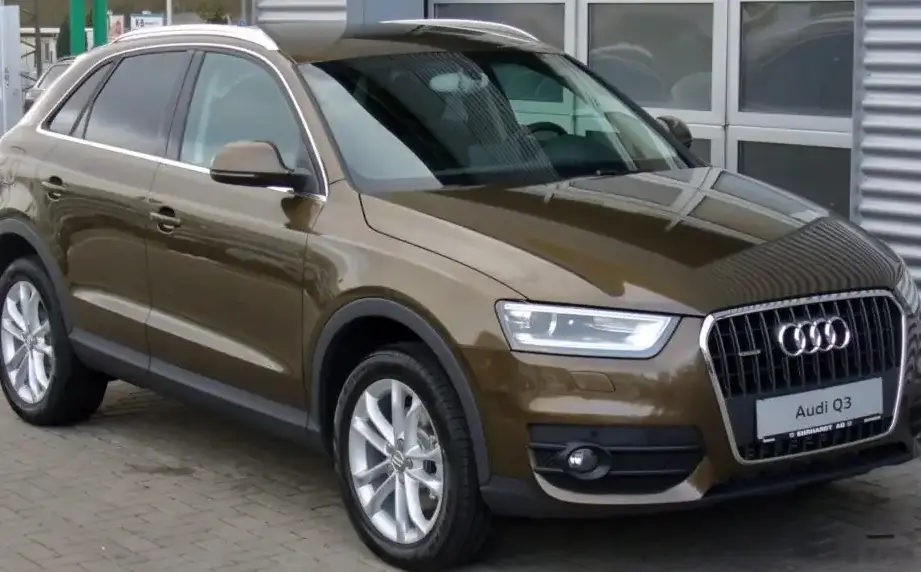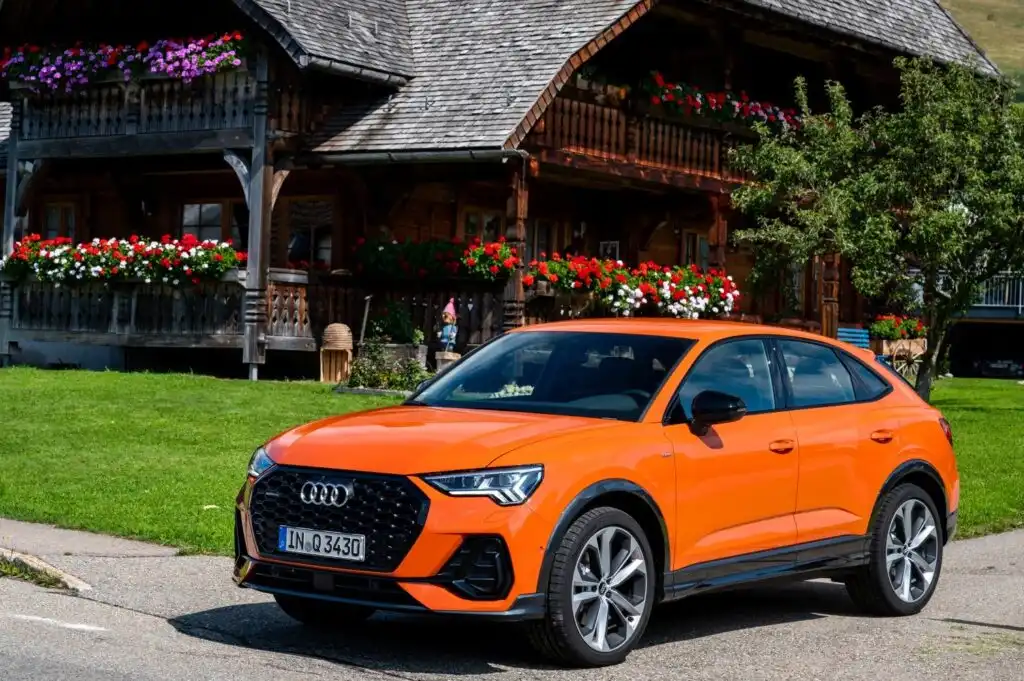
The Audi Q3 II Sportback (F3) 45 TFSI quattro S tronic represents a compelling blend of performance and practicality within the Audi compact SUV lineup. Introduced in January 2021 and continuing through 2025, this variant occupies a mid-to-upper position in the Q3 Sportback range, offering a significant step up in power and all-wheel-drive capability compared to the base models. It’s built on the Volkswagen Group’s MQB platform (specifically the A3/1HX0 variant), shared with models like the Volkswagen Tiguan and SEAT Ateca, but distinguished by Audi’s premium appointments and technology. The Sportback designation denotes the coupe-like sloping roofline, differentiating it from the more traditionally shaped Q3.
Technical Specifications
| Brand | Audi |
| Model | Q3 |
| Generation | Q3 II Sportback (F3) |
| Type (Engine) | 45 TFSI (245 Hp) quattro S tronic |
| Start of production | January, 2021 |
| End of production | 2025 |
| Powertrain Architecture | Internal Combustion engine |
| Body type | Coupe, SUV |
| Seats | 5 |
| Doors | 5 |
| Combined fuel consumption (WLTP) | 8.2-8.8 l/100 km (28.7 – 26.7 US mpg, 34.4 – 32.1 UK mpg, 12.2 – 11.4 km/l) |
| CO2 emissions (WLTP) | 186-200 g/km |
| Fuel consumption (economy) – urban (NEDC, WLTP equivalent) | 8.9-9.2 l/100 km (26.4 – 25.6 US mpg, 31.7 – 30.7 UK mpg, 11.2 – 10.9 km/l) |
| Fuel consumption (economy) – extra urban (NEDC, WLTP equivalent) | 6.2-6.5 l/100 km (37.9 – 36.2 US mpg, 45.6 – 43.5 UK mpg, 16.1 – 15.4 km/l) |
| Fuel consumption (economy) – combined (NEDC, WLTP equivalent) | 7.2-7.5 l/100 km (32.7 – 31.4 US mpg, 39.2 – 37.7 UK mpg, 13.9 – 13.3 km/l) |
| CO2 emissions (NEDC, WLTP equivalent) | 164-172 g/km |
| Fuel Type | Petrol (Gasoline) |
| Acceleration 0 – 100 km/h | 5.8 sec |
| Acceleration 0 – 62 mph | 5.8 sec |
| Acceleration 0 – 60 mph | 5.5 sec |
| Maximum speed | 235 km/h (146.02 mph) |
| Emission standard | Euro 6d-ISC-FCM |
| Weight-to-power ratio | 6.6 kg/Hp, 150.8 Hp/tonne |
| Weight-to-torque ratio | 4.4 kg/Nm, 227.7 Nm/tonne |
| Power | 245 Hp @ 5000-6500 rpm |
| Power per litre | 123.5 Hp/l |
| Torque | 370 Nm @ 1600-4300 rpm (272.9 lb.-ft. @ 1600-4300 rpm) |
| Engine layout | Front, Transverse |
| Engine Model/Code | EA888 / DNPA |
| Engine displacement | 1984 cm3 (121.07 cu. in.) |
| Number of cylinders | 4 |
| Engine configuration | Inline |
| Cylinder Bore | 82.5 mm (3.25 in.) |
| Piston Stroke | 92.8 mm (3.65 in.) |
| Compression ratio | 9.6:1 |
| Number of valves per cylinder | 4 |
| Fuel injection system | Direct injection |
| Engine aspiration | Turbocharger, Intercooler |
| Engine oil capacity | 5.7 l (6.02 US qt | 5.02 UK qt) |
| Coolant | 9.2 l (9.72 US qt | 8.09 UK qt) |
| Kerb Weight | 1625 kg (3582.51 lbs.) |
| Max. weight | 2210 kg (4872.22 lbs.) |
| Max load | 585 kg (1289.7 lbs.) |
| Trunk (boot) space – minimum | 530 l (18.72 cu. ft.) |
| Trunk (boot) space – maximum | 1400 l (49.44 cu. ft.) |
| Fuel tank capacity | 60 l (15.85 US gal | 13.2 UK gal) |
| Max. roof load | 75 kg (165.35 lbs.) |
| Permitted trailer load with brakes (8%) | 2100 kg (4629.71 lbs.) |
| Permitted trailer load with brakes (12%) | 2100 kg (4629.71 lbs.) |
| Permitted trailer load without brakes | 750 kg (1653.47 lbs.) |
| Permitted towbar download | 90 kg (198.42 lbs.) |
| Length | 4500 mm (177.17 in.) |
| Width | 1843 mm (72.56 in.) |
| Width including mirrors | 2022 mm (79.61 in.) |
| Height | 1567 mm (61.69 in.) |
| Wheelbase | 2680 mm (105.51 in.) |
| Front track | 1541 mm (60.67 in.) |
| Rear (Back) track | 1574 mm (61.97 in.) |
| Drag coefficient (Cd) | 0.34 |
| Minimum turning circle (turning diameter) | 11.8 m (38.71 ft.) |
| Drivetrain Architecture | The Internal combustion engine (ICE) drives the front wheels permanently, and the rear wheels are driven through an electrically or mechanically operated clutch if necessary. |
| Drive wheel | All wheel drive (4×4) |
| Number of gears and type of gearbox | 7 gears, automatic transmission S tronic |
| Front suspension | Independent type McPherson |
| Rear suspension | Independent multi-link suspension |
| Front brakes | Ventilated discs |
| Rear brakes | Ventilated discs |
| Assisting systems | ABS (Anti-lock braking system) |
| Steering type | Steering rack and pinion |
| Power steering | Electric Steering |
| Tires size | 215/65 R17 |
| Wheel rims size | 7 J x 17 |
Powertrain & Engine Architecture
At the heart of the Q3 45 TFSI Sportback lies the EA888 2.0-liter turbocharged four-cylinder engine, specifically the DNPA variant. This engine is a staple in the Volkswagen Group’s portfolio, known for its robust construction and tuning potential. The EA888 utilizes direct fuel injection, delivering fuel directly into the combustion chamber for improved efficiency and power. It also features an integrated exhaust manifold for faster turbocharger response. The turbocharger itself is a twin-scroll unit, further enhancing responsiveness and minimizing turbo lag. The engine produces 245 horsepower at 5000-6500 rpm and 272.9 lb.-ft. of torque between 1600-4300 rpm. This power is then channeled through Audi’s seven-speed S tronic dual-clutch transmission. The S tronic offers quick and seamless gear changes, contributing to the vehicle’s brisk acceleration. The quattro all-wheel-drive system is standard, utilizing a multi-plate clutch to distribute power between the front and rear axles as needed, providing enhanced traction and stability.
Driving Characteristics
The 45 TFSI quattro S tronic delivers a noticeably more engaging driving experience than the lower-powered Q3 variants. The 245 hp engine provides ample power for confident overtaking and merging, with a 0-60 mph time of around 5.5 seconds. The S tronic transmission contributes to this performance, offering rapid shifts and a responsive feel. The quattro all-wheel-drive system inspires confidence in various weather conditions, providing excellent grip and stability. While not a sports SUV, the Q3 45 TFSI Sportback handles corners with composure, thanks to its well-tuned suspension. The steering is precise and well-weighted, providing good feedback to the driver. Compared to a manual transmission Q3, the S tronic prioritizes convenience and efficiency over outright driver involvement. However, the paddle shifters allow for some degree of manual control when desired.
Equipment & Trim Levels
The 45 TFSI quattro S tronic typically comes well-equipped as standard. Key features include Audi’s Virtual Cockpit digital instrument cluster, a touchscreen infotainment system with Apple CarPlay and Android Auto integration, leather upholstery, and automatic climate control. Standard safety features include Audi pre sense basic, lane departure warning, and automatic emergency braking. Optional extras include a panoramic sunroof, a premium sound system, adaptive cruise control, and a 360-degree camera system. Trim levels beyond the base 45 TFSI quattro S tronic often add cosmetic enhancements, such as unique wheel designs and interior trim options.
Chassis & Braking
The Q3 Sportback utilizes an independent McPherson strut suspension at the front and a multi-link suspension at the rear, providing a comfortable yet controlled ride. The suspension is tuned to balance ride comfort with handling performance. Ventilated disc brakes are fitted on all four wheels, providing ample stopping power. The electronic stability control (ESC) system works in conjunction with the ABS (Anti-lock Braking System) to maintain stability during braking and cornering. The steering system is an electric power-assisted rack and pinion system, offering precise and responsive steering feel.
Market Reception & Comparison
The Audi Q3 II Sportback 45 TFSI quattro S tronic was generally well-received by automotive critics. It was praised for its powerful engine, refined transmission, and comfortable ride. The Sportback’s stylish design also garnered positive attention. Compared to the lower-powered Q3 variants, the 45 TFSI offered a significant performance upgrade, making it a more appealing option for drivers seeking a more engaging driving experience. Fuel economy, while respectable, was not a standout feature, with combined fuel consumption ranging from 8.2 to 8.8 l/100 km. However, this was generally considered acceptable given the vehicle’s performance capabilities.
Legacy
The EA888 engine, in its various iterations, has proven to be a reliable and durable powerplant. The S tronic transmission, while more complex than a traditional automatic, has also demonstrated good long-term reliability when properly maintained. The Q3 Sportback 45 TFSI quattro S tronic remains a desirable used car option, offering a blend of performance, luxury, and practicality. Regular maintenance, including oil changes and transmission servicing, is crucial to ensure the continued reliability of this powertrain. As with any modern vehicle, keeping the software up to date is also important for optimal performance and functionality.