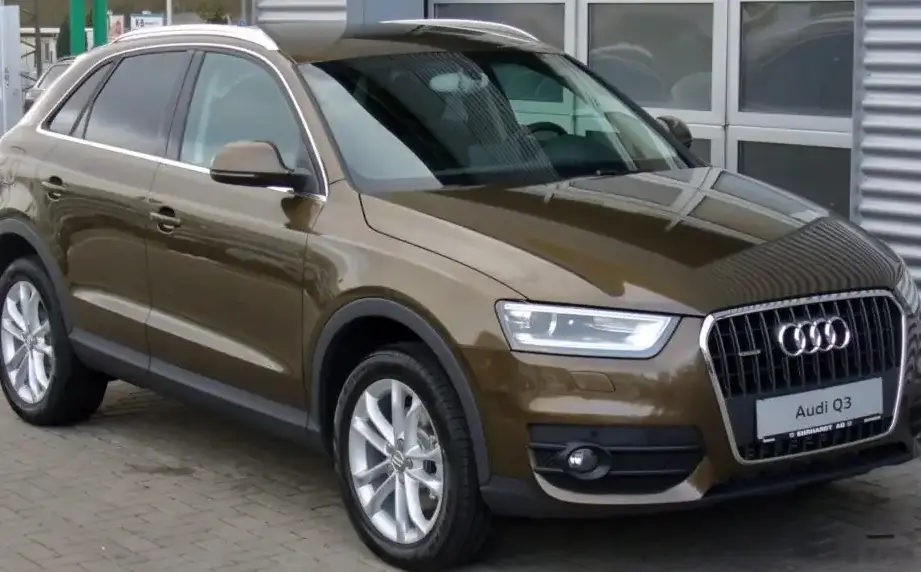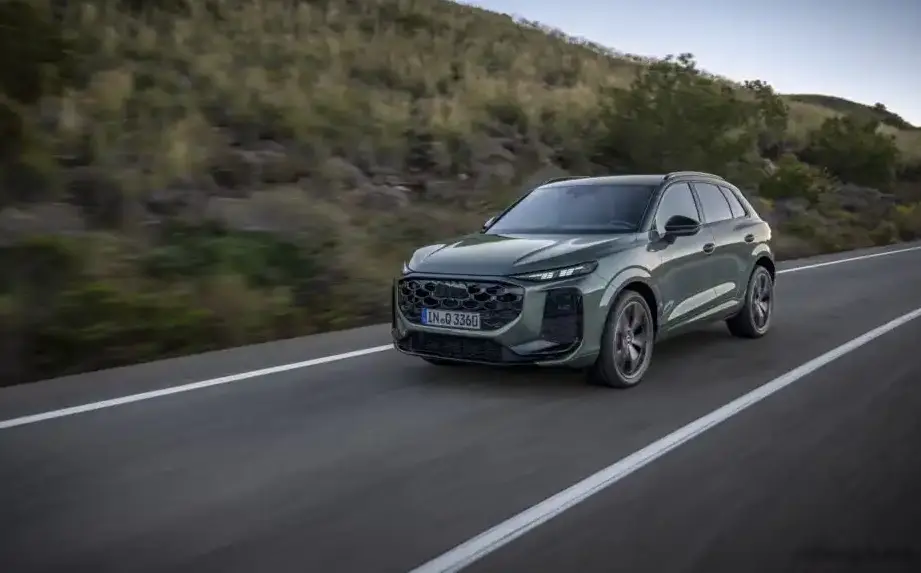
The Audi Q3 III (FJ) 1.5 TFSI, introduced in October 2025, represents a key entry point into the third generation of Audi’s compact luxury SUV. Positioned as a mid-range offering within the Q3 lineup, this variant combines a 1.5-liter turbocharged four-cylinder engine with a 48-volt mild hybrid system and Audi’s seven-speed S tronic dual-clutch transmission. It’s designed to appeal to buyers seeking a balance of fuel efficiency, modern technology, and the premium experience associated with the Audi brand. The Q3 III (FJ) builds upon the 1HX0/A3 platform, shared with other Volkswagen Group vehicles, offering a refined driving experience and a spacious interior within a relatively compact footprint.
Technical Specifications
| Brand | Audi |
| Model | Q3 |
| Generation | Q3 III (FJ) |
| Type (Engine) | 1.5 TFSI (150 Hp) Mild Hybrid S tronic |
| Start of production | October, 2025 |
| Powertrain Architecture | MHEV (Mild Hybrid Electric Vehicle) |
| Body type | SUV |
| Seats | 5 |
| Doors | 5 |
| Combined fuel consumption (WLTP) | 6-6.6 l/100 km (39.2 – 35.6 US mpg, 47.1 – 42.8 UK mpg, 16.7 – 15.2 km/l) |
| CO2 emissions (WLTP) | 137-151 g/km |
| Fuel Type | Petrol (Gasoline) |
| Acceleration 0 – 100 km/h | 9.1 sec |
| Acceleration 0 – 62 mph | 9.1 sec |
| Acceleration 0 – 60 mph | 8.6 sec |
| Maximum speed | 209 km/h (129.87 mph) |
| Emission standard | Euro 6e |
| Weight-to-power ratio | 10.4 kg/Hp, 96.2 Hp/tonne |
| Weight-to-torque ratio | 6.2 kg/Nm, 160.3 Nm/tonne |
| Battery voltage | 48 V |
| Battery technology | Lithium-ion (Li-Ion) |
| Power | 150 Hp @ 5000-6000 rpm |
| Power per litre | 100.1 Hp/l |
| Torque | 250 Nm @ 1500-3500 rpm (184.39 lb.-ft. @ 1500-3500 rpm) |
| Engine layout | Front, Transverse |
| Engine displacement | 1498 cm3 (91.41 cu. in.) |
| Number of cylinders | 4 |
| Engine configuration | Inline |
| Cylinder Bore | 74.5 mm (2.93 in.) |
| Piston Stroke | 85.9 mm (3.38 in.) |
| Compression ratio | 12:1 |
| Number of valves per cylinder | 4 |
| Fuel injection system | Direct injection |
| Engine aspiration | Turbocharger, Intercooler |
| Valvetrain | DOHC |
| Engine oil capacity | 4.3 l (4.54 US qt | 3.78 UK qt) |
| Coolant | 10.5 l (11.1 US qt | 9.24 UK qt) |
| Kerb Weight | 1560 kg (3439.21 lbs.) |
| Max. weight | 2050-2170 kg (4519.48 – 4784.03 lbs.) |
| Max load | 490-610 kg (1080.27 – 1344.82 lbs.) |
| Trunk (boot) space – minimum | 488 l (17.23 cu. ft.) |
| Trunk (boot) space – maximum | 1386 l (48.95 cu. ft.) |
| Fuel tank capacity | 55 l (14.53 US gal | 12.1 UK gal) |
| Max. roof load | 75 kg (165.35 lbs.) |
| Permitted trailer load with brakes (8%) | 2000 kg (4409.25 lbs.) |
| Permitted trailer load with brakes (12%) | 1800 kg (3968.32 lbs.) |
| Permitted trailer load without brakes | 750 kg (1653.47 lbs.) |
| Permitted towbar download | 90 kg (198.42 lbs.) |
| Length | 4531 mm (178.39 in.) |
| Width | 1859 mm (73.19 in.) |
| Width including mirrors | 2087 mm (82.17 in.) |
| Height | 1601 mm (63.03 in.) |
| Wheelbase | 2681 mm (105.55 in.) |
| Front track | 1588 mm (62.52 in.) |
| Rear (Back) track | 1581 mm (62.24 in.) |
| Front overhang | 940 mm (37.01 in.) |
| Rear overhang | 910 mm (35.83 in.) |
| Drag coefficient (Cd) | 0.30 |
| Minimum turning circle (turning diameter) | 11.8 m (38.71 ft.) |
| Approach angle | 17° |
| Departure angle | 25° |
| Drivetrain Architecture | ICE and electric motor drive the front wheels |
| Drive wheel | Front wheel drive |
| Number of gears and type of gearbox | 7 gears, automatic transmission S tronic |
| Front suspension | Independent, type McPherson with coil spring and anti-roll bar |
| Rear suspension | Independent multi-link spring suspension with stabilizer |
| Front brakes | Ventilated discs |
| Assisting systems | ABS (Anti-lock braking system) |
| Steering type | Steering rack and pinion |
| Power steering | Electric Steering |
| Tires size | 215/65 R17; 235/60 R17; 235/55 R18; 255/45 R19; 255/40 R20 |
| Wheel rims size | 7.5J x 17; 8J x 18; 8.5J x 19; 8.5J x 20 |
Powertrain & Engine Architecture
At the heart of the Q3 III 1.5 TFSI lies the VW Group’s EA211 family of engines. Specifically, this variant utilizes a 1.5-liter inline-four cylinder engine, employing direct fuel injection and a single turbocharger with intercooling. This engine is known for its responsiveness and efficiency. The 48V mild hybrid system adds a belt starter generator (BSG) and a small lithium-ion battery, enabling features like extended start-stop operation, coasting with engine off, and a slight power boost during acceleration. The S tronic seven-speed dual-clutch transmission provides quick and smooth gear changes, contributing to both performance and fuel economy. This transmission is known for its efficiency and responsiveness, offering a more engaging driving experience than a traditional torque-converter automatic.
Driving Characteristics
The 150 hp and 250 Nm (184 lb-ft) of torque delivered by this powertrain configuration results in a 0-60 mph time of approximately 8.6 seconds and a top speed of 209 km/h (129.87 mph). While not the quickest Q3 variant, it offers adequate performance for everyday driving. The S tronic transmission keeps the engine in its optimal power band, providing brisk acceleration in most situations. Compared to the more powerful 2.0 TFSI models, the 1.5 TFSI feels less urgent, but it excels in fuel efficiency. The mild hybrid system contributes to a smoother driving experience, particularly in city traffic. The gear ratios are tuned for a balance of acceleration and fuel economy, with taller gears for highway cruising.
Equipment & Trim Levels
The Q3 III 1.5 TFSI typically comes standard with features such as Audi’s MMI infotainment system with a touchscreen display, Apple CarPlay and Android Auto integration, automatic climate control, and a suite of driver-assistance systems including lane departure warning and forward collision warning. Interior upholstery is typically cloth, with leather options available as upgrades. Trim levels often include ‘Advanced’ and ‘S line’ packages, adding features like larger wheels, sport seats, and more premium interior materials. Optional extras include a panoramic sunroof, a premium sound system, and adaptive cruise control.
Chassis & Braking
The Q3 III utilizes a MacPherson strut front suspension and a multi-link rear suspension, providing a comfortable and controlled ride. The suspension is tuned to balance handling and comfort, making it suitable for both city driving and longer journeys. Front brakes are ventilated discs, while rear brakes are typically solid discs. ABS (Anti-lock Braking System) is standard, along with electronic stability control. The steering is electric power-assisted, offering a precise and responsive feel.
Market Reception & Comparison
The Audi Q3 III 1.5 TFSI has been generally well-received by automotive critics, praised for its fuel efficiency, comfortable ride, and well-appointed interior. Compared to other trims in the Q3 lineup, the 1.5 TFSI offers a more affordable entry point, making it attractive to buyers who prioritize value. Its fuel economy is notably better than the 2.0 TFSI models, while its performance is sufficient for most drivers. However, some critics have noted that the engine can feel strained when fully loaded or during aggressive acceleration.
Legacy
The EA211 engine family, including the 1.5 TFSI variant, has proven to be relatively reliable, although regular maintenance is crucial. The S tronic transmission is generally durable, but requires scheduled servicing to ensure optimal performance. In the used car market, the Q3 III 1.5 TFSI represents a good value proposition, offering a blend of luxury, technology, and efficiency. Its mild hybrid system and modern features make it a competitive choice in the compact SUV segment. Long-term reliability is expected to be good, provided the vehicle is properly maintained.