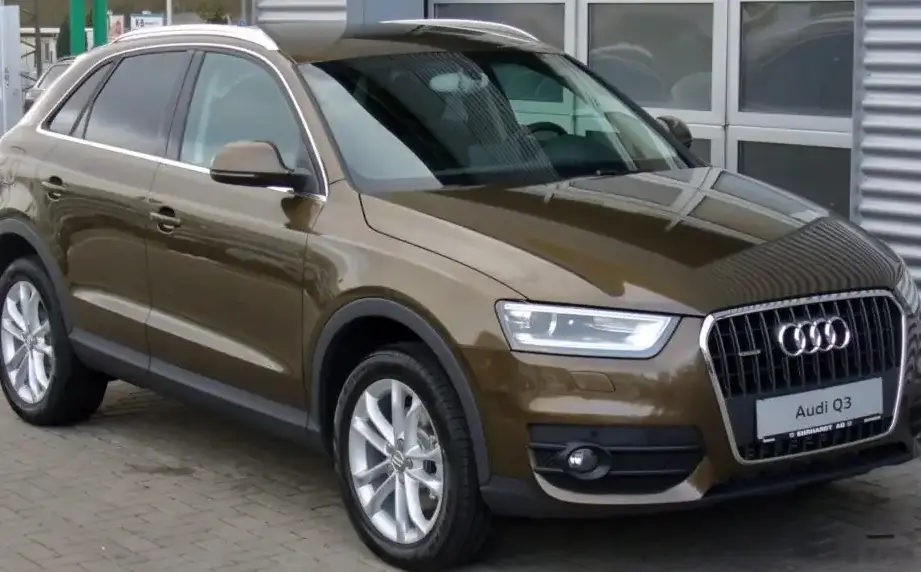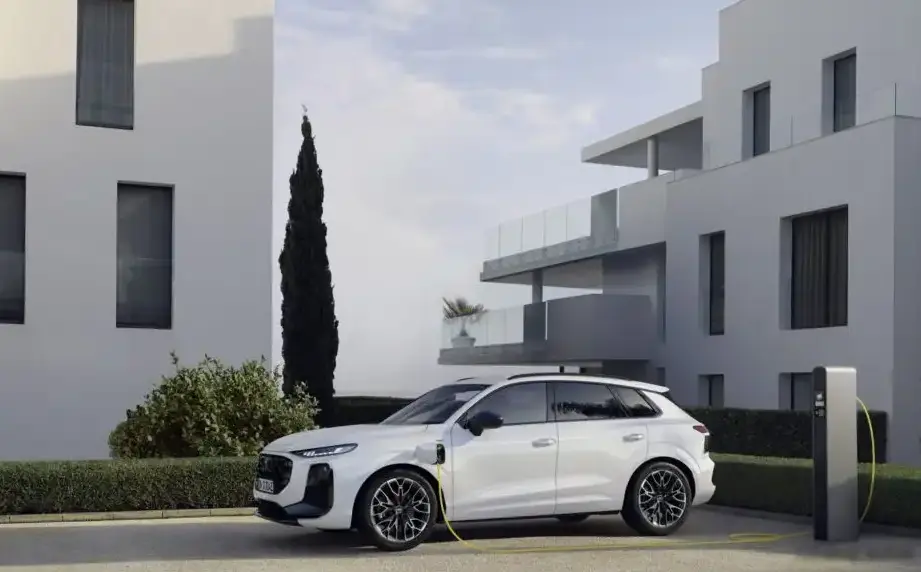
The Audi Q3 III (FJ) 1.5 TFSI e-hybrid, introduced in October 2025, represents a significant step in Audi’s electrification strategy for its compact SUV lineup. Positioned as a mid-range offering within the third generation Q3 (FJ) series, this plug-in hybrid variant combines a 1.5-liter turbocharged gasoline engine with an electric motor, delivering a combined system output of 272 horsepower. It’s designed to appeal to buyers seeking a balance between fuel efficiency, performance, and the practicality of a small SUV. The Q3 III builds upon the 1HX0/A3 platform, shared with other Volkswagen Group vehicles, but distinguishes itself with Audi’s signature premium features and advanced technology.
Technical Specifications
| Brand | Audi |
| Model | Q3 |
| Generation | Q3 III (FJ) |
| Type (Engine) | 1.5 TFSI (272 Hp) e-hybrid S tronic |
| Start of production | October, 2025 |
| Powertrain Architecture | PHEV (Plug-in Hybrid Electric Vehicle) |
| Body type | SUV |
| Seats | 5 |
| Doors | 5 |
| Fuel consumption (combined) | 1.7-6.6 l/100 km (138.4 – 35.6 US mpg, 166.2 – 42.8 UK mpg, 58.8 – 15.2 km/l) |
| CO2 emissions | 39-49 g/km |
| Fuel Type | Petrol / electricity |
| Acceleration 0 – 100 km/h | 6.8 sec |
| Acceleration 0 – 62 mph | 6.8 sec |
| Acceleration 0 – 60 mph | 6.5 sec |
| Maximum speed | 215 km/h (133.59 mph) |
| Emission standard | Euro 6e |
| Weight-to-power ratio | 6.7 kg/Hp, 149 Hp/tonne |
| Weight-to-torque ratio | 4.6 kg/Nm, 219.2 Nm/tonne |
| Gross battery capacity | 25.7 kWh |
| Net (usable) battery capacity | 19.7 kWh |
| Battery voltage | 400 V |
| Battery technology | Lithium-ion (Li-Ion) |
| Battery location | Under the rear seats |
| All-electric range | 105-119 km (65.24 – 73.94 mi) |
| Average Energy consumption | 13.9-15 kWh/100 km (22.37 – 24.14 kWh/100 mi, 151 – 140 MPGe, 7.2 – 6.7 km/kWh, 4.5 – 4.1 mi/kWh) |
| Max speed (electric) | 140 km/h (86.99 mph) |
| Electric motor power | 116 Hp |
| Electric motor Torque | 330 Nm (243.4 lb.-ft.) |
| Electric motor location | Between the combustion engine and the transmission |
| Electric motor type | Synchronous |
| System power | 272 Hp |
| System torque | 400 Nm (295.02 lb.-ft.) |
| Power | 177 Hp @ 5500-6000 rpm |
| Torque | 250 Nm @ 1500-4000 rpm (184.39 lb.-ft. @ 1500-4000 rpm) |
| Engine layout | Front, Transverse |
| Engine displacement | 1498 cm3 (91.41 cu. in.) |
| Number of cylinders | 4 |
| Engine configuration | Inline |
| Cylinder Bore | 74.5 mm (2.93 in.) |
| Piston Stroke | 85.9 mm (3.38 in.) |
| Compression ratio | 11.5:1 |
| Number of valves per cylinder | 4 |
| Fuel injection system | Direct injection |
| Engine aspiration | Turbocharger, Intercooler |
| Valvetrain | DOHC |
| Engine oil capacity | 4.3 l (4.54 US qt | 3.78 UK qt) |
| Coolant | 15.9 l (16.8 US qt | 13.99 UK qt) |
| Kerb Weight | 1825 kg (4023.44 lbs.) |
| Max. weight | 2405 kg (5302.12 lbs.) |
| Max load | 580 kg (1278.68 lbs.) |
| Trunk (boot) space – minimum | 375 l (13.24 cu. ft.) |
| Trunk (boot) space – maximum | 1293 l (45.66 cu. ft.) |
| Fuel tank capacity | 45 l (11.89 US gal | 9.9 UK gal) |
| Max. roof load | 75 kg (165.35 lbs.) |
| Permitted trailer load with brakes (8%) | 1700 kg (3747.86 lbs.) |
| Permitted trailer load with brakes (12%) | 1400 kg (3086.47 lbs.) |
| Permitted trailer load without brakes | 750 kg (1653.47 lbs.) |
| Permitted towbar download | 90 kg (198.42 lbs.) |
| Length | 4531 mm (178.39 in.) |
| Width | 1859 mm (73.19 in.) |
| Width including mirrors | 2087 mm (82.17 in.) |
| Height | 1601 mm (63.03 in.) |
| Wheelbase | 2681 mm (105.55 in.) |
| Front track | 1588 mm (62.52 in.) |
| Rear (Back) track | 1581 mm (62.24 in.) |
| Front overhang | 940 mm (37.01 in.) |
| Rear overhang | 910 mm (35.83 in.) |
| Drag coefficient (Cd) | 0.32 |
| Minimum turning circle (turning diameter) | 11.8 m (38.71 ft.) |
| Approach angle | 17° |
| Departure angle | 25° |
| Drivetrain Architecture | The Internal combustion engine (ICE) and electric motor drive the front wheels of the car with the ability to work in full electric or mixed mode. |
| Drive wheel | Front wheel drive |
| Number of gears and type of gearbox | 6 gears, automatic transmission S tronic |
| Front suspension | Independent, type McPherson with coil spring and anti-roll bar |
| Rear suspension | Independent multi-link spring suspension with stabilizer |
| Front brakes | Ventilated discs |
| Rear brakes | Ventilated discs |
| Assisting systems | ABS (Anti-lock braking system) |
| Steering type | Steering rack and pinion |
| Power steering | Electric Steering |
| Tires size | 215/65 R17; 235/60 R17; 235/55 R18; 255/45 R19; 255/40 R20 |
| Wheel rims size | 7.5J x 17; 8J x 18; 8.5J x 19; 8.5J x 20 |
Powertrain & Engine Architecture
At the heart of the Q3 III 1.5 TFSI e-hybrid lies a 1.5-liter, four-cylinder turbocharged gasoline engine, identified by engine code DNV. This engine utilizes direct fuel injection and a Miller cycle combustion process to enhance efficiency. The turbocharger, coupled with an intercooler, provides increased power output. The electric motor, a synchronous unit, is integrated between the engine and the seven-speed S tronic dual-clutch transmission. This placement allows for seamless transitions between electric, hybrid, and gasoline power. The 25.7 kWh (gross) / 19.7 kWh (net) lithium-ion battery pack is located under the rear seats, optimizing space utilization. The S tronic transmission is specifically calibrated for the hybrid powertrain, offering quick and smooth gear changes. The engine management system intelligently blends power from both sources, prioritizing electric drive when possible and seamlessly engaging the gasoline engine for increased performance or when the battery is depleted.
Driving Characteristics
The 1.5 TFSI e-hybrid delivers a refined driving experience. In electric-only mode, the Q3 offers near-silent operation and brisk acceleration, particularly in urban environments. The combined system output of 272 hp provides a 0-60 mph time of approximately 6.5 seconds. The S tronic transmission contributes to responsive acceleration, and the hybrid system’s torque-fill capabilities minimize turbo lag. Compared to the standard 1.5 TFSI Q3, the e-hybrid offers significantly improved fuel economy and the ability to drive short distances on electric power alone. While the added weight of the battery pack slightly impacts handling compared to lighter Q3 variants, the well-tuned suspension maintains a comfortable and controlled ride. The gear ratios are optimized for both efficiency and performance, providing ample power for highway cruising and overtaking maneuvers.
Equipment & Trim Levels
The Q3 III 1.5 TFSI e-hybrid typically comes well-equipped, reflecting Audi’s premium positioning. Standard features often include Audi’s Virtual Cockpit digital instrument cluster, a touchscreen infotainment system with Apple CarPlay and Android Auto compatibility, automatic climate control, and a suite of advanced driver-assistance systems such as lane departure warning and automatic emergency braking. Interior upholstery is typically a combination of leather and premium cloth. Optional extras include a panoramic sunroof, upgraded sound system, adaptive cruise control, and a 360-degree camera system. Trim levels may vary by market, but generally offer increasing levels of luxury and technology.
Chassis & Braking
The Q3 III utilizes a McPherson strut front suspension and a multi-link rear suspension, providing a balance between comfort and handling. Stabilizer bars are fitted to both axles to reduce body roll. The braking system consists of ventilated discs on all four wheels, providing ample stopping power. ABS (Anti-lock Braking System) and electronic stability control are standard features. The steering is an electric power-assisted rack and pinion system, offering precise and responsive control.
Market Reception & Comparison
The Audi Q3 III 1.5 TFSI e-hybrid has been generally well-received by automotive critics, praised for its fuel efficiency, refined driving experience, and advanced technology. Compared to other Q3 variants, the e-hybrid offers a compelling alternative for buyers prioritizing environmental consciousness and lower running costs. While the initial purchase price is higher than that of the standard gasoline models, the potential fuel savings and government incentives can offset the cost difference over time. Compared to competitors like the BMW X1 xDrive30e and Mercedes-Benz GLA 250 e, the Q3 e-hybrid offers a competitive combination of performance, efficiency, and luxury.
Legacy
The 1.5 TFSI e-hybrid powertrain represents a key step in Audi’s transition towards electrification. Early reports suggest good long-term reliability, with the hybrid system proving robust under normal operating conditions. The Q3 III 1.5 TFSI e-hybrid is expected to hold its value well in the used car market, appealing to buyers seeking a fuel-efficient and technologically advanced compact SUV. As battery technology continues to improve and charging infrastructure expands, the demand for plug-in hybrid models like the Q3 e-hybrid is likely to increase.