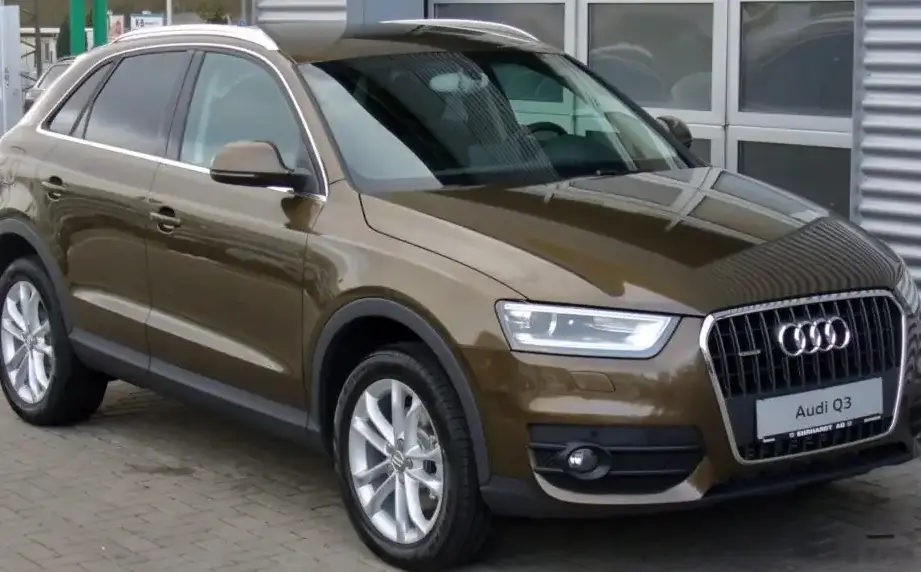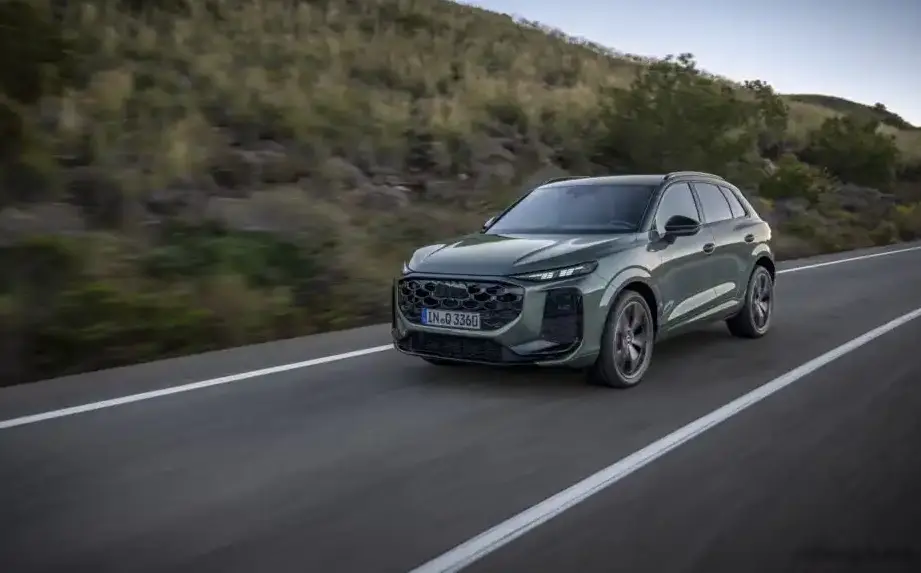
The Audi Q3 III (FJ) 2.0 TFSI quattro S tronic represents the third generation of Audi’s compact luxury SUV, entering production in October 2025. This variant, equipped with a 2.0-liter turbocharged four-cylinder engine producing 265 horsepower, occupies a performance-oriented position within the Q3 lineup, slotting above the base engine options and offering a compelling blend of power, technology, and all-wheel drive capability. It builds upon the foundation of the MQB Evo platform, shared with other Volkswagen Group vehicles, and aims to compete with rivals like the BMW X3, Mercedes-Benz GLC, and Acura RDX in the North American market.
Technical Specifications
| Brand | Audi |
| Model | Q3 |
| Generation | Q3 III (FJ) |
| Type (Engine) | 2.0 TFSI (265 Hp) quattro S tronic |
| Start of production | October, 2025 |
| Powertrain Architecture | Internal Combustion engine |
| Body type | SUV |
| Seats | 5 |
| Doors | 5 |
| Combined fuel consumption (WLTP) | 8.5-9 l/100 km (27.7 – 26.1 US mpg, 33.2 – 31.4 UK mpg, 11.8 – 11.1 km/l) |
| CO2 emissions (WLTP) | 193-205 g/km |
| Fuel Type | Petrol (Gasoline) |
| Acceleration 0 – 100 km/h | 5.7 sec |
| Acceleration 0 – 62 mph | 5.7 sec |
| Acceleration 0 – 60 mph | 5.4 sec |
| Maximum speed | 240 km/h (149.13 mph) |
| Emission standard | Euro 6e |
| Weight-to-power ratio | 6.3 kg/Hp, 158.2 Hp/tonne |
| Weight-to-torque ratio | 4.2 kg/Nm, 238.8 Nm/tonne |
| Power | 265 Hp @ 5000-6500 rpm |
| Power per litre | 133.6 Hp/l |
| Torque | 400 Nm @ 1650-4350 rpm (295.02 lb.-ft. @ 1650-4350 rpm) |
| Engine layout | Front, Transverse |
| Engine displacement | 1984 cm3 (121.07 cu. in.) |
| Number of cylinders | 4 |
| Engine configuration | Inline |
| Cylinder Bore | 82.5 mm (3.25 in.) |
| Piston Stroke | 92.8 mm (3.65 in.) |
| Compression ratio | 9.6:1 |
| Number of valves per cylinder | 4 |
| Fuel injection system | Direct injection |
| Engine aspiration | Turbocharger, Intercooler |
| Valvetrain | DOHC |
| Engine oil capacity | 5.7 l (6.02 US qt | 5.02 UK qt) |
| Coolant | 9.2 l (9.72 US qt | 8.09 UK qt) |
| Engine systems | Start & Stop System, Particulate filter |
| Kerb Weight | 1675 kg (3692.74 lbs.) |
| Max. weight | 2260 kg (4982.45 lbs.) |
| Max load | 585 kg (1289.7 lbs.) |
| Trunk (boot) space – minimum | 488 l (17.23 cu. ft.) |
| Trunk (boot) space – maximum | 1386 l (48.95 cu. ft.) |
| Fuel tank capacity | 60 l (15.85 US gal | 13.2 UK gal) |
| Max. roof load | 75 kg (165.35 lbs.) |
| Permitted trailer load with brakes (8%) | 2100 kg (4629.71 lbs.) |
| Permitted trailer load with brakes (12%) | 2100 kg (4629.71 lbs.) |
| Permitted trailer load without brakes | 750 kg (1653.47 lbs.) |
| Permitted towbar download | 90 kg (198.42 lbs.) |
| Length | 4531 mm (178.39 in.) |
| Width | 1859 mm (73.19 in.) |
| Width including mirrors | 2087 mm (82.17 in.) |
| Height | 1601 mm (63.03 in.) |
| Wheelbase | 2681 mm (105.55 in.) |
| Front track | 1588 mm (62.52 in.) |
| Rear (Back) track | 1581 mm (62.24 in.) |
| Front overhang | 940 mm (37.01 in.) |
| Rear overhang | 910 mm (35.83 in.) |
| Drag coefficient (Cd) | 0.33 |
| Minimum turning circle (turning diameter) | 11.8 m (38.71 ft.) |
| Approach angle | 17° |
| Departure angle | 25° |
| Drivetrain Architecture | The Internal combustion engine (ICE) drives the front wheels permanently, and the rear wheels are driven through an electrically or mechanically operated clutch if necessary. |
| Drive wheel | All wheel drive (4×4) |
| Number of gears and type of gearbox | 7 gears, automatic transmission S tronic |
| Front suspension | Independent, type McPherson with coil spring and anti-roll bar |
| Rear suspension | Independent multi-link spring suspension with stabilizer |
| Front brakes | Ventilated discs |
| Rear brakes | Ventilated discs |
| Assisting systems | ABS (Anti-lock braking system) |
| Steering type | Steering rack and pinion |
| Power steering | Electric Steering |
| Tires size | 215/65 R17; 235/60 R17; 235/55 R18; 255/45 R19; 255/40 R20 |
| Wheel rims size | 7.5J x 17; 8J x 18; 8.5J x 19; 8.5J x 20 |
Powertrain & Engine Architecture
At the heart of the Q3 III 2.0 TFSI quattro S tronic lies the EA888 2.0-liter inline-four cylinder engine. This engine, a staple in the Volkswagen Group’s portfolio, utilizes direct fuel injection and a single twin-scroll turbocharger with intercooling. The engine code will likely fall within the current generation, potentially a variation of the CZPA or similar. The engine produces 265 horsepower between 5000 and 6500 rpm, and 295 lb-ft of torque from 1650 to 4350 rpm. The S tronic transmission is a seven-speed dual-clutch transmission known for its quick and smooth shifts. This transmission is integral to the vehicle’s performance, offering both automatic and manual shift modes. The quattro all-wheel-drive system employs a multi-plate clutch to distribute torque between the front and rear axles as needed, enhancing traction and stability.
Driving Characteristics
The 2.0 TFSI quattro S tronic delivers a noticeably more engaging driving experience than lower-powered Q3 variants. Acceleration to 60 mph is achieved in approximately 5.4 seconds. The S tronic transmission contributes to responsive acceleration, and the quattro system provides confident handling in various conditions. The gear ratios are tuned for a balance between performance and fuel efficiency, with shorter lower gears for quick acceleration and taller higher gears for relaxed cruising. Compared to a manual transmission equipped Q3, the S tronic offers convenience and quicker shift times, though some enthusiasts may prefer the greater control of a manual gearbox.
Equipment & Trim Levels
The 2.0 TFSI quattro S tronic trim typically includes a generous array of standard features. These often include Audi’s Virtual Cockpit digital instrument cluster, a touchscreen infotainment system with Apple CarPlay and Android Auto integration, leather upholstery, heated front seats, and a panoramic sunroof. Optional extras can include a premium sound system, adaptive cruise control, lane-keeping assist, and a 360-degree camera system. Interior trim options typically range from brushed aluminum to wood veneers, allowing for a degree of personalization.
Chassis & Braking
The Q3 III utilizes a McPherson strut front suspension and a multi-link rear suspension, providing a comfortable yet controlled ride. Stabilizer bars are fitted to both axles to reduce body roll during cornering. The braking system consists of ventilated discs on all four wheels, providing ample stopping power. ABS, electronic stability control, and traction control are standard safety features. The chassis is tuned to balance ride comfort with handling precision, making it suitable for both daily commuting and spirited driving.
Market Reception & Comparison
The Audi Q3 III 2.0 TFSI quattro S tronic has generally received positive reviews from automotive critics. It is praised for its refined interior, strong performance, and advanced technology. Fuel economy is respectable for its class, averaging around 27-31 mpg in combined driving. Compared to the base engine Q3 models, the 2.0 TFSI offers a significant performance upgrade, justifying the higher price point for buyers prioritizing driving enjoyment. Reliability is generally considered good, though as with any modern vehicle, preventative maintenance is crucial.
Legacy
The EA888 engine family has a long-standing reputation for durability and tunability. The S tronic transmission, while complex, has proven to be reliable when properly maintained. The Q3 III 2.0 TFSI quattro S tronic is expected to hold its value reasonably well in the used car market, appealing to buyers seeking a premium compact SUV with a balance of performance, luxury, and technology. Its all-wheel-drive system and robust powertrain should ensure it remains a desirable option for years to come.