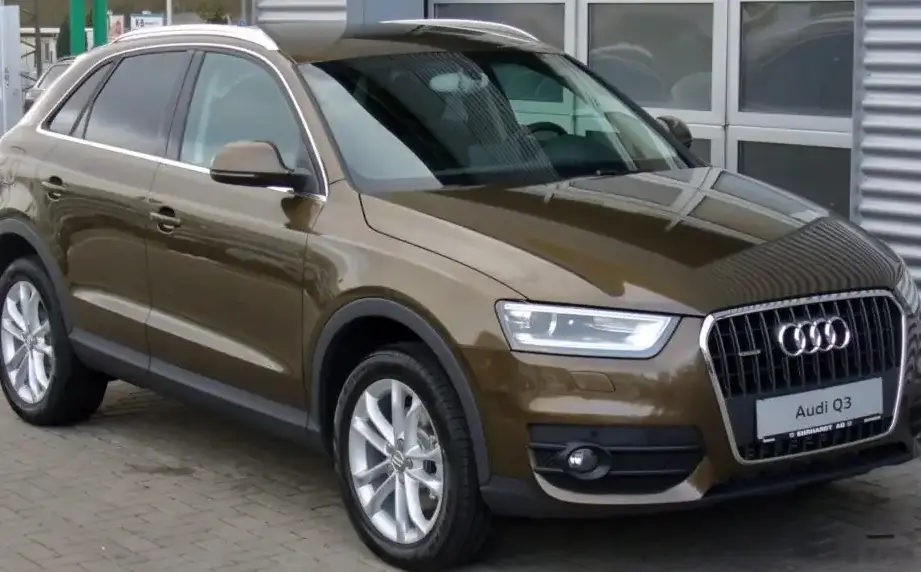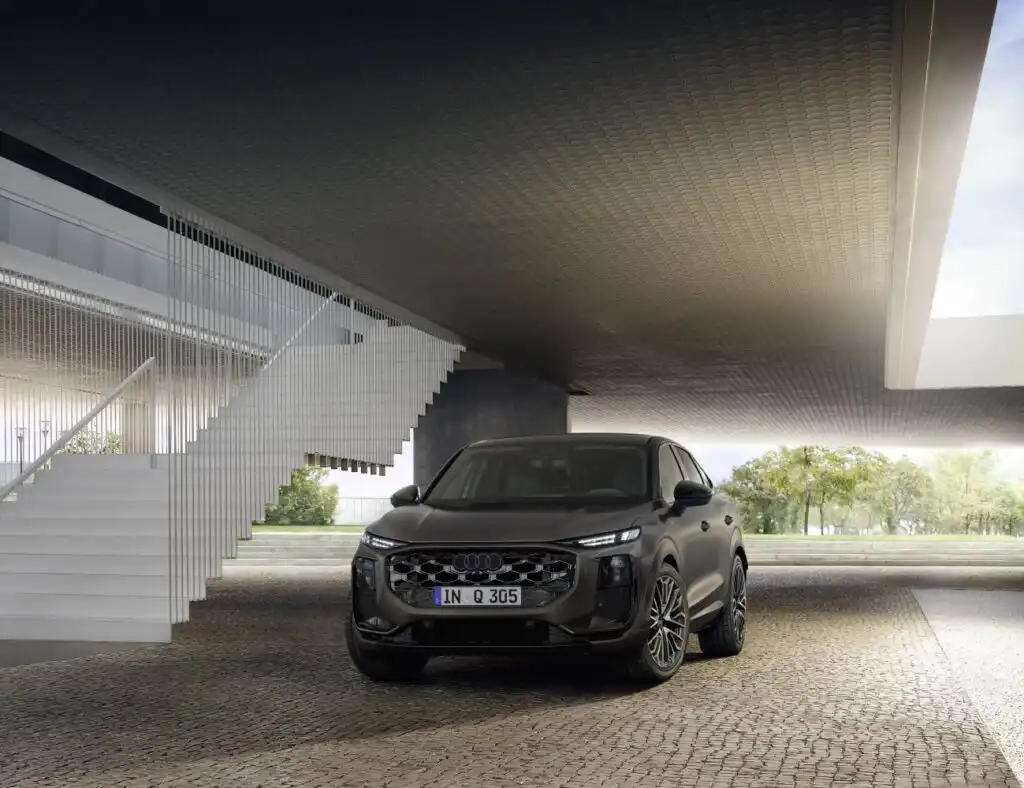
The Audi Q3 III Sportback 2.0 TDI (150 hp) S tronic, launched in August 2025, represents a compelling entry point into Audi’s compact luxury crossover segment. Positioned within the third generation (FJ) of the Q3 Sportback, this variant balances fuel efficiency with respectable performance, appealing to buyers seeking a premium experience without the higher costs associated with more powerful engines. It builds upon the foundation of the Q3 platform (shared with the Volkswagen Tiguan and SEAT Ateca) but distinguishes itself through Audi’s signature design language and technology integration. The Sportback body style, a coupe-SUV, offers a more dynamic silhouette compared to the standard Q3.
Technical Specifications
| Brand | Audi |
| Model | Q3 |
| Generation | Q3 III Sportback (FJ) |
| Type (Engine) | 2.0 TDI (150 Hp) S tronic |
| Start of production | August, 2025 |
| Powertrain Architecture | Internal Combustion engine |
| Body type | Coupe, SUV |
| Seats | 5 |
| Doors | 5 |
| Combined fuel consumption (WLTP) | 5.3-5.9 l/100 km (44.4 – 39.9 US mpg, 53.3 – 47.9 UK mpg, 18.9 – 16.9 km/l) |
| CO2 emissions (WLTP) | 139-153 g/km |
| Fuel Type | Diesel |
| Acceleration 0 – 100 km/h | 9.2 sec |
| Acceleration 0 – 62 mph | 9.2 sec |
| Acceleration 0 – 60 mph | 8.7 sec |
| Maximum speed | 207 km/h (128.62 mph) |
| Emission standard | Euro 6e |
| Weight-to-power ratio | 10.8 kg/Hp, 92.3 Hp/tonne |
| Weight-to-torque ratio | 4.5 kg/Nm, 221.5 Nm/tonne |
| Power | 150 Hp @ 3000-4200 rpm |
| Power per litre | 76.2 Hp/l |
| Torque | 360 Nm @ 1600-2750 rpm (265.52 lb.-ft. @ 1600-2750 rpm) |
| Engine layout | Front, Transverse |
| Engine displacement | 1968 cm3 (120.09 cu. in.) |
| Number of cylinders | 4 |
| Engine configuration | Inline |
| Cylinder Bore | 81 mm (3.19 in.) |
| Piston Stroke | 95.5 mm (3.76 in.) |
| Compression ratio | 16:1 |
| Number of valves per cylinder | 4 |
| Fuel injection system | Diesel Commonrail |
| Engine aspiration | Turbocharger, Intercooler |
| Valvetrain | DOHC |
| Engine oil capacity | 5.5 l (5.81 US qt | 4.84 UK qt) |
| Coolant | 13.2 l (13.95 US qt | 11.61 UK qt) |
| Engine systems | Start & Stop System, Particulate filter |
| Kerb Weight | 1625 kg (3582.51 lbs.) |
| Max. weight | 2100-2225 kg (4629.71 – 4905.29 lbs.) |
| Max load | 475-600 kg (1047.2 – 1322.77 lbs.) |
| Trunk (boot) space – minimum | 488 l (17.23 cu. ft.) |
| Trunk (boot) space – maximum | 1289 l (45.52 cu. ft.) |
| Fuel tank capacity | 55 l (14.53 US gal | 12.1 UK gal) |
| AdBlue tank | 18 l (4.76 US gal | 3.96 UK gal) |
| Max. roof load | 75 kg (165.35 lbs.) |
| Permitted trailer load with brakes (8%) | 2000 kg (4409.25 lbs.) |
| Permitted trailer load with brakes (12%) | 2000 kg (4409.25 lbs.) |
| Permitted trailer load without brakes | 750 kg (1653.47 lbs.) |
| Permitted towbar download | 90 kg (198.42 lbs.) |
| Length | 4531 mm (178.39 in.) |
| Width | 1859 mm (73.19 in.) |
| Width including mirrors | 2087 mm (82.17 in.) |
| Height | 1559 mm (61.38 in.) |
| Wheelbase | 2681 mm (105.55 in.) |
| Front track | 1588 mm (62.52 in.) |
| Rear (Back) track | 1581 mm (62.24 in.) |
| Front overhang | 940 mm (37.01 in.) |
| Rear overhang | 910 mm (35.83 in.) |
| Drag coefficient (Cd) | 0.31 |
| Minimum turning circle (turning diameter) | 11.8 m (38.71 ft.) |
| Approach angle | 17° |
| Departure angle | 25° |
| Drivetrain Architecture | The Internal combustion engine (ICE) drives the front wheels of the vehicle. |
| Drive wheel | Front wheel drive |
| Number of gears and type of gearbox | 7 gears, automatic transmission S tronic |
| Front suspension | Independent, type McPherson with coil spring and anti-roll bar |
| Rear suspension | Independent multi-link spring suspension with stabilizer |
| Front brakes | Ventilated discs |
| Assisting systems | ABS (Anti-lock braking system) |
| Steering type | Steering rack and pinion |
| Power steering | Electric Steering |
| Tires size | 235/55 R8 |
| Wheel rims size | 8J x 18 |
Powertrain & Engine Architecture
At the heart of the Q3 Sportback 2.0 TDI is the Volkswagen Group’s EA288 series diesel engine. Specifically, this variant utilizes a 1968cc inline-four cylinder engine producing 150 horsepower at 3000-4200 rpm and 360 Nm (265.52 lb.-ft.) of torque between 1600-2750 rpm. The engine employs a turbocharger with an intercooler to boost power and efficiency. Fuel is delivered via a common rail direct injection system, allowing for precise fuel metering and optimized combustion. The engine features a DOHC (Double Overhead Camshaft) valvetrain with four valves per cylinder. Crucially, this engine incorporates a diesel particulate filter (DPF) and a Start & Stop system to meet stringent Euro 6e emission standards. The engine is transversely mounted in the front of the vehicle. Paired with the engine is a 7-speed S tronic dual-clutch automatic transmission, known for its quick and smooth gear changes. This transmission contributes to both performance and fuel economy.
Driving Characteristics
The 150 hp 2.0 TDI S tronic powertrain delivers a balanced driving experience. Acceleration from 0-60 mph takes approximately 8.7 seconds, and 0-100 km/h in 9.2 seconds, making it suitable for everyday driving and highway cruising. While not overtly sporty, the engine provides ample torque for confident overtaking maneuvers. The S tronic transmission is a key component, offering responsive shifts and contributing to a relatively seamless power delivery. Compared to the more powerful 2.0 TFSI gasoline variants, the TDI offers superior fuel economy but lacks the same level of outright acceleration. Against other diesel Q3 variants, such as the 184 hp version, this 150 hp model prioritizes efficiency over peak performance. The gear ratios are tuned for a blend of fuel efficiency and usability, with a focus on maximizing torque in the lower and mid-range.
Equipment & Trim Levels
The Q3 Sportback 2.0 TDI (150 hp) S tronic typically comes well-equipped as standard. Features generally include Audi’s MMI infotainment system with a touchscreen display, automatic climate control, LED headlights, and a suite of driver-assistance systems such as lane departure warning and automatic emergency braking. Interior upholstery is typically cloth, with leather options available as upgrades. Trim levels often build upon this base, adding features like a panoramic sunroof, upgraded sound system, heated seats, and parking assistance. Optional extras could include adaptive cruise control, a virtual cockpit digital instrument cluster, and various styling packages.
Chassis & Braking
The Q3 Sportback utilizes a front-wheel-drive configuration. The front suspension employs a McPherson strut setup with coil springs and an anti-roll bar, while the rear features an independent multi-link suspension with a stabilizer bar. This suspension setup provides a comfortable ride quality while maintaining reasonable handling characteristics. Braking duties are handled by ventilated discs at the front, providing adequate stopping power. ABS (Anti-lock Braking System) is standard. The chassis is tuned to balance comfort and handling, leaning towards a more comfort-oriented experience than a purely sporty one.
Market Reception & Comparison
The Audi Q3 Sportback 2.0 TDI (150 hp) S tronic was generally well-received by automotive critics as a practical and efficient luxury crossover. Reviewers praised its comfortable ride, refined interior, and user-friendly technology. Fuel economy was consistently highlighted as a strong point, with real-world figures closely matching the official WLTP ratings. Compared to competitors like the BMW X2 and Mercedes-Benz GLA, the Q3 Sportback offered a compelling combination of value, practicality, and brand prestige. The diesel engine, while offering excellent fuel economy, was sometimes criticized for being slightly less refined than the gasoline alternatives.
Legacy
The EA288 diesel engine, in its various iterations, has proven to be a relatively reliable powertrain. However, like all modern diesel engines, it requires regular maintenance, including oil changes and DPF servicing. The S tronic transmission is generally durable but can be expensive to repair if issues arise. In the used car market, the Q3 Sportback 2.0 TDI (150 hp) S tronic represents a good value proposition for buyers seeking a premium crossover with low running costs. Its combination of practicality, comfort, and efficiency ensures its continued appeal in the years to come.