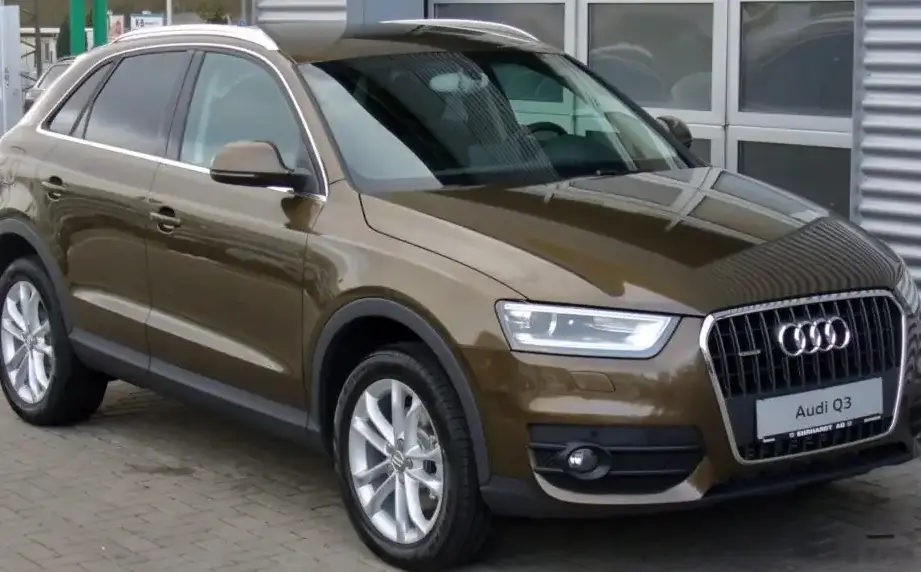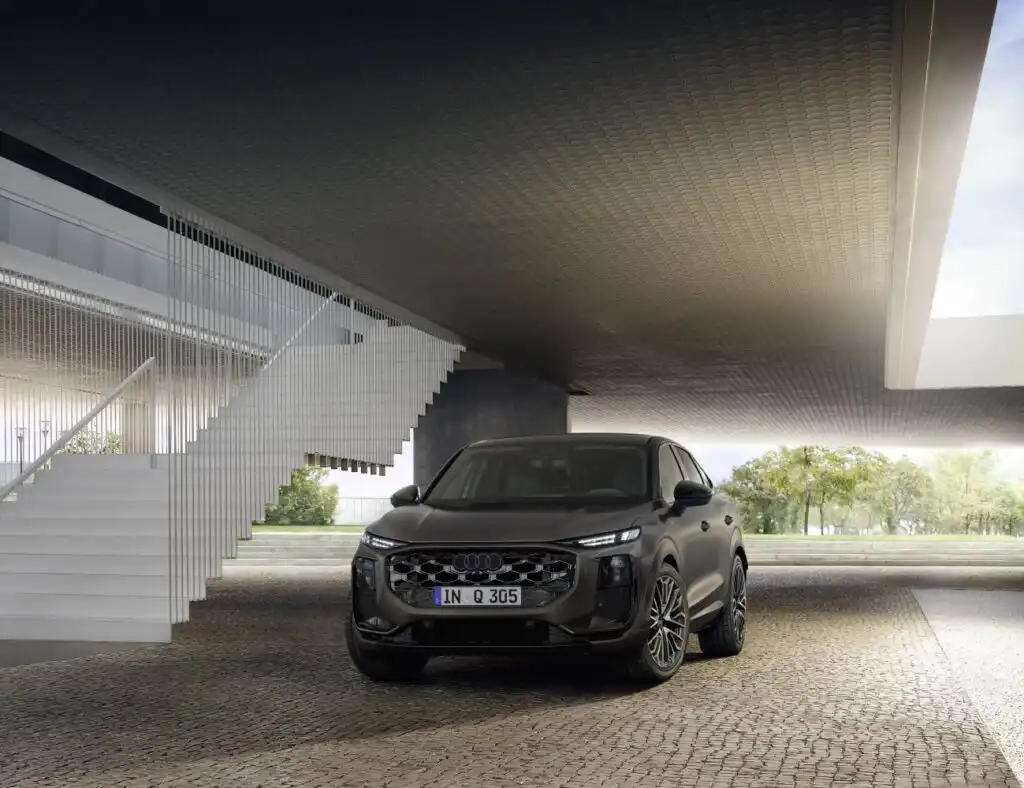
The Audi Q3 III Sportback 2.0 TFSI quattro S tronic, launched in August 2025, represents a compelling blend of style, performance, and technology within the Audi Q3 lineup. This variant, built on the Audi Group’s modular transverse matrix (MQB) platform – specifically the FJ generation – caters to buyers seeking a more dynamically styled compact SUV with all-wheel drive capability and a responsive turbocharged engine. Positioned as a mid-range offering, it bridges the gap between the entry-level Q3 variants and the higher-performance SQ3 models. The Sportback designation denotes its coupe-like sloping roofline, differentiating it from the more traditionally shaped Q3 SUV.
Technical Specifications
| Brand | Audi |
| Model | Q3 |
| Generation | Q3 III Sportback (FJ) |
| Type (Engine) | 2.0 TFSI (204 Hp) quattro S tronic |
| Start of production | August, 2025 |
| Powertrain Architecture | Internal Combustion engine |
| Body type | Coupe, SUV |
| Seats | 5 |
| Doors | 5 |
| Combined fuel consumption (WLTP) | 7.8-8.5 l/100 km (30.2 – 27.7 US mpg, 36.2 – 33.2 UK mpg, 12.8 – 11.8 km/l) |
| CO2 emissions (WLTP) | 176-193 g/km |
| Fuel Type | Petrol (Gasoline) |
| Acceleration 0 – 100 km/h | 7.1 sec |
| Acceleration 0 – 62 mph | 7.1 sec |
| Acceleration 0 – 60 mph | 6.7 sec |
| Maximum speed | 228 km/h (141.67 mph) |
| Emission standard | Euro 6e |
| Weight-to-power ratio | 8.1 kg/Hp, 122.9 Hp/tonne |
| Weight-to-torque ratio | 5.2 kg/Nm, 192.8 Nm/tonne |
| Power | 204 Hp @ 4500-6000 rpm |
| Power per litre | 102.8 Hp/l |
| Torque | 320 Nm @ 1500-4400 rpm (236.02 lb.-ft. @ 1500-4400 rpm) |
| Engine layout | Front, Transverse |
| Engine displacement | 1984 cm3 (121.07 cu. in.) |
| Number of cylinders | 4 |
| Engine configuration | Inline |
| Cylinder Bore | 82.5 mm (3.25 in.) |
| Piston Stroke | 92.8 mm (3.65 in.) |
| Compression ratio | 12.2:1 |
| Number of valves per cylinder | 4 |
| Fuel injection system | Direct injection |
| Engine aspiration | Turbocharger, Intercooler |
| Valvetrain | DOHC |
| Engine oil capacity | 5.7 l (6.02 US qt | 5.02 UK qt) |
| Coolant | 9.2 l (9.72 US qt | 8.09 UK qt) |
| Engine systems | Start & Stop System, Particulate filter |
| Kerb Weight | 1660 kg (3659.67 lbs.) |
| Max. weight | 2260 kg (4982.45 lbs.) |
| Max load | 600 kg (1322.77 lbs.) |
| Trunk (boot) space – minimum | 488 l (17.23 cu. ft.) |
| Trunk (boot) space – maximum | 1289 l (45.52 cu. ft.) |
| Fuel tank capacity | 60 l (15.85 US gal | 13.2 UK gal) |
| Max. roof load | 75 kg (165.35 lbs.) |
| Permitted trailer load with brakes (8%) | 2000 kg (4409.25 lbs.) |
| Permitted trailer load with brakes (12%) | 2000 kg (4409.25 lbs.) |
| Permitted trailer load without brakes | 750 kg (1653.47 lbs.) |
| Permitted towbar download | 90 kg (198.42 lbs.) |
| Length | 4531 mm (178.39 in.) |
| Width | 1859 mm (73.19 in.) |
| Width including mirrors | 2087 mm (82.17 in.) |
| Height | 1559 mm (61.38 in.) |
| Wheelbase | 2681 mm (105.55 in.) |
| Front track | 1588 mm (62.52 in.) |
| Rear (Back) track | 1581 mm (62.24 in.) |
| Front overhang | 940 mm (37.01 in.) |
| Rear overhang | 910 mm (35.83 in.) |
| Drag coefficient (Cd) | 0.33 |
| Minimum turning circle (turning diameter) | 11.8 m (38.71 ft.) |
| Approach angle | 17° |
| Departure angle | 25° |
| Drivetrain Architecture | The Internal combustion engine (ICE) drives the front wheels permanently, and the rear wheels are driven through an electrically or mechanically operated clutch if necessary. |
| Drive wheel | All wheel drive (4×4) |
| Number of gears and type of gearbox | 7 gears, automatic transmission S tronic |
| Front suspension | Independent, type McPherson with coil spring and anti-roll bar |
| Rear suspension | Independent multi-link spring suspension with stabilizer |
| Front brakes | Ventilated discs |
| Assisting systems | ABS (Anti-lock braking system) |
| Steering type | Steering rack and pinion |
| Power steering | Electric Steering |
| Tires size | 235/55 R8 |
| Wheel rims size | 8J x 18 |
Powertrain & Engine Architecture
At the heart of the Q3 Sportback 2.0 TFSI quattro lies the EA888 1.984-liter inline-four cylinder gasoline engine. This engine, a staple in the Volkswagen Group’s portfolio, utilizes direct fuel injection and a single turbocharger with an intercooler to deliver a balance of power and efficiency. The engine code is typically associated with variations of the EA888 family. The 204 horsepower output is achieved between 4,500 and 6,000 rpm, while the 320 Nm (236 lb-ft) of torque is readily available from 1,500 to 4,400 rpm. This broad torque curve contributes to strong mid-range acceleration. The engine features a dual overhead camshaft (DOHC) valvetrain with four valves per cylinder. The S tronic seven-speed dual-clutch transmission (DCT) is standard, providing quick and seamless gear changes. This transmission is known for its efficiency and responsiveness, contributing to the vehicle’s overall performance. The quattro all-wheel-drive system employs a multi-plate clutch to distribute power between the front and rear axles as needed, enhancing traction and stability, particularly in adverse weather conditions.
Driving Characteristics
The 2.0 TFSI engine paired with the S tronic transmission delivers a refined and engaging driving experience. Acceleration from 0 to 60 mph takes approximately 6.7 seconds, making it adequately quick for everyday driving and highway merging. The S tronic transmission’s quick shifts contribute to a feeling of responsiveness. While not as overtly sporty as the SQ3, the 2.0 TFSI offers ample power for most driving situations. The quattro all-wheel-drive system provides confident handling and stability, especially on slippery surfaces. The gear ratios are tuned for a balance of acceleration and fuel efficiency, with taller gears for relaxed cruising on the highway. Compared to lower-powered Q3 variants, the 2.0 TFSI offers a noticeable performance upgrade, while remaining more accessible and fuel-efficient than the higher-performance SQ3.
Equipment & Trim Levels
The Q3 Sportback 2.0 TFSI quattro typically comes well-equipped as standard. Features often include Audi’s Virtual Cockpit digital instrument cluster, a touchscreen infotainment system with Apple CarPlay and Android Auto compatibility, automatic climate control, and a suite of driver-assistance systems such as lane departure warning and forward collision warning. Interior upholstery is typically a combination of cloth and leatherette, with optional upgrades to full leather available. Exterior features include LED headlights, alloy wheels (typically 18-inch), and a power tailgate. Optional extras can include a panoramic sunroof, a premium sound system, and adaptive cruise control.
Chassis & Braking
The Q3 Sportback utilizes an independent suspension setup, with McPherson struts at the front and a multi-link suspension at the rear. This configuration provides a comfortable ride while maintaining good handling characteristics. Stabilizer bars are fitted to both axles to reduce body roll during cornering. The braking system consists of ventilated disc brakes at the front and solid discs at the rear. Anti-lock braking system (ABS) and electronic stability control (ESC) are standard safety features.
Market Reception & Comparison
The Audi Q3 Sportback 2.0 TFSI quattro was generally well-received by automotive critics. It was praised for its stylish design, refined interior, and responsive powertrain. Fuel economy, averaging between 27.7 and 30.2 US mpg, was considered competitive for its class. Compared to other trims in the Q3 lineup, the 2.0 TFSI quattro offered a compelling balance of performance and efficiency. It provided a noticeable upgrade in power and handling compared to the lower-powered variants, while remaining more affordable and fuel-efficient than the SQ3. Reliability reports have been generally positive, with the EA888 engine proving to be a durable and dependable unit.
Legacy
The Audi Q3 III Sportback 2.0 TFSI quattro S tronic represents a significant step forward in the compact luxury SUV segment. Its combination of stylish design, advanced technology, and responsive performance has made it a popular choice among buyers. The EA888 engine, with its proven track record, is expected to remain a reliable powertrain for years to come. On the used car market, these models are holding their value well, reflecting their desirability and build quality. As Audi continues to evolve its lineup, the Q3 Sportback 2.0 TFSI quattro will likely be remembered as a well-rounded and enjoyable vehicle that offered a compelling blend of practicality and driving pleasure.