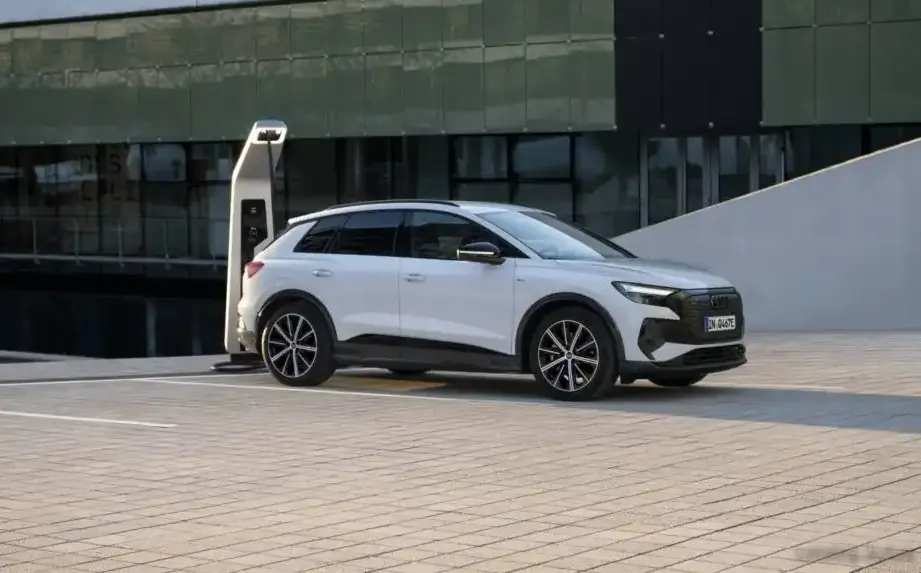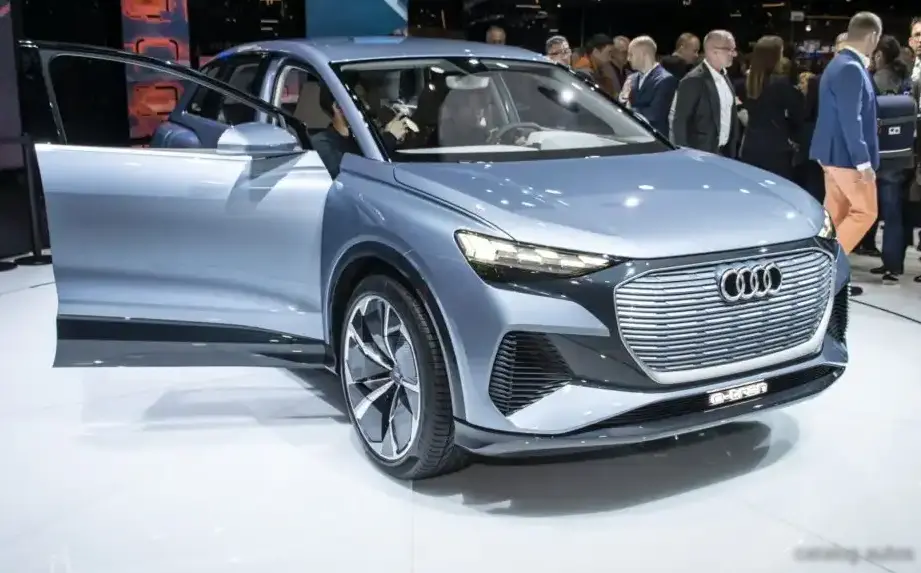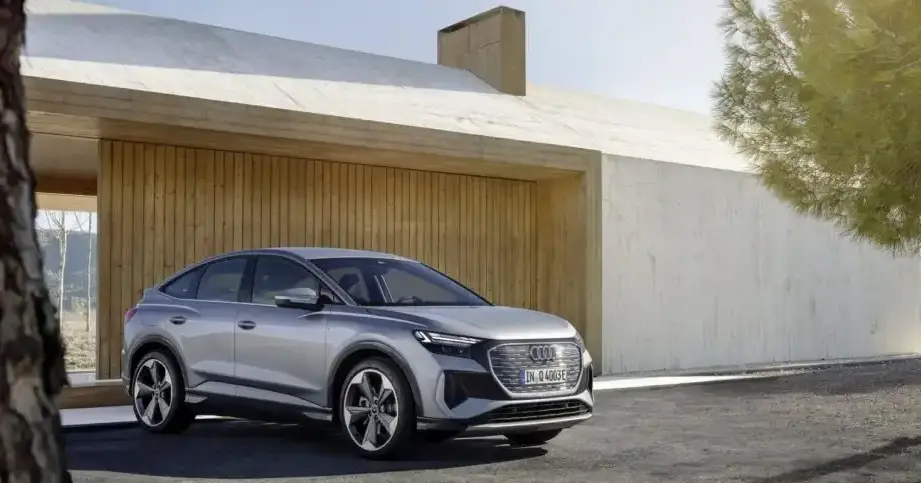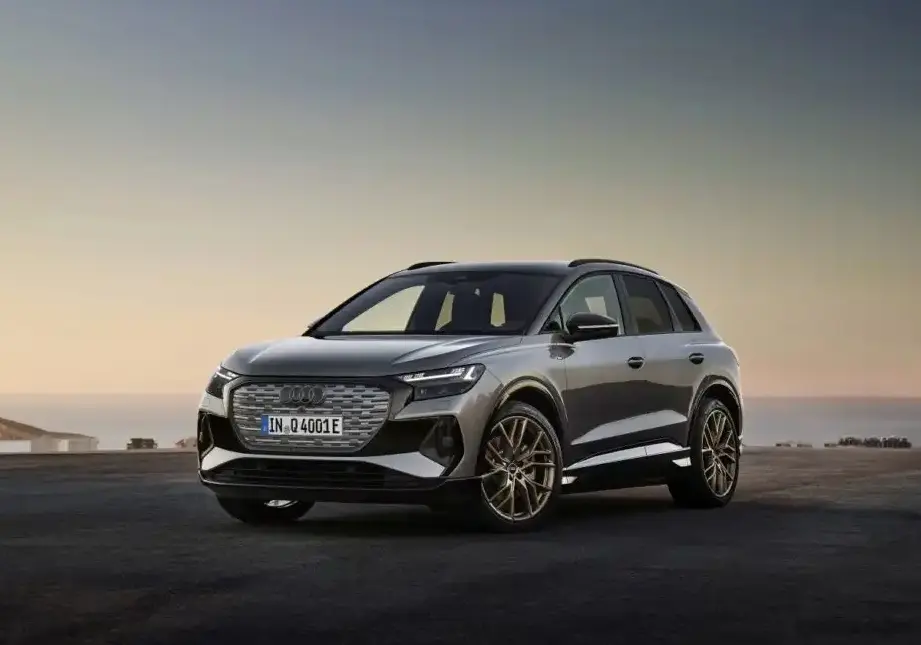
The Audi Q4 e-tron 35, equipped with a 55 kWh battery and producing 170 horsepower, represents the entry point into Audi’s all-electric Q4 e-tron lineup. Introduced in March 2021 and continuing through the 2022 model year, this variant played a crucial role in making electric mobility more accessible to a wider audience. Positioned as the base model, it offered a balance of range, performance, and affordability within the Q4 e-tron family, which also included higher-output and long-range versions like the 40 and 50 e-tron models. The Q4 e-tron itself is built on the Volkswagen Group’s MEB platform, shared with models like the Volkswagen ID.4 and Skoda Enyaq iV.
Technical Specifications
| Brand | Audi |
| Model | Q4 e-tron |
| Generation | Q4 e-tron |
| Type (Engine) | 35 55 kWh (170 Hp) |
| Start of production | March, 2021 |
| End of production | October, 2022 |
| Powertrain Architecture | BEV (Electric Vehicle) |
| Body type | SUV |
| Seats | 5 |
| Doors | 5 |
| Fuel Type | Electricity |
| Acceleration 0 – 100 km/h | 9 sec |
| Acceleration 0 – 62 mph | 9 sec |
| Acceleration 0 – 60 mph | 8.6 sec |
| Maximum speed | 160 km/h (99.42 mph) |
| Weight-to-power ratio | 11.1 kg/Hp, 89.9 Hp/tonne |
| Weight-to-torque ratio | 6.1 kg/Nm, 164 Nm/tonne |
| Gross battery capacity | 55 kWh |
| Net (usable) battery capacity | 52 kWh |
| Battery voltage | 352 V |
| Battery technology | Lithium-ion (Li-Ion) |
| Battery weight | 350 kg (771.62 lbs) |
| Battery location | Below the floor |
| All-electric range (WLTP) | 308-341 km (191.38 – 211.89 mi) |
| Average Energy consumption (WLTP) | 17-19.1 kWh/100 km (27.36 – 30.74 kWh/100 mi) |
| Average Energy consumption (NEDC, WLTP equivalent) | 15.8-16.7 kWh/100 km (25.43 – 26.88 kWh/100 mi) |
| Electric motor power | 170 Hp |
| Electric motor Torque | 310 Nm (228.64 lb.-ft.) |
| Electric motor model/code | EBJ |
| Maximum revolutions of the electric motor | 16000 rpm |
| Electric motor location | Rear axle, Transverse |
| Electric motor type | Synchronous |
| System power | 170 Hp |
| System torque | 310 Nm (228.64 lb.-ft.) |
| Kerb Weight | 1890 kg (4166.74 lbs) |
| Max. weight | 2475 kg (5456.44 lbs) |
| Max load | 585 kg (1289.7 lbs) |
| Trunk (boot) space – minimum | 520 l (18.36 cu. ft.) |
| Trunk (boot) space – maximum | 1490 l (52.62 cu. ft.) |
| Max. roof load | 75 kg (165.35 lbs) |
| Permitted trailer load with brakes (8%) | 1000 kg (2204.62 lbs) |
| Permitted trailer load with brakes (12%) | 1000 kg (2204.62 lbs) |
| Permitted trailer load without brakes | 750 kg (1653.47 lbs) |
| Permitted towbar download | 75 kg (165.35 lbs) |
| Length | 4588 mm (180.63 in) |
| Width | 1865 mm (73.43 in) |
| Width including mirrors | 2108 mm (82.99 in) |
| Height | 1632 mm (64.25 in) |
| Wheelbase | 2764 mm (108.82 in) |
| Front track | 1587 mm (62.48 in) |
| Rear (Back) track | 1565 mm (61.61 in) |
| Front overhang | 854 mm (33.62 in) |
| Rear overhang | 970 mm (38.19 in) |
| Ride height (ground clearance) | 180 mm (7.09 in) |
| Drag coefficient (Cd) | 0.28 |
| Minimum turning circle (turning diameter) | 10.2 m (33.46 ft) |
| Front brakes | Ventilated discs, 330 mm |
| Rear brakes | Drum |
| Number of gears and type of gearbox | 1 gears, automatic transmission |
Powertrain & Engine Architecture
The Q4 e-tron 35 utilizes a single electric motor mounted on the rear axle. This motor, designated EBJ, is a synchronous motor producing 170 horsepower and 310 Nm (228.64 lb-ft) of torque. The motor’s maximum rotational speed is 16,000 rpm. Power is delivered through a single-speed automatic transmission to the rear wheels, making it a rear-wheel-drive vehicle. The 55 kWh battery pack, composed of lithium-ion cells, is located under the floor of the vehicle, contributing to a low center of gravity and improved handling. The battery operates at a voltage of 352V. The car supports DC fast charging, allowing for a significant recharge in a relatively short period, though charging times vary depending on the charging station’s capabilities.
Driving Characteristics
The Q4 e-tron 35 offers a comfortable and refined driving experience, prioritizing efficiency and smoothness over outright performance. Acceleration from 0-60 mph takes approximately 8.6 seconds, and 0-100 km/h in 9 seconds, which is adequate for everyday driving but noticeably slower than the dual-motor Q4 e-tron 50. The single-speed transmission provides seamless acceleration, and the instant torque characteristic of electric motors delivers responsive power delivery. Compared to the higher-output variants, the 35 feels less eager to accelerate, but its lighter weight (1890 kg / 4166.74 lbs) helps to mitigate some of the performance deficit. The rear-wheel-drive configuration contributes to a balanced feel, although it may exhibit some understeer when pushed hard in corners.
Equipment & Trim Levels
The Q4 e-tron 35 typically came standard with features such as Audi’s virtual cockpit, a 10.1-inch touchscreen infotainment system, and a suite of driver-assistance systems including lane departure warning and automatic emergency braking. Interior upholstery was generally cloth, with leather options available as upgrades. Trim levels varied by market, but common options included upgraded wheel designs, panoramic sunroofs, and premium audio systems. The base trim focused on providing essential features, while higher trims added luxury and convenience items.
Chassis & Braking
The Q4 e-tron 35 features an independent suspension system, with McPherson struts at the front and a multi-link setup at the rear. This configuration provides a comfortable ride and good handling characteristics. Front brakes are ventilated discs measuring 330mm, while the rear brakes are drum brakes. This combination is appropriate for the vehicle’s weight and performance level. The electric steering system provides precise and responsive steering feel. Standard tires were typically 235/55 R19 or 235/50 R20, with larger wheel and tire options available on higher trims.
Market Reception & Comparison
The Audi Q4 e-tron 35 was generally well-received by critics as an accessible entry point into the premium electric SUV segment. Its range of 308-341 km (191.38 – 211.89 mi) on the WLTP cycle was considered adequate for many drivers, and its energy consumption of 17-19.1 kWh/100 km (27.36 – 30.74 kWh/100 mi) was competitive. Compared to the Q4 e-tron 40, the 35 offered a lower price point but sacrificed some performance and range. The Q4 e-tron 35 also competed with other compact electric SUVs such as the Tesla Model Y and the Volvo XC40 Recharge, offering a more traditional Audi interior and a comfortable ride.
Legacy
The Q4 e-tron 35 has established itself as a reliable and practical electric SUV in the used car market. The electric powertrain is known for its durability, and the battery pack is generally expected to maintain a significant portion of its capacity over time. While the 55 kWh battery offers a shorter range than larger battery packs, it remains suitable for urban commuting and shorter trips. The Q4 e-tron 35 represents a significant step forward in Audi’s electrification strategy, and its affordability has helped to broaden the appeal of electric vehicles to a wider range of consumers.