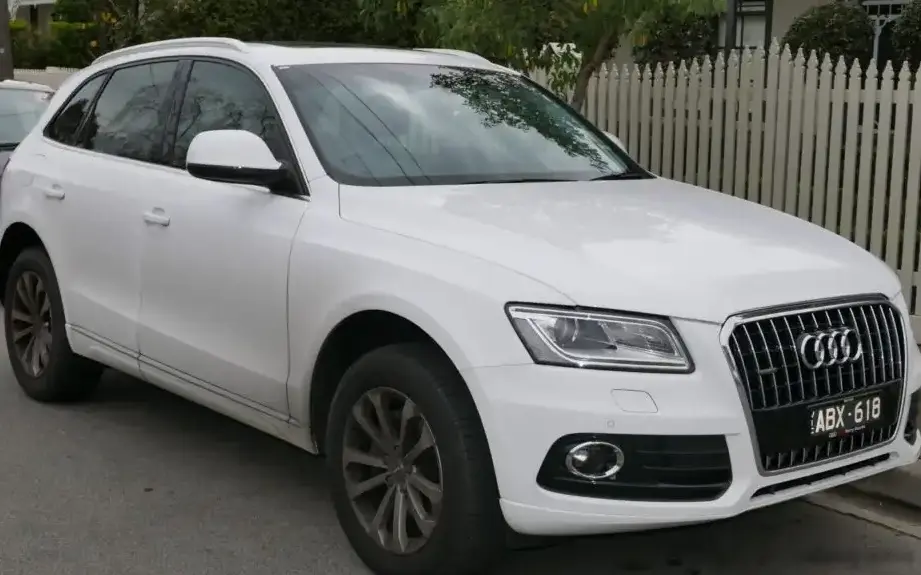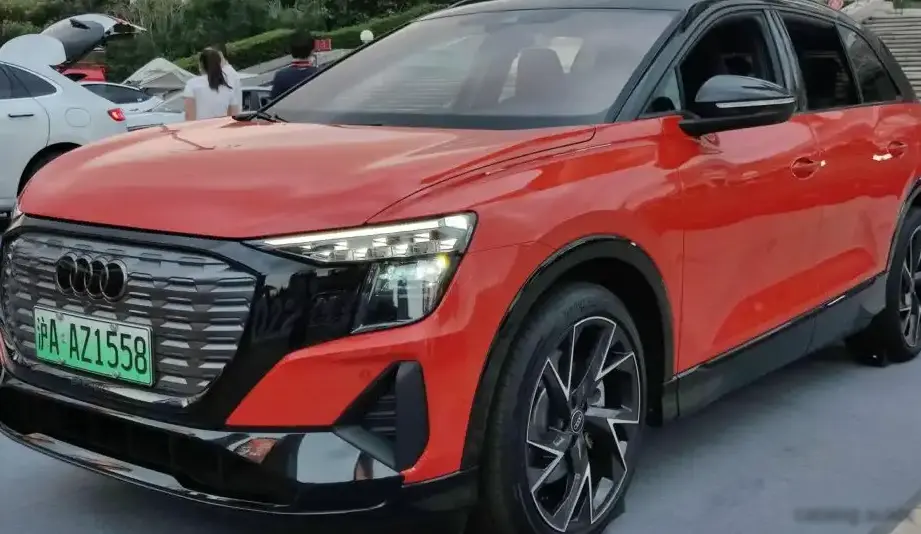
The Audi Q5 e-tron 40 83.4 kWh is an all-electric, mid-size SUV introduced by Audi in February 2022. Positioned as an entry-level variant within the Q5 e-tron lineup, it represents Audi’s commitment to expanding its electric vehicle offerings, particularly in markets where a balance of range, practicality, and price is desired. Built on the modular electric drive platform (MEB) shared with other Volkswagen Group vehicles, the Q5 e-tron aims to provide a premium electric SUV experience with a focus on comfort and technology. It serves as a direct competitor to other electric SUVs in the premium segment, such as the Tesla Model Y, BMW iX3, and Mercedes-Benz EQC.
Technical Specifications
| Brand | Audi |
| Model | Q5 e-tron |
| Generation | Q5 e-tron |
| Type (Engine) | 40 83.4 kWh (204 Hp) |
| Start of production | February, 2022 |
| Powertrain Architecture | BEV (Electric Vehicle) |
| Body type | SUV |
| Seats | 7 |
| Doors | 5 |
| Fuel Type | Electricity |
| Acceleration 0 – 100 km/h | 9.3 sec |
| Acceleration 0 – 62 mph | 9.3 sec |
| Acceleration 0 – 60 mph | 8.8 sec |
| Maximum speed | 160 km/h (99.42 mph) |
| Weight-to-power ratio | 11.4 kg/Hp, 87.7 Hp/tonne |
| Weight-to-torque ratio | 7.5 kg/Nm, 133.3 Nm/tonne |
| Gross battery capacity | 83.4 kWh |
| Battery technology | Lithium nickel manganese cobalt oxides (Li-NMC) |
| Battery location | Below the floor |
| All-electric range (CLTC) | 560 km (347.97 mi) |
| Average Energy consumption (CLTC) | 15.9 kWh/100 km (25.59 kWh/100 mi) |
| MPGe | 132 |
| km/kWh | 6.3 |
| mi/kWh | 3.9 |
| Electric motor power | 204 Hp |
| Electric motor Torque | 310 Nm (228.64 lb.-ft.) |
| Electric motor location | Rear axle, Transverse |
| Electric motor type | Synchronous |
| System power | 204 Hp |
| System torque | 310 Nm (228.64 lb.-ft.) |
| Kerb Weight | 2325 kg (5125.75 lbs.) |
| Max. weight | 2885 kg (6360.34 lbs.) |
| Max load | 560 kg (1234.59 lbs.) |
| Trunk (boot) space – maximum | 1776 l (62.72 cu. ft.) |
| Length | 4876 mm (191.97 in.) |
| Width | 1860 mm (73.23 in.) |
| Height | 1675 mm (65.94 in.) |
| Wheelbase | 2965 mm (116.73 in.) |
| Front track | 1587 mm (62.48 in.) |
| Rear (Back) track | 1563 mm (61.54 in.) |
| Approach angle | 17° |
| Departure angle | 20° |
| Drivetrain Architecture | One electric motor drives the rear wheels. |
| Drive wheel | Rear wheel drive |
| Number of gears and type of gearbox | 1 gears, automatic transmission |
| Front suspension | Independent, type McPherson with coil spring and anti-roll bar |
| Rear suspension | Independent multi-link spring suspension with stabilizer |
| Front brakes | Ventilated discs |
| Rear brakes | Drum |
| Assisting systems | ABS (Anti-lock braking system) |
| Steering type | Steering rack and pinion |
| Power steering | Electric Steering |
| Front wheel tires | 235/55 R19; 235/50 R20; 235/45 R21 |
| Rear wheel tires | 255/50 R19; 265/45 R20; 265/40 R21 |
| Wheel rims size | 19; 20; 21 |
Powertrain & Engine Architecture
The Q5 e-tron 40 utilizes a single, rear-mounted synchronous electric motor producing 204 horsepower and 310 Nm (228.64 lb.-ft.) of torque. This motor is powered by an 83.4 kWh lithium-ion battery pack composed of lithium nickel manganese cobalt oxide (Li-NMC) cells. The battery is positioned under the vehicle floor to optimize space and lower the center of gravity. The vehicle employs a single-speed automatic transmission, typical of most electric vehicles, delivering seamless power delivery. The charging system supports both AC and DC fast charging, allowing for convenient charging at home or on the go. The battery management system (BMS) is crucial for maintaining battery health, optimizing performance, and ensuring safety.
Driving Characteristics
The rear-wheel-drive configuration of the Q5 e-tron 40 provides a comfortable and predictable driving experience. Acceleration from 0 to 60 mph takes approximately 8.8 seconds, which is adequate for everyday driving but not particularly sporty. The single-speed transmission offers instant torque, providing brisk acceleration at lower speeds. Compared to higher-output Q5 e-tron variants (like the 50 quattro), the 40 offers a more relaxed driving experience, prioritizing efficiency over outright performance. The single gear ratio is optimized for a balance of acceleration and highway cruising. The regenerative braking system allows for one-pedal driving in certain conditions, enhancing efficiency and convenience.
Equipment & Trim Levels
The Q5 e-tron 40 typically comes standard with a comprehensive suite of features, including Audi’s virtual cockpit digital instrument cluster, a large touchscreen infotainment system with Apple CarPlay and Android Auto compatibility, and a premium sound system. Standard safety features include automatic emergency braking, lane departure warning, and adaptive cruise control. Interior upholstery is typically a combination of leatherette and cloth, with options for full leather upgrades. Available optional extras include a panoramic sunroof, heated and ventilated front seats, and a head-up display. Trim levels often vary by market, but generally offer increasing levels of luxury and technology.
Chassis & Braking
The Q5 e-tron 40 features an independent suspension system with McPherson struts at the front and a multi-link setup at the rear. This configuration provides a comfortable ride and good handling characteristics. The vehicle’s relatively high weight (2325 kg / 5125.75 lbs.) necessitates robust suspension components. Front brakes are ventilated discs, while rear brakes are drums, a cost-saving measure for the entry-level variant. Anti-lock braking system (ABS) and electronic stability control (ESC) are standard safety features. The steering system is an electric power-assisted rack and pinion, providing precise and responsive steering feel.
Market Reception & Comparison
The Audi Q5 e-tron 40 has been generally well-received by critics for its comfortable ride, spacious interior, and advanced technology. However, some reviewers have noted that its acceleration is not as brisk as some competitors, and its range is slightly lower than some other electric SUVs in its class. Fuel economy, measured in terms of kWh per 100 km, is competitive with other electric vehicles. Compared to the higher-output Q5 e-tron variants, the 40 offers a more affordable entry point into the Audi electric SUV lineup, making it attractive to buyers who prioritize value and efficiency. Reliability reports are still emerging, but early indications suggest that the Q5 e-tron is a well-built and dependable vehicle.
Legacy
The Q5 e-tron 40 represents a significant step in Audi’s transition to electric mobility. While it’s still relatively early in its lifecycle, the powertrain is expected to prove durable and reliable, benefiting from Audi’s extensive experience in electric vehicle technology. As the used car market matures, the Q5 e-tron 40 is likely to become a popular choice for buyers seeking a premium, electric SUV with a good balance of features, performance, and value. The long-term availability of battery replacement and maintenance services will be crucial for maintaining the vehicle’s value and appeal in the years to come.