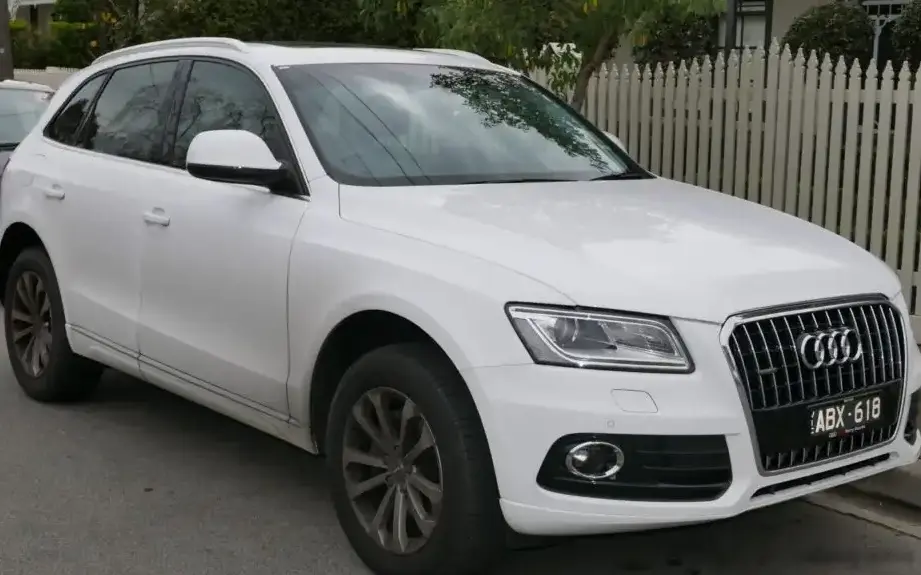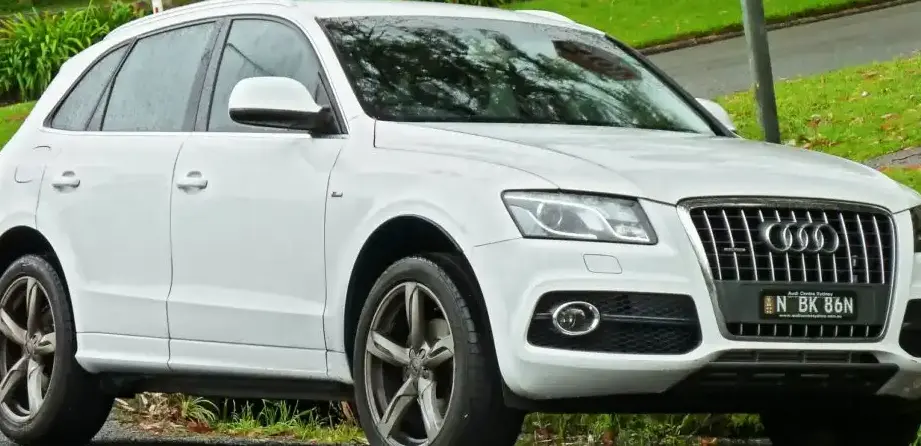
The Audi Q5 I (8R) 2.0 TFSI quattro, produced from August 2009 to September 2012, represented a key entry point into Audi’s popular compact luxury SUV range. Positioned as a mid-range offering within the first-generation Q5 lineup (8R chassis), this variant combined a turbocharged 2.0-liter four-cylinder engine with Audi’s renowned quattro all-wheel-drive system and a six-speed automatic transmission. It aimed to balance performance, fuel efficiency, and practicality for a broad customer base in both European and North American markets. The Q5 itself was Audi’s first dedicated compact SUV, designed to compete with established rivals like the BMW X3 and Mercedes-Benz GLK.
Technical Specifications
| Brand | Audi |
| Model | Q5 |
| Generation | Q5 I (8R) |
| Type (Engine) | 2.0 TFSI (180 Hp) quattro |
| Start of production | August, 2009 |
| End of production | September, 2012 |
| Powertrain Architecture | Internal Combustion engine |
| Body type | SUV |
| Seats | 5 |
| Doors | 5 |
| Fuel consumption (urban) | 10.8 l/100 km (21.8 US mpg, 26.2 UK mpg, 9.3 km/l) |
| Fuel consumption (extra urban) | 6.9 l/100 km (34.1 US mpg, 40.9 UK mpg, 14.5 km/l) |
| Fuel consumption (combined) | 8.4 l/100 km (28 US mpg, 33.6 UK mpg, 11.9 km/l) |
| CO2 emissions | 195 g/km |
| Fuel Type | Petrol (Gasoline) |
| Acceleration 0 – 100 km/h | 8.5 sec |
| Acceleration 0 – 62 mph | 8.5 sec |
| Acceleration 0 – 60 mph | 8.1 sec |
| Maximum speed | 210 km/h (130.49 mph) |
| Emission standard | Euro 5 |
| Weight-to-power ratio | 9.5 kg/Hp, 105.3 Hp/tonne |
| Weight-to-torque ratio | 5.3 kg/Nm, 187.1 Nm/tonne |
| Power | 180 Hp @ 4000-6000 rpm |
| Power per litre | 90.7 Hp/l |
| Torque | 320 Nm @ 1500-3900 rpm (236.02 lb.-ft. @ 1500-3900 rpm) |
| Engine layout | Front, Longitudinal |
| Engine Model/Code | CDNB |
| Engine displacement | 1984 cm3 (121.07 cu. in.) |
| Number of cylinders | 4 |
| Engine configuration | Inline |
| Cylinder Bore | 82.5 mm (3.25 in.) |
| Piston Stroke | 92.8 mm (3.65 in.) |
| Compression ratio | 9.6:1 |
| Number of valves per cylinder | 4 |
| Fuel injection system | Direct injection |
| Engine aspiration | Turbocharger, Intercooler |
| Valvetrain | DOHC |
| Engine oil capacity | 4.6 l (4.86 US qt | 4.05 UK qt) |
| Coolant | 7.8 l (8.24 US qt | 6.86 UK qt) |
| Kerb Weight | 1710 kg (3769.9 lbs.) |
| Max. weight | 2320 kg (5114.72 lbs.) |
| Max load | 610 kg (1344.82 lbs.) |
| Trunk (boot) space – minimum | 540 l (19.07 cu. ft.) |
| Trunk (boot) space – maximum | 1560 l (55.09 cu. ft.) |
| Fuel tank capacity | 75 l (19.81 US gal | 16.5 UK gal) |
| Max. roof load | 100 kg (220.46 lbs.) |
| Permitted trailer load with brakes (8%) | 2200 kg (4850.17 lbs.) |
| Permitted trailer load with brakes (12%) | 2000 kg (4409.25 lbs.) |
| Permitted trailer load without brakes | 750 kg (1653.47 lbs.) |
| Permitted towbar download | 80 kg (176.37 lbs.) |
| Length | 4629 mm (182.24 in.) |
| Width | 1880 mm (74.02 in.) |
| Width including mirrors | 2088 mm (82.2 in.) |
| Height | 1653 mm (65.08 in.) |
| Wheelbase | 2807 mm (110.51 in.) |
| Front track | 1617 mm (63.66 in.) |
| Rear (Back) track | 1613 mm (63.5 in.) |
| Front overhang | 895 mm (35.24 in.) |
| Rear overhang | 927 mm (36.5 in.) |
| Ride height (ground clearance) | 200 mm (7.87 in.) |
| Drag coefficient (Cd) | 0.33 |
| Minimum turning circle (turning diameter) | 11.6 m (38.06 ft.) |
| Drive wheel | All wheel drive (4×4) |
| Number of gears and type of gearbox | 6 gears, automatic transmission |
| Front suspension | Independent multi-link suspension |
| Rear suspension | Independent on trapezoidal lever |
| Front brakes | Ventilated discs |
| Rear brakes | Disc |
| Assisting systems | ABS (Anti-lock braking system) |
| Steering type | Steering rack and pinion |
| Tires size | 235/60 R18 |
| Wheel rims size | 8.0J x 18 |
Powertrain & Engine Architecture
The heart of the Q5 2.0 TFSI quattro is the CDNB engine code, a 1.984-liter (121.07 cubic inches) inline-four cylinder gasoline engine. This engine utilizes direct fuel injection (FSI – Fuel Stratified Injection) and a single turbocharger with an intercooler to deliver a balance of power and efficiency. The direct injection system allows for precise fuel delivery, improving combustion efficiency and reducing emissions. The turbocharger boosts power output, providing 180 horsepower at 4000-6000 rpm and 320 Nm (236 lb-ft) of torque between 1500-3900 rpm. The engine features a dual overhead camshaft (DOHC) valvetrain with four valves per cylinder. The six-speed automatic transmission, known as the 09M, was a common unit in the Volkswagen Group at the time. It offered smooth shifts and a torque converter for enhanced drivability. The quattro all-wheel-drive system employs a Torsen center differential, distributing torque between the front and rear axles as needed, enhancing traction and stability.
Driving Characteristics
The 180 hp 2.0 TFSI quattro offered a comfortable and capable driving experience. Acceleration from 0-60 mph took approximately 8.1 seconds, making it adequately quick for everyday driving. While not as sporty as the higher-output 211 hp version of the 2.0 TFSI or the Q5’s V6 options, the 180 hp variant provided sufficient power for highway cruising and overtaking. The automatic transmission, while smooth, could sometimes feel hesitant during quick downshifts. The quattro system provided excellent grip in all weather conditions, inspiring confidence on slippery surfaces. The gear ratios were tuned for fuel efficiency and relaxed cruising, rather than outright performance. Compared to the manual transmission version, the automatic offered greater convenience but slightly reduced responsiveness.
Equipment & Trim Levels
The Q5 2.0 TFSI quattro typically came standard with features such as leather upholstery, tri-zone automatic climate control, a premium audio system, and power-adjustable front seats. Standard safety features included ABS, electronic stability control, and multiple airbags. Optional extras included a panoramic sunroof, navigation system, parking sensors, and upgraded alloy wheels. Trim levels varied by market, but generally, this engine/transmission combination represented a mid-range offering, positioned above the base models but below the more luxurious trims with larger engines and more extensive features.
Chassis & Braking
The Q5’s chassis featured an independent multi-link suspension at the front and an independent trapezoidal link suspension at the rear, providing a comfortable ride and good handling characteristics. The suspension was tuned to prioritize comfort over outright sportiness. Braking duties were handled by ventilated discs at the front and solid discs at the rear. The ABS (Anti-lock Braking System) provided enhanced braking performance and stability. Stabilizer bars were fitted to both the front and rear axles to reduce body roll during cornering.
Market Reception & Comparison
The Audi Q5 2.0 TFSI quattro was generally well-received by automotive critics. It was praised for its comfortable ride, spacious interior, and sophisticated all-wheel-drive system. However, some reviewers noted that the 180 hp engine could feel underpowered, especially when fully loaded. Compared to the 211 hp 2.0 TFSI, the 180 hp version offered better fuel economy but less performance. The 3.2-liter V6 Q5 provided significantly more power but came at a higher price and with increased fuel consumption. The Q5’s fuel economy of around 28 US mpg combined was competitive for its class.
Legacy
The CDNB engine, while generally reliable, is known to be susceptible to carbon buildup on the intake valves over time, particularly with frequent short trips. Regular oil changes and the use of high-quality fuel are crucial for maintaining its longevity. The 09M automatic transmission is also relatively robust but requires proper maintenance, including fluid changes, to prevent issues. Today, the Q5 2.0 TFSI quattro remains a popular choice in the used car market, offering a blend of luxury, practicality, and all-weather capability. Its relatively affordable price point and Audi’s reputation for quality make it an attractive option for buyers seeking a compact luxury SUV.