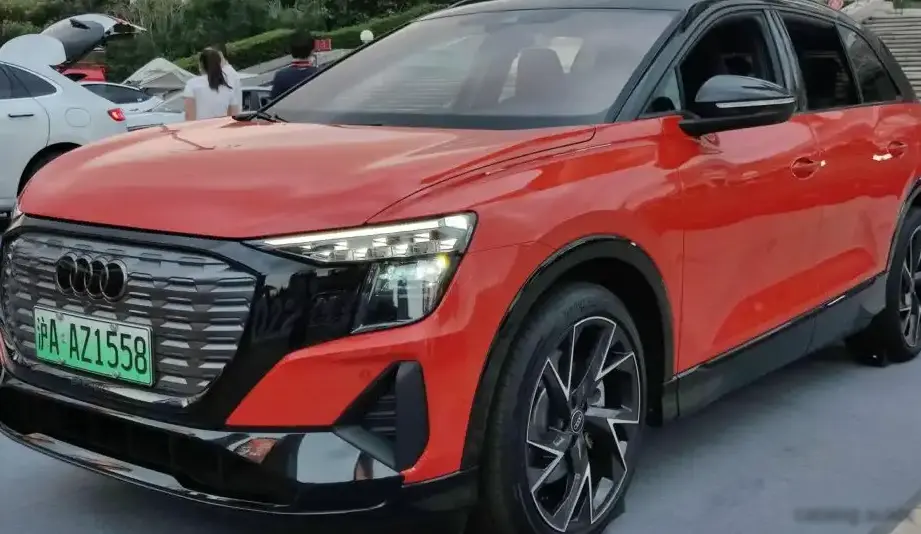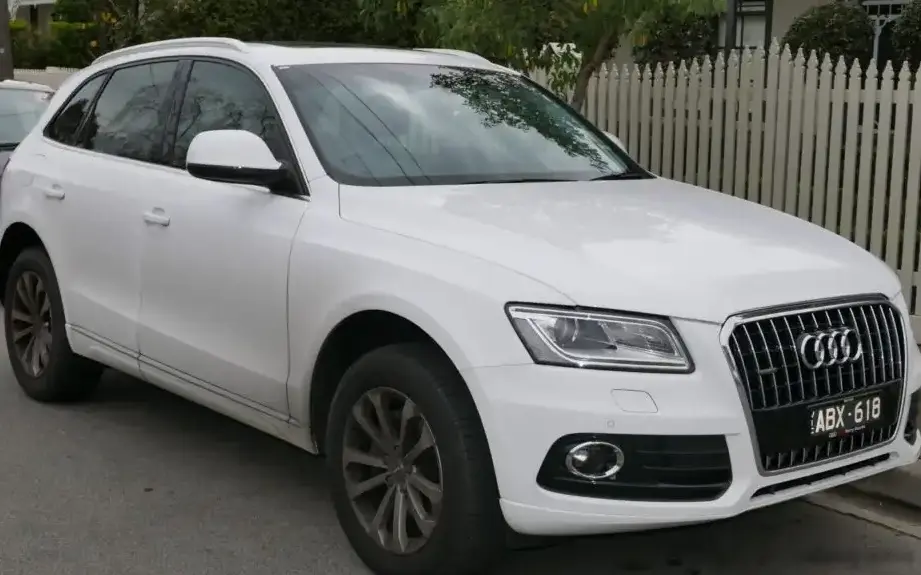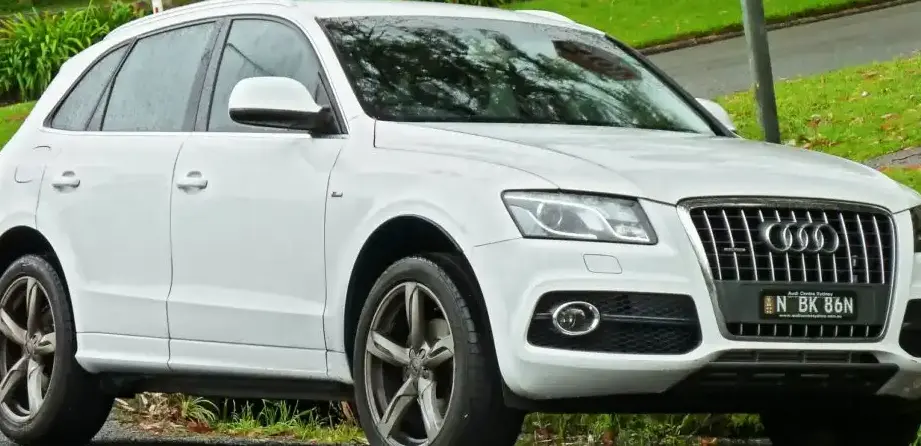
The Audi Q5 I (8R) 2.0 TFSI quattro, produced from May 2008 to December 2009, represents Audi’s entry into the burgeoning luxury compact SUV segment. Positioned as a premium offering, it aimed to blend the practicality of an SUV with the driving dynamics expected of the Audi brand. This particular variant, equipped with the 2.0-liter turbocharged four-cylinder engine producing 211 horsepower and paired with Audi’s S tronic seven-speed dual-clutch automatic transmission, served as a popular mid-range option within the Q5 lineup, appealing to buyers seeking a balance between performance, fuel efficiency, and all-weather capability. It was built on the Volkswagen Group’s PL46 platform, also known as the 8K platform, shared with models like the Volkswagen Tiguan and the SEAT Alhambra.
Technical Specifications
| Brand | Audi |
| Model | Q5 |
| Generation | Q5 I (8R) |
| Type (Engine) | 2.0 TFSI (211 Hp) quattro |
| Start of production | May, 2008 |
| End of production | December, 2009 |
| Powertrain Architecture | Internal Combustion engine |
| Body type | SUV |
| Seats | 5 |
| Doors | 5 |
| Fuel consumption (urban) | 10.4 l/100 km (22.6 US mpg, 27.2 UK mpg, 9.6 km/l) |
| Fuel consumption (extra urban) | 7.3 l/100 km (32.2 US mpg, 38.7 UK mpg, 13.7 km/l) |
| Fuel consumption (combined) | 8.5 l/100 km (27.7 US mpg, 33.2 UK mpg, 11.8 km/l) |
| Fuel Type | Petrol (Gasoline) |
| Acceleration 0 – 100 km/h | 7.6 sec |
| Acceleration 0 – 62 mph | 7.6 sec |
| Acceleration 0 – 60 mph | 7.2 sec |
| Maximum speed | 222 km/h (137.94 mph) |
| Emission standard | Euro 4 |
| Weight-to-power ratio | 8.1 kg/Hp, 123.4 Hp/tonne |
| Weight-to-torque ratio | 4.9 kg/Nm, 204.7 Nm/tonne |
| Power | 211 Hp @ 5500 rpm |
| Power per litre | 106.4 Hp/l |
| Torque | 350 Nm @ 1500-4200 rpm (258.15 lb.-ft. @ 1500-4200 rpm) |
| Engine layout | Front, Longitudinal |
| Engine Model/Code | CDNC, CPMA, CADA, CAEB |
| Engine displacement | 1984 cm3 (121.07 cu. in.) |
| Number of cylinders | 4 |
| Engine configuration | Inline |
| Cylinder Bore | 82.5 mm (3.25 in.) |
| Piston Stroke | 92.8 mm (3.65 in.) |
| Compression ratio | 10.5:1 |
| Number of valves per cylinder | 4 |
| Fuel injection system | Direct injection |
| Engine aspiration | Turbocharger, Intercooler |
| Valvetrain | DOHC |
| Engine oil capacity | 4.6 l (4.86 US qt | 4.05 UK qt) |
| Coolant | 7.8 l (8.24 US qt | 6.86 UK qt) |
| Kerb Weight | 1710 kg (3769.9 lbs.) |
| Max. weight | 2320 kg (5114.72 lbs.) |
| Max load | 610 kg (1344.82 lbs.) |
| Trunk (boot) space – minimum | 540 l (19.07 cu. ft.) |
| Trunk (boot) space – maximum | 1560 l (55.09 cu. ft.) |
| Fuel tank capacity | 75 l (19.81 US gal | 16.5 UK gal) |
| Length | 4629 mm (182.24 in.) |
| Width | 1880 mm (74.02 in.) |
| Width including mirrors | 2088 mm (82.2 in.) |
| Height | 1653 mm (65.08 in.) |
| Wheelbase | 2807 mm (110.51 in.) |
| Front track | 1617 mm (63.66 in.) |
| Rear (Back) track | 1613 mm (63.5 in.) |
| Front overhang | 895 mm (35.24 in.) |
| Rear overhang | 927 mm (36.5 in.) |
| Ride height (ground clearance) | 200 mm (7.87 in.) |
| Drag coefficient (Cd) | 0.33 |
| Minimum turning circle (turning diameter) | 11.6 m (38.06 ft.) |
| Drive wheel | All wheel drive (4×4) |
| Number of gears and type of gearbox | 7 gears, automatic transmission S tronic |
| Front suspension | Independent multi-link suspension |
| Rear suspension | Independent on trapezoidal lever |
| Front brakes | Ventilated discs |
| Rear brakes | Disc |
| Assisting systems | ABS (Anti-lock braking system) |
| Steering type | Steering rack and pinion |
| Tires size | 235/60 R18 |
| Wheel rims size | 18 |
Powertrain & Engine Architecture
At the heart of the Q5 2.0 TFSI quattro lies the EA888 engine family, specifically the 2.0-liter turbocharged four-cylinder. Engine codes such as CDNC, CPMA, CADA, and CAEB were used depending on the specific market and production year. This engine utilizes direct fuel injection (FSI) and a turbocharger with an intercooler to deliver a robust 211 horsepower and 350 Nm (258 lb-ft) of torque. The turbocharger provides a broad torque curve, peaking between 1500 and 4200 rpm, offering strong acceleration in everyday driving situations. The engine features a double overhead camshaft (DOHC) valvetrain with four valves per cylinder, optimizing airflow for increased power and efficiency. The S tronic seven-speed dual-clutch transmission (DCT) is a key component of this powertrain. Unlike a traditional automatic, the S tronic offers incredibly fast and smooth gear changes, contributing to both performance and fuel economy. It operates with two separate clutches, pre-selecting the next gear for near-instantaneous shifts.
Driving Characteristics
The 2.0 TFSI quattro with the S tronic transmission delivers a refined and capable driving experience. While not as overtly sporty as the Q5 variants equipped with the 3.2-liter V6, it provides ample power for confident overtaking and highway cruising. The S tronic transmission’s quick shifts contribute to a responsive feel, and the quattro all-wheel-drive system provides excellent traction in various weather conditions. The gear ratios are tuned for a balance between acceleration and fuel efficiency. Compared to the manual transmission versions of the same engine, the S tronic offers a more effortless driving experience, particularly in urban traffic. However, some drivers may find the S tronic less engaging than a traditional manual gearbox. The 0-60 mph time of around 7.2 seconds is respectable for a compact luxury SUV.
Equipment & Trim Levels
The Q5 2.0 TFSI quattro typically came well-equipped, reflecting its premium positioning. Standard features often included leather upholstery, tri-zone automatic climate control, a multi-function steering wheel, and a premium audio system. Optional extras included navigation, sunroof, parking sensors, and upgraded alloy wheels. The interior design was typically understated and elegant, with high-quality materials and a focus on ergonomics. Trim levels varied by market, but generally, this 2.0 TFSI quattro model sat in the middle of the Q5 range, offering a step up in performance and features compared to the base models but falling short of the luxury and performance offered by the top-tier V6 variants.
Chassis & Braking
The Q5’s chassis features an independent multi-link suspension at the front and an independent suspension on trapezoidal levers at the rear, providing a comfortable ride and good handling characteristics. The quattro all-wheel-drive system distributes power between the front and rear axles as needed, enhancing stability and traction. Braking duties are handled by ventilated discs at the front and solid discs at the rear, equipped with ABS (Anti-lock Braking System) for enhanced safety. The suspension tuning is geared towards comfort, but the Q5 still offers a reasonably controlled and engaging driving experience.
Market Reception & Comparison
The Audi Q5 2.0 TFSI quattro was generally well-received by automotive critics. It was praised for its refined interior, comfortable ride, and capable all-wheel-drive system. The 2.0-liter engine was considered a good compromise between performance and fuel economy, although some reviewers noted that it could feel strained when pushed hard. Compared to rivals like the BMW X3 and Mercedes-Benz GLK, the Q5 was often seen as offering a more modern and technologically advanced package. Fuel economy figures of around 27.7 US mpg combined were competitive for its class. Reliability was generally good, although some owners reported minor issues with the electronic systems.
Legacy
The Audi Q5 I (8R) 2.0 TFSI quattro has proven to be a durable and reliable vehicle in the used car market. The EA888 engine, while not without its potential issues (such as carbon buildup on the intake valves), is generally considered robust when properly maintained. The S tronic transmission, if serviced according to Audi’s recommendations, can provide years of trouble-free operation. Today, these Q5s represent a good value proposition for buyers seeking a well-equipped and capable luxury compact SUV. Their blend of practicality, performance, and all-weather capability continues to make them a popular choice among used car shoppers.