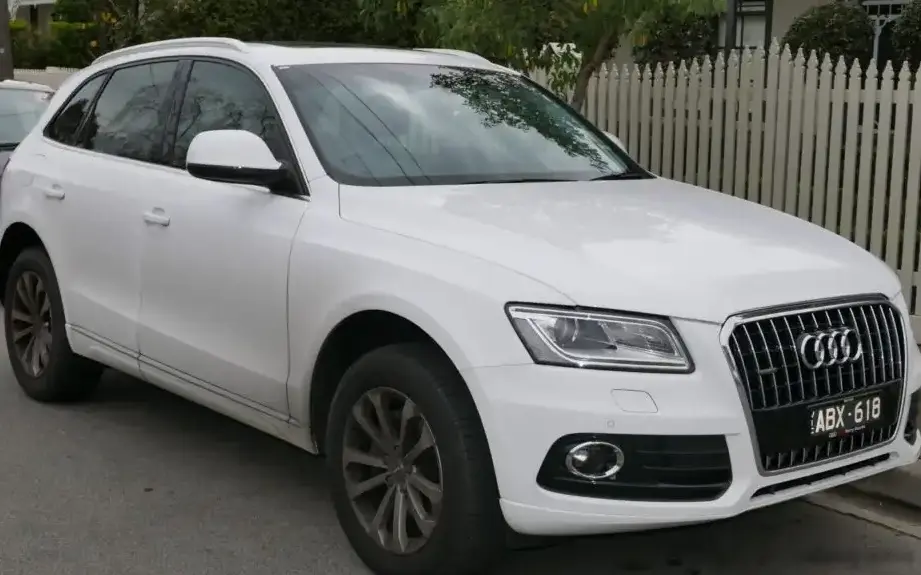
The Audi Q5 I (8R) 3.0 TDI V6 quattro S tronic represents a significant entry in Audi’s early foray into the burgeoning luxury crossover segment. Produced from May 2008 to September 2012, this variant occupied a premium position within the first-generation Q5 lineup (8R), offering a blend of performance, refinement, and all-weather capability. It was designed to appeal to buyers seeking a more powerful and sophisticated alternative to the base 2.0 TDI models, while providing a more economical and practical option compared to the performance-oriented SQ5 that would arrive later. The Q5, as a whole, aimed to bring Audi’s established build quality and technology to a wider audience within the growing SUV market.
Technical Specifications
| Brand | Audi |
| Model | Q5 |
| Generation | Q5 I (8R) |
| Type (Engine) | 3.0 TDI V6 (240 Hp) quattro S tronic |
| Start of production | May, 2008 |
| End of production | September, 2012 |
| Powertrain Architecture | Internal Combustion engine |
| Body type | SUV |
| Seats | 5 |
| Doors | 5 |
| Fuel consumption (urban) | 9.2 l/100 km (25.6 US mpg, 30.7 UK mpg, 10.9 km/l) |
| Fuel consumption (extra urban) | 6.6 l/100 km (35.6 US mpg, 42.8 UK mpg, 15.2 km/l) |
| Fuel consumption (combined) | 7.5 l/100 km (31.4 US mpg, 37.7 UK mpg, 13.3 km/l) |
| Fuel Type | Diesel |
| Acceleration 0 – 100 km/h | 6.5 sec |
| Acceleration 0 – 62 mph | 6.5 sec |
| Acceleration 0 – 60 mph | 6.2 sec |
| Maximum speed | 225 km/h (139.81 mph) |
| Emission standard | Euro 4 |
| Weight-to-power ratio | 7.8 kg/Hp, 128.7 Hp/tonne |
| Weight-to-torque ratio | 3.7 kg/Nm, 268.1 Nm/tonne |
| Power | 240 Hp @ 4000-4400 rpm |
| Power per litre | 80.9 Hp/l |
| Torque | 500 Nm @ 1500-3000 rpm (368.78 lb.-ft. @ 1500-3000 rpm) |
| Engine layout | Front, Longitudinal |
| Engine Model/Code | CCWA |
| Engine displacement | 2967 cm3 (181.06 cu. in.) |
| Number of cylinders | 6 |
| Engine configuration | V-engine |
| Cylinder Bore | 83 mm (3.27 in.) |
| Piston Stroke | 91.4 mm (3.6 in.) |
| Compression ratio | 16.8:1 |
| Number of valves per cylinder | 4 |
| Fuel injection system | Diesel Commonrail |
| Engine aspiration | Turbocharger, Intercooler |
| Valvetrain | DOHC |
| Engine oil capacity | 6.9 l (7.29 US qt | 6.07 UK qt) |
| Coolant | 11.5 l (12.15 US qt | 10.12 UK qt) |
| Kerb Weight | 1865 kg (4111.62 lbs.) |
| Max. weight | 2445 kg (5390.3 lbs.) |
| Max load | 580 kg (1278.68 lbs.) |
| Trunk (boot) space – minimum | 540 l (19.07 cu. ft.) |
| Trunk (boot) space – maximum | 1560 l (55.09 cu. ft.) |
| Fuel tank capacity | 75 l (19.81 US gal | 16.5 UK gal) |
| Length | 4629 mm (182.24 in.) |
| Width | 1880 mm (74.02 in.) |
| Width including mirrors | 2088 mm (82.2 in.) |
| Height | 1653 mm (65.08 in.) |
| Wheelbase | 2807 mm (110.51 in.) |
| Front track | 1617 mm (63.66 in.) |
| Rear (Back) track | 1613 mm (63.5 in.) |
| Front overhang | 895 mm (35.24 in.) |
| Rear overhang | 927 mm (36.5 in.) |
| Ride height (ground clearance) | 200 mm (7.87 in.) |
| Drag coefficient (Cd) | 0.33 |
| Minimum turning circle | 11.6 m (38.06 ft.) |
| Drive wheel | All wheel drive (4×4) |
| Number of gears and type of gearbox | 7 gears, automatic transmission S tronic |
| Front suspension | Independent multi-link suspension |
| Rear suspension | Independent on trapezoidal lever |
| Front brakes | Ventilated discs |
| Rear brakes | Disc |
| Assisting systems | ABS (Anti-lock braking system) |
| Steering type | Steering rack and pinion |
| Tires size | 235/60 R18 |
| Wheel rims size | 18 |
INTRODUCTION
The Audi Q5 I (8R) 3.0 TDI V6 quattro S tronic, launched in 2008, was a key component of Audi’s strategy to expand its presence in the luxury compact SUV market. Built on the Volkswagen Group’s 1HX0/A3 platform (shared with models like the VW Tiguan and Skoda Yeti), the Q5 aimed to deliver a more premium experience than its mainstream counterparts. This particular variant, powered by the 3.0-liter TDI V6 engine and paired with the seven-speed S tronic dual-clutch transmission, represented a mid-range offering, balancing performance with fuel efficiency and a more accessible price point than the higher-spec models.
Powertrain & Engine Architecture
At the heart of the Q5 3.0 TDI lies the CCWA engine code, a 2,967 cc (181.06 cu. in.) V6 diesel engine. This engine utilizes a common rail direct injection system, delivering fuel at extremely high pressures for optimized combustion. The engine features a single turbocharger with an intercooler, boosting power and torque. The valvetrain employs a double overhead camshaft (DOHC) design with four valves per cylinder, enhancing breathing and overall efficiency. The S tronic seven-speed dual-clutch transmission (DCT) is a crucial element of this variant. Unlike traditional automatic transmissions, the S tronic offers incredibly fast and smooth gear changes, contributing to both performance and fuel economy. It operates with two separate clutches, pre-selecting the next gear for near-instantaneous shifts.
Driving Characteristics
The 3.0 TDI V6 with the S tronic transmission delivers a noticeably more engaging driving experience compared to the lower-powered 2.0 TDI variants. The 240 horsepower and 368.78 lb.-ft. of torque provide ample power for confident acceleration and effortless highway cruising. The 0-60 mph sprint takes approximately 6.2 seconds, making it a competitive performer in its class. The S tronic transmission’s quick shifts contribute to a responsive feel, while the quattro all-wheel-drive system provides excellent traction in various conditions. While not as overtly sporty as some rivals, the Q5 3.0 TDI offers a refined and composed ride, prioritizing comfort and stability. The gear ratios are tuned for a balance between acceleration and fuel efficiency, with taller gears for relaxed cruising and shorter gears for quicker response.
Equipment & Trim Levels
The Q5 3.0 TDI typically came well-equipped, reflecting its position as a premium model. Standard features often included leather upholstery, automatic climate control, a multi-function steering wheel, and an Audi Concert audio system. Optional extras were plentiful, allowing buyers to customize their vehicles with features like navigation, sunroof, heated seats, and advanced driver-assistance systems. Trim levels varied slightly depending on the market, but generally offered progressive upgrades in terms of interior materials, exterior styling, and technology features. The Q5 3.0 TDI aimed to provide a luxurious and comfortable interior, with a focus on quality materials and a user-friendly layout.
Chassis & Braking
The Q5’s chassis features an independent multi-link suspension at the front and an independent trapezoidal link suspension at the rear, providing a comfortable and controlled ride. The quattro all-wheel-drive system distributes power between the front and rear axles as needed, enhancing traction and stability. Braking duties are handled by ventilated discs at the front and solid discs at the rear. Anti-lock braking system (ABS) is standard, providing enhanced stopping power and control. The suspension tuning is geared towards comfort and stability, rather than outright sportiness, but it still offers a reasonably engaging driving experience.
Market Reception & Comparison
The Audi Q5 3.0 TDI was generally well-received by automotive critics. It was praised for its refined engine, smooth transmission, comfortable ride, and high-quality interior. Compared to the 2.0 TDI models, the 3.0 TDI offered a significant performance upgrade, making it a more appealing option for drivers who prioritized power and responsiveness. However, it came at a higher price point. Compared to rivals like the BMW X3 and Mercedes-Benz GLK, the Q5 was often seen as offering a more balanced package, with a strong emphasis on practicality and refinement. Fuel economy was competitive for its class, offering a good balance between performance and efficiency.
Legacy
The Audi Q5 I (8R) 3.0 TDI V6 quattro S tronic has proven to be a relatively reliable vehicle, with the 3.0 TDI engine generally considered robust and durable. The S tronic transmission, while offering excellent performance, can require more frequent maintenance than traditional automatic transmissions, particularly fluid changes. In the used car market, these Q5s remain popular choices, offering a blend of luxury, performance, and practicality. They are often sought after by buyers who appreciate the Audi brand and the capabilities of the quattro all-wheel-drive system. With proper maintenance, these vehicles can provide many years of reliable service.