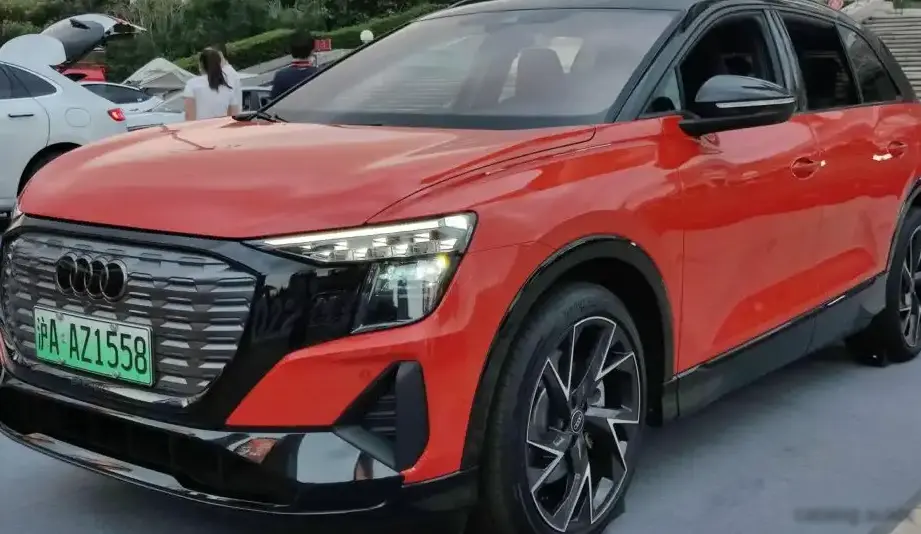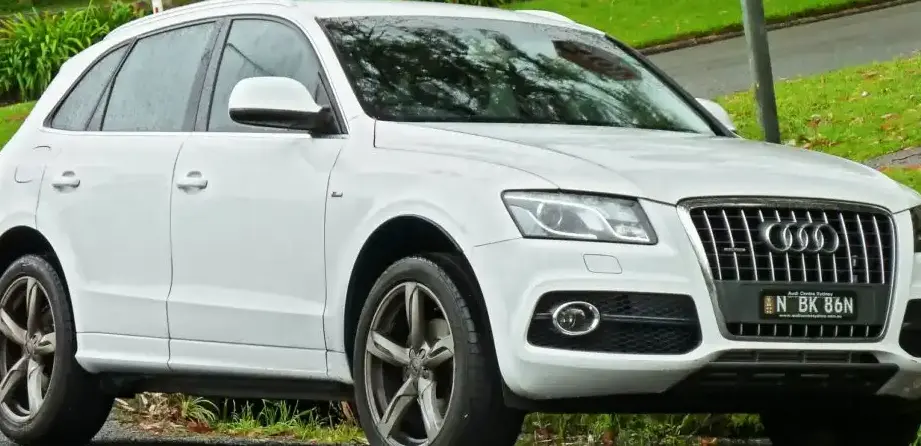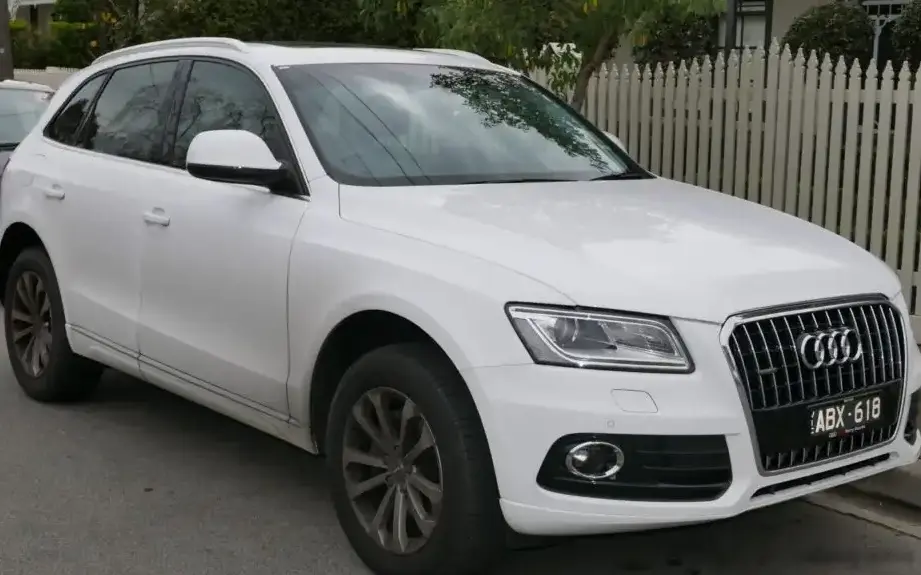
The Audi Q5 I (8R) facelift, specifically the 2.0 TDI 190 hp variant equipped with the S tronic dual-clutch transmission, was a key model in Audi’s lineup from 2013 to 2016. Positioned as a mid-range offering within the Q5 range, it aimed to balance fuel efficiency, performance, and practicality for the growing compact luxury SUV market. This iteration of the Q5, built on the Volkswagen Group’s MLB platform (shared with models like the Volkswagen Tiguan and Porsche Macan), represented a significant update to the original Q5 introduced in 2008, featuring revised styling, enhanced technology, and improved engine options. The 2.0 TDI S tronic model was particularly popular in Europe, where diesel engines held a substantial market share, and offered a compelling alternative to petrol-powered Q5s and competitors from BMW and Mercedes-Benz.
Technical Specifications
| Brand | Audi |
| Model | Q5 |
| Generation | Q5 I (8R, facelift 2012) |
| Type (Engine) | 2.0 TDI (190 Hp) S tronic |
| Start of production | September, 2013 |
| End of production | 2016 |
| Powertrain Architecture | Internal Combustion engine |
| Body type | SUV |
| Seats | 5 |
| Doors | 5 |
| Fuel consumption (urban) | 5.3 l/100 km (44.4 US mpg, 53.3 UK mpg, 18.9 km/l) |
| Fuel consumption (extra urban) | 4.5 l/100 km (52.3 US mpg, 62.8 UK mpg, 22.2 km/l) |
| Fuel consumption (combined) | 4.8 l/100 km (49 US mpg, 58.9 UK mpg, 20.8 km/l) |
| CO2 emissions | 126 g/km |
| Fuel Type | Diesel |
| Acceleration 0 – 100 km/h | 8.7 sec |
| Acceleration 0 – 62 mph | 8.7 sec |
| Acceleration 0 – 60 mph | 8.3 sec |
| Maximum speed | 211 km/h (131.11 mph) |
| Emission standard | Euro 6 |
| Weight-to-power ratio | 9.3 kg/Hp, 107.3 Hp/tonne |
| Weight-to-torque ratio | 4.4 kg/Nm, 226 Nm/tonne |
| Power | 190 Hp @ 3800-4200 rpm |
| Power per litre | 96.5 Hp/l |
| Torque | 400 Nm @ 1750-3000 rpm (295.02 lb.-ft. @ 1750-3000 rpm) |
| Engine layout | Front, Longitudinal |
| Engine Model/Code | CDDA, CNHA |
| Engine displacement | 1968 cm3 (120.09 cu. in.) |
| Number of cylinders | 4 |
| Engine configuration | Inline |
| Number of valves per cylinder | 4 |
| Fuel injection system | Diesel Commonrail |
| Engine aspiration | Turbocharger, Intercooler |
| Valvetrain | DOHC |
| Engine oil capacity | 4.7 l (4.97 US qt | 4.14 UK qt) |
| Kerb Weight | 1770 kg (3902.18 lbs.) |
| Max. weight | 2350 kg (5180.86 lbs.) |
| Max load | 580 kg (1278.68 lbs.) |
| Trunk (boot) space – minimum | 540 l (19.07 cu. ft.) |
| Trunk (boot) space – maximum | 1560 l (55.09 cu. ft.) |
| Fuel tank capacity | 75 l (19.81 US gal | 16.5 UK gal) |
| Max. roof load | 75 kg (165.35 lbs.) |
| Permitted trailer load with brakes (8%) | 2000 kg (4409.25 lbs.) |
| Permitted trailer load with brakes (12%) | 1700 kg (3747.86 lbs.) |
| Permitted towbar download | 100 kg (220.46 lbs.) |
| Length | 4629 mm (182.24 in.) |
| Width | 1898 mm (74.72 in.) |
| Width including mirrors | 2089 mm (82.24 in.) |
| Height | 1655 mm (65.16 in.) |
| Wheelbase | 2807 mm (110.51 in.) |
| Front track | 1617 mm (63.66 in.) |
| Rear (Back) track | 1614 mm (63.54 in.) |
| Front overhang | 895 mm (35.24 in.) |
| Rear overhang | 927 mm (36.5 in.) |
| Ride height (ground clearance) | 200 mm (7.87 in.) |
| Minimum turning circle (turning diameter) | 11.6 m (38.06 ft.) |
| Drivetrain Architecture | The Internal combustion engine (ICE) drives the front wheels of the vehicle. |
| Drive wheel | Front wheel drive |
| Number of gears and type of gearbox | 7 gears, automatic transmission S tronic |
| Front suspension | Independent multi-link suspension |
| Rear suspension | Independent on trapezoidal lever |
| Front brakes | Ventilated discs |
| Rear brakes | Disc |
| Assisting systems | ABS (Anti-lock braking system) |
| Steering type | Steering rack and pinion |
| Tires size | 235/65 R17 |
| Wheel rims size | 8J x 17 |
Powertrain & Engine Architecture
The heart of this Q5 variant is the 2.0-liter four-cylinder diesel engine, specifically the CDDA or CNHA engine code depending on the exact production date and market. This engine is a member of the Volkswagen Group’s modular engine family, known for its compact dimensions and efficiency. It features common-rail direct injection, delivering fuel at extremely high pressure for optimized combustion. A turbocharger with an intercooler is employed to boost power output, providing 190 horsepower and a substantial 400 Nm (295 lb-ft) of torque. The engine utilizes a double overhead camshaft (DOHC) valvetrain with four valves per cylinder, enhancing breathing and contributing to its power delivery. The S tronic transmission is a seven-speed dual-clutch gearbox. This transmission offers rapid, seamless shifts and contributes to the Q5’s overall efficiency. Unlike a traditional torque converter automatic, the S tronic provides a more direct connection between the engine and the wheels.
Driving Characteristics
The 2.0 TDI 190 hp S tronic Q5 delivers a composed and refined driving experience. While not as overtly sporty as the higher-powered variants, it provides ample power for everyday driving and highway cruising. The S tronic transmission is a key contributor to this, offering quick and smooth gear changes. Acceleration from 0-60 mph takes around 8.3 seconds, which is respectable for a vehicle of this size and weight. The engine’s strong low-end torque makes it easy to navigate city traffic and provides effortless overtaking capability. Compared to the six-speed manual transmission offered on some Q5 models, the S tronic prioritizes convenience and efficiency over outright driver engagement. The higher-output 2.0 TDI (typically around 240 hp) and the 3.0 TDI V6 offer significantly more performance, but at the cost of increased fuel consumption and a higher price point.
Equipment & Trim Levels
The 2.0 TDI 190 hp S tronic Q5 typically came well-equipped, reflecting its position as a mid-range model. Standard features often included Audi’s Multi Media Interface (MMI) infotainment system with a central display screen, tri-zone automatic climate control, leather upholstery, and front fog lights. Safety features such as ABS, electronic stability control, and multiple airbags were also standard. Optional extras included features like a panoramic sunroof, navigation system, advanced driver-assistance systems (such as adaptive cruise control and lane departure warning), and upgraded sound systems. Trim levels varied by market, but generally offered packages that added cosmetic enhancements and additional convenience features.
Chassis & Braking
The Q5’s chassis features an independent suspension setup at all four corners, providing a comfortable ride and good handling characteristics. The front suspension utilizes a multi-link design, while the rear employs a trapezoidal link setup. The 2.0 TDI models typically featured ventilated front disc brakes and solid rear disc brakes. ABS (Anti-lock Braking System) and electronic stability control were standard, enhancing safety and control. The suspension tuning was geared towards comfort and stability, rather than outright sportiness, making it well-suited for long-distance driving.
Market Reception & Comparison
The Audi Q5 2.0 TDI S tronic was generally well-received by automotive critics. It was praised for its refined driving experience, comfortable interior, and fuel efficiency. The S tronic transmission was a particular highlight, offering smooth and quick gear changes. Compared to its rivals, such as the BMW X3 and Mercedes-Benz GLK, the Q5 was often seen as offering a more balanced combination of luxury, practicality, and fuel economy. The 2.0 TDI engine provided a good compromise between performance and efficiency, making it a popular choice for buyers who prioritized fuel costs. However, some critics noted that the interior design, while well-built, was starting to feel a little dated compared to newer competitors.
Legacy
The 2.0 TDI 190 hp S tronic Q5 has proven to be a relatively reliable vehicle in the long term. The engine is generally robust, and the S tronic transmission, while complex, has demonstrated good durability with regular maintenance. Common issues, if any, often relate to the diesel particulate filter (DPF) requiring regeneration, particularly on vehicles used primarily for short journeys. On the used car market, these Q5s remain popular due to their blend of practicality, comfort, and fuel efficiency. They represent a good value proposition for buyers seeking a premium compact SUV. The Q5’s success helped establish Audi as a major player in the luxury SUV segment, and the 8R generation remains a well-regarded vehicle among enthusiasts and owners alike.