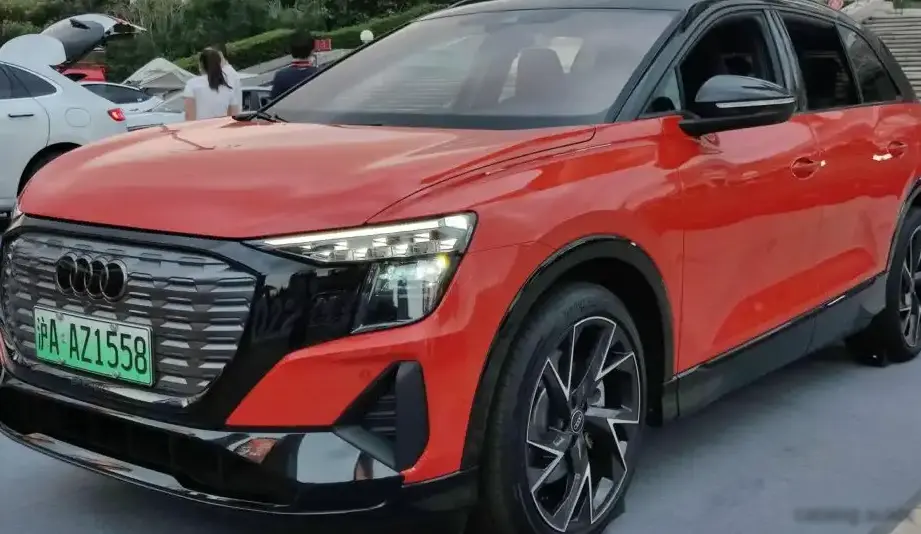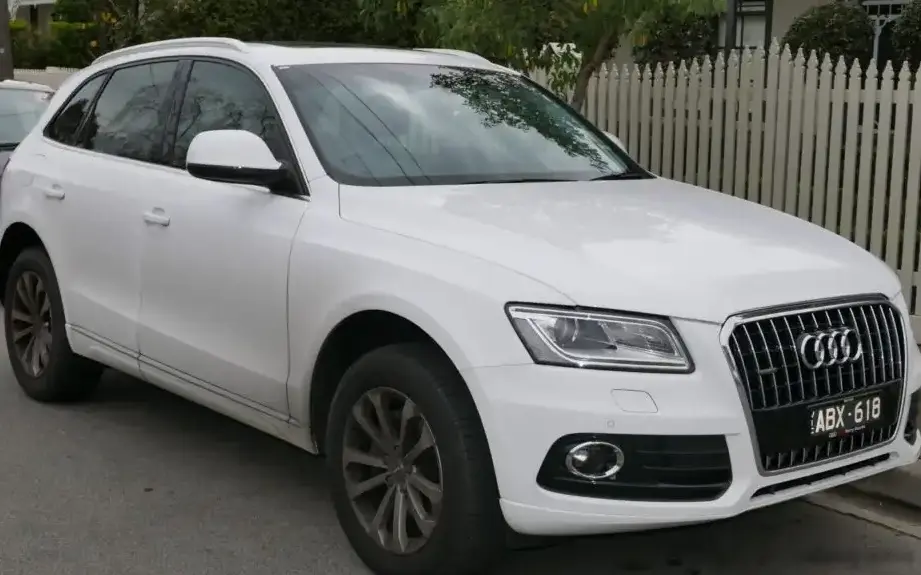
The Audi Q5 I (8R) facelift, specifically the 2.0 TDI clean diesel variant producing 163 horsepower with the quattro all-wheel drive system and S tronic dual-clutch transmission, was a significant model within Audi’s luxury compact SUV lineup. Introduced in April 2014 and continuing through 2016, this configuration represented a balance between fuel efficiency, performance, and all-weather capability, aimed at a broad segment of the premium SUV market. It sat within the first generation (8R) of the Q5, benefitting from the 2012 facelift which brought styling updates and technological enhancements to the platform. This variant was particularly popular in Europe, where diesel engines held a substantial market share, but also found a niche audience in North America.
Technical Specifications
| Brand | Audi |
| Model | Q5 |
| Generation | Q5 I (8R, facelift 2012) |
| Type (Engine) | 2.0 TDI clean diesel (163 Hp) quattro S tronic |
| Start of production | April, 2014 |
| End of production | 2016 |
| Powertrain Architecture | Internal Combustion engine |
| Body type | SUV |
| Seats | 5 |
| Doors | 5 |
| Fuel consumption (urban) | 6.5 l/100 km (36.2 US mpg, 43.5 UK mpg, 15.4 km/l) |
| Fuel consumption (extra urban) | 5.3 l/100 km (44.4 US mpg, 53.3 UK mpg, 18.9 km/l) |
| Fuel consumption (combined) | 5.7 l/100 km (41.3 US mpg, 49.6 UK mpg, 17.5 km/l) |
| CO2 emissions | 149 g/km |
| Fuel Type | Diesel |
| Acceleration 0 – 100 km/h | 9.7 sec |
| Acceleration 0 – 62 mph | 9.7 sec |
| Acceleration 0 – 60 mph | 9.2 sec |
| Maximum speed | 196 km/h (121.79 mph) |
| Emission standard | Euro 6 |
| Weight-to-power ratio | 11.3 kg/Hp, 88.1 Hp/tonne |
| Weight-to-torque ratio | 4.6 kg/Nm, 216.2 Nm/tonne |
| Power | 163 Hp @ 3000-4200 rpm |
| Power per litre | 82.8 Hp/l |
| Torque | 400 Nm @ 1750-2750 rpm (295.02 lb.-ft. @ 1750-2750 rpm) |
| Engine layout | Front, Longitudinal |
| Engine Model/Code | CNHC |
| Engine displacement | 1968 cm3 (120.09 cu. in.) |
| Number of cylinders | 4 |
| Engine configuration | Inline |
| Cylinder Bore | 81 mm (3.19 in.) |
| Piston Stroke | 95.5 mm (3.76 in.) |
| Compression ratio | 15.5:1 |
| Number of valves per cylinder | 4 |
| Fuel injection system | Diesel Commonrail |
| Engine aspiration | Turbocharger, Intercooler |
| Valvetrain | DOHC |
| Engine oil capacity | 5 l (5.28 US qt | 4.4 UK qt) |
| Kerb Weight | 1850 kg (4078.55 lbs.) |
| Max. weight | 2460 kg (5423.37 lbs.) |
| Max load | 610 kg (1344.82 lbs.) |
| Trunk (boot) space – minimum | 540 l (19.07 cu. ft.) |
| Trunk (boot) space – maximum | 1560 l (55.09 cu. ft.) |
| Fuel tank capacity | 75 l (19.81 US gal | 16.5 UK gal) |
| Max. roof load | 75 kg (165.35 lbs.) |
| Permitted trailer load with brakes (8%) | 2400 kg (5291.09 lbs.) |
| Permitted trailer load with brakes (12%) | 2000 kg (4409.25 lbs.) |
| Permitted trailer load without brakes | 750 kg (1653.47 lbs.) |
| Permitted towbar download | 100 kg (220.46 lbs.) |
| Length | 4629 mm (182.24 in.) |
| Width | 1898 mm (74.72 in.) |
| Width including mirrors | 2089 mm (82.24 in.) |
| Height | 1655 mm (65.16 in.) |
| Wheelbase | 2807 mm (110.51 in.) |
| Front track | 1617 mm (63.66 in.) |
| Rear (Back) track | 1614 mm (63.54 in.) |
| Front overhang | 895 mm (35.24 in.) |
| Rear overhang | 927 mm (36.5 in.) |
| Ride height (ground clearance) | 200 mm (7.87 in.) |
| Drag coefficient (Cd) | 0.34 |
| Minimum turning circle (turning diameter) | 11.6 m (38.06 ft.) |
| Approach angle | 25° |
| Ramp-over (brakeover) angle | 17.6° |
| Climb angle | 31° |
| Wading depth | 500 mm (19.69 in.) |
| Drive wheel | All wheel drive (4×4) |
| Number of gears and type of gearbox | 7 gears, automatic transmission S tronic |
| Front suspension | Independent multi-link suspension |
| Rear suspension | Independent on trapezoidal lever |
| Front brakes | Ventilated discs |
| Rear brakes | Disc |
INTRODUCTION
The Audi Q5 I (8R) facelift, launched in 2012 and continuing through 2016, represented a significant update to Audi’s popular compact luxury SUV. The 2.0 TDI clean diesel variant with 163 horsepower, coupled with the quattro all-wheel drive system and the seven-speed S tronic dual-clutch transmission, was a key offering, particularly in European markets. This configuration aimed to provide a balance of fuel efficiency, respectable performance, and all-weather capability. Positioned as a mid-range option within the Q5 lineup, it offered a step up from the base engine while remaining more accessible than the higher-performance variants.
Powertrain & Engine Architecture
The heart of this Q5 variant is the CNHC engine code, a 2.0-liter inline-four cylinder diesel engine. This engine utilizes a common rail direct injection system, delivering fuel at extremely high pressure for optimized combustion. The engine features a turbocharger with an intercooler, boosting power output and improving efficiency. The valvetrain employs a Dual Overhead Camshaft (DOHC) design with four valves per cylinder, enhancing breathing and contributing to the engine’s torque curve. The S tronic transmission is a seven-speed dual-clutch unit, known for its rapid and smooth gear changes. Unlike a traditional automatic, the S tronic utilizes two separate clutches – one for odd gears and one for even gears – allowing for pre-selection of the next gear, resulting in near-seamless shifts. This transmission is electronically controlled and offers both automatic and manual shift modes.
Driving Characteristics
The 163 horsepower and 400 Nm (295 lb-ft) of torque delivered by the 2.0 TDI engine, combined with the S tronic transmission and quattro all-wheel drive, provided a capable and refined driving experience. While not overtly sporty, the Q5 2.0 TDI offered sufficient power for everyday driving and highway cruising. Acceleration from 0-60 mph took approximately 9.2 seconds. The S tronic transmission’s quick shifts helped to maximize the available power, and the quattro system provided excellent traction in various conditions. Compared to the higher-output 2.0 TDI variants or the 3.0 TDI, this version felt less urgent in acceleration, but it offered a more relaxed and fuel-efficient driving experience. The gear ratios in the S tronic were tuned for a balance of performance and economy, with taller gears for highway cruising and shorter gears for quicker acceleration.
Equipment & Trim Levels
The 2.0 TDI quattro S tronic Q5 typically came standard with a comprehensive list of features. These included automatic climate control, a multi-function steering wheel, power-adjustable front seats, and an Audi Concert audio system. Safety features such as ABS, electronic stability control, and multiple airbags were also standard. Interior upholstery was typically cloth, with leather options available as an upgrade. Optional extras included a navigation system, panoramic sunroof, advanced parking systems, and upgraded audio systems like Bang & Olufsen. Trim levels varied slightly by market, but generally offered packages that bundled popular options together.
Chassis & Braking
The Q5’s chassis featured an independent multi-link suspension at the front and an independent trapezoidal link suspension at the rear, providing a comfortable ride and good handling characteristics. The suspension was tuned to balance comfort and control, making it suitable for both city driving and longer journeys. Braking duties were handled by ventilated discs at the front and solid discs at the rear. The ABS system and electronic stability control worked in conjunction to provide safe and controlled braking performance. Stabilizer bars were fitted front and rear to reduce body roll during cornering.
Market Reception & Comparison
The Audi Q5 2.0 TDI quattro S tronic was generally well-received by automotive critics. It was praised for its refined driving experience, comfortable interior, and fuel efficiency. Compared to other trims in the Q5 lineup, this variant offered a compelling value proposition for buyers who prioritized economy and all-weather capability over outright performance. The 1.8 TFSI petrol version offered similar performance but with lower fuel economy, while the higher-output TDI variants provided more power but at a higher price point. The 2.0 TDI’s reliability was generally good, although, like all modern diesel engines, it was susceptible to issues with the diesel particulate filter (DPF) if not driven on longer journeys periodically.
Legacy
The Audi Q5 I (8R) 2.0 TDI clean diesel quattro S tronic remains a popular choice in the used car market. Its combination of practicality, fuel efficiency, and Audi’s reputation for quality has ensured its continued desirability. The CNHC engine, while requiring regular maintenance, is generally considered robust. However, potential buyers should be aware of the potential for DPF issues and the importance of maintaining the turbocharger. The S tronic transmission, while offering smooth and quick shifts, can be expensive to repair if problems arise. Overall, this Q5 variant represents a well-rounded and capable luxury SUV that continues to offer a compelling ownership experience.