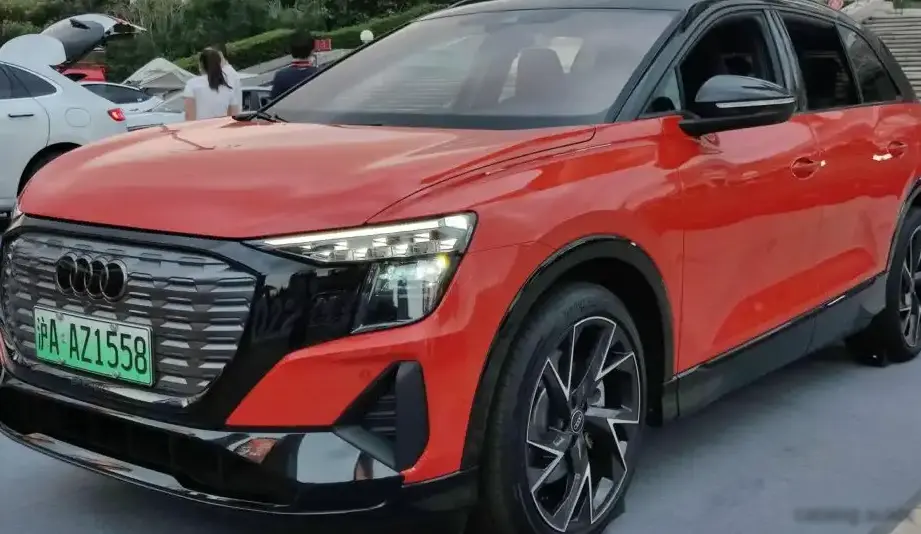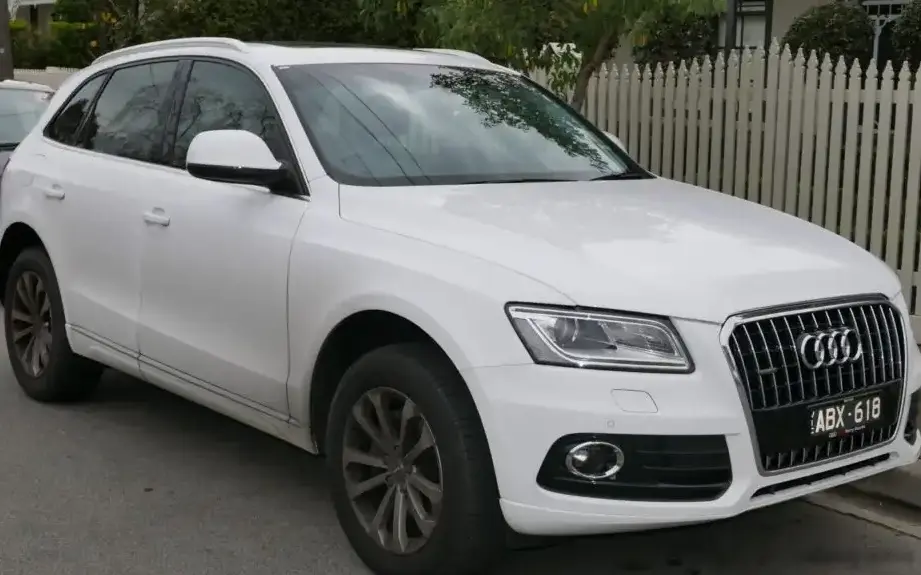
The Audi Q5 I (8R) facelift, specifically the 2.0 TDI clean diesel variant producing 190 horsepower with the quattro all-wheel drive system and S tronic dual-clutch transmission, was a significant model within Audi’s luxury compact SUV lineup. Introduced in September 2013 and continuing through 2016, this configuration represented a balance between performance, fuel efficiency, and practicality, aimed at buyers seeking a premium SUV experience. It sat within the broader Q5 range, which also included lower-powered diesel options, higher-output gasoline engines, and the performance-oriented SQ5. This variant was primarily marketed in Europe and other regions where diesel fuel was prevalent, offering a compelling alternative to gasoline-powered competitors.
Technical Specifications
| Brand | Audi |
| Model | Q5 |
| Generation | Q5 I (8R, facelift 2012) |
| Type (Engine) | 2.0 TDI clean diesel (190 Hp) quattro S tronic |
| Start of production | September, 2013 |
| End of production | 2016 |
| Powertrain Architecture | Internal Combustion engine |
| Body type | SUV |
| Seats | 5 |
| Doors | 5 |
| Fuel consumption (urban) | 6.5 l/100 km (36.2 US mpg, 43.5 UK mpg, 15.4 km/l) |
| Fuel consumption (extra urban) | 5.3 l/100 km (44.4 US mpg, 53.3 UK mpg, 18.9 km/l) |
| Fuel consumption (combined) | 5.7 l/100 km (41.3 US mpg, 49.6 UK mpg, 17.5 km/l) |
| CO2 emissions | 149 g/km |
| Fuel Type | Diesel |
| Acceleration 0 – 100 km/h | 8.4 sec |
| Acceleration 0 – 62 mph | 8.4 sec |
| Acceleration 0 – 60 mph | 8 sec |
| Maximum speed | 210 km/h (130.49 mph) |
| Emission standard | Euro 6 |
| Weight-to-power ratio | 9.7 kg/Hp, 102.7 Hp/tonne |
| Weight-to-torque ratio | 4.6 kg/Nm, 216.2 Nm/tonne |
| Power | 190 Hp @ 3800-4200 rpm |
| Power per litre | 96.5 Hp/l |
| Torque | 400 Nm @ 1750-3000 rpm (295.02 lb.-ft. @ 1750-3000 rpm) |
| Engine layout | Front, Longitudinal |
| Engine Model/Code | CDDA, CNHA |
| Engine displacement | 1968 cm3 (120.09 cu. in.) |
| Number of cylinders | 4 |
| Engine configuration | Inline |
| Cylinder Bore | 81 mm (3.19 in.) |
| Piston Stroke | 95.5 mm (3.76 in.) |
| Compression ratio | 15.5:1 |
| Number of valves per cylinder | 4 |
| Fuel injection system | Diesel Commonrail |
| Engine aspiration | Turbocharger, Intercooler |
| Valvetrain | DOHC |
| Engine oil capacity | 4.7 l (4.97 US qt | 4.14 UK qt) |
| Kerb Weight | 1850 kg (4078.55 lbs.) |
| Max. weight | 2460 kg (5423.37 lbs.) |
| Max load | 610 kg (1344.82 lbs.) |
| Trunk (boot) space – minimum | 540 l (19.07 cu. ft.) |
| Trunk (boot) space – maximum | 1560 l (55.09 cu. ft.) |
| Fuel tank capacity | 75 l (19.81 US gal | 16.5 UK gal) |
| Max. roof load | 75 kg (165.35 lbs.) |
| Permitted trailer load with brakes (8%) | 2400 kg (5291.09 lbs.) |
| Permitted trailer load with brakes (12%) | 2000 kg (4409.25 lbs.) |
| Permitted trailer load without brakes | 750 kg (1653.47 lbs.) |
| Permitted towbar download | 100 kg (220.46 lbs.) |
| Length | 4629 mm (182.24 in.) |
| Width | 1898 mm (74.72 in.) |
| Width including mirrors | 2089 mm (82.24 in.) |
| Height | 1655 mm (65.16 in.) |
| Wheelbase | 2807 mm (110.51 in.) |
| Front track | 1617 mm (63.66 in.) |
| Rear (Back) track | 1614 mm (63.54 in.) |
| Front overhang | 895 mm (35.24 in.) |
| Rear overhang | 927 mm (36.5 in.) |
| Ride height (ground clearance) | 200 mm (7.87 in.) |
| Drag coefficient (Cd) | 0.34 |
| Minimum turning circle (turning diameter) | 11.6 m (38.06 ft.) |
| Approach angle | 25° |
| Ramp-over (brakeover) angle | 17.6° |
| Climb angle | 31° |
| Wading depth | 500 mm (19.69 in.) |
| Drive wheel | All wheel drive (4×4) |
| Number of gears and type of gearbox | 7 gears, automatic transmission S tronic |
| Front suspension | Independent multi-link suspension |
| Rear suspension | Independent on trapezoidal lever |
| Front brakes | Ventilated discs |
| Rear brakes | Disc |
INTRODUCTION
The Audi Q5 I (8R) facelift, launched in 2012 and continuing through 2016, represented a mid-cycle refresh of Audi’s popular compact luxury SUV. The 2.0 TDI clean diesel variant with 190 horsepower, coupled with the quattro all-wheel drive system and the seven-speed S tronic dual-clutch transmission, was a key offering, particularly in European markets. This model aimed to provide a balance of performance, efficiency, and refinement, appealing to customers seeking a versatile and premium vehicle. It built upon the success of the original Q5, addressing some criticisms and enhancing its overall appeal. The “clean diesel” designation referred to Audi’s efforts to reduce emissions through advanced technologies like diesel particulate filters and selective catalytic reduction (SCR) systems.
Powertrain & Engine Architecture
At the heart of this Q5 variant lies the 2.0-liter four-cylinder diesel engine, specifically the CDDA or CNHA engine code depending on the specific market and year. This engine is a longitudinal inline-four, meaning it’s mounted lengthwise in the engine bay. It utilizes a common rail direct injection system, delivering fuel directly into the combustion chamber at extremely high pressure for optimized combustion. The engine also features a turbocharger with an intercooler, boosting power output and improving efficiency. The valvetrain employs a dual overhead camshaft (DOHC) design with four valves per cylinder, enhancing breathing and overall performance. The S tronic seven-speed dual-clutch transmission is a crucial component, offering rapid and smooth gear changes. This transmission operates with two separate clutches, pre-selecting the next gear for near-instantaneous shifts. It contributes significantly to both performance and fuel economy.
Driving Characteristics
The 190 horsepower and 400 Nm (295 lb-ft) of torque delivered by the 2.0 TDI engine, combined with the S tronic transmission and quattro all-wheel drive, provided a capable and refined driving experience. While not as overtly sporty as higher-output Q5 models, this variant offered ample power for everyday driving and highway cruising. The S tronic transmission’s quick shifts ensured responsive acceleration, and the quattro system provided excellent traction in various weather conditions. Compared to the manual transmission versions of the same engine, the S tronic offered greater convenience and ease of use, particularly in urban environments. However, some enthusiasts preferred the more engaging feel of a manual gearbox. Against the more powerful 3.0 TDI or 2.0 TFSI gasoline engines, this variant offered a more economical option, albeit with slightly less outright performance.
Equipment & Trim Levels
The 2.0 TDI clean diesel quattro S tronic Q5 typically came well-equipped, reflecting Audi’s premium positioning. Standard features often included leather upholstery, tri-zone automatic climate control, a multi-function steering wheel, and the Audi MMI infotainment system with a central display screen. Depending on the specific market and optional packages, features like navigation, a premium sound system, parking sensors, and heated seats were available. The interior design was typically understated and elegant, with high-quality materials and a focus on ergonomics. Exterior styling cues included Audi’s signature Singleframe grille, xenon headlights (often upgraded to LED), and alloy wheels.
Chassis & Braking
The Q5’s chassis featured an independent multi-link suspension at the front and an independent trapezoidal link suspension at the rear, providing a comfortable and controlled ride. The suspension was tuned to balance ride comfort with handling precision. The quattro all-wheel drive system distributed power between the front and rear axles as needed, enhancing traction and stability. Braking duties were handled by ventilated discs at the front and solid discs at the rear. Anti-lock braking system (ABS) and electronic stability control (ESC) were standard safety features. The Q5’s steering system utilized a rack-and-pinion setup, offering precise and responsive steering feel.
Market Reception & Comparison
The Audi Q5 2.0 TDI clean diesel quattro S tronic was generally well-received by automotive critics. It was praised for its refined driving experience, fuel efficiency, and comfortable interior. Critics noted that the engine provided adequate power for most driving situations, and the S tronic transmission offered smooth and quick gear changes. Compared to competitors like the BMW X3 and Mercedes-Benz GLK, the Q5 was often seen as offering a more balanced package, with a strong emphasis on interior quality and technology. Fuel economy was a key selling point, particularly in Europe, where diesel fuel was more affordable than gasoline. Reliability was generally good, although some owners reported issues with the diesel particulate filter (DPF) system, a common concern with modern diesel engines.
Legacy
The Audi Q5 I (8R) 2.0 TDI clean diesel quattro S tronic remains a popular choice in the used car market. Its combination of practicality, fuel efficiency, and premium features continues to appeal to buyers. The 2.0 TDI engine, while requiring diligent maintenance (particularly regarding the DPF system), has proven to be relatively durable. The S tronic transmission, if properly maintained with regular fluid changes, is also generally reliable. However, potential buyers should be aware of the potential for DPF issues and ensure that the vehicle has been properly serviced. This Q5 variant represents a significant step in Audi’s development of luxury SUVs, establishing the Q5 as a benchmark in its class.