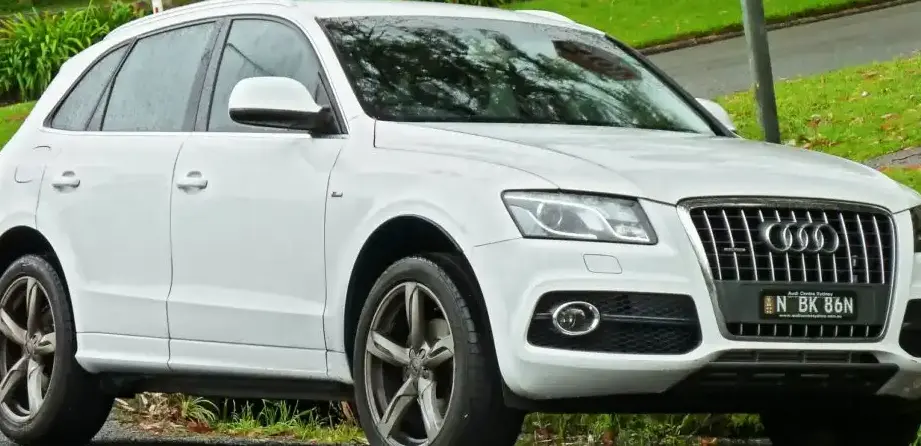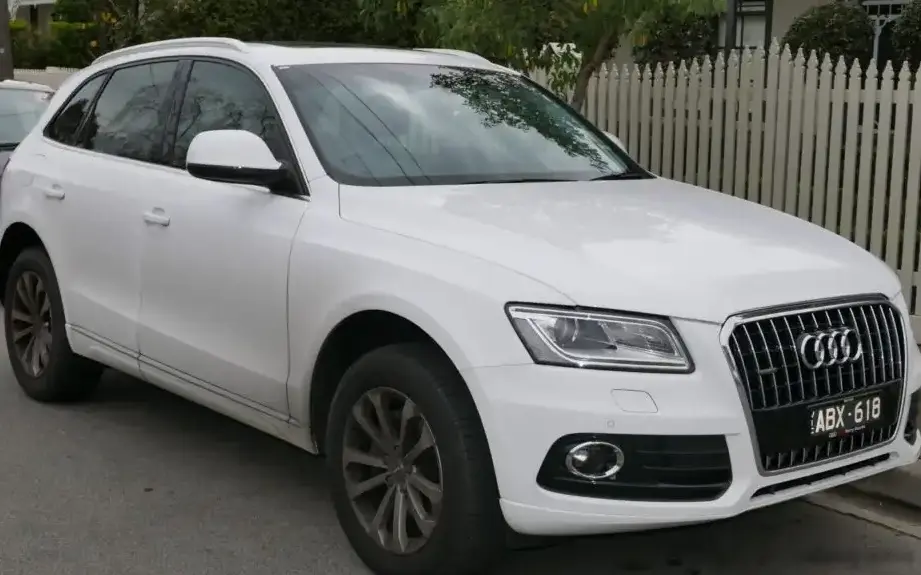
The Audi Q5 I (8R) facelift, specifically the 3.0 TDI V6 clean diesel variant with 258 horsepower and the S tronic dual-clutch transmission, was produced from November 2013 to 2016. This model represented a significant mid-cycle refresh of the first-generation Q5, which debuted in 2008. Positioned as a premium compact SUV, the Q5 aimed to blend practicality, luxury, and performance, competing with vehicles like the BMW X3, Mercedes-Benz GLK, and Acura RDX. The 3.0 TDI quattro S tronic trim sat towards the top of the Q5 range, offering a compelling combination of power, efficiency, and all-weather capability. It was a popular choice in European markets where diesel engines were favored, and increasingly sought after by US buyers looking for a refined and capable SUV.
Technical Specifications
| Brand | Audi |
| Model | Q5 |
| Generation | Q5 I (8R, facelift 2012) |
| Type (Engine) | 3.0 TDI V6 clean diesel (258 Hp) quattro S tronic |
| Start of production | November, 2013 |
| End of production | 2016 |
| Powertrain Architecture | Internal Combustion engine |
| Body type | SUV |
| Seats | 5 |
| Doors | 5 |
| Fuel consumption (urban) | 7.1 l/100 km (33.1 US mpg, 39.8 UK mpg, 14.1 km/l) |
| Fuel consumption (extra urban) | 5.8 l/100 km (40.6 US mpg, 48.7 UK mpg, 17.2 km/l) |
| Fuel consumption (combined) | 6.3 l/100 km (37.3 US mpg, 44.8 UK mpg, 15.9 km/l) |
| CO2 emissions | 164 g/km |
| Fuel Type | Diesel |
| Acceleration 0 – 100 km/h | 6.2 sec |
| Acceleration 0 – 62 mph | 6.2 sec |
| Acceleration 0 – 60 mph | 5.9 sec |
| Maximum speed | 230 km/h (142.92 mph) |
| Emission standard | Euro 6 |
| Weight-to-power ratio | 7.3 kg/Hp, 137.2 Hp/tonne |
| Weight-to-torque ratio | 3.2 kg/Nm, 308.5 Nm/tonne |
| Power | 258 Hp @ 4000-4500 rpm |
| Power per litre | 87 Hp/l |
| Torque | 580 Nm @ 1750-2500 rpm (427.79 lb.-ft. @ 1750-2500 rpm) |
| Engine layout | Front, Longitudinal |
| Engine Model/Code | CTBA |
| Engine displacement | 2967 cm3 (181.06 cu. in.) |
| Number of cylinders | 6 |
| Engine configuration | V-engine |
| Cylinder Bore | 83 mm (3.27 in.) |
| Piston Stroke | 91.4 mm (3.6 in.) |
| Compression ratio | 16.8:1 |
| Number of valves per cylinder | 4 |
| Fuel injection system | Diesel Commonrail |
| Engine aspiration | Turbocharger, Intercooler |
| Valvetrain | DOHC |
| Engine oil capacity | 6.4 l (6.76 US qt | 5.63 UK qt) |
| Kerb Weight | 1880 kg (4144.69 lbs.) |
| Max. weight | 2490 kg (5489.51 lbs.) |
| Max load | 610 kg (1344.82 lbs.) |
| Trunk (boot) space – minimum | 540 l (19.07 cu. ft.) |
| Trunk (boot) space – maximum | 1560 l (55.09 cu. ft.) |
| Fuel tank capacity | 75 l (19.81 US gal | 16.5 UK gal) |
| Max. roof load | 75 kg (165.35 lbs.) |
| Permitted trailer load with brakes (8%) | 2400 kg (5291.09 lbs.) |
| Permitted trailer load without brakes | 750 kg (1653.47 lbs.) |
| Permitted towbar download | 100 kg (220.46 lbs.) |
| Length | 4629 mm (182.24 in.) |
| Width | 1898 mm (74.72 in.) |
| Width including mirrors | 2089 mm (82.24 in.) |
| Height | 1655 mm (65.16 in.) |
| Wheelbase | 2807 mm (110.51 in.) |
| Front track | 1617 mm (63.66 in.) |
| Rear (Back) track | 1614 mm (63.54 in.) |
| Front overhang | 895 mm (35.24 in.) |
| Rear overhang | 927 mm (36.5 in.) |
| Ride height (ground clearance) | 200 mm (7.87 in.) |
| Drag coefficient (Cd) | 0.34 |
| Minimum turning circle (turning diameter) | 11.6 m (38.06 ft.) |
| Approach angle | 25° |
| Ramp-over (brakeover) angle | 17.6° |
| Climb angle | 31° |
| Wading depth | 500 mm (19.69 in.) |
| Drive wheel | All wheel drive (4×4) |
| Number of gears and type of gearbox | 7 gears, automatic transmission S tronic |
| Front suspension | Independent multi-link suspension |
| Rear suspension | Independent on trapezoidal lever |
| Front brakes | Ventilated discs |
| Rear brakes | Ventilated discs |
| Assisting systems | ABS (Anti-lock braking system) |
| Steering type | Steering rack and pinion |
| Power steering | Electric Steering |
| Tires size | 235/60 R18 |
| Wheel rims size | 8J x 18 |
Powertrain & Engine Architecture
The heart of this Q5 variant is the 3.0-liter TDI V6 engine, designated CTBA. This engine is a member of the Volkswagen Group’s modular engine family, known for its robust construction and sophisticated technology. The CTBA features a common rail direct injection system, delivering fuel at extremely high pressures for optimized combustion. A single turbocharger, coupled with an intercooler, provides forced induction, boosting power and torque. The engine utilizes a double overhead camshaft (DOHC) valvetrain with four valves per cylinder, enhancing breathing and efficiency. The S tronic transmission is a seven-speed dual-clutch gearbox. This transmission offers incredibly fast and smooth gear changes, contributing to both performance and fuel economy. It operates similarly to two manual gearboxes in one, with one clutch controlling the odd gears and the other controlling the even gears, allowing for pre-selection of the next gear.
Driving Characteristics
The 3.0 TDI Q5 offered a distinctly refined driving experience. The 580 Nm (427.79 lb-ft) of torque, available from a low 1750 rpm, provided strong acceleration in virtually any gear. The S tronic transmission further enhanced this, delivering seamless shifts and keeping the engine in its optimal power band. While not a sports SUV, the 6.2-second 0-62 mph acceleration time was respectable for its class. Compared to the 2.0-liter TFSI variants, the TDI offered significantly more low-end grunt and a more relaxed cruising experience. The quattro all-wheel-drive system provided excellent traction in all weather conditions, making it a confident performer on both dry and slippery surfaces. The gear ratios in the S tronic were tuned for a balance of performance and fuel efficiency, with taller gears for highway cruising and shorter gears for quicker acceleration.
Equipment & Trim Levels
The 3.0 TDI quattro S tronic typically came well-equipped. Standard features included leather upholstery, tri-zone automatic climate control, a multi-function steering wheel, and Audi’s MMI infotainment system with a color display. Optional extras included features like navigation, a panoramic sunroof, advanced driver-assistance systems (such as adaptive cruise control and blind-spot monitoring), and upgraded sound systems. Interior trim options varied, with choices in wood, aluminum, or carbon fiber accents. The exterior often featured chrome accents and distinctive alloy wheel designs.
Chassis & Braking
The Q5’s chassis was designed to provide a comfortable yet controlled ride. It utilized an independent multi-link suspension at the front and an independent trapezoidal link suspension at the rear. The 3.0 TDI models typically featured larger brakes than the lower-trim levels, with ventilated discs at all four corners. Anti-lock braking system (ABS) and electronic stability control (ESC) were standard safety features. The suspension tuning was geared towards comfort, but still provided good body control during cornering. Stabilizer bars were fitted front and rear to reduce body roll.
Market Reception & Comparison
The 3.0 TDI Q5 was generally well-received by automotive critics. It was praised for its powerful and efficient engine, refined ride quality, and luxurious interior. Compared to the 2.0-liter TFSI models, the TDI offered superior fuel economy and a more relaxed driving experience, albeit at a higher price point. The S tronic transmission was also a highlight, praised for its responsiveness and smoothness. However, some critics noted that the steering lacked a bit of feel. In terms of reliability, the 3.0 TDI engine proved to be generally robust, although diesel particulate filter (DPF) issues could occur with infrequent long-distance driving.
Legacy
The Audi Q5 I (8R) 3.0 TDI V6 clean diesel quattro S tronic remains a desirable used SUV. Its combination of performance, luxury, and efficiency continues to appeal to buyers. The engine, while subject to the scrutiny of diesel emissions regulations, has proven to be durable when properly maintained. The S tronic transmission, while requiring occasional servicing, is generally reliable. Today, these Q5s represent a good value proposition for those seeking a premium SUV with a capable diesel powertrain. The 8R Q5 established the Q5 as a key model in Audi’s lineup, paving the way for the successful second-generation model.