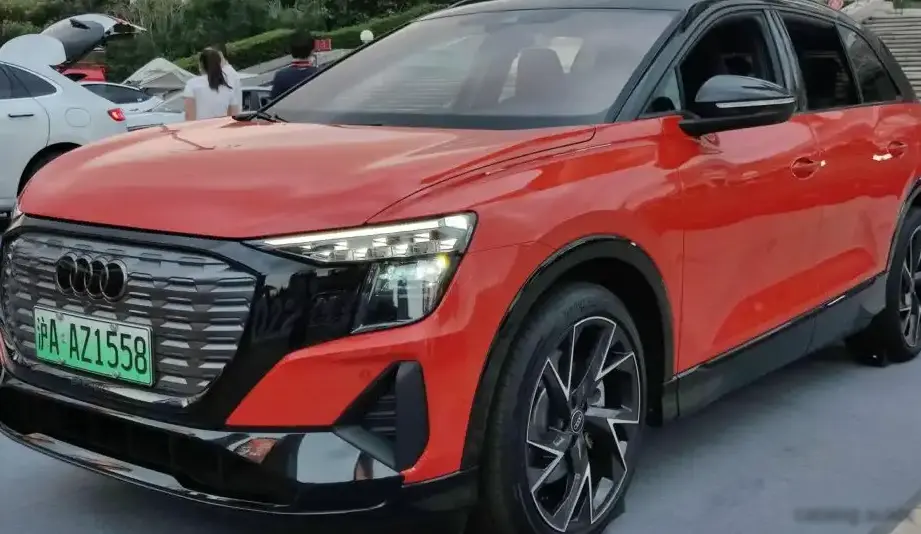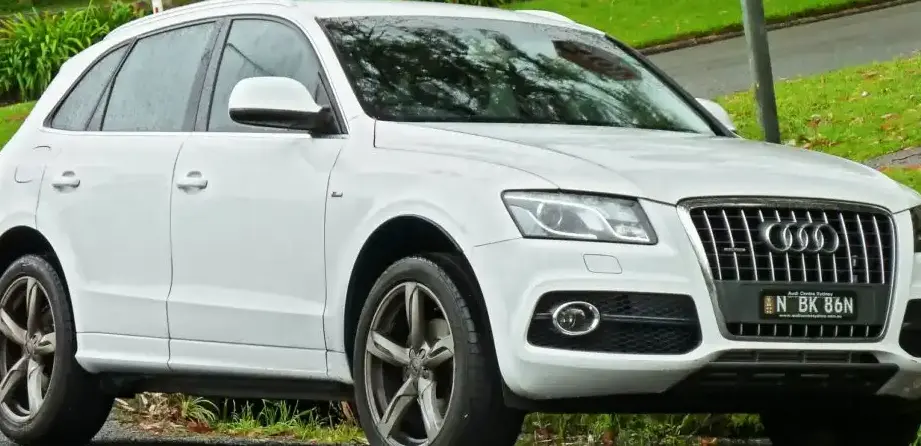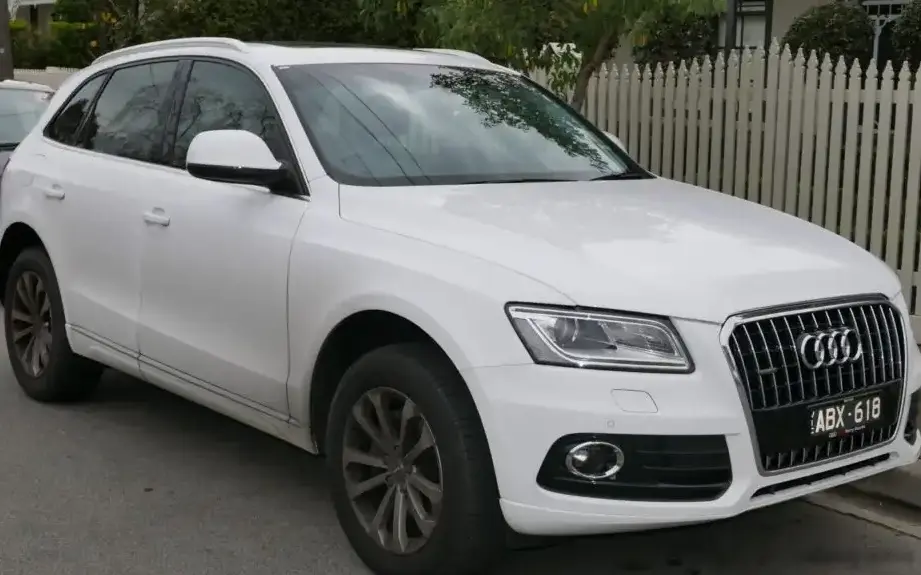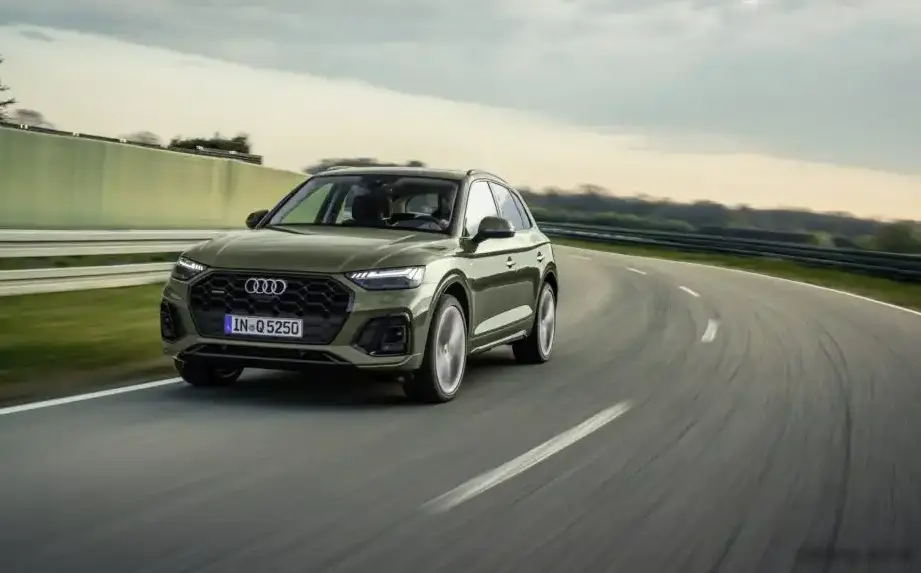
The Audi Q5 II (FY) 40 TFSI Mild Hybrid quattro ultra S tronic, produced from December 2021 to September 2024, represents a significant iteration within the second generation of Audi’s popular Q5 SUV. This variant, positioned as a mid-range offering, combines a 2.0-liter turbocharged four-cylinder engine with a 48-volt mild hybrid system and Audi’s renowned quattro all-wheel-drive system, paired with a seven-speed S tronic dual-clutch transmission. It was designed to balance performance, fuel efficiency, and everyday usability within the competitive luxury compact SUV segment, primarily targeting the European and North American markets.
Technical Specifications
| Brand | Audi |
| Model | Q5 |
| Generation | Q5 II (FY, facelift 2020) |
| Type (Engine) | 40 TFSI (204 Hp) Mild Hybrid quattro ultra S tronic |
| Start of production | December, 2021 |
| End of production | September, 2024 |
| Powertrain Architecture | MHEV (Mild Hybrid Electric Vehicle) |
| Body type | SUV |
| Seats | 5 |
| Doors | 5 |
| Combined fuel consumption (WLTP) | 7.6-8.7 l/100 km (30.9 – 27 US mpg) |
| CO2 emissions (WLTP) | 173-198 g/km |
| Fuel consumption (urban NEDC) | 7.9-8.2 l/100 km (29.8 – 28.7 US mpg) |
| Fuel consumption (extra urban NEDC) | 5.7-6.1 l/100 km (41.3 – 38.6 US mpg) |
| Fuel consumption (combined NEDC) | 6.5-6.9 l/100 km (36.2 – 34.1 US mpg) |
| CO2 emissions (NEDC) | 149-157 g/km |
| Fuel Type | Petrol (Gasoline) |
| Acceleration 0 – 100 km/h | 7.3 sec |
| Acceleration 0 – 62 mph | 7.3 sec |
| Acceleration 0 – 60 mph | 6.9 sec |
| Maximum speed | 223 km/h (138.57 mph) |
| Emission standard | Euro 6d-ISC-FCM |
| Weight-to-power ratio | 8.6 kg/Hp |
| Weight-to-torque ratio | 5.5 kg/Nm |
| Power | 204 Hp @ 4475-6000 rpm |
| Torque | 320 Nm @ 1450-4375 rpm (236.02 lb.-ft.) |
| Engine layout | Front, Longitudinal |
| Engine displacement | 1984 cm3 (121.07 cu. in.) |
| Number of cylinders | 4 |
| Engine configuration | Inline |
| Cylinder Bore | 82.5 mm (3.25 in.) |
| Piston Stroke | 92.8 mm (3.65 in.) |
| Number of valves per cylinder | 4 |
| Fuel injection system | Direct injection |
| Engine aspiration | Turbocharger, Intercooler |
| Valvetrain | DOHC |
| Kerb Weight | 1755 kg (3869.11 lbs.) |
| Trunk (boot) space – minimum | 520 l (18.36 cu. ft.) |
| Trunk (boot) space – maximum | 1520 l (53.68 cu. ft.) |
| Fuel tank capacity | 70 l (18.49 US gal) |
| Max. roof load | 75 kg (165.35 lbs.) |
| Permitted trailer load with brakes (12%) | 2400 kg (5291.09 lbs.) |
| Permitted trailer load without brakes | 750 kg (1653.47 lbs.) |
| Permitted towbar download | 100 kg (220.46 lbs.) |
| Length | 4682 mm (184.33 in.) |
| Width | 1893 mm (74.53 in.) |
| Width including mirrors | 2140 mm (84.25 in.) |
| Height | 1662 mm (65.43 in.) |
| Wheelbase | 2819 mm (110.98 in.) |
| Front track | 1616 mm (63.62 in.) |
| Rear track | 1609 mm (63.35 in.) |
| Front overhang | 910 mm (35.83 in.) |
| Rear overhang | 953 mm (37.52 in.) |
| Drag coefficient (Cd) | 0.30 |
| Minimum turning circle | 11.8 m (38.71 ft.) |
| Drivetrain Architecture | All wheel drive (4×4). MHEV. |
| Number of gears | 7 |
| Type of gearbox | Automatic transmission S tronic |
| Front suspension | Independent multi-link suspension, Transverse stabilizer |
| Rear suspension | Independent multi-link suspension, Transverse stabilizer |
| Front brakes | Ventilated discs |
| Rear brakes | Ventilated discs |
INTRODUCTION
The Audi Q5 II (FY) underwent a facelift in 2020, bringing updated styling, enhanced technology, and refined powertrains. The 40 TFSI Mild Hybrid quattro ultra S tronic, introduced in late 2021, is a key variant within this updated range. It builds upon the successful foundation of the Q5, offering a compelling blend of luxury, practicality, and efficiency. The “40 TFSI” designation indicates the engine’s power output relative to Audi’s internal naming convention, while “Mild Hybrid” signifies the inclusion of a 48-volt electrical system to assist the engine and enable features like extended coasting. The “quattro ultra” system is an on-demand all-wheel-drive system that prioritizes front-wheel drive for efficiency but can seamlessly engage all four wheels when traction demands it. The S tronic transmission is a seven-speed dual-clutch unit known for its quick and smooth shifts.
Powertrain & Engine Architecture
At the heart of the Q5 40 TFSI lies the EA888 2.0-liter turbocharged inline-four cylinder engine. Specifically, this engine utilizes direct fuel injection and an integrated exhaust manifold for improved thermal management and responsiveness. The engine code is typically associated with variations of the EA888 family. The turbocharger, often a twin-scroll unit, provides boost across a wide RPM range, contributing to the engine’s 320 Nm (236 lb-ft) of torque available from 1450 to 4375 rpm. The mild hybrid system incorporates a belt starter generator (BSG) and a small lithium-ion battery. The BSG allows for extended engine-off coasting, regenerative braking to recapture energy, and a smoother start-stop function. The seven-speed S tronic transmission is a dual-clutch unit that offers both automatic and manual shifting modes. It features a sophisticated electronic control system that optimizes shift points for performance and efficiency. Gear ratios are tuned to provide a balance between acceleration and fuel economy.
Driving Characteristics
The Q5 40 TFSI delivers a refined and comfortable driving experience. While not overtly sporty, the 204 horsepower and 320 Nm of torque provide adequate acceleration for everyday driving and highway merging. The 0-60 mph sprint takes approximately 6.9 seconds. The S tronic transmission contributes to smooth and quick gear changes, enhancing the overall driving feel. The quattro ultra all-wheel-drive system provides excellent traction in various conditions, inspiring confidence on slippery surfaces. Compared to the more powerful Q5 45 TFSI, the 40 TFSI offers a slightly less aggressive throttle response and a more relaxed driving character. The mild hybrid system is largely transparent to the driver, providing subtle assistance and contributing to improved fuel economy.
Equipment & Trim Levels
The Q5 40 TFSI typically came well-equipped as standard. Common features included Audi’s MMI touch response infotainment system with a 10.1-inch touchscreen display, Audi virtual cockpit (digital instrument cluster), leather upholstery, three-zone automatic climate control, and a suite of driver-assistance systems such as lane departure warning and forward collision warning. Optional extras included a panoramic sunroof, premium sound system, adaptive cruise control, and various interior trim packages. Trim levels varied by market, but generally offered increasing levels of luxury and technology.
Chassis & Braking
The Q5 II utilizes a sophisticated chassis design featuring independent multi-link suspension at both the front and rear axles. This setup provides a comfortable ride quality while maintaining good handling characteristics. The suspension is tuned to prioritize comfort, but still offers a reasonable level of body control. The Q5 40 TFSI is equipped with ventilated disc brakes on all four wheels, providing ample stopping power. Anti-lock braking system (ABS) and electronic stability control (ESC) are standard features, enhancing safety and stability.
Market Reception & Comparison
The Audi Q5 40 TFSI Mild Hybrid quattro ultra S tronic was generally well-received by automotive critics. It was praised for its comfortable ride, refined interior, and efficient powertrain. Fuel economy figures of 7.6-8.7 l/100 km (30.9-27 US mpg) were competitive within the luxury compact SUV segment. Compared to the Q5 45 TFSI, the 40 TFSI offered a more affordable entry point into the Q5 range, albeit with slightly less performance. The mild hybrid system was seen as a positive addition, contributing to improved fuel efficiency and reduced emissions. Reliability reports have generally been positive, with the EA888 engine proving to be a durable and dependable unit.
Legacy
The Audi Q5 II 40 TFSI Mild Hybrid quattro ultra S tronic represents a significant step in Audi’s push towards electrification and improved fuel efficiency. The combination of a turbocharged engine, mild hybrid technology, and all-wheel drive provides a compelling package for buyers seeking a luxurious and practical SUV. On the used car market, these models are generally sought after for their blend of features, reliability, and relatively good fuel economy. The EA888 engine, while not without its potential maintenance needs (such as carbon buildup), has proven to be a robust and long-lasting unit when properly maintained. The S tronic transmission, while generally reliable, may require servicing at higher mileages.