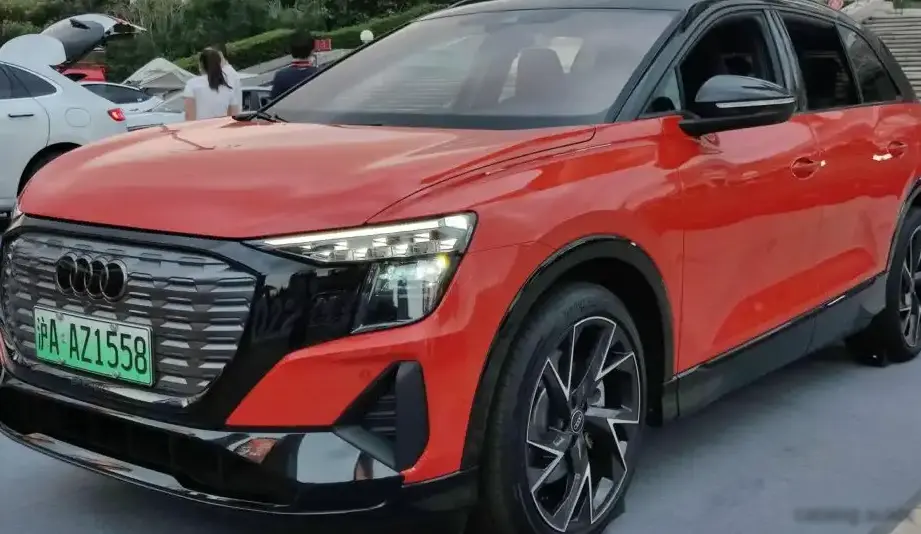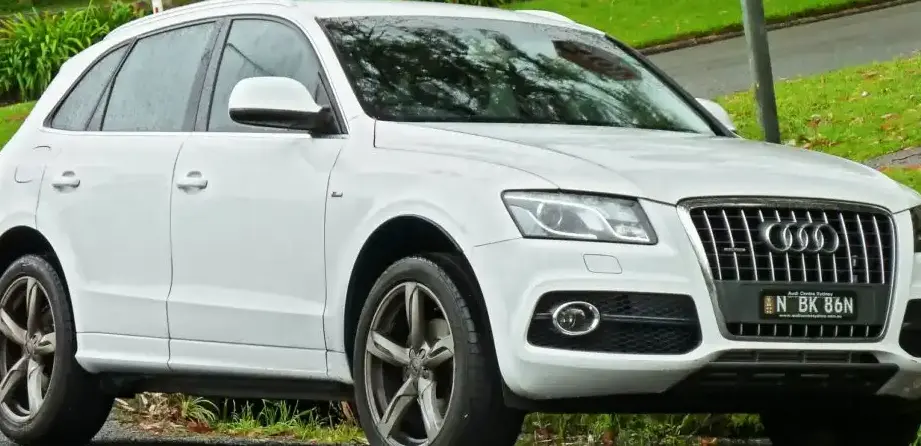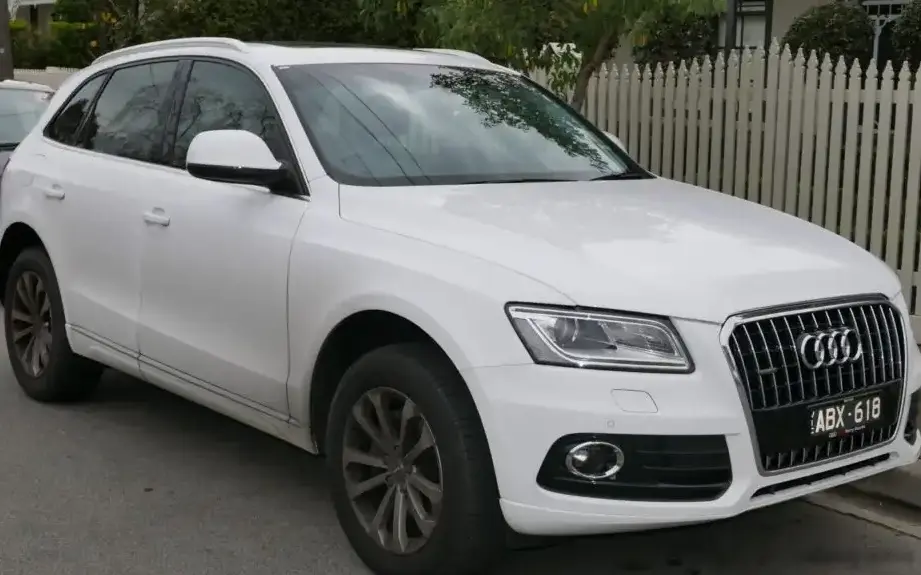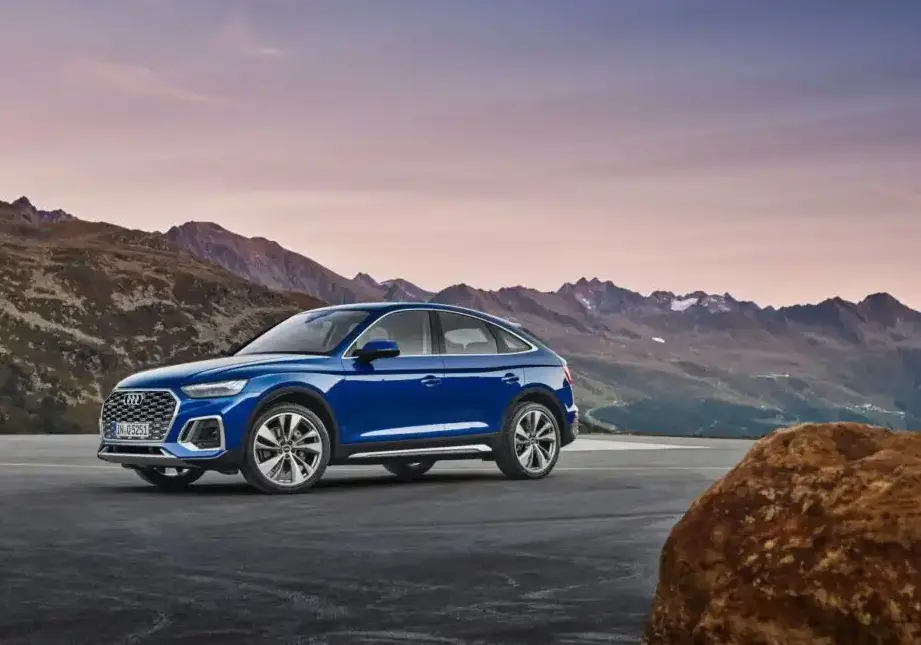
The Audi Q5 II Sportback 50 TDI, produced from 2020 through November 2024, represents a compelling blend of performance, efficiency, and practicality within the luxury compact SUV segment. This variant, part of the FY facelift generation, positioned itself as a mid-to-upper tier offering in the Q5 Sportback lineup, appealing to buyers seeking a more powerful and refined experience than the base models, but without the outright performance focus of the SQ5. It features a 3.0-liter V6 turbocharged diesel engine paired with a mild-hybrid system and Audi’s renowned quattro all-wheel-drive system, managed by an eight-speed tiptronic automatic transmission. The Sportback body style, with its sloping roofline, distinguishes it from the standard Q5, offering a more coupe-like aesthetic.
Technical Specifications
| Brand | Audi |
| Model | Q5 |
| Generation | Q5 II Sportback (FY, facelift 2020) |
| Type (Engine) | 50 TDI V6 (286 Hp) Mild Hybrid quattro tiptronic |
| Start of production | 2020 |
| End of production | November, 2024 |
| Powertrain Architecture | MHEV (Mild Hybrid Electric Vehicle) |
| Body type | SUV |
| Seats | 5 |
| Doors | 5 |
| Combined fuel consumption (WLTP) | 8.0-8.7 l/100 km (29.4 – 27 US mpg) |
| CO2 emissions (WLTP) | 210-228 g/km |
| Fuel consumption (economy) – urban (NEDC) | 8.4-8.5 l/100 km (28 – 27.7 US mpg) |
| Fuel consumption (economy) – extra urban (NEDC) | 5.7-5.9 l/100 km (41.3 – 39.9 US mpg) |
| Fuel consumption (economy) – combined (NEDC) | 6.7-6.9 l/100 km (35.1 – 34.1 US mpg) |
| CO2 emissions (NEDC) | 176-182 g/km |
| Fuel Type | Diesel |
| Acceleration 0 – 100 km/h | 5.7 sec |
| Acceleration 0 – 62 mph | 5.7 sec |
| Acceleration 0 – 60 mph | 5.4 sec |
| Maximum speed | 240 km/h (149.13 mph) |
| Emission standard | Euro 6d-ISC-FCM |
| Weight-to-power ratio | 6.8 kg/Hp |
| Weight-to-torque ratio | 3.2 kg/Nm |
| Power | 286 Hp @ 3500-4000 rpm |
| Torque | 620 Nm @ 1750-3000 rpm (457.29 lb.-ft.) |
| Engine layout | Front, Longitudinal |
| Engine Model/Code | EA897evo3 / DMGA |
| Engine displacement | 2967 cm3 (181.06 cu. in.) |
| Number of cylinders | 6 |
| Engine configuration | V-engine |
| Number of valves per cylinder | 4 |
| Fuel injection system | Diesel Commonrail |
| Engine aspiration | Turbocharger, Intercooler |
| Engine oil capacity | 6.1 l (6.45 US qt | 5.37 UK qt) |
| Kerb Weight | 1955 kg (4310.04 lbs.) |
| Trunk (boot) space – minimum | 510 l (18.01 cu. ft.) |
| Trunk (boot) space – maximum | 1480 l (52.27 cu. ft.) |
| Fuel tank capacity | 70 l (18.49 US gal | 15.4 UK gal) |
| Max. roof load | 75 kg (165.35 lbs.) |
| Permitted trailer load with brakes (12%) | 2400 kg (5291.09 lbs.) |
| Permitted trailer load without brakes | 750 kg (1653.47 lbs.) |
| Permitted towbar download | 100 kg (220.46 lbs.) |
| Length | 4689 mm (184.61 in.) |
| Width | 1893 mm (74.53 in.) |
| Width including mirrors | 2140 mm (84.25 in.) |
| Height | 1660 mm (65.35 in.) |
| Wheelbase | 2819 mm (110.98 in.) |
| Front track | 1616 mm (63.62 in.) |
| Rear (Back) track | 1609 mm (63.35 in.) |
| Front overhang | 910 mm (35.83 in.) |
| Rear overhang | 960 mm (37.8 in.) |
| Drivetrain Architecture | ICE and electric motor, permanent all-wheel drive |
| Drive wheel | All wheel drive (4×4) |
| Number of gears and type of gearbox | 8 gears, automatic transmission tiptronic |
| Front brakes | Ventilated discs |
| Rear brakes | Disc |
| Tires size | 235/60 R18 |
| Wheel rims size | 8J x 18 |
INTRODUCTION
The Audi Q5 II Sportback 50 TDI debuted in 2020 as part of the facelift for the second-generation Q5 (FY) series. Building upon the success of the original Q5, the Sportback variant aimed to attract customers desiring a more dynamic and stylish SUV. The “50 TDI” designation signifies a specific engine and power output level within the Q5 range. This model occupied a sweet spot in the lineup, offering a substantial performance upgrade over the 40 TDI while remaining more accessible than the performance-oriented SQ5. It was primarily marketed towards European and Asian markets, where diesel engines continue to hold significant popularity due to their fuel efficiency and torque characteristics. The Q5 Sportback 50 TDI was discontinued in November 2024.
Powertrain & Engine Architecture
At the heart of the Q5 Sportback 50 TDI lies the EA897evo3 3.0-liter V6 turbocharged diesel engine, internally coded as DMGA. This engine is a sophisticated design featuring a common-rail direct injection system operating at extremely high pressures to optimize combustion. The engine utilizes four valves per cylinder and a single turbocharger with an intercooler to deliver both power and efficiency. The mild-hybrid system, a 48-volt system, incorporates a belt starter generator (BSG) that enables features like extended engine-off coasting, smoother start-stop operation, and a slight power boost during acceleration. The eight-speed tiptronic automatic transmission is a torque-converter type, known for its smooth shifts and responsiveness. It’s programmed to prioritize fuel efficiency while still providing ample power when needed. The transmission is integral to the quattro all-wheel-drive system, which utilizes a self-locking center differential to distribute torque between the front and rear axles, ensuring optimal traction in various conditions.
Driving Characteristics
The Q5 Sportback 50 TDI delivers a refined and capable driving experience. The 620 Nm (457.29 lb.-ft.) of torque, available from 1750-3000 rpm, provides strong acceleration in everyday driving situations and effortless overtaking. The 0-60 mph sprint takes approximately 5.4 seconds, making it a genuinely quick SUV. The eight-speed tiptronic transmission is well-matched to the engine, offering smooth and timely gear changes. Compared to the 40 TDI, the 50 TDI feels significantly more powerful and responsive. While not as aggressively tuned as the SQ5, it provides ample power for spirited driving. The quattro all-wheel-drive system inspires confidence in all weather conditions, providing excellent grip and stability. The suspension is tuned for comfort, absorbing bumps and imperfections in the road effectively, but it still maintains a degree of body control during cornering.
Equipment & Trim Levels
The Q5 Sportback 50 TDI typically came well-equipped as standard. Features included Audi’s Virtual Cockpit digital instrument cluster, a touchscreen infotainment system with navigation, leather upholstery, tri-zone automatic climate control, and a suite of driver-assistance systems such as adaptive cruise control, lane departure warning, and automatic emergency braking. Optional extras included a panoramic sunroof, a Bang & Olufsen sound system, ventilated front seats, and a head-up display. Trim levels varied slightly depending on the market, but generally offered progressive upgrades in terms of interior materials, exterior styling, and technology features. The Sportback model also featured a more aggressively styled rear end compared to the standard Q5, with a sloping roofline and integrated spoiler.
Chassis & Braking
The Q5 Sportback 50 TDI utilizes a MacPherson strut front suspension and a multi-link rear suspension. The suspension components are tuned to provide a balance between comfort and handling. The standard brakes consist of ventilated discs at the front and solid discs at the rear. The braking system is assisted by ABS (Anti-lock Braking System), electronic brake-force distribution, and brake assist. The steering is an electromechanical power steering system, providing precise and responsive steering feel. The Q5 Sportback 50 TDI typically came equipped with 18-inch alloy wheels as standard, with larger wheel sizes available as an option.
Market Reception & Comparison
The Q5 Sportback 50 TDI was generally well-received by automotive critics. It was praised for its powerful engine, refined driving experience, and stylish design. Compared to the 40 TDI, the 50 TDI offered a significant performance upgrade, making it a more appealing option for drivers who prioritize power and responsiveness. However, it came at a higher price point. Compared to the SQ5, the 50 TDI offered a more balanced blend of performance and efficiency, making it a more practical choice for everyday driving. Fuel economy was a strong point, with combined figures ranging from 8.0-8.7 l/100 km (29.4 – 27 US mpg), making it relatively efficient for a V6-powered SUV.
Legacy
The Audi Q5 II Sportback 50 TDI represents a high point in the development of diesel-powered luxury SUVs. The EA897evo3 engine is known for its reliability and durability, and the mild-hybrid system helps to improve fuel efficiency and reduce emissions. On the used car market, these models hold their value well, reflecting their desirable combination of performance, luxury, and practicality. While diesel engines are facing increasing scrutiny due to environmental concerns, the Q5 Sportback 50 TDI remains a compelling option for buyers seeking a refined and capable SUV with strong fuel economy and a proven powertrain.