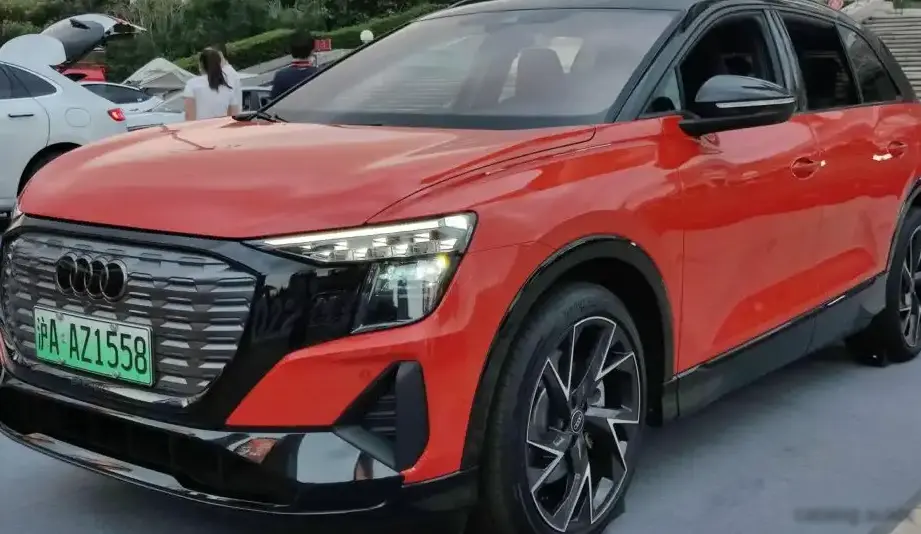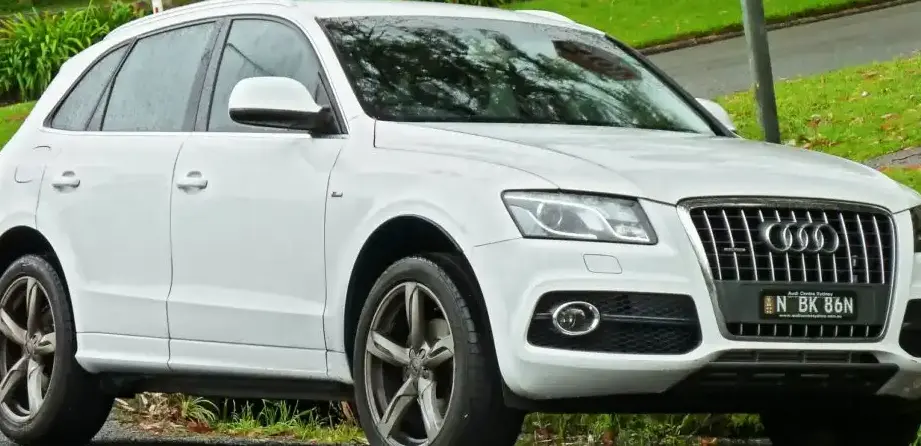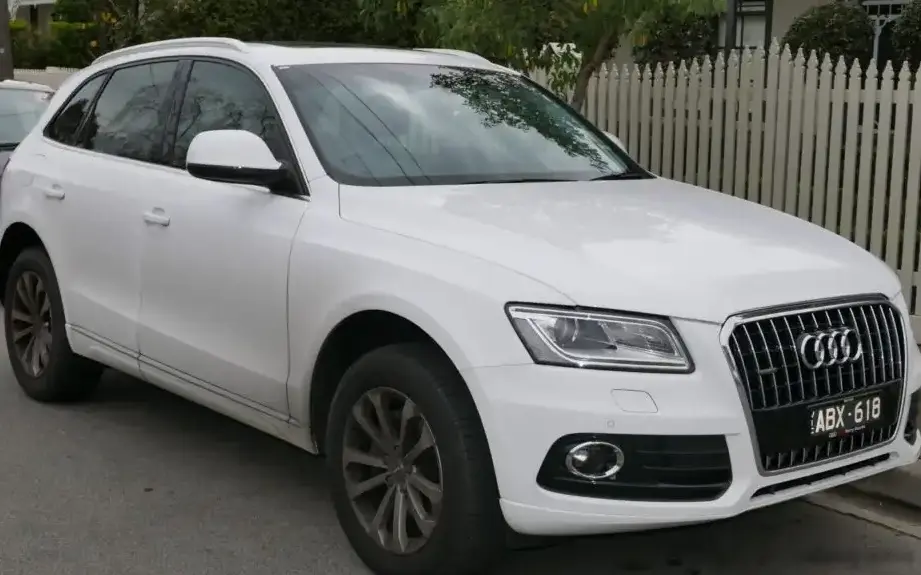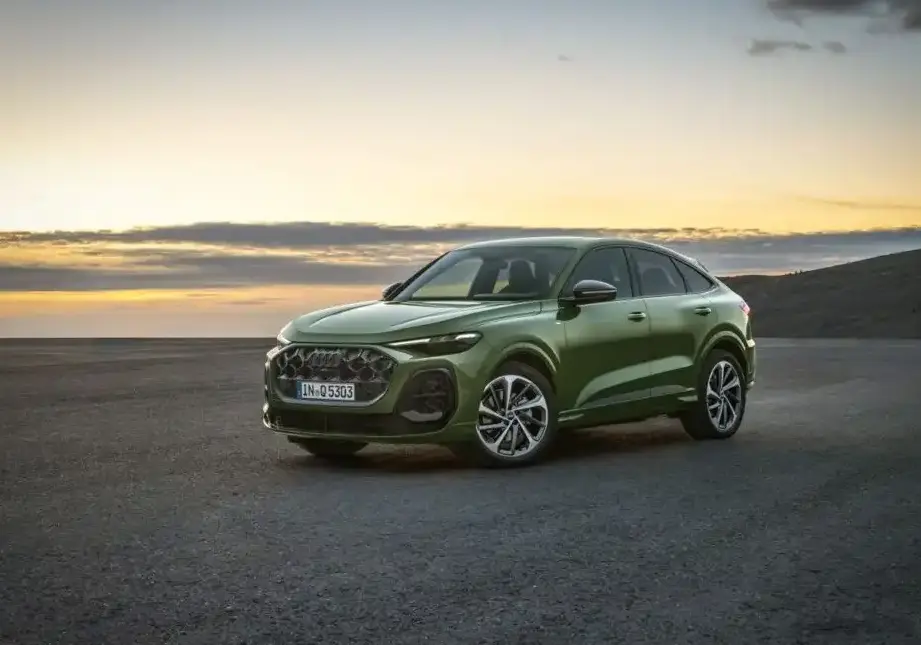
The Audi Q5 III Sportback (GU) 2.0 TFSI, launched in November 2024, represents the latest iteration of Audi’s popular mid-size luxury SUV. This variant, equipped with a 2.0-liter turbocharged four-cylinder engine producing 204 horsepower and a mild hybrid system paired with a seven-speed S tronic dual-clutch transmission, occupies a key position in the Q5 Sportback lineup. It’s designed to balance performance, efficiency, and technology, appealing to buyers seeking a premium SUV experience without the higher price tag of the more powerful models. The “GU” designation refers to a significant facelift and technology update for the Q5 series, building upon the foundation of the MLB Evo platform.
Technical Specifications
| Brand | Audi |
| Model | Q5 |
| Generation | Q5 III Sportback (GU) |
| Type (Engine) | 2.0 TFSI (204 Hp) Mild Hybrid plus S tronic |
| Start of production | November, 2024 |
| Powertrain Architecture | MHEV (Mild Hybrid Electric Vehicle) |
| Body type | SUV |
| Seats | 5 |
| Doors | 5 |
| Combined fuel consumption (WLTP) | 7.1-7.4 l/100 km (33.1 – 31.8 US mpg, 39.8 – 38.2 UK mpg, 14.1 – 13.5 km/l) |
| CO2 emissions (WLTP) | 148-169 g/km |
| Fuel Type | Petrol (Gasoline) |
| Acceleration 0 – 100 km/h | 8.6 sec |
| Acceleration 0 – 62 mph | 8.6 sec |
| Acceleration 0 – 60 mph | 8.2 sec |
| Maximum speed | 226 km/h (140.43 mph) |
| Emission standard | Euro 6e |
| Weight-to-power ratio | 9.1 kg/Hp, 110.3 Hp/tonne |
| Weight-to-torque ratio | 5.4 kg/Nm, 183.8 Nm/tonne |
| Gross battery capacity | 1.7 kWh |
| Battery voltage | 48 V |
| Battery technology | Lithium iron phosphate (LiFePO4) |
| Battery location | Under the trunk |
| Recuperation output | 25 kW |
| Electric motor power | 24 Hp |
| Electric motor Torque | 230 Nm (169.64 lb.-ft.) |
| Electric motor location | Middle, Longitudinal |
| Power | 204 Hp @ 4300-6000 rpm |
| Torque | 340 Nm @ 2000-4000 rpm (250.77 lb.-ft. @ 2000-4000 rpm) |
| Engine layout | Front, Longitudinal |
| Engine Model/Code | DXA |
| Engine displacement | 1984 cm3 (121.07 cu. in.) |
| Number of cylinders | 4 |
| Engine configuration | Inline |
| Cylinder Bore | 82.5 mm (3.25 in.) |
| Piston Stroke | 92.8 mm (3.65 in.) |
| Compression ratio | 12.5:1 |
| Number of valves per cylinder | 4 |
| Fuel injection system | Direct injection |
| Engine aspiration | Turbocharger, Intercooler |
| Valvetrain | DOHC |
| Engine oil capacity | 6 l (6.34 US qt | 5.28 UK qt) |
| Coolant | 17.4 l (18.39 US qt | 15.31 UK qt) |
| Kerb Weight | 1850 kg (4078.55 lbs.) |
| Max. weight | 2460 kg (5423.37 lbs.) |
| Max load | 610 kg (1344.82 lbs.) |
| Trunk (boot) space – minimum | 515 l (18.19 cu. ft.) |
| Trunk (boot) space – maximum | 1415 l (49.97 cu. ft.) |
| Fuel tank capacity | 65 l (17.17 US gal | 14.3 UK gal) |
| Max. roof load | 75 kg (165.35 lbs.) |
| Permitted trailer load with brakes (8%) | 2000 kg (4409.25 lbs.) |
| Permitted trailer load with brakes (12%) | 2000 kg (4409.25 lbs.) |
| Permitted trailer load without brakes | 750 kg (1653.47 lbs.) |
| Permitted towbar download | 100 kg (220.46 lbs.) |
| Length | 4717 mm (185.71 in.) |
| Width | 1900 mm (74.8 in.) |
| Width including mirrors | 2155 mm (84.84 in.) |
| Height | 1619-1656 mm (63.74 – 65.2 in.) |
| Wheelbase | 2823 mm (111.14 in.) |
| Front track | 1621 mm (63.82 in.) |
| Rear (Back) track | 1613 mm (63.5 in.) |
| Drag coefficient (Cd) | 0.31 |
| Minimum turning circle (turning diameter) | 11.8 m (38.71 ft.) |
| Approach angle | 16.6° |
| Departure angle | 24.5° |
| Drivetrain Architecture | ICE and electric motor drive the front wheels |
| Drive wheel | Front wheel drive |
| Number of gears and type of gearbox | 7 gears, automatic transmission S tronic |
| Front suspension | Independent multi-link suspension |
| Rear suspension | Independent multi-link suspension |
| Front brakes | Ventilated discs, 338 mm |
| Rear brakes | Disc, 330 mm |
| Tires size | 235/60 R18; 235/55 R19; 255/45 R20; 255/40 R21 |
| Wheel rims size | 8.0J x 18; 8.0J x 19; 8.0J x 20; 8.5J x 21 |
Powertrain & Engine Architecture
At the heart of the Q5 III Sportback 2.0 TFSI lies the DXA engine code, a 1.984-liter inline-four cylinder gasoline engine. This engine utilizes direct fuel injection and a single turbocharger with an intercooler to deliver a balance of power and efficiency. The engine’s 12.5:1 compression ratio contributes to its thermal efficiency. The mild hybrid system, a 48V system, incorporates a belt-driven starter generator (BSG) and a small lithium-ion battery. This system allows for extended start-stop functionality, regenerative braking, and a limited amount of electric assistance during acceleration. The seven-speed S tronic dual-clutch transmission provides quick and smooth gear changes, enhancing the driving experience. This transmission is known for its efficiency and responsiveness compared to traditional torque-converter automatics.
Driving Characteristics
The 204 horsepower and 340 Nm (250.77 lb-ft) of torque provide adequate performance for everyday driving. Acceleration from 0 to 60 mph takes approximately 8.2 seconds, and the top speed is electronically limited to 140.43 mph. While not as quick as the higher-output Q5 variants, the 2.0 TFSI offers a comfortable and refined driving experience. The S tronic transmission contributes to seamless gear changes, and the mild hybrid system helps to smooth out the start-stop transitions. The front-wheel-drive configuration provides good traction in most conditions, although all-wheel drive (quattro) is available as an option for enhanced stability and performance. The gear ratios are tuned for a balance between fuel economy and responsiveness, with a focus on providing sufficient torque in the lower gears for everyday driving situations.
Equipment & Trim Levels
The Q5 III Sportback 2.0 TFSI typically comes standard with a generous array of features, including Audi’s Virtual Cockpit digital instrument cluster, a touchscreen infotainment system with Apple CarPlay and Android Auto compatibility, leather upholstery, and a panoramic sunroof. Standard safety features include automatic emergency braking, lane departure warning, and blind-spot monitoring. Optional extras include adaptive cruise control, a premium sound system, and upgraded interior trim materials. Trim levels often build upon this base, adding features like heated and ventilated seats, a head-up display, and more advanced driver-assistance systems.
Chassis & Braking
The Q5 Sportback features an independent multi-link suspension at both the front and rear axles, providing a comfortable and controlled ride. The suspension is tuned to balance handling and comfort, making it suitable for both city driving and longer highway journeys. The braking system consists of ventilated discs at the front and solid discs at the rear. ABS (Anti-lock Braking System) is standard, along with electronic stability control. The steering is electric power-assisted, providing precise and responsive steering feel.
Market Reception & Comparison
The Audi Q5 III Sportback 2.0 TFSI has been well-received by critics for its blend of luxury, technology, and efficiency. It offers a compelling alternative to rivals such as the BMW X3, Mercedes-Benz GLC, and Acura RDX. Compared to the higher-output Q5 variants, the 2.0 TFSI offers better fuel economy and a lower price point, making it an attractive option for buyers who prioritize value. However, it lacks the outright performance of its more powerful siblings. The mild hybrid system contributes to improved fuel efficiency, but its impact on overall performance is relatively modest.
Legacy
The DXA engine, in various iterations, has proven to be a reliable and durable powerplant within the Volkswagen Group. The S tronic transmission is also known for its longevity when properly maintained. While long-term reliability data for the 2024 Q5 Sportback is still emerging, the underlying technology has a solid track record. In the used car market, these models are expected to hold their value well due to Audi’s reputation for quality and the Q5’s popularity. Regular maintenance, including oil changes and transmission servicing, will be crucial to ensuring the long-term reliability of this powertrain.