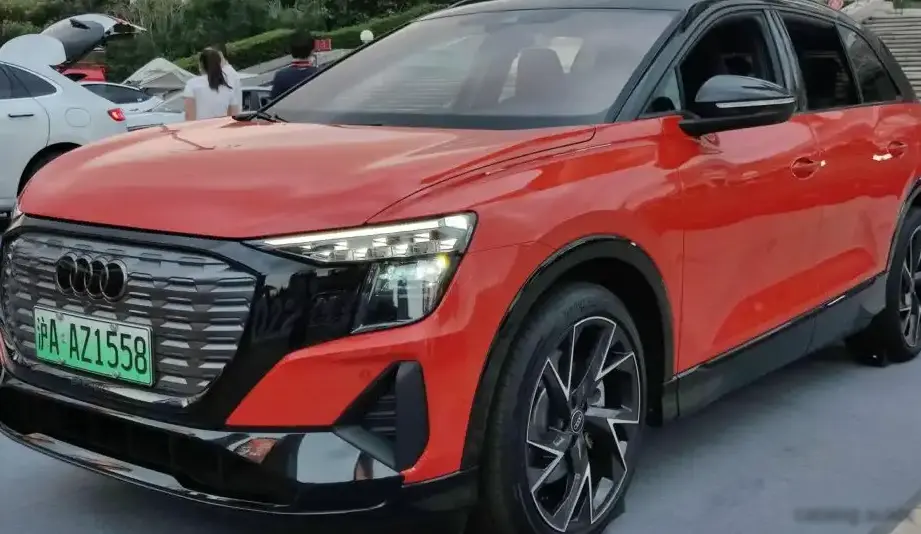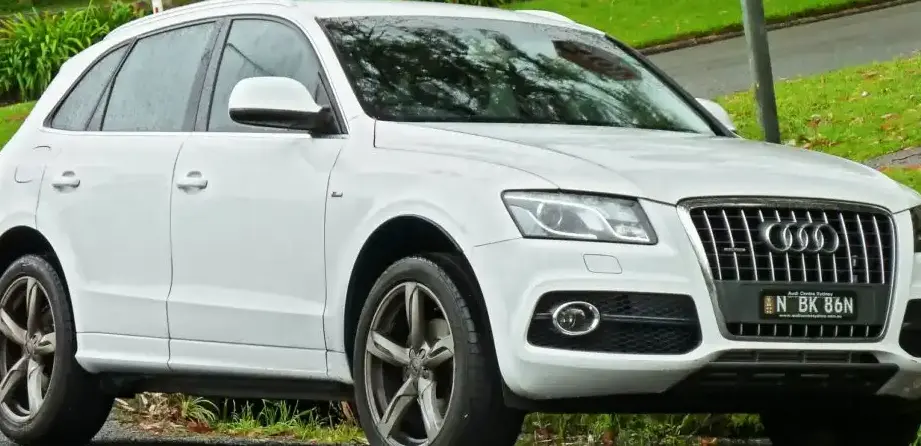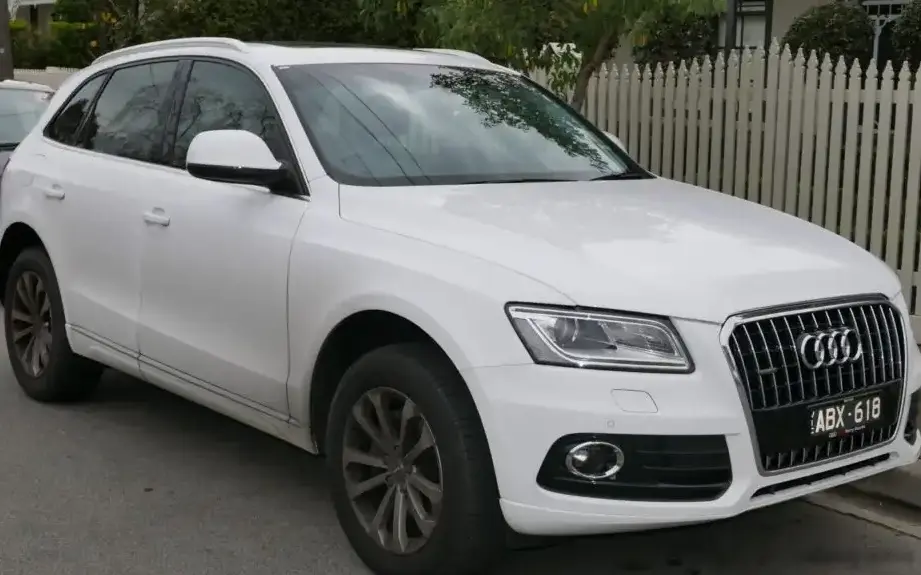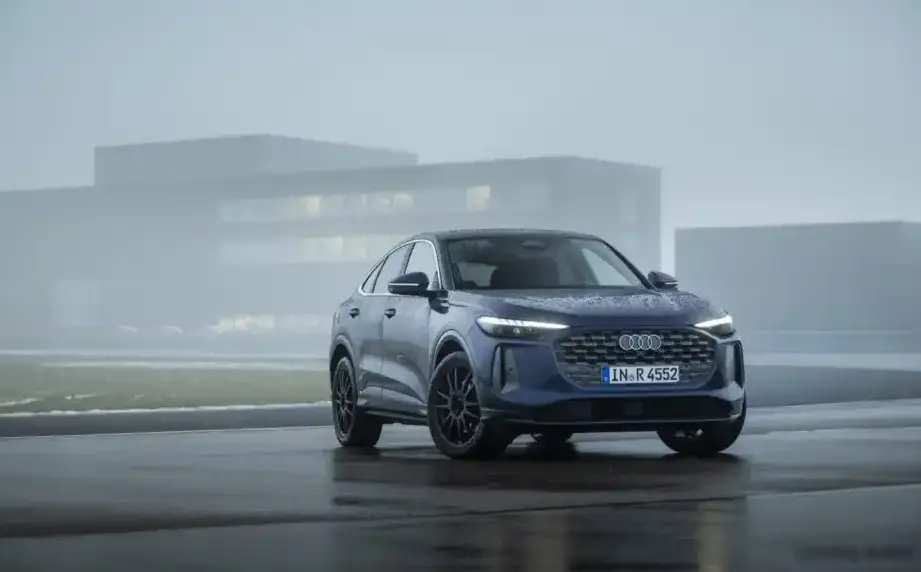
The Audi Q5 III Sportback (GU) 3.0 TDI V6, introduced in November 2025, represents a sophisticated iteration of Audi’s popular mid-size luxury SUV. Positioned as a premium offering within the Q5 Sportback range, this variant combines a powerful diesel engine with mild hybrid technology and Audi’s renowned quattro all-wheel-drive system. It builds upon the foundation of the Q5 III (GU) generation, utilizing the MLB Evo platform, and aims to deliver a balance of performance, efficiency, and practicality for discerning buyers. The “GU” designation signifies a significant mid-cycle refresh, bringing updated styling, technology, and powertrain options to the Q5 lineup.
Technical Specifications
| Brand | Audi |
| Model | Q5 |
| Generation | Q5 III Sportback (GU) |
| Type (Engine) | 3.0 TDI V6 (299 Hp) Mild Hybrid plus quattro ultra S tronic |
| Start of production | November, 2025 |
| Powertrain Architecture | MHEV (Mild Hybrid Electric Vehicle) |
| Body type | SUV |
| Seats | 5 |
| Doors | 5 |
| Combined fuel consumption (WLTP) | 5.8-6.7 l/100 km (40.6 – 35.1 US mpg, 48.7 – 42.2 UK mpg, 17.2 – 14.9 km/l) |
| CO2 emissions (WLTP) | 153-176 g/km |
| Fuel Type | Diesel |
| Acceleration 0 – 100 km/h | 5 sec |
| Acceleration 0 – 62 mph | 5 sec |
| Acceleration 0 – 60 mph | 4.8 sec |
| Maximum speed | 250 km/h (155.34 mph) |
| Emission standard | Euro 6e-bis |
| Weight-to-power ratio | 6.9 kg/Hp, 145.1 Hp/tonne |
| Weight-to-torque ratio | 3.6 kg/Nm, 281.6 Nm/tonne |
| Battery voltage | 48 V |
| Battery technology | Lithium iron phosphate (LiFePO4) |
| Battery location | Under the trunk |
| Recuperation output | 25 kW |
| Electric motor power | 24 Hp |
| Electric motor Torque | 230 Nm (169.64 lb.-ft.) |
| Electric motor location | Middle, Longitudinal |
| Power | 299 Hp @ 3620-3750 rpm |
| Torque | 580 Nm @ 1500-3620 rpm (427.79 lb.-ft. @ 1500-3620 rpm) |
| Engine layout | Front, Longitudinal |
| Engine Model/Code | EA897 evo4 |
| Engine displacement | 2967 cm3 (181.06 cu. in.) |
| Number of cylinders | 6 |
| Engine configuration | V-engine |
| Cylinder Bore | 83 mm (3.27 in.) |
| Piston Stroke | 91.4 mm (3.6 in.) |
| Number of valves per cylinder | 4 |
| Fuel injection system | Diesel Commonrail |
| Engine aspiration | Turbocharger and Electric Powered Compressor, Intercooler |
| Valvetrain | DOHC |
| Kerb Weight | 2060 kg (4541.52 lbs.) |
| Max. weight | 2700 kg (5952.48 lbs.) |
| Max load | 640 kg (1410.96 lbs.) |
| Trunk (boot) space – minimum | 515 l (18.19 cu. ft.) |
| Trunk (boot) space – maximum | 1415 l (49.97 cu. ft.) |
| Fuel tank capacity | 65 l (17.17 US gal | 14.3 UK gal) |
| Max. roof load | 75 kg (165.35 lbs.) |
| Permitted trailer load with brakes (8%) | 2400 kg (5291.09 lbs.) |
| Permitted trailer load with brakes (12%) | 2400 kg (5291.09 lbs.) |
| Permitted trailer load without brakes | 750 kg (1653.47 lbs.) |
| Permitted towbar download | 100 kg (220.46 lbs.) |
| Length | 4717 mm (185.71 in.) |
| Width | 1900 mm (74.8 in.) |
| Width including mirrors | 2155 mm (84.84 in.) |
| Height | 1642 mm (64.65 in.) |
| Wheelbase | 2820 mm (111.02 in.) |
| Front track | 1621 mm (63.82 in.) |
| Rear (Back) track | 1613 mm (63.5 in.) |
| Front overhang | 936 mm (36.85 in.) |
| Rear overhang | 961 mm (37.83 in.) |
| Minimum turning circle (turning diameter) | 11.8 m (38.71 ft.) |
| Drivetrain Architecture | ICE and electric motor drive front wheels, rear drive via clutch |
| Drive wheel | All wheel drive (4×4) |
| Number of gears and type of gearbox | 7 gears, automatic transmission S tronic |
| Front suspension | Coil spring, Independent multi-link suspension, Transverse stabilizer, Air Suspension – Optional |
| Rear suspension | Independent multi-link spring suspension with stabilizer, Air Suspension – Optional |
| Front brakes | Ventilated discs |
| Rear brakes | Ventilated discs |
| Assisting systems | ABS (Anti-lock braking system) |
| Steering type | Steering rack and pinion |
| Power steering | Electric Steering |
| Tires size | 235/60 R18; 235/55 R19; 255/45 R20; 255/40 R21 |
| Wheel rims size | 8J x 18; 8J x 19; 8J x 20; 8.5J x 21 |
Powertrain & Engine Architecture
At the heart of the Q5 III Sportback 3.0 TDI lies the EA897 evo4 3.0-liter V6 diesel engine. This engine benefits from significant advancements in combustion technology, including a high-pressure common rail fuel injection system and a sophisticated turbocharging system augmented by an electric powered compressor. This combination delivers 299 horsepower at 3620-3750 rpm and a substantial 580 Nm (427.79 lb-ft) of torque between 1500-3620 rpm. The mild hybrid system, utilizing a 48V lithium iron phosphate (LiFePO4) battery and a 24 hp electric motor, provides start-stop functionality, regenerative braking (up to 25 kW of recuperation), and a limited degree of electric assistance during acceleration. The S tronic 7-speed dual-clutch transmission ensures rapid and smooth gear changes, contributing to the vehicle’s overall performance. The engine is longitudinally mounted, driving all four wheels through Audi’s quattro all-wheel-drive system.
Driving Characteristics
The 3.0 TDI V6 with the S tronic transmission delivers a refined and responsive driving experience. Acceleration to 100 km/h (62 mph) takes just 5 seconds, and the engine provides ample torque for effortless overtaking and comfortable cruising. The mild hybrid system helps to smooth out power delivery and improve fuel economy. Compared to lower-powered Q5 variants, such as the 2.0 TDI, this version offers significantly more performance. While not as overtly sporty as the SQ5, it provides a satisfying balance of power and efficiency. The S tronic transmission’s quick shifts contribute to a more engaging driving experience than a traditional torque-converter automatic.
Equipment & Trim Levels
The Q5 III Sportback 3.0 TDI typically comes well-equipped as standard. Features include Audi’s virtual cockpit digital instrument cluster, a touchscreen infotainment system with navigation, leather upholstery, tri-zone automatic climate control, and a suite of advanced driver-assistance systems (ADAS) such as adaptive cruise control, lane-keeping assist, and automatic emergency braking. Optional extras include a Bang & Olufsen sound system, panoramic sunroof, and air suspension for enhanced ride comfort. Trim levels may vary by market, but generally offer increasing levels of luxury and technology.
Chassis & Braking
The Q5 III Sportback features a sophisticated chassis design, utilizing independent multi-link suspension at both the front and rear. The suspension is tuned to provide a comfortable ride while maintaining good handling characteristics. Available air suspension further enhances ride quality and allows for adjustable ride height. Braking is handled by ventilated discs on all four wheels, providing ample stopping power. ABS, electronic stability control, and traction control are standard features.
Market Reception & Comparison
The Audi Q5 III Sportback 3.0 TDI has been generally well-received by automotive critics. It is praised for its refined engine, comfortable ride, and high-quality interior. Fuel economy is competitive for its class, and the mild hybrid system helps to reduce emissions. Compared to other Q5 variants, the 3.0 TDI offers a significant performance upgrade, but at a higher price point. Competitors include the BMW X4 xDrive30d and the Mercedes-Benz GLC 300 d.
Legacy
The EA897 engine family, including the 3.0 TDI variant, has a reputation for reliability and durability. With proper maintenance, these engines can provide many years of trouble-free service. The integration of mild hybrid technology in the Q5 III Sportback represents a step towards greater fuel efficiency and reduced emissions. As a used vehicle, the 3.0 TDI is likely to hold its value well due to its desirable combination of performance, luxury, and efficiency.