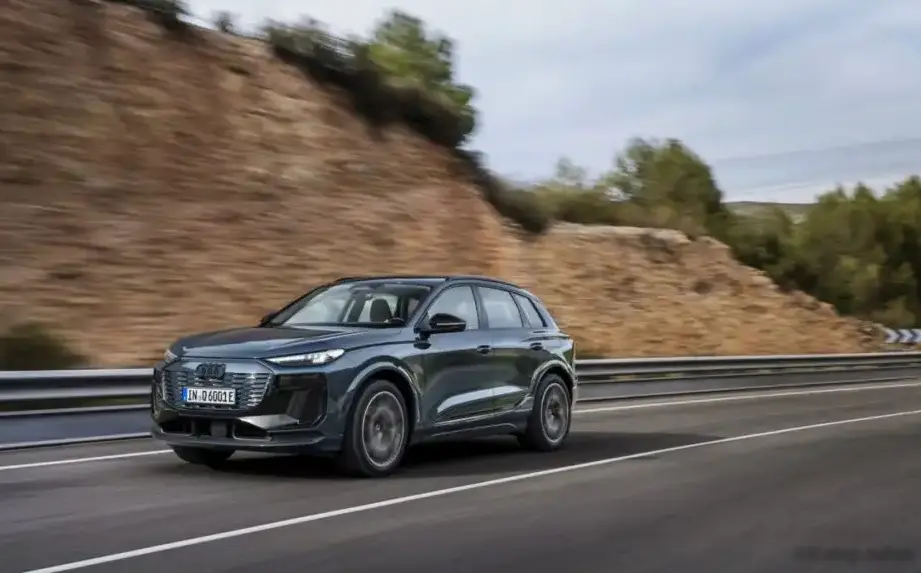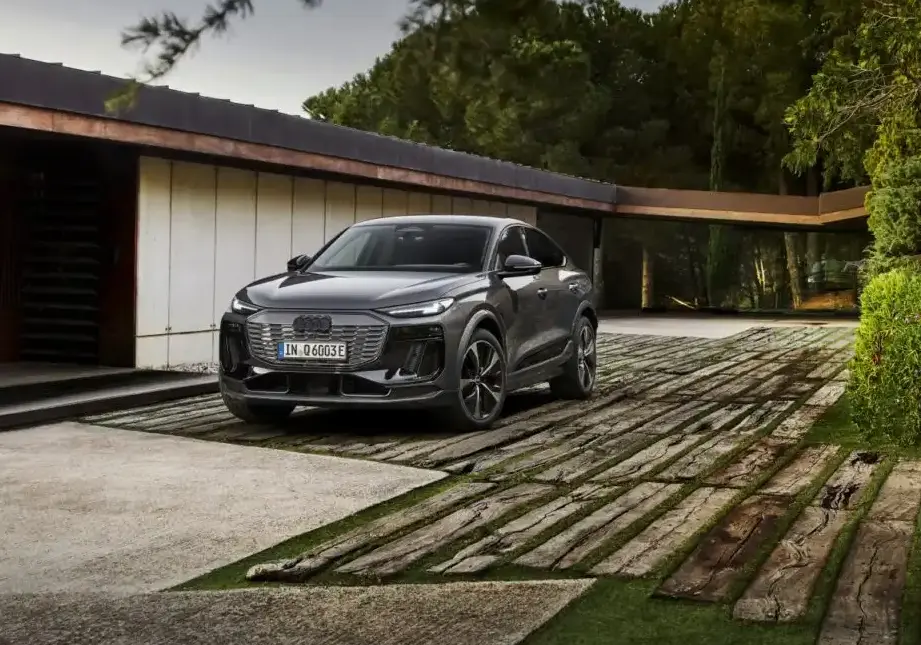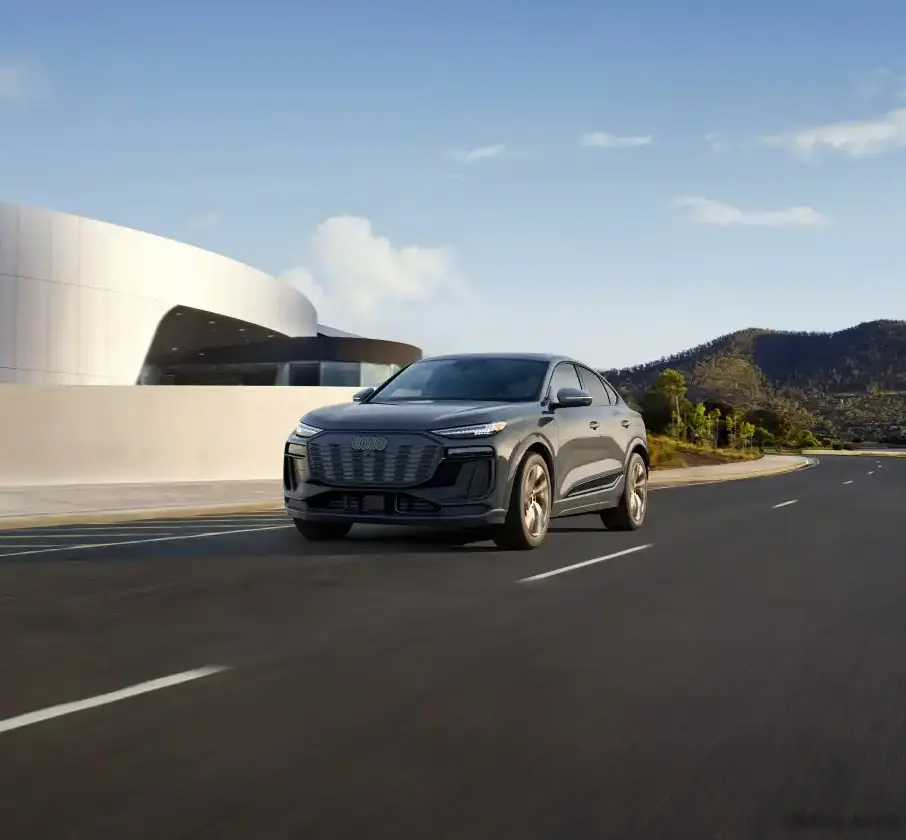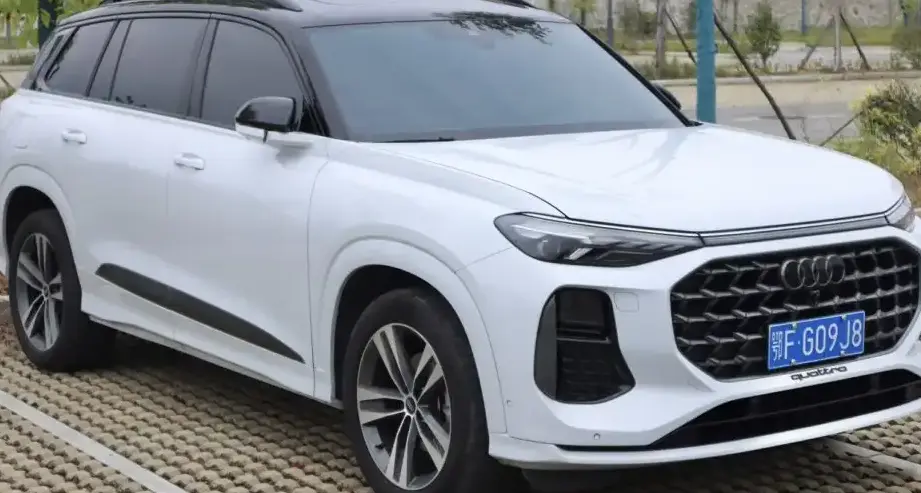
The Audi Q6 40 TFSI quattro S tronic is a mid-size SUV produced by Audi since September 2022. Positioned within the expanding Q-series lineup, the Q6 aims to bridge the gap between the Q5 and the larger Q7, offering a more spacious alternative to the Q5 while remaining more accessible than the flagship Q7. This particular variant, the 40 TFSI, represents a balance between performance and efficiency, targeting buyers seeking a premium SUV experience with a responsive yet economical powertrain. It is primarily marketed in Europe and Asia, where demand for this size of SUV is particularly strong.
Technical Specifications
| Brand | Audi |
| Model | Q6 |
| Generation | Q6 |
| Type (Engine) | 40 TFSI (231 Hp) quattro S tronic |
| Start of production | September, 2022 |
| Powertrain Architecture | Internal Combustion engine |
| Body type | SUV |
| Seats | 6-7 |
| Doors | 5 |
| Fuel consumption (combined) | 9.25 l/100 km (25.4 US mpg, 30.5 UK mpg, 10.8 km/l) |
| Fuel Type | Petrol (Gasoline) |
| Acceleration 0 – 100 km/h | 8.6 sec |
| Acceleration 0 – 62 mph | 8.6 sec |
| Acceleration 0 – 60 mph | 8.2 sec |
| Maximum speed | 207 km/h (128.62 mph) |
| Weight-to-power ratio | 9.5 kg/Hp, 104.8 Hp/tonne |
| Weight-to-torque ratio | 6 kg/Nm, 167.8 Nm/tonne |
| Power | 231 Hp |
| Power per litre | 116.4 Hp/l |
| Torque | 370 Nm (272.9 lb.-ft.) |
| Engine layout | Front, Transverse |
| Engine Model/Code | EA888 / DVL |
| Engine displacement | 1984 cm3 (121.07 cu. in.) |
| Number of cylinders | 4 |
| Engine configuration | Inline |
| Cylinder Bore | 82.5 mm (3.25 in.) |
| Piston Stroke | 92.8 mm (3.65 in.) |
| Number of valves per cylinder | 4 |
| Fuel injection system | Direct injection |
| Engine aspiration | Turbocharger, Intercooler |
| Valvetrain | DOHC |
| Engine systems | Start & Stop System |
| Kerb Weight | 2205 kg (4861.19 lbs.) |
| Max. weight | 2765 kg (6095.78 lbs.) |
| Max load | 560 kg (1234.59 lbs.) |
| Trunk (boot) space – minimum | 286 l (10.1 cu. ft.) |
| Trunk (boot) space – maximum | 2398 l (84.68 cu. ft.) |
| Fuel tank capacity | 70 l (18.49 US gal | 15.4 UK gal) |
| Length | 5099 mm (200.75 in.) |
| Width | 2014 mm (79.29 in.) |
| Height | 1784 mm (70.24 in.) |
| Wheelbase | 2980 mm (117.32 in.) |
| Front track | 1704 mm (67.09 in.) |
| Rear (Back) track | 1721 mm (67.76 in.) |
| Minimum turning circle | 12.5 m (41.01 ft.) |
| Drivetrain Architecture | All wheel drive (4×4) |
| Number of gears and type of gearbox | 7 gears, automatic transmission S tronic |
| Front suspension | Independent, type McPherson with coil spring and anti-roll bar |
| Rear suspension | Independent multi-link spring suspension with stabilizer |
| Front brakes | Ventilated discs |
| Rear brakes | Ventilated discs |
| Assisting systems | ABS (Anti-lock braking system) |
| Steering type | Steering rack and pinion |
| Power steering | Electric Steering |
| Tires size | 255/55 R19; 255/50 R20; 265/45 R21 |
| Wheel rims size | 19; 20; 21 |
INTRODUCTION
The Audi Q6 40 TFSI quattro S tronic, launched in September 2022, is a significant addition to Audi’s SUV family. Built on the modular transverse matrix (MLB) platform, also underpinning vehicles like the Volkswagen Tiguan Allspace and the Skoda Kodiaq, the Q6 offers a compelling blend of space, technology, and driving dynamics. The ‘40 TFSI’ designation indicates the engine output and positioning within the range. This variant serves as a mid-range offering, providing a step up in performance from the base models while remaining more accessible than the higher-powered 45 TFSI and plug-in hybrid options. The inclusion of ‘quattro’ denotes Audi’s renowned all-wheel-drive system, and ‘S tronic’ signifies the use of a seven-speed dual-clutch transmission.
Powertrain & Engine Architecture
At the heart of the Q6 40 TFSI lies the EA888 2.0-liter turbocharged four-cylinder engine, specifically coded DVL. This engine is a staple in the Volkswagen Group’s portfolio, known for its robust construction and tuning potential. The EA888 utilizes direct fuel injection, delivering fuel directly into the combustion chamber for improved efficiency and power. It also features an integrated exhaust manifold for faster warm-up times and reduced emissions. The turbocharger, coupled with an intercooler, provides a significant boost in power and torque. The engine produces 231 horsepower and 272.9 lb.-ft. of torque. The seven-speed S tronic dual-clutch transmission offers rapid and seamless gear changes, contributing to both performance and fuel efficiency. This transmission is known for its quick shifts and ability to anticipate the driver’s needs.
Driving Characteristics
The Q6 40 TFSI quattro delivers a composed and refined driving experience. While not overtly sporty, the 231 hp engine provides ample power for everyday driving and overtaking maneuvers. Acceleration from 0 to 60 mph takes approximately 8.2 seconds, and the car feels responsive in most situations. The S tronic transmission contributes to this responsiveness, providing quick and precise gear changes. The quattro all-wheel-drive system ensures excellent traction in various weather conditions, enhancing stability and confidence. Compared to higher-output versions like the 45 TFSI, the 40 TFSI offers a slightly more relaxed driving experience, prioritizing comfort and fuel economy over outright performance. The gear ratios are tuned for a balance between acceleration and cruising efficiency, making it well-suited for long highway journeys.
Equipment & Trim Levels
The Q6 40 TFSI quattro typically comes well-equipped as standard. Key features include Audi’s Virtual Cockpit digital instrument cluster, a touchscreen infotainment system with Apple CarPlay and Android Auto compatibility, and a suite of advanced driver-assistance systems such as lane departure warning and automatic emergency braking. Interior upholstery is typically a combination of leather and synthetic materials, with options for full leather upgrades. Trim levels often include ‘Premium’ and ‘Prestige’ variants, offering progressively more luxurious features such as panoramic sunroofs, premium sound systems, and adaptive cruise control. Optional extras can include heated and ventilated seats, a head-up display, and a 360-degree camera system.
Chassis & Braking
The Q6 40 TFSI utilizes an independent suspension setup, with McPherson struts at the front and a multi-link system at the rear. This configuration provides a comfortable ride quality while maintaining good handling characteristics. Stabilizer bars are fitted to both axles to reduce body roll during cornering. Braking duties are handled by ventilated discs on all four wheels, providing ample stopping power. The ABS (Anti-lock Braking System) and electronic stability control systems enhance safety and control. The chassis is tuned to balance comfort and handling, offering a refined ride without sacrificing agility.
Market Reception & Comparison
The Audi Q6 40 TFSI quattro has been generally well-received by automotive critics. It’s praised for its spacious interior, comfortable ride, and advanced technology. The 2.0-liter engine is considered adequate for most drivers, offering a good balance between performance and fuel economy. Compared to the higher-powered 45 TFSI, the 40 TFSI offers a more affordable entry point into the Q6 range. Fuel economy is rated at approximately 25.4 US mpg combined, which is competitive within its class. Reliability reports are still emerging, but the EA888 engine has a proven track record of durability.
Legacy
The Audi Q6 40 TFSI quattro represents a modern approach to the mid-size SUV segment, combining practicality, technology, and a refined driving experience. While it’s still relatively new to the market, the EA888 engine’s established reputation for reliability suggests that this powertrain should prove durable over the long term. As the Q6 gains a foothold in the used car market, it’s expected to become a popular choice for buyers seeking a premium SUV with a balance of performance, efficiency, and all-weather capability. The S tronic transmission, while generally reliable, may require more attentive maintenance than a traditional automatic gearbox, and potential buyers should be aware of this when considering a used model.