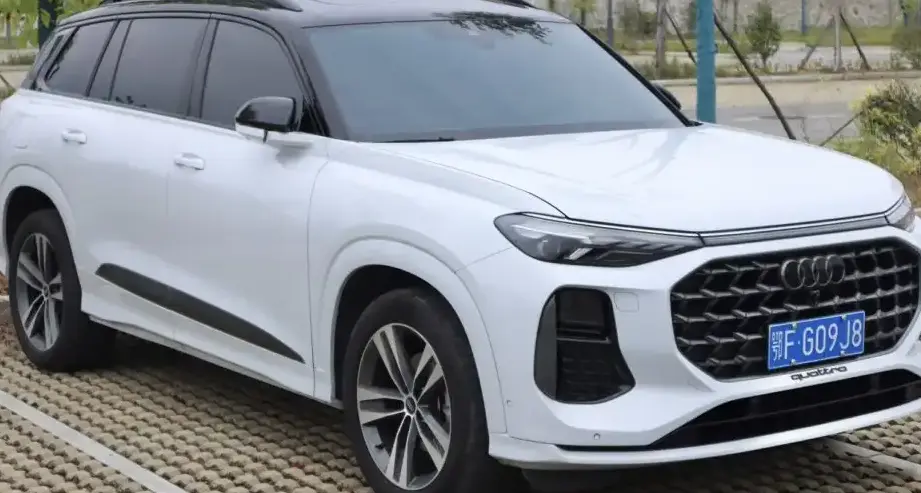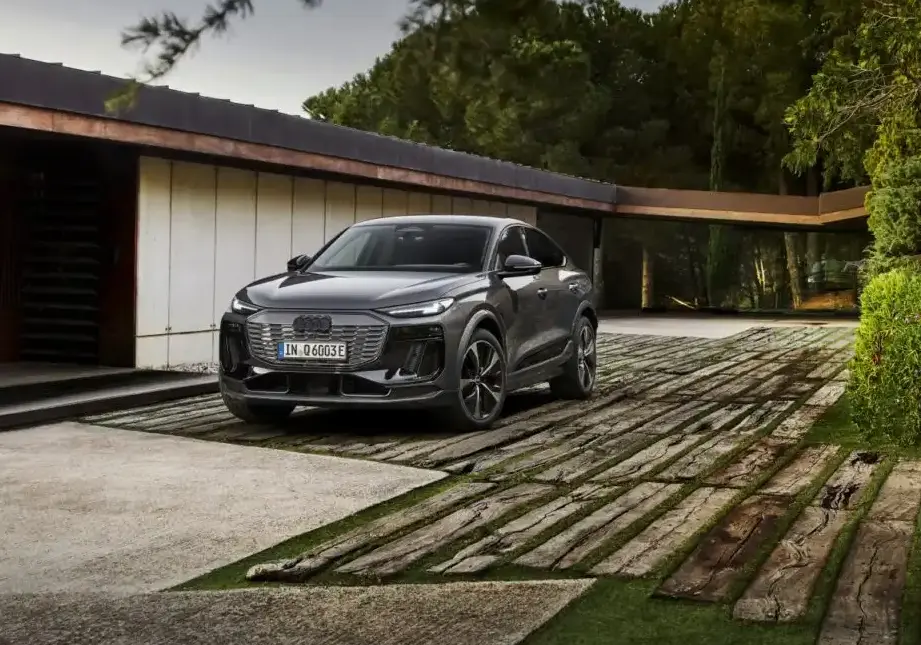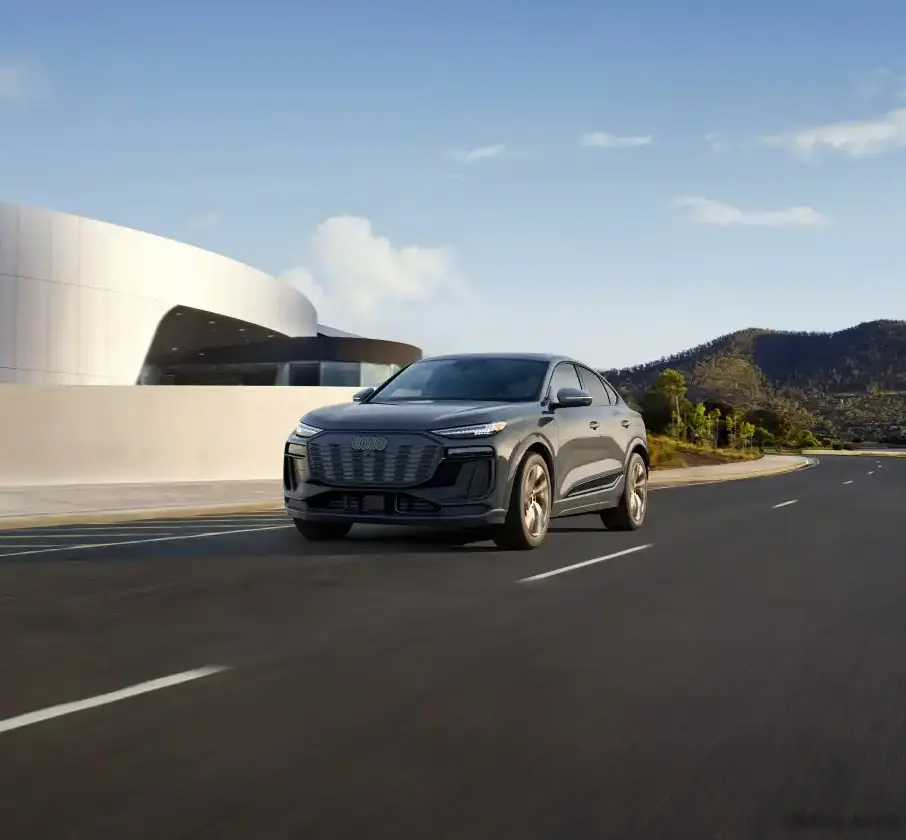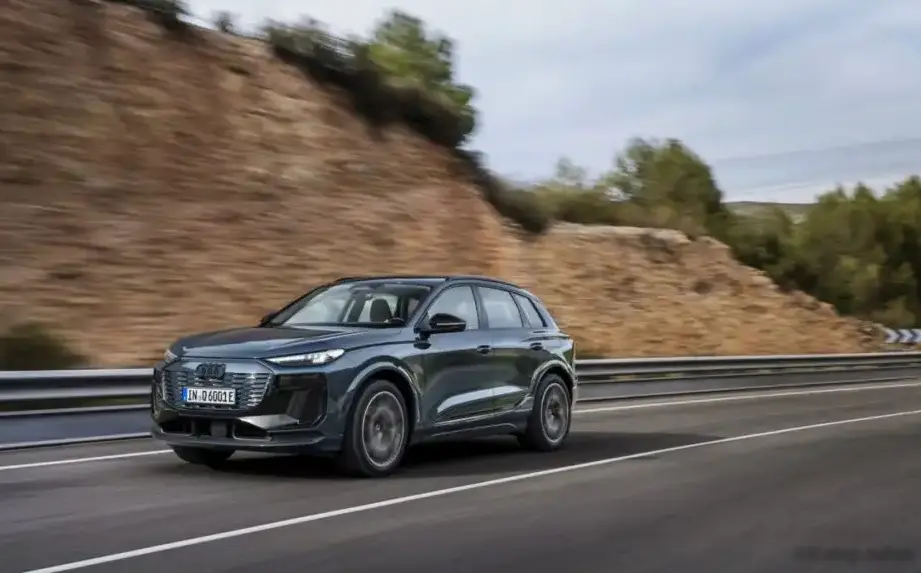
The Audi Q6 e-tron, designated internally as the GF, represents Audi’s entry into the mid-size all-electric SUV segment, positioned between the Q4 e-tron and the larger Q8 e-tron. Production commenced in September 2024, and it’s built upon the Premium Platform Electric (PPE) architecture co-developed with Porsche. This variant, equipped with an 83 kWh battery pack delivering 292 horsepower, is a key model in the initial Q6 e-tron lineup, aiming to balance performance, range, and price within the burgeoning electric SUV market. The Q6 e-tron is primarily targeted at the European and North American markets, offering a premium electric driving experience with Audi’s signature refinement and technology.
Technical Specifications
| Brand | Audi |
| Model | Q6 e-tron |
| Generation | Q6 e-tron (GF) |
| Type (Engine) | 83 kWh (292 Hp) |
| Start of production | September, 2024 |
| Powertrain Architecture | BEV (Electric Vehicle) |
| Body type | SUV |
| Seats | 5 |
| Doors | 5 |
| Fuel Type | Electricity |
| Acceleration 0 – 100 km/h | 7 sec |
| Acceleration 0 – 62 mph | 7 sec |
| Acceleration 0 – 60 mph | 6.7 sec |
| Maximum speed | 210 km/h (130.49 mph) |
| Weight-to-power ratio | 7.3 kg/Hp, 137.4 Hp/tonne |
| Weight-to-torque ratio | 4.7 kg/Nm, 211.8 Nm/tonne |
| Gross battery capacity | 83 kWh |
| Net (usable) battery capacity | 75.8 kWh |
| Battery voltage | 800 V |
| Battery technology | Lithium nickel manganese cobalt oxides (Li-NMC) |
| Battery location | Below the floor |
| All-electric range (WLTP) | 458-533 km (284.59 – 331.19 mi) |
| Average Energy consumption (WLTP) | 16-18.6 kWh/100 km (25.75 – 29.93 kWh/100 mi) |
| Average Energy consumption (MPGe) | 131 – 113 |
| Average Energy consumption (km/kWh) | 6.3 – 5.4 |
| Average Energy consumption (mi/kWh) | 3.9 – 3.3 |
| Electric motor power | 292 Hp |
| Electric motor Torque | 450 Nm (331.9 lb.-ft.) |
| Electric motor location | Rear axle, Transverse |
| Electric motor type | Synchronous |
| System power | 292 Hp |
| System torque | 450 Nm (331.9 lb.-ft.) |
| Kerb Weight | 2125 kg (4684.82 lbs.) |
| Max. weight | 2740 kg (6040.67 lbs.) |
| Max load | 615 kg (1355.84 lbs.) |
| Trunk (boot) space – minimum | 526 l (18.58 cu. ft.) |
| Trunk (boot) space – maximum | 1529 l (54 cu. ft.) |
| Max. roof load | 75 kg (165.35 lbs.) |
| Permitted trailer load with brakes (8%) | 2000 kg (4409.25 lbs.) |
| Permitted trailer load with brakes (12%) | 2000 kg (4409.25 lbs.) |
| Permitted trailer load without brakes | 750 kg (1653.47 lbs.) |
| Permitted towbar download | 100 kg (220.46 lbs.) |
| Length | 4771 mm (187.83 in.) |
| Width | 1939 mm (76.34 in.) |
| Width including mirrors | 2193 mm (86.34 in.) |
| Height | 1685 mm (66.34 in.) |
| Wheelbase | 2889 mm (113.74 in.) |
| Front track | 1661 mm (65.39 in.) |
| Rear (Back) track | 1640 mm (64.57 in.) |
| Front overhang | 906 mm (35.67 in.) |
| Rear overhang | 976 mm (38.43 in.) |
| Drag coefficient (Cd) | 0.30 |
| Minimum turning circle (turning diameter) | 12.1 m (39.7 ft.) |
| Drivetrain Architecture | One electric motor drives the rear wheels. |
| Drive wheel | Rear wheel drive |
| Number of gears and type of gearbox | 1 gears, automatic transmission |
| Front suspension | Independent multi-link suspension, Transverse stabilizer, Air Suspension – Optional |
| Rear suspension | Independent multi-link suspension, Transverse stabilizer, Air Suspension – Optional |
| Front brakes | Ventilated discs, 350 mm |
| Rear brakes | Ventilated discs, 330 mm |
| Assisting systems | ABS (Anti-lock braking system) |
| Steering type | Steering rack and pinion |
| Power steering | Electric Steering |
| Front wheel tires | 235/65 R18; 235/60 R19; 255/50 R20; 255/45 R21 |
| Rear wheel tires | 255/60 R18; 255/55 R19; 285/45 R20; 285/40 R21 |
| Front wheel rims | 8J x 18; 8J x 19; 8.5J x 20; 9J x 21 |
| Rear wheel rims | 9J x 18; 9J x 19; 10J x 20; 10J x 21 |
Powertrain & Engine Architecture
The Q6 e-tron 83 kWh variant utilizes a permanently excited synchronous motor (PSM) located on the rear axle. This motor design is known for its high efficiency and power density. The 83 kWh battery pack, employing Lithium Nickel Manganese Cobalt Oxide (Li-NMC) chemistry, is positioned low in the vehicle floor to optimize the center of gravity. The 800-volt architecture allows for rapid DC fast charging, capable of adding significant range in a short period. The single-speed automatic transmission is a standard feature, delivering seamless power transfer. The motor produces 292 horsepower and 450 Nm (331.9 lb-ft) of torque, providing brisk acceleration. The power electronics and thermal management systems are crucial components, ensuring optimal motor and battery performance across varying conditions.
Driving Characteristics
The rear-wheel-drive configuration of the Q6 e-tron 83 kWh contributes to a balanced driving experience. Acceleration from 0-60 mph is achieved in approximately 6.7 seconds. While not as quick as dual-motor, all-wheel-drive variants, this version offers sufficient performance for everyday driving and highway merging. The single-speed transmission provides linear power delivery, and the instant torque characteristic of electric motors ensures responsive acceleration. The relatively low weight (2125 kg / 4684.82 lbs) compared to some competitors enhances agility. The steering is precise and well-weighted, providing a confident feel. The regenerative braking system allows for one-pedal driving, enhancing efficiency and convenience.
Equipment & Trim Levels
The Q6 e-tron 83 kWh typically comes standard with a comprehensive suite of features, including Audi’s virtual cockpit digital instrument cluster, a large central touchscreen infotainment system with navigation, and a premium sound system. Interior upholstery is typically a combination of leather and synthetic materials. Standard safety features include automatic emergency braking, lane departure warning, and adaptive cruise control. Optional extras include air suspension for a more comfortable ride, panoramic sunroof, and upgraded interior trim packages. The trim level often dictates the availability of these options, with higher trims offering more customization possibilities.
Chassis & Braking
The Q6 e-tron utilizes an independent multi-link suspension system at both the front and rear axles. This setup provides a comfortable ride and precise handling. Air suspension is available as an option, further enhancing ride quality and allowing for adjustable ride height. The braking system consists of ventilated discs on all four wheels, with front discs measuring 350 mm and rear discs measuring 330 mm. Anti-lock braking system (ABS) is standard. The suspension is tuned to balance comfort and handling, providing a stable and controlled driving experience.
Market Reception & Comparison
The Audi Q6 e-tron 83 kWh has been generally well-received by automotive critics, praised for its refined driving experience, spacious interior, and advanced technology. Compared to other mid-size electric SUVs, such as the Tesla Model Y and the BMW iX3, the Q6 e-tron offers a more luxurious and refined interior. Its range is competitive, although slightly less than some rivals. Fuel economy, expressed as kWh per 100 km, is typically between 16-18.6 kWh, translating to approximately 131-113 MPGe. Reliability is expected to be good, given Audi’s reputation for build quality, but long-term data is still emerging.
Legacy
The Q6 e-tron represents a significant step forward for Audi in the electric vehicle market. The 83 kWh variant, while not the highest-performance model, provides a compelling combination of range, performance, and price. The PPE platform it utilizes will underpin future Audi and Porsche electric vehicles, demonstrating its importance to the Volkswagen Group’s electrification strategy. As the electric vehicle market matures, the Q6 e-tron is expected to maintain a strong position as a premium and desirable electric SUV, and its powertrain is anticipated to prove durable and reliable in the used car market.