Technical Specifications
| Brand | Audi |
| Model | Q6 e-tron |
| Generation | Q6 Sportback e-tron (GF) |
| Type (Engine) | performance 100 kWh (326 Hp) |
| Start of production | October, 2024 |
| Powertrain Architecture | BEV (Electric Vehicle) |
| Body type | SUV |
| Seats | 5 |
| Doors | 5 |
| Fuel Type | Electricity |
| Acceleration 0 – 100 km/h | 6.6 sec |
| Acceleration 0 – 62 mph | 6.6 sec |
| Acceleration 0 – 60 mph | 6.3 sec |
| Maximum speed | 210 km/h (130.49 mph) |
| Weight-to-power ratio | 6.7 kg/Hp, 148.2 Hp/tonne |
| Weight-to-torque ratio | 4.5 kg/Nm, 220.5 Nm/tonne |
| Gross battery capacity | 100 kWh |
| Net (usable) battery capacity | 94.9 kWh |
| Battery voltage | 800 V |
| Battery technology | Lithium nickel manganese cobalt oxides (Li-NMC) |
| Battery location | Below the floor |
| All-electric range (WLTP) | 587-656 km (364.74 – 407.62 mi) |
| Average Energy consumption (WLTP) | 16.1-18.3 kWh/100 km (25.91 – 29.45 kWh/100 mi) |
| Average Energy consumption (MPGe) | 130 – 114 |
| Average Energy consumption (km/kWh) | 6.2 – 5.5 |
| Average Energy consumption (mi/kWh) | 3.9 – 3.4 |
| Electric motor power | 326 Hp |
| Electric motor Torque | 485 Nm (357.72 lb.-ft.) |
| Electric motor location | Rear axle, Transverse |
| Electric motor type | Synchronous |
| System power | 326 Hp |
| System torque | 485 Nm (357.72 lb.-ft.) |
| Kerb Weight | 2200 kg (4850.17 lbs.) |
| Max. weight | 2815 kg (6206.01 lbs.) |
| Max load | 615 kg (1355.84 lbs.) |
| Trunk (boot) space – minimum | 511 l (18.05 cu. ft.) |
| Trunk (boot) space – maximum | 1373 l (48.49 cu. ft.) |
| Max. roof load | 75 kg (165.35 lbs.) |
| Permitted trailer load with brakes (8%) | 2000 kg (4409.25 lbs.) |
| Permitted trailer load with brakes (12%) | 2000 kg (4409.25 lbs.) |
| Permitted trailer load without brakes | 750 kg (1653.47 lbs.) |
| Permitted towbar download | 100 kg (220.46 lbs.) |
| Length | 4771 mm (187.83 in.) |
| Width | 1939 mm (76.34 in.) |
| Width including mirrors | 2193 mm (86.34 in.) |
| Height | 1648 mm (64.88 in.) |
| Wheelbase | 2889 mm (113.74 in.) |
| Front track | 1661 mm (65.39 in.) |
| Rear (Back) track | 1646 mm (64.8 in.) |
| Front overhang | 906 mm (35.67 in.) |
| Rear overhang | 976 mm (38.43 in.) |
| Drag coefficient (Cd) | 0.30 |
| Minimum turning circle | 12.1 m (39.7 ft.) |
| Approach angle | 18° |
| Departure angle | 25.7° |
| Drivetrain Architecture | One electric motor drives the rear wheels. |
| Drive wheel | Rear wheel drive |
| Number of gears | 1 |
| Type of gearbox | automatic transmission |
| Front suspension | Independent multi-link suspension, Transverse stabilizer, Air Suspension – Optional |
| Rear suspension | Independent multi-link suspension, Transverse stabilizer, Air Suspension – Optional |
| Front brakes | Ventilated discs, 350 mm |
| Rear brakes | Ventilated discs, 330 mm |
| Steering type | Steering rack and pinion |
| Power steering | Electric Steering |
| Front wheel tires | 235/65 R18; 235/60 R19; 255/50 R20; 255/45 R21 |
| Rear wheel tires | 255/60 R18; 255/55 R19; 285/45 R20; 285/40 R21 |
| Front wheel rims | 8J x 18; 8J x 19; 8.5J x 20; 9J x 21 |
| Rear wheel rims | 9J x 18; 9J x 19; 10J x 20; 10J x 21 |
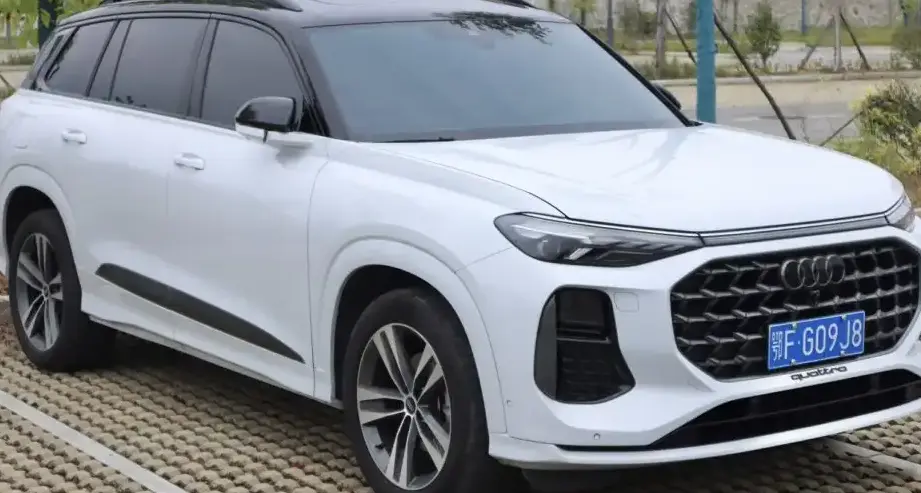
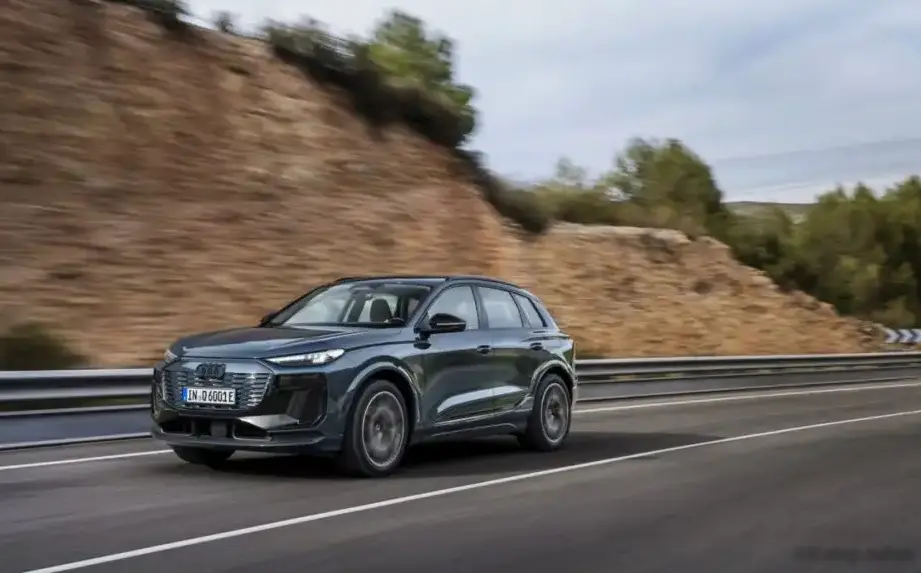
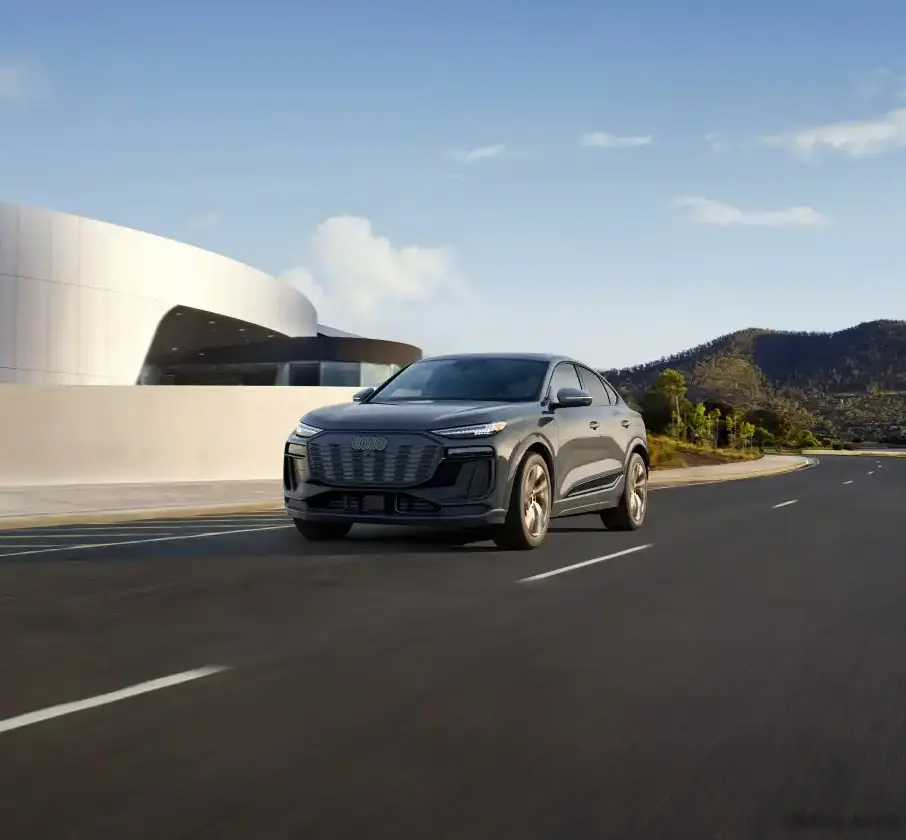
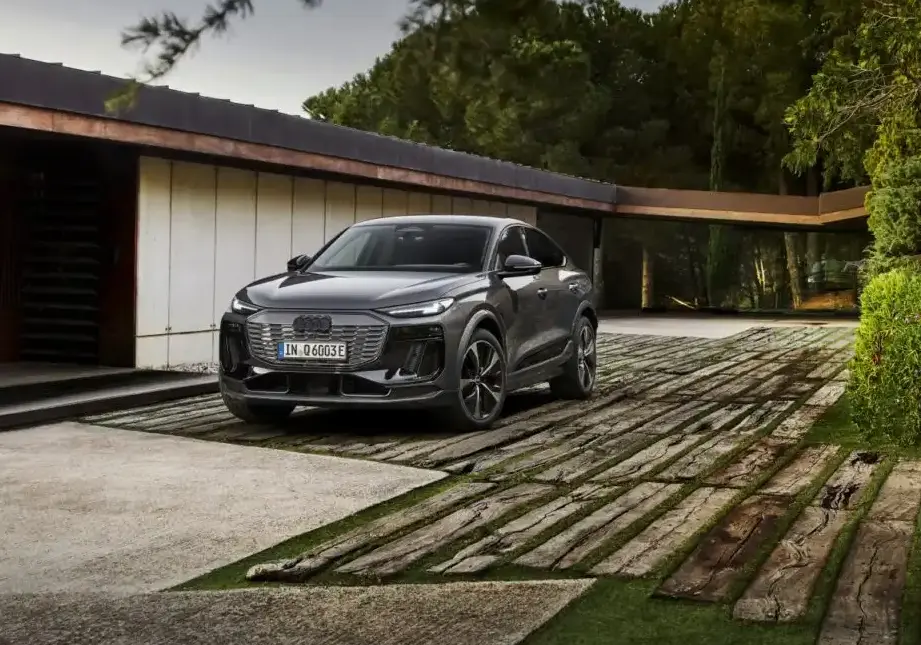
The Audi Q6 Sportback e-tron, specifically the performance variant with the 100 kWh battery pack producing 326 horsepower, represents Audi’s entry into the increasingly competitive mid-size electric SUV-coupe segment. Production commenced in October 2024, positioning it as a key model within Audi’s expanding ‘e-tron’ family, built upon the Premium Platform Electric (PPE) architecture co-developed with Porsche. This Sportback variant distinguishes itself from the standard Q6 e-tron through its sloping roofline, offering a more dynamic aesthetic without significantly compromising interior space. It aims to blend the practicality of an SUV with the style of a coupe, targeting buyers seeking a premium electric vehicle with a focus on performance and range.
Powertrain & Engine Architecture
The Q6 Sportback e-tron performance utilizes a permanently excited synchronous motor (PSM) located on the rear axle. This motor delivers 326 horsepower and 485 Nm (357.72 lb.-ft.) of torque. The 100 kWh battery pack, employing Lithium-Nickel-Manganese-Cobalt (Li-NMC) chemistry, is a key component, providing a usable capacity of 94.9 kWh. A significant feature is the 800-volt architecture, enabling exceptionally fast DC charging speeds – capable of adding approximately 150 miles of range in around 10 minutes at a compatible charging station. The single-speed automatic transmission is integral to the motor housing, providing seamless power delivery. The battery pack is positioned low in the vehicle floor, contributing to a lower center of gravity and improved handling.
Driving Characteristics
The rear-wheel-drive configuration of the Q6 Sportback e-tron performance delivers a balanced driving experience. Acceleration from 0-60 mph is achieved in approximately 6.3 seconds. The instant torque characteristic of electric motors provides brisk acceleration in everyday driving situations. While not as overtly sporty as some dual-motor, all-wheel-drive electric SUVs, the single-motor setup offers a more efficient and engaging driving feel. The single-speed transmission ensures smooth, linear acceleration without noticeable gear changes. The optional air suspension enhances ride comfort and allows for adjustable ride height.
Equipment & Trim Levels
The “performance” trim of the Q6 Sportback e-tron typically includes a comprehensive suite of standard features. These generally encompass Audi’s virtual cockpit digital instrument cluster, a large central touchscreen infotainment system with navigation, premium upholstery (leather or synthetic leather options), heated and ventilated front seats, a panoramic sunroof, and a suite of advanced driver-assistance systems (ADAS) such as adaptive cruise control, lane-keeping assist, and automatic emergency braking. Optional extras include upgraded audio systems (Bang & Olufsen), massaging front seats, and a head-up display.
Chassis & Braking
The Q6 Sportback e-tron features an independent multi-link suspension at both the front and rear axles. The optional air suspension provides adjustable ride height and damping characteristics, enhancing both comfort and handling. Braking duties are handled by ventilated disc brakes on all four wheels, with 350mm discs at the front and 330mm discs at the rear. ABS (Anti-lock Braking System) is standard, along with electronic stability control. The vehicle’s relatively low center of gravity, thanks to the battery pack placement, contributes to stable and predictable handling.
Market Reception & Comparison
Early reviews of the Q6 Sportback e-tron have praised its stylish design, comfortable interior, and fast charging capabilities. Critics have noted its competitive range and refined driving experience. Compared to other electric SUVs in its class, such as the BMW iX and the Tesla Model Y, the Q6 Sportback e-tron positions itself as a premium offering with a focus on build quality and technology. Fuel economy, expressed as MPGe, ranges from 114 to 130, depending on driving conditions. The single-motor configuration offers slightly lower performance than dual-motor variants but provides improved efficiency.
Legacy
As a relatively new model, the long-term reliability of the Q6 Sportback e-tron remains to be fully established. However, Audi’s reputation for engineering quality and the robust design of the electric powertrain suggest a high level of durability. The 800-volt charging architecture is expected to maintain its effectiveness for many years, and the Li-NMC battery technology is well-proven. On the used car market, the Q6 Sportback e-tron is anticipated to hold its value well, particularly the performance variant, due to its combination of style, performance, and advanced technology.