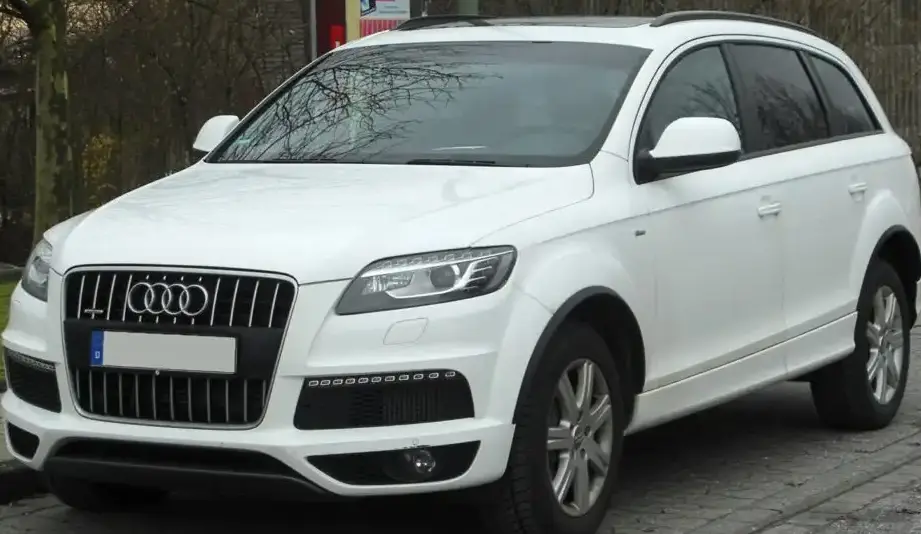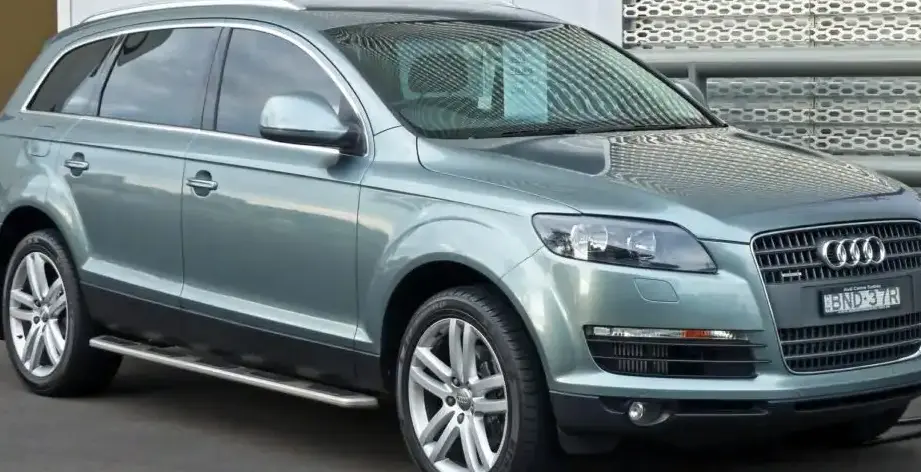
The Audi Q7 (Typ 4L) 3.0 TDI V6 quattro tiptronic, produced from November 2005 to November 2007, represented a significant entry into the burgeoning luxury SUV market for Audi. Positioned as a mid-range offering within the first-generation Q7 lineup (4L chassis), it aimed to balance performance, fuel efficiency, and practicality for families. This variant utilized a 3.0-liter turbocharged diesel engine paired with a six-speed Tiptronic automatic transmission and Audi’s signature quattro all-wheel-drive system. The Q7, built on the Volkswagen Group’s PL46 platform (shared with the Porsche Cayenne and Volkswagen Touareg), was Audi’s first full-size SUV, designed to compete with established players like the BMW X5 and Mercedes-Benz ML-Class.
Technical Specifications
| Brand | Audi |
| Model | Q7 |
| Generation | Q7 (Typ 4L) |
| Type (Engine) | 3.0 TDI V6 (233 Hp) quattro tiptronic |
| Start of production | November, 2005 |
| End of production | November, 2007 |
| Powertrain Architecture | Internal Combustion engine |
| Body type | SUV |
| Seats | 7 |
| Doors | 5 |
| Fuel consumption (urban) | 12.9 l/100 km (18.2 US mpg, 21.9 UK mpg, 7.8 km/l) |
| Fuel consumption (extra urban) | 8.1 l/100 km (29 US mpg, 34.9 UK mpg, 12.3 km/l) |
| Fuel consumption (combined) | 9.8 l/100 km (24 US mpg, 28.8 UK mpg, 10.2 km/l) |
| Fuel Type | Diesel |
| Acceleration 0 – 100 km/h | 9.1 sec |
| Acceleration 0 – 62 mph | 9.1 sec |
| Acceleration 0 – 60 mph | 8.6 sec |
| Maximum speed | 220 km/h (136.7 mph) |
| Emission standard | Euro 4 |
| Weight-to-power ratio | 9.8 kg/Hp, 101.5 Hp/tonne |
| Weight-to-torque ratio | 5.1 kg/Nm, 196.1 Nm/tonne |
| Power | 233 Hp @ 4000 rpm |
| Power per litre | 78.5 Hp/l |
| Torque | 450 Nm @ 1400-3250 rpm (331.9 lb.-ft. @ 1400-3250 rpm) |
| Engine layout | Front, Longitudinal |
| Engine Model/Code | BUG |
| Engine displacement | 2967 cm3 (181.06 cu. in.) |
| Number of cylinders | 6 |
| Engine configuration | V-engine |
| Cylinder Bore | 83 mm (3.27 in.) |
| Piston Stroke | 91.4 mm (3.6 in.) |
| Compression ratio | 17:1 |
| Number of valves per cylinder | 4 |
| Fuel injection system | Diesel Commonrail |
| Engine aspiration | Turbocharger, Intercooler |
| Valvetrain | DOHC |
| Engine oil capacity | 8.2 l (8.66 US qt | 7.21 UK qt) |
| Kerb Weight | 2295 kg (5059.61 lbs.) |
| Max. weight | 2990 kg (6591.82 lbs.) |
| Max load | 695 kg (1532.21 lbs.) |
| Trunk (boot) space – minimum | 775 l (27.37 cu. ft.) |
| Trunk (boot) space – maximum | 2035 l (71.87 cu. ft.) |
| Fuel tank capacity | 100 l (26.42 US gal | 22 UK gal) |
| Length | 5086 mm (200.24 in.) |
| Width | 1983 mm (78.07 in.) |
| Width including mirrors | 2177 mm (85.71 in.) |
| Height | 1737 mm (68.39 in.) |
| Wheelbase | 3002 mm (118.19 in.) |
| Front track | 1651 mm (65 in.) |
| Rear (Back) track | 1676 mm (65.98 in.) |
| Front overhang | 965 mm (37.99 in.) |
| Rear overhang | 1119 mm (44.06 in.) |
| Ride height (ground clearance) | 240-205 mm (9.45 – 8.07 in.) |
| Drag coefficient (Cd) | 0.37 |
| Minimum turning circle | 12 m (39.37 ft.) |
| Drive wheel | All wheel drive (4×4) |
| Number of gears and type of gearbox | 6 gears, automatic transmission Tiptronic |
| Front suspension | Double wishbone |
| Rear suspension | Independent coil spring |
| Front brakes | Ventilated discs |
| Rear brakes | Ventilated discs |
| Assisting systems | ABS (Anti-lock braking system) |
| Steering type | Steering rack and pinion |
| Tires size | 235/60 R18 |
| Wheel rims size | 18 |
Powertrain & Engine Architecture
The heart of the Q7 3.0 TDI was the BUG engine code, a 3.0-liter V6 diesel. This engine was a member of Volkswagen Group’s common rail diesel family, utilizing piezo injectors for precise fuel delivery. The engine featured a single turbocharger with an intercooler to boost power and efficiency. The DOHC valvetrain, with four valves per cylinder, contributed to the engine’s breathing efficiency. The Tiptronic six-speed automatic transmission offered both fully automatic operation and manual gear selection via steering wheel-mounted paddles or the gear selector. The transmission was designed to handle the engine’s substantial 450 Nm (331.9 lb-ft) of torque. The quattro all-wheel-drive system employed a Torsen center differential, distributing torque between the front and rear axles as needed, enhancing traction and stability.
Driving Characteristics
The 3.0 TDI automatic Q7 offered a comfortable and capable driving experience. While not overtly sporty, the engine provided ample torque for effortless cruising and confident overtaking. The automatic transmission, while smooth, wasn’t particularly quick to shift, especially compared to the available manual transmission. Acceleration from 0-60 mph took around 8.6 seconds, making it competitive within its class. The Tiptronic function allowed for more driver involvement, but the transmission’s programming prioritized smoothness over outright performance. The quattro system provided excellent grip in all weather conditions, inspiring confidence on slippery surfaces. The Q7’s substantial weight (over 5,000 lbs) was noticeable, particularly during spirited driving, but the suspension did a good job of managing body roll.
Equipment & Trim Levels
The 3.0 TDI quattro tiptronic typically came well-equipped, reflecting its position as a mid-range offering. Standard features included leather upholstery, dual-zone automatic climate control, a premium audio system, and power-adjustable front seats. Optional extras included a navigation system, sunroof, rear-seat entertainment system, and upgraded interior trim materials. The Q7’s flexible seating configuration, with optional third-row seating, allowed for up to seven passengers. Safety features included ABS, traction control, stability control, and multiple airbags.
Chassis & Braking
The Q7’s chassis featured a double wishbone front suspension and an independent coil spring rear suspension. This setup provided a comfortable ride while maintaining reasonable handling characteristics. The Q7 3.0 TDI was equipped with ventilated disc brakes on all four wheels, providing adequate stopping power for its weight. ABS (Anti-lock Braking System) was standard, enhancing braking performance and stability. The steering was a rack-and-pinion system, offering precise and responsive control.
Market Reception & Comparison
The Audi Q7 3.0 TDI was generally well-received by automotive critics. It was praised for its spacious interior, comfortable ride, and capable all-wheel-drive system. The diesel engine was lauded for its fuel efficiency and strong torque output. However, some critics noted the Q7’s substantial weight and relatively uninspired handling compared to sportier SUVs. Compared to the Q7 4.2 FSI (V8 gasoline), the 3.0 TDI offered better fuel economy but less outright performance. Against the Q7 2.0 TDI, the 3.0 TDI provided a significant power upgrade, justifying its higher price point. The 3.0 TDI was often seen as the sweet spot in the Q7 lineup, offering a good balance of performance, efficiency, and practicality.
Legacy
The Audi Q7 3.0 TDI (Typ 4L) has proven to be a relatively reliable vehicle, with the 3.0-liter TDI engine generally considered robust. However, like all diesel engines, it’s susceptible to issues with the diesel particulate filter (DPF) and fuel injectors if not properly maintained. The Tiptronic transmission, while generally reliable, can experience issues with valve body wear over time. Today, these Q7s are readily available on the used car market at relatively affordable prices. They remain a popular choice for buyers seeking a spacious, comfortable, and capable SUV with good fuel economy. The Typ 4L Q7 established the Q7 as a key model in Audi’s lineup, paving the way for subsequent generations.