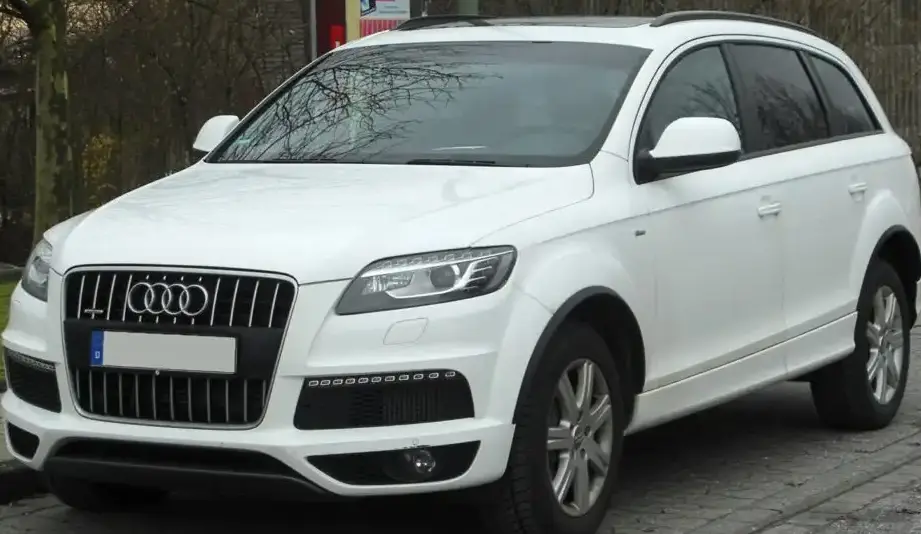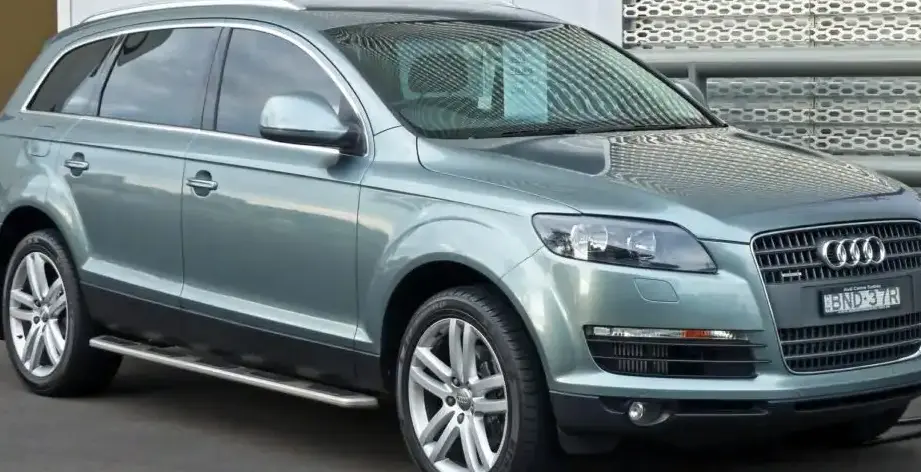
The Audi Q7 (Typ 4L) 3.0 TDI V6 quattro tiptronic, produced from October 2007 to April 2009, represents a significant offering in Audi’s early foray into the luxury SUV segment. Positioned as a mid-range variant within the first-generation Q7 lineup (internally designated Typ 4L, based on the Volkswagen PL71 platform shared with the Porsche Cayenne and Volkswagen Touareg), this model combined a potent diesel engine with a convenient automatic transmission and Audi’s renowned quattro all-wheel-drive system. It aimed to balance performance, fuel efficiency, and practicality for discerning buyers in the European market, where diesel SUVs were particularly popular. This version offered a step up in power and refinement compared to the base 3.6L gasoline engine, while remaining more accessible than the flagship 4.2L V8.
Technical Specifications
| Brand | Audi |
| Model | Q7 |
| Generation | Q7 (Typ 4L) |
| Type (Engine) | 3.0 TDI V6 (240 Hp) quattro tiptronic |
| Start of production | October, 2007 |
| End of production | April, 2009 |
| Powertrain Architecture | Internal Combustion engine |
| Body type | SUV |
| Seats | 5 |
| Doors | 5 |
| Fuel consumption (urban) | 11.3-12.9 l/100 km (20.8 – 18.2 US mpg, 25 – 21.9 UK mpg, 8.8 – 7.8 km/l) |
| Fuel consumption (extra urban) | 7.8-8.1 l/100 km (30.2 – 29 US mpg, 36.2 – 34.9 UK mpg, 12.8 – 12.3 km/l) |
| Fuel consumption (combined) | 9.1-9.8 l/100 km (25.8 – 24 US mpg, 31 – 28.8 UK mpg, 11 – 10.2 km/l) |
| CO2 emissions | 239-260 g/km |
| Fuel Type | Diesel |
| Acceleration 0 – 100 km/h | 8.5 sec |
| Acceleration 0 – 62 mph | 8.5 sec |
| Acceleration 0 – 60 mph | 8.1 sec |
| Maximum speed | 210 km/h (130.49 mph) |
| Emission standard | Euro 4 |
| Weight-to-power ratio | 9.3 kg/Hp, 108.1 Hp/tonne |
| Weight-to-torque ratio | 4 kg/Nm, 247.7 Nm/tonne |
| Power | 240 Hp @ 4000-4400 rpm |
| Power per litre | 80.9 Hp/l |
| Torque | 550 Nm @ 2000-2250 rpm (405.66 lb.-ft. @ 2000-2250 rpm) |
| Engine layout | Front, Longitudinal |
| Engine Model/Code | EA896 evo / CASA |
| Engine displacement | 2967 cm3 (181.06 cu. in.) |
| Number of cylinders | 6 |
| Engine configuration | V-engine |
| Cylinder Bore | 83 mm (3.27 in.) |
| Piston Stroke | 91.4 mm (3.6 in.) |
| Number of valves per cylinder | 4 |
| Fuel injection system | Diesel Commonrail |
| Engine aspiration | Turbocharger, Intercooler |
| Valvetrain | DOHC |
| Engine oil capacity | 8.2 l (8.66 US qt | 7.21 UK qt) |
| Kerb Weight | 2220 kg (4894.26 lbs.) |
| Max. weight | 2990 kg (6591.82 lbs.) |
| Max load | 770 kg (1697.56 lbs.) |
| Trunk (boot) space – minimum | 775 l (27.37 cu. ft.) |
| Trunk (boot) space – maximum | 2035 l (71.87 cu. ft.) |
| Fuel tank capacity | 100 l (26.42 US gal | 22 UK gal) |
| Max. roof load | 100 kg (220.46 lbs.) |
| Permitted trailer load with brakes (8%) | 3500 kg (7716.18 lbs.) |
| Permitted trailer load with brakes (12%) | 3500 kg (7716.18 lbs.) |
| Permitted trailer load without brakes | 750 kg (1653.47 lbs.) |
| Permitted towbar download | 140 kg (308.65 lbs.) |
| Length | 5086 mm (200.24 in.) |
| Width | 1983 mm (78.07 in.) |
| Width including mirrors | 2177 mm (85.71 in.) |
| Height | 1737 mm (68.39 in.) |
| Wheelbase | 3002 mm (118.19 in.) |
| Front track | 1651 mm (65 in.) |
| Rear (Back) track | 1676 mm (65.98 in.) |
| Front overhang | 965 mm (37.99 in.) |
| Rear overhang | 1119 mm (44.06 in.) |
| Ride height (ground clearance) | 205 mm (8.07 in.) |
| Minimum turning circle (turning diameter) | 12 m (39.37 ft.) |
| Front brakes | Ventilated discs, 350 mm |
| Rear brakes | Ventilated discs, 330 mm |
| Number of gears and type of gearbox | 6 gears, automatic transmission tiptronic |
Powertrain & Engine Architecture
At the heart of the Q7 3.0 TDI quattro tiptronic lies the EA896 evo engine, specifically the CASA code variant. This 3.0-liter V6 diesel engine utilizes a common rail direct injection system, delivering fuel at extremely high pressures for optimized combustion. The engine features a single turbocharger with an intercooler, boosting power and torque. The DOHC (Double Overhead Camshaft) valvetrain, with four valves per cylinder, contributes to efficient gas exchange. The CASA engine is known for its robust build quality and relatively straightforward maintenance. Paired with this engine is a six-speed tiptronic automatic transmission. This transmission, while offering smooth shifts, isn’t known for being the most fuel-efficient compared to later generations of automatic gearboxes. It allows for manual gear selection, providing some driver control, but primarily focuses on convenience.
Driving Characteristics
The 240 horsepower and 405 lb-ft of torque produced by the 3.0 TDI engine provide ample power for the Q7’s substantial weight. Acceleration from 0-60 mph takes around 8.1 seconds, which is respectable for a large SUV. However, the tiptronic transmission, while smooth, can feel somewhat sluggish compared to the more responsive manual transmission options available in other Q7 variants. The quattro all-wheel-drive system provides excellent traction in various conditions, enhancing stability and confidence. The gear ratios are tuned for a balance of fuel economy and usability, prioritizing comfortable cruising over outright performance. Compared to the 4.2L V8, the 3.0 TDI offers a more relaxed driving experience, with a broader, more accessible torque curve. It also feels significantly lighter on its feet than the V8 model.
Equipment & Trim Levels
The 3.0 TDI quattro tiptronic typically came equipped with a generous array of standard features. These included leather upholstery, dual-zone automatic climate control, a premium audio system, and power-adjustable front seats. Optional extras included a navigation system, panoramic sunroof, adaptive air suspension, and upgraded interior trim packages. The interior design was characterized by Audi’s typically understated elegance, with high-quality materials and a focus on ergonomics. The dashboard layout was clean and functional, with intuitive controls.
Chassis & Braking
The Q7’s chassis features a double wishbone suspension setup at both the front and rear, providing a comfortable ride and good handling characteristics. Many examples were equipped with optional adaptive air suspension, which allowed the ride height to be adjusted for improved off-road capability or on-road comfort. Braking duties are handled by ventilated discs on all four wheels, providing ample stopping power. Anti-lock brakes (ABS) and electronic stability control (ESC) are standard features, enhancing safety. The Q7’s substantial weight necessitates a robust braking system, and the ventilated discs effectively dissipate heat during repeated use.
Market Reception & Comparison
The Audi Q7 3.0 TDI quattro tiptronic was generally well-received by automotive critics. It was praised for its comfortable ride, spacious interior, and refined diesel engine. However, some critics noted the tiptronic transmission’s lack of responsiveness and the Q7’s relatively high price tag. Compared to the 3.6L gasoline version, the 3.0 TDI offered significantly better fuel economy and more torque. Compared to the 4.2L V8, it was more affordable and fuel-efficient, but lacked the V8’s outright performance. The 3.0 TDI proved to be a popular choice for buyers seeking a luxurious and capable SUV with good fuel economy.
Legacy
The EA896 evo engine, in its various iterations, has proven to be a durable and reliable powerplant. The 3.0 TDI variant in the Q7 is generally considered to be a robust engine, capable of high mileage with proper maintenance. Common issues include turbocharger wear and potential problems with the diesel particulate filter (DPF), particularly on vehicles that are primarily driven on short trips. On the used car market, the Q7 3.0 TDI quattro tiptronic remains a desirable option, offering a good balance of luxury, practicality, and fuel efficiency. However, potential buyers should be aware of the potential maintenance costs associated with a higher-mileage diesel vehicle.