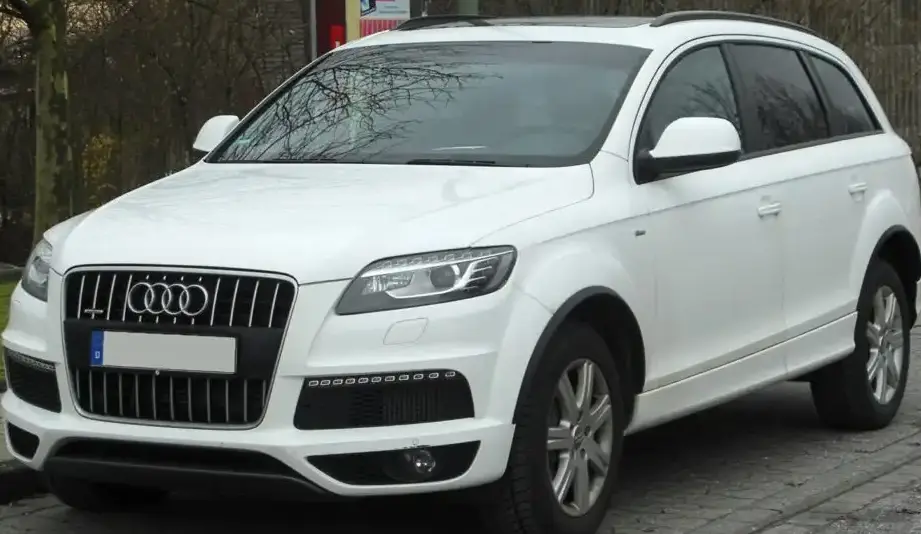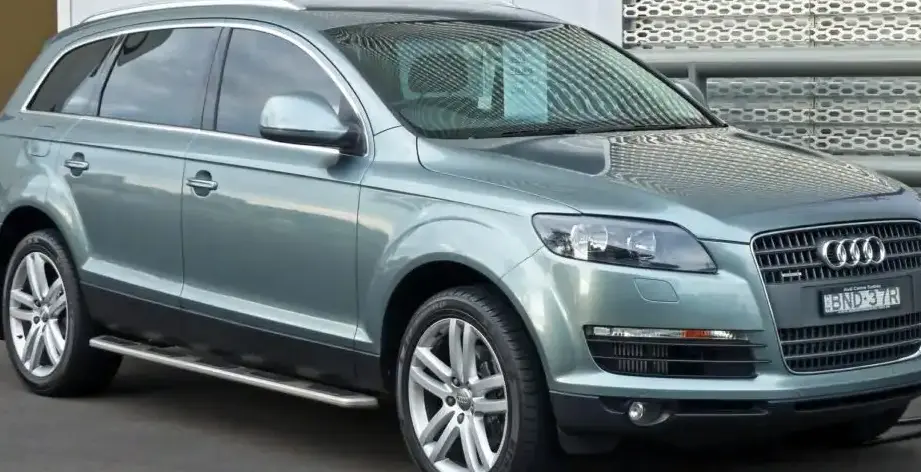
The Audi Q7 (Typ 4L) 3.6 FSI V6 quattro tiptronic represents a significant entry into the luxury SUV market for Audi, launched in August 2006 and continuing through 2009. This variant, powered by a naturally aspirated 3.6-liter V6 engine paired with a six-speed automatic transmission and Audi’s quattro all-wheel-drive system, positioned itself as a versatile option within the first-generation Q7 lineup. The Typ 4L Q7 was based on the Volkswagen Group’s PL46 platform, shared with the Porsche Cayenne and Volkswagen Touareg, offering a blend of on-road comfort and respectable off-road capability. This specific configuration aimed to balance performance with accessibility, serving as a step up from the base 3.2-liter V6 while remaining more attainable than the performance-oriented 4.2-liter V8 models.
Technical Specifications
| Brand | Audi |
| Model | Q7 |
| Generation | Q7 (Typ 4L) |
| Type (Engine) | 3.6 FSI V6 (280 Hp) quattro tiptronic |
| Start of production | August, 2006 |
| End of production | 2009 |
| Powertrain Architecture | Internal Combustion engine |
| Body type | SUV |
| Seats | 5 |
| Doors | 5 |
| Fuel consumption (urban) | 17.8 l/100 km (13.2 US mpg, 15.9 UK mpg, 5.6 km/l) |
| Fuel consumption (extra urban) | 9.8 l/100 km (24 US mpg, 28.8 UK mpg, 10.2 km/l) |
| Fuel consumption (combined) | 12.7 l/100 km (18.5 US mpg, 22.2 UK mpg, 7.9 km/l) |
| Fuel Type | Petrol (Gasoline) |
| Acceleration 0 – 100 km/h | 8.5 sec |
| Acceleration 0 – 62 mph | 8.5 sec |
| Acceleration 0 – 60 mph | 8.1 sec |
| Maximum speed | 225 km/h (139.81 mph) |
| Emission standard | Euro 4 |
| Weight-to-power ratio | 7.9 kg/Hp, 127 Hp/tonne |
| Weight-to-torque ratio | 6.1 kg/Nm, 163.3 Nm/tonne |
| Power | 280 Hp @ 6200 rpm |
| Power per litre | 77.8 Hp/l |
| Torque | 360 Nm @ 2500-5000 rpm (265.52 lb.-ft. @ 2500-5000 rpm) |
| Engine layout | Front, Longitudinal |
| Engine Model/Code | BHK |
| Engine displacement | 3597 cm3 (219.5 cu. in.) |
| Number of cylinders | 6 |
| Engine configuration | V-engine |
| Cylinder Bore | 89 mm (3.5 in.) |
| Piston Stroke | 96.4 mm (3.8 in.) |
| Compression ratio | 12:1 |
| Number of valves per cylinder | 4 |
| Fuel injection system | Direct injection |
| Engine aspiration | Naturally aspirated engine |
| Valvetrain | DOHC |
| Engine oil capacity | 8.2 l (8.66 US qt | 7.21 UK qt) |
| Kerb Weight | 2205 kg (4861.19 lbs.) |
| Max. weight | 2900 kg (6393.41 lbs.) |
| Max load | 695 kg (1532.21 lbs.) |
| Trunk (boot) space – minimum | 775 l (27.37 cu. ft.) |
| Trunk (boot) space – maximum | 2035 l (71.87 cu. ft.) |
| Fuel tank capacity | 100 l (26.42 US gal | 22 UK gal) |
| Length | 5086 mm (200.24 in.) |
| Width | 1983 mm (78.07 in.) |
| Width including mirrors | 2177 mm (85.71 in.) |
| Height | 1737 mm (68.39 in.) |
| Wheelbase | 3002 mm (118.19 in.) |
| Front track | 1651 mm (65 in.) |
| Rear (Back) track | 1676 mm (65.98 in.) |
| Front overhang | 965 mm (37.99 in.) |
| Rear overhang | 1119 mm (44.06 in.) |
| Ride height (ground clearance) | 240-205 mm (9.45 – 8.07 in.) |
| Drag coefficient (Cd) | 0.37 |
| Minimum turning circle (turning diameter) | 12 m (39.37 ft.) |
| Drive wheel | All wheel drive (4×4) |
| Number of gears and type of gearbox | 6 gears, automatic transmission |
| Front suspension | Double wishbone |
| Rear suspension | Independent coil spring |
| Front brakes | Ventilated discs |
| Rear brakes | Ventilated discs |
| Assisting systems | ABS (Anti-lock braking system) |
| Steering type | Steering rack and pinion |
| Tires size | 235/60 R18 |
| Wheel rims size | 18 |
Powertrain & Engine Architecture
At the heart of the Q7 3.6 FSI quattro tiptronic lies the BHK engine code, a 3.6-liter naturally aspirated V6. This engine utilizes Audi’s FSI (Fuel Stratified Injection) direct injection technology, which allows for precise fuel delivery and improved combustion efficiency. The engine features a double overhead camshaft (DOHC) valvetrain with four valves per cylinder, contributing to its respectable power output. The 3.6-liter V6 produces 280 horsepower at 6200 rpm and 360 Nm (265.52 lb-ft) of torque between 2500 and 5000 rpm. This power is then channeled through a six-speed tiptronic automatic transmission, offering both fully automatic operation and manual gear selection via steering wheel-mounted paddles or the gear selector. The quattro all-wheel-drive system distributes power between the front and rear axles as needed, enhancing traction and stability in various driving conditions.
Driving Characteristics
The Q7 3.6 FSI with the tiptronic transmission delivers a comfortable and refined driving experience. While not as overtly sporty as the higher-powered V8 models, the 3.6-liter V6 provides adequate acceleration for everyday driving and highway cruising. The 0-60 mph sprint takes approximately 8.1 seconds, and the vehicle has a top speed of 225 km/h (139.81 mph). The tiptronic transmission offers smooth and responsive gear changes, although it may not be as quick or engaging as a dual-clutch transmission. Compared to the manual transmission versions of the same engine, the tiptronic offers greater convenience, particularly in urban traffic. However, it does result in a slight decrease in fuel economy and acceleration. The quattro all-wheel-drive system provides excellent grip and stability, especially in inclement weather.
Equipment & Trim Levels
The Q7 3.6 FSI quattro tiptronic typically came well-equipped with standard features such as leather upholstery, power-adjustable front seats, dual-zone automatic climate control, a premium audio system, and parking sensors. Optional extras included a sunroof, navigation system, rear-seat entertainment system, and adaptive air suspension. Trim levels varied depending on the market, but generally, this variant occupied a mid-range position in the Q7 lineup, offering a balance of luxury and features without the higher price tag of the top-tier models. The interior design was characterized by Audi’s typically understated elegance, with high-quality materials and a focus on ergonomics.
Chassis & Braking
The Q7 3.6 FSI features a double wishbone front suspension and an independent coil spring rear suspension, providing a comfortable ride and good handling characteristics. Ventilated disc brakes are fitted on all four wheels, providing ample stopping power. The anti-lock braking system (ABS) is standard, enhancing safety and control during emergency braking situations. The vehicle’s relatively high weight (2205 kg / 4861.19 lbs) necessitates a robust braking system and suspension setup to maintain stability and control.
Market Reception & Comparison
The Audi Q7 3.6 FSI quattro tiptronic was generally well-received by automotive critics, who praised its comfortable ride, spacious interior, and refined driving experience. However, some critics noted that the 3.6-liter V6 engine could feel somewhat underpowered for a vehicle of its size and weight. Compared to the 3.2-liter V6, the 3.6 FSI offered a noticeable performance improvement. When compared to the 4.2-liter V8 models, the 3.6 FSI was more fuel-efficient but lacked the same level of outright performance. Fuel economy figures were around 12.7 l/100 km (18.5 US mpg) combined, which was typical for a luxury SUV of its size at the time.
Legacy
The Audi Q7 3.6 FSI quattro tiptronic has proven to be a relatively reliable vehicle, with the BHK engine generally considered durable. However, like any complex vehicle, it is susceptible to age-related issues such as oil leaks, sensor failures, and wear and tear on the suspension components. The tiptronic transmission, while generally reliable, can require expensive repairs if it develops problems. In the used car market, the Q7 3.6 FSI remains a popular choice for buyers seeking a spacious, comfortable, and well-equipped luxury SUV. Its blend of practicality, performance, and refinement continues to appeal to a wide range of buyers.