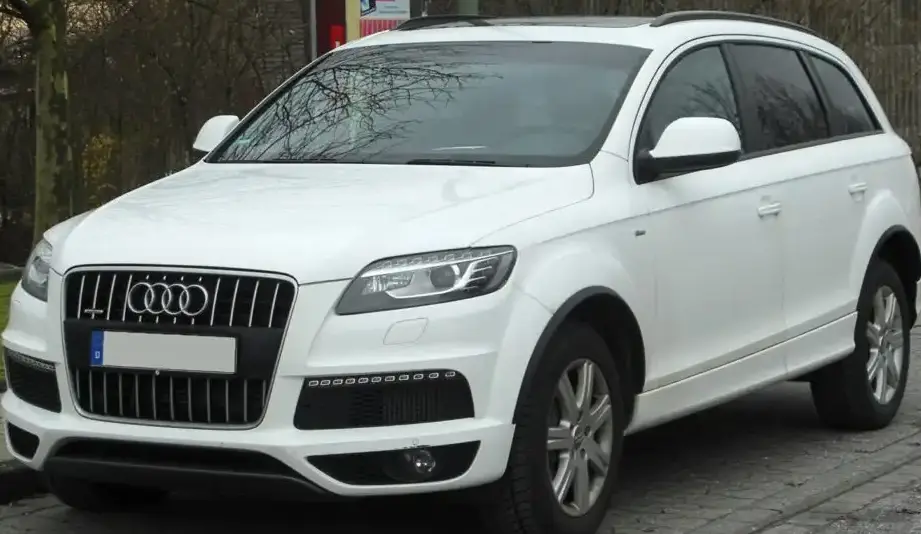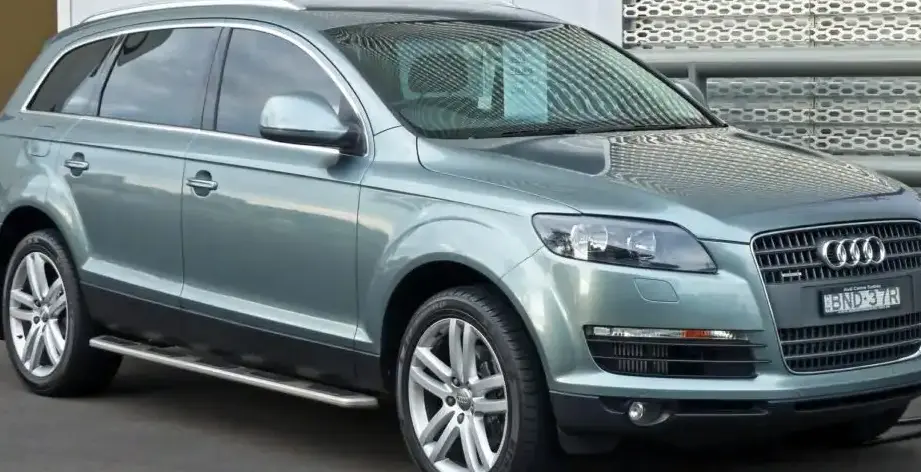
The Audi Q7 (Typ 4L) 4.2 TDI V8 quattro DPF tiptronic represents a significant offering within the first generation Q7 lineup, produced between March 2007 and June 2009. This variant positioned itself as the performance-oriented diesel option, blending luxury, space, and substantial power within Audi’s burgeoning SUV range. The Typ 4L Q7, based on the Volkswagen Group’s PL71 platform (shared with the Porsche Cayenne and Volkswagen Touareg), aimed to deliver a premium SUV experience with a focus on all-weather capability thanks to its standard quattro all-wheel-drive system. The 4.2 TDI model specifically targeted buyers seeking a powerful and refined diesel engine paired with the convenience of an automatic transmission.
Technical Specifications
| Brand | Audi |
| Model | Q7 |
| Generation | Q7 (Typ 4L) |
| Type (Engine) | 4.2 TDI V8 (326 Hp) quattro DPF tiptronic |
| Start of production | March, 2007 |
| End of production | June, 2009 |
| Powertrain Architecture | Internal Combustion engine |
| Body type | SUV |
| Seats | 7 |
| Doors | 5 |
| Fuel consumption (urban) | 14.9 l/100 km (15.8 US mpg, 19 UK mpg, 6.7 km/l) |
| Fuel consumption (extra urban) | 8.9 l/100 km (26.4 US mpg, 31.7 UK mpg, 11.2 km/l) |
| Fuel consumption (combined) | 11.1 l/100 km (21.2 US mpg, 25.4 UK mpg, 9 km/l) |
| Fuel Type | Diesel |
| Acceleration 0 – 100 km/h | 6.4 sec |
| Acceleration 0 – 62 mph | 6.4 sec |
| Acceleration 0 – 60 mph | 6.1 sec |
| Maximum speed | 236 km/h (146.64 mph) |
| Emission standard | Euro 4 |
| Weight-to-power ratio | 7.4 kg/Hp, 134.7 Hp/tonne |
| Weight-to-torque ratio | 3.2 kg/Nm, 314 Nm/tonne |
| Power | 326 Hp @ 3750 rpm |
| Power per litre | 78.9 Hp/l |
| Torque | 760 Nm @ 1800-2500 rpm (560.55 lb.-ft. @ 1800-2500 rpm) |
| Engine layout | Front, Longitudinal |
| Engine Model/Code | BTR |
| Engine displacement | 4134 cm3 (252.27 cu. in.) |
| Number of cylinders | 8 |
| Engine configuration | V-engine |
| Cylinder Bore | 83 mm (3.27 in.) |
| Piston Stroke | 95.5 mm (3.76 in.) |
| Compression ratio | 16.5:1 |
| Number of valves per cylinder | 4 |
| Fuel injection system | Diesel Commonrail |
| Engine aspiration | Turbocharger, Intercooler |
| Valvetrain | DOHC |
| Engine oil capacity | 9.5 l (10.04 US qt, 8.36 UK qt) |
| Kerb Weight | 2420 kg (5335.19 lbs.) |
| Max. weight | 3115 kg (6867.4 lbs.) |
| Max load | 695 kg (1532.21 lbs.) |
| Trunk (boot) space – minimum | 775 l (27.37 cu. ft.) |
| Trunk (boot) space – maximum | 2035 l (71.87 cu. ft.) |
| Fuel tank capacity | 100 l (26.42 US gal, 22 UK gal) |
| Length | 5086 mm (200.24 in.) |
| Width | 1983 mm (78.07 in.) |
| Width including mirrors | 2177 mm (85.71 in.) |
| Height | 1737 mm (68.39 in.) |
| Wheelbase | 3002 mm (118.19 in.) |
| Front track | 1651 mm (65 in.) |
| Rear (Back) track | 1676 mm (65.98 in.) |
| Front overhang | 965 mm (37.99 in.) |
| Rear overhang | 1119 mm (44.06 in.) |
| Ride height (ground clearance) | 240-205 mm (9.45 – 8.07 in.) |
| Drag coefficient (Cd) | 0.35 |
| Minimum turning circle | 12 m (39.37 ft.) |
| Drive wheel | All wheel drive (4×4) |
| Number of gears and type of gearbox | 6 gears, automatic transmission Tiptronic |
| Front suspension | Double wishbone |
| Rear suspension | Independent coil spring |
| Front brakes | Ventilated discs |
| Rear brakes | Ventilated discs |
| Assisting systems | ABS (Anti-lock braking system) |
| Steering type | Steering rack and pinion |
| Tires size | 235/60 R18 |
| Wheel rims size | 18 |
INTRODUCTION
The Audi Q7 4.2 TDI V8 quattro DPF tiptronic, launched in 2007, represented the pinnacle of diesel performance within the first-generation Q7 range (Typ 4L, 2005-2015). Positioned above the 3.0 TDI and 2.7 TDI models, it offered a significant power upgrade and a more luxurious experience. The “tiptronic” designation indicated the use of Audi’s six-speed automatic transmission with a manual shift mode. The inclusion of a Diesel Particulate Filter (DPF) was crucial for meeting increasingly stringent European emission standards. This model aimed to appeal to buyers who desired a large, capable SUV with the refinement and fuel efficiency of a modern diesel engine.
Powertrain & Engine Architecture
At the heart of the Q7 4.2 TDI lies the BTR engine code, a 4.134-liter V8 diesel engine. This engine utilizes a common rail direct injection system, delivering fuel at extremely high pressures for optimized combustion. The engine features a single turbocharger with an intercooler, boosting power and torque. The valvetrain employs double overhead camshafts (DOHC) with four valves per cylinder, enhancing breathing and overall efficiency. The six-speed tiptronic automatic transmission is designed to handle the substantial torque output of the V8 diesel. This transmission features adaptive shift programming, adjusting shift points based on driving style and conditions. The quattro all-wheel-drive system utilizes a Torsen center differential, distributing torque between the front and rear axles as needed, providing excellent traction in various conditions.
Driving Characteristics
The 4.2 TDI tiptronic Q7 delivers a markedly different driving experience compared to its lower-powered siblings. The 326 horsepower and 760 Nm (560 lb-ft) of torque provide effortless acceleration, with a 0-60 mph time of around 6.1 seconds. The tiptronic transmission, while smooth, isn’t as quick-shifting as some dual-clutch transmissions found in later models. However, it provides a comfortable and refined driving experience, particularly on long journeys. The substantial weight of the Q7 (2420 kg / 5335 lbs) is noticeable, but the powerful engine mitigates this, offering strong performance even when fully loaded. Compared to the 3.0 TDI, the 4.2 TDI offers significantly more power and a more responsive feel. The manual shift mode allows for greater driver control, but the transmission’s programming prioritizes smoothness over outright performance.
Equipment & Trim Levels
The 4.2 TDI quattro tiptronic typically came well-equipped, reflecting its position as the range-topping diesel model. Standard features included leather upholstery, multi-zone climate control, a premium audio system, and parking sensors. Optional extras included a panoramic sunroof, adaptive cruise control, and upgraded navigation systems. Interior trim options varied, with choices in wood or aluminum accents. The Q7’s spacious interior comfortably accommodated seven passengers, with a flexible seating arrangement allowing for increased cargo space when needed. The standard seats were power-adjustable, and higher trim levels offered ventilated and massaging front seats.
Chassis & Braking
The Q7 4.2 TDI features a double wishbone front suspension and an independent coil spring rear suspension, providing a comfortable ride and good handling characteristics. Stabilizer bars are fitted to both axles to reduce body roll. The braking system consists of ventilated discs on all four wheels, providing ample stopping power. The ABS (Anti-lock Braking System) is standard, enhancing safety in emergency braking situations. The steering is rack and pinion, offering precise and responsive control. The Q7’s ride height is adjustable via the air suspension system (optional on some models), allowing drivers to tailor the ride to their preferences and driving conditions.
Market Reception & Comparison
The Audi Q7 4.2 TDI was generally well-received by automotive critics, who praised its powerful engine, luxurious interior, and all-weather capability. However, some criticisms were leveled at its weight and relatively high fuel consumption compared to the smaller-engined models. Compared to the 3.0 TDI, the 4.2 TDI offered a significant performance advantage but came at a higher price point. The 4.2 TDI also offered a more refined driving experience than the 2.7 TDI, but the latter was more affordable. Fuel economy, while respectable for a vehicle of its size and performance, averaged around 21.2 US mpg combined.
Legacy
The Audi Q7 4.2 TDI V8 quattro tiptronic remains a desirable used car, particularly for those seeking a powerful and luxurious SUV. The BTR engine, while complex, is generally considered reliable if properly maintained. Common issues include DPF clogging (particularly with frequent short trips) and potential problems with the turbocharger. The tiptronic transmission is also known to be durable, but regular fluid changes are essential. Today, these Q7s represent a good value for buyers seeking a capable and well-equipped SUV with a distinctive diesel engine. The Typ 4L Q7, and specifically the 4.2 TDI variant, helped establish Audi as a major player in the luxury SUV segment.