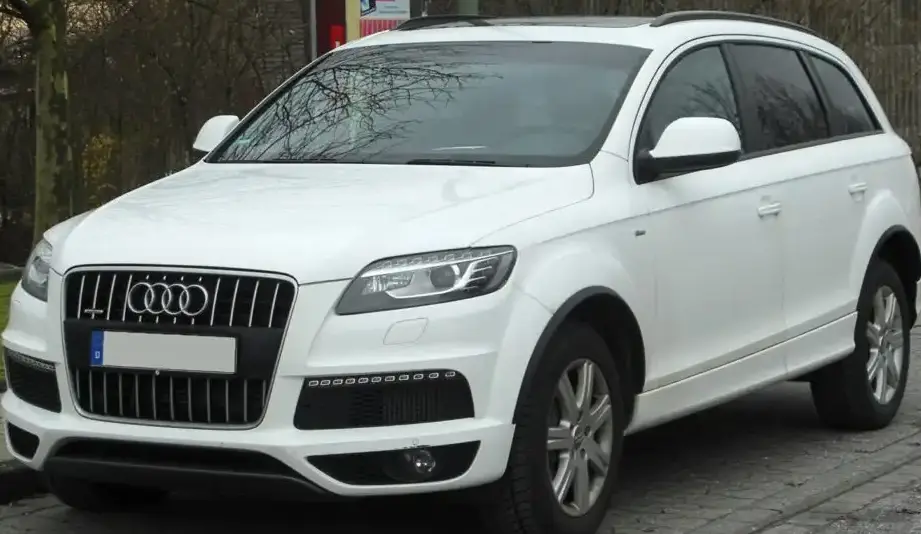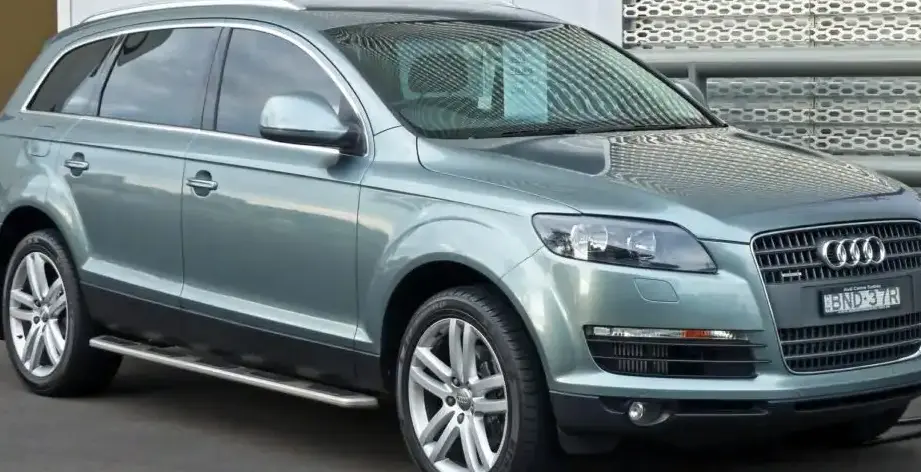
The Audi Q7 (Typ 4L) 6.0 V12 TDI quattro DPF tiptronic represents the pinnacle of diesel performance within the first-generation Q7 lineup, produced briefly between January and April of 2009. This variant, utilizing the CCGA engine code, was positioned as the ultra-luxury, high-performance offering, showcasing Audi’s technological prowess in diesel engine development. It was built on the Volkswagen Group’s PL46 platform (also known as the 1HX0 platform, shared with the Porsche Cayenne and Volkswagen Touareg), and aimed to compete with high-end SUVs from BMW and Mercedes-Benz. The Q7 6.0 V12 TDI was primarily marketed in Europe and select international markets where large, diesel-powered luxury SUVs were in demand.
Technical Specifications
| Brand | Audi |
| Model | Q7 |
| Generation | Q7 (Typ 4L) |
| Type (Engine) | 6.0 V12 TDI (500 Hp) quattro DPF tiptronic |
| Start of production | January, 2009 |
| End of production | April, 2009 |
| Powertrain Architecture | Internal Combustion engine |
| Body type | SUV |
| Seats | 7 |
| Doors | 5 |
| Fuel consumption (urban) | 14.8 l/100 km (15.9 US mpg, 19.1 UK mpg, 6.8 km/l) |
| Fuel consumption (extra urban) | 9.3 l/100 km (25.3 US mpg, 30.4 UK mpg, 10.8 km/l) |
| Fuel consumption (combined) | 11.3 l/100 km (20.8 US mpg, 25 UK mpg, 8.8 km/l) |
| CO2 emissions | 298 g/km |
| Fuel Type | Diesel |
| Acceleration 0 – 100 km/h | 5.5 sec |
| Acceleration 0 – 62 mph | 5.5 sec |
| Acceleration 0 – 60 mph | 5.2 sec |
| Maximum speed | 250 km/h (155.34 mph) |
| Emission standard | Euro 4 |
| Weight-to-power ratio | 5.3 kg/Hp, 189.8 Hp/tonne |
| Weight-to-torque ratio | 2.6 kg/Nm, 379.5 Nm/tonne |
| Power | 500 Hp @ 3750 rpm |
| Power per litre | 84.3 Hp/l |
| Torque | 1000 Nm @ 1750-3250 rpm (737.56 lb.-ft. @ 1750-3250 rpm) |
| Maximum engine speed | 4750 rpm |
| Engine layout | Front, Longitudinal |
| Engine Model/Code | CCGA |
| Engine displacement | 5934 cm3 (362.11 cu. in.) |
| Number of cylinders | 12 |
| Engine configuration | V-engine |
| Cylinder Bore | 83 mm (3.27 in.) |
| Piston Stroke | 91.4 mm (3.6 in.) |
| Compression ratio | 16:1 |
| Number of valves per cylinder | 4 |
| Fuel injection system | Diesel Commonrail |
| Engine aspiration | BiTurbo, Intercooler |
| Valvetrain | DOHC |
| Engine oil capacity | 12.5 l (13.21 US qt, 11 UK qt) |
| Kerb Weight | 2635 kg (5809.18 lbs.) |
| Max. weight | 3405 kg (7506.74 lbs.) |
| Max load | 770 kg (1697.56 lbs.) |
| Trunk (boot) space – minimum | 775 l (27.37 cu. ft.) |
| Trunk (boot) space – maximum | 2035 l (71.87 cu. ft.) |
| Fuel tank capacity | 100 l (26.42 US gal, 22 UK gal) |
| Permitted trailer load with brakes (8%) | 3000 kg (6613.87 lbs.) |
| Permitted trailer load with brakes (12%) | 3000 kg (6613.87 lbs.) |
| Permitted trailer load without brakes | 750 kg (1653.47 lbs.) |
| Permitted towbar download | 120 kg (264.55 lbs.) |
| Length | 5086 mm (200.24 in.) |
| Width | 1983 mm (78.07 in.) |
| Width including mirrors | 2177 mm (85.71 in.) |
| Height | 1737 mm (68.39 in.) |
| Wheelbase | 3002 mm (118.19 in.) |
| Front track | 1651 mm (65 in.) |
| Rear (Back) track | 1676 mm (65.98 in.) |
| Front overhang | 965 mm (37.99 in.) |
| Rear overhang | 1119 mm (44.06 in.) |
| Ride height (ground clearance) | 240-205 mm (9.45 – 8.07 in.) |
| Drag coefficient (Cd) | 0.35 |
| Minimum turning circle (turning diameter) | 12 m (39.37 ft.) |
| Drive wheel | All wheel drive (4×4) |
| Number of gears and type of gearbox | 6 gears, automatic transmission Tiptronic |
| Front suspension | Double wishbone |
| Rear suspension | Independent coil spring |
| Front brakes | Ventilated discs |
| Rear brakes | Ventilated discs |
| Assisting systems | ABS (Anti-lock braking system) |
| Steering type | Steering rack and pinion |
| Power steering | Hydraulic Steering |
| Tires size | 295/40 R20 |
| Wheel rims size | 10J x 20 |
Powertrain & Engine Architecture
The heart of the Q7 6.0 V12 TDI is the CCGA engine, a 6.0-liter V12 diesel engine. This engine utilizes a common rail direct injection system, delivering fuel at extremely high pressures for optimized combustion. It’s equipped with two sequentially-mounted turbochargers with variable geometry turbine (VGT) technology, and intercooling, which significantly boost power and torque while minimizing turbo lag. The engine also features a Diesel Particulate Filter (DPF) to reduce emissions, complying with Euro 4 standards. The valvetrain employs Double Overhead Camshafts (DOHC) with four valves per cylinder. The engine’s robust construction and advanced technologies allowed it to produce a remarkable 500 horsepower at 3750 rpm and a staggering 1000 Nm (737.56 lb-ft) of torque between 1750 and 3250 rpm. The engine is longitudinally mounted in the chassis. Paired with the engine is a six-speed Tiptronic automatic transmission, offering both fully automatic operation and manual gear selection via steering wheel-mounted paddles or the gear selector. This transmission was specifically calibrated to handle the immense torque output of the V12 diesel.
Driving Characteristics
The Q7 6.0 V12 TDI delivers a unique driving experience. Despite its substantial weight (2635 kg / 5809.18 lbs), the engine’s massive torque provides effortless acceleration. The 0-60 mph sprint takes just 5.2 seconds, and the car feels remarkably composed even at high speeds. The Tiptronic transmission shifts smoothly, although it isn’t as quick or sporty as some dual-clutch transmissions found in competitors. The gear ratios are tuned for both acceleration and fuel efficiency, with a relatively tall sixth gear for highway cruising. Compared to the 3.0 TDI or 4.2 FSI gasoline variants, the V12 TDI offers significantly more power and torque, resulting in a more authoritative and refined driving experience. However, the added weight and complexity of the V12 engine do impact handling slightly, making it feel less agile than its lighter siblings.
Equipment & Trim Levels
The Q7 6.0 V12 TDI came standard with a comprehensive list of luxury features. Interior appointments included premium leather upholstery, wood trim, and heated, power-adjustable front seats. Standard technology included a navigation system, Bose premium sound system, and a multi-function steering wheel. Available options included adaptive air suspension, rear-seat entertainment, and a panoramic sunroof. The exterior featured unique V12 badging and larger alloy wheels. The overall trim level was positioned at the very top of the Q7 range, offering a level of luxury and refinement comparable to the flagship models from other premium SUV manufacturers.
Chassis & Braking
The Q7 6.0 V12 TDI utilizes a double wishbone front suspension and an independent coil spring rear suspension. The suspension was tuned to provide a comfortable ride while maintaining reasonable handling characteristics. Larger ventilated disc brakes were fitted on all four wheels to cope with the car’s weight and performance. An Anti-lock Braking System (ABS) was standard. The quattro all-wheel-drive system distributes power between the front and rear axles as needed, providing excellent traction in all weather conditions. The steering is a hydraulic rack and pinion system, offering precise and responsive control.
Market Reception & Comparison
The Audi Q7 6.0 V12 TDI was generally well-received by automotive critics, who praised its powerful engine, luxurious interior, and refined driving experience. However, its high price and relatively short production run limited its market appeal. Fuel economy, while respectable for a vehicle of its size and performance, was still relatively high at 11.3 l/100 km (20.8 US mpg). Compared to the 3.0 TDI, the V12 TDI offered significantly more performance but at a substantial price premium. The 4.2 FSI gasoline variant provided similar performance but lacked the V12’s torque and fuel efficiency. Reliability was generally good, although the complex engine and drivetrain components could be expensive to maintain.
Legacy
The Audi Q7 6.0 V12 TDI remains a relatively rare and sought-after vehicle among enthusiasts. The CCGA engine is known for its durability and performance, but maintenance can be costly due to its complexity. In the used car market, these Q7s command a premium price compared to other variants. The V12 TDI represents a unique chapter in Audi’s history, showcasing the brand’s commitment to diesel technology and its ability to create high-performance luxury SUVs. While not a mainstream success, it cemented the Q7’s reputation as a technologically advanced and capable vehicle.