Technical Specifications
| Brand | Audi |
| Model | Q7 |
| Generation | Q7 (Typ 4L, facelift 2009) |
| Type (Engine) | 3.0 TDI V6 (225 Hp) quattro 8 Tiptronic 7 Seat |
| Start of production | 2010 |
| End of production | 2012 |
| Powertrain Architecture | Internal Combustion engine |
| Body type | SUV |
| Seats | 7 |
| Doors | 5 |
| Fuel consumption (urban) | 13.8 l/100 km (17 US mpg, 20.5 UK mpg, 7.2 km/l) |
| Fuel consumption (extra urban) | 9.4 l/100 km (25 US mpg, 30.1 UK mpg, 10.6 km/l) |
| Fuel consumption (combined) | 11.8 l/100 km (19.9 US mpg, 23.9 UK mpg, 8.5 km/l) |
| Fuel Type | Diesel |
| Acceleration 0 – 60 mph | 8 sec |
| Maximum speed | 209 km/h (129.87 mph) |
| Emission standard | ULEV II |
| Weight-to-power ratio | 11.2 kg/Hp, 89.1 Hp/tonne |
| Weight-to-torque ratio | 4.6 kg/Nm, 217.8 Nm/tonne |
| Power | 225 Hp @ 3750 rpm |
| Power per litre | 75.8 Hp/l |
| Torque | 550 Nm @ 1750 rpm (405.66 lb.-ft. @ 1750 rpm) |
| Engine layout | Front, Longitudinal |
| Engine Model/Code | CATA |
| Engine displacement | 2967 cm3 (181.06 cu. in.) |
| Number of cylinders | 6 |
| Engine configuration | V-engine |
| Cylinder Bore | 83 mm (3.27 in.) |
| Piston Stroke | 91.4 mm (3.6 in.) |
| Compression ratio | 16.8:1 |
| Number of valves per cylinder | 4 |
| Fuel injection system | Diesel Commonrail |
| Engine aspiration | Turbocharger, Intercooler |
| Valvetrain | DOHC |
| Engine oil capacity | 8.2 l (8.66 US qt, 7.21 UK qt) |
| Kerb Weight | 2525 kg (5566.67 lbs.) |
| Trunk (boot) space – minimum | 330 l (11.65 cu. ft.) |
| Trunk (boot) space – maximum | 2035 l (71.87 cu. ft.) |
| Fuel tank capacity | 100 l (26.42 US gal, 22 UK gal) |
| AdBlue tank | 23 l (6.08 US gal, 5.06 UK gal) |
| Permitted trailer load with brakes (12%) | 2495 kg (5500.53 lbs.) |
| Length | 5089 mm (200.35 in.) |
| Width | 1983 mm (78.07 in.) |
| Width including mirrors | 2177 mm (85.71 in.) |
| Height | 1737 mm (68.39 in.) |
| Wheelbase | 3002 mm (118.19 in.) |
| Front track | 1651 mm (65 in.) |
| Rear (Back) track | 1676 mm (65.98 in.) |
| Front overhang | 962 mm (37.87 in.) |
| Rear overhang | 1125 mm (44.29 in.) |
| Ride height (ground clearance) | 205 mm (8.07 in.) |
| Minimum turning circle (turning diameter) | 12 m (39.37 ft.) |
| Drivetrain Architecture | All wheel drive (4×4) |
| Number of gears and type of gearbox | 8 gears, automatic transmission Tiptronic |
| Front suspension | Coil spring, Double wishbone, Transverse stabilizer, Air Suspension – Optional |
| Rear suspension | Independent multi-link spring suspension with stabilizer, Air Suspension – Optional |
| Front brakes | Ventilated discs, 350×34 mm |
| Rear brakes | Ventilated discs, 330×28 mm |
| Assisting systems | ABS (Anti-lock braking system) |
| Steering type | Steering rack and pinion |
| Power steering | Electric Steering |
| Tires size | 265/50 R19; 275/45 R20; 295/35 R21 |
| Wheel rims size | 8.5J x 19; 9J x 20; 10J x 21 |
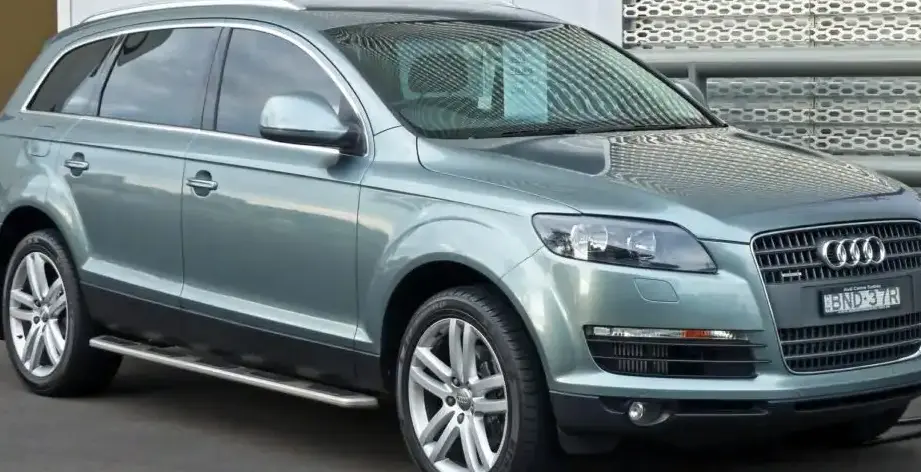
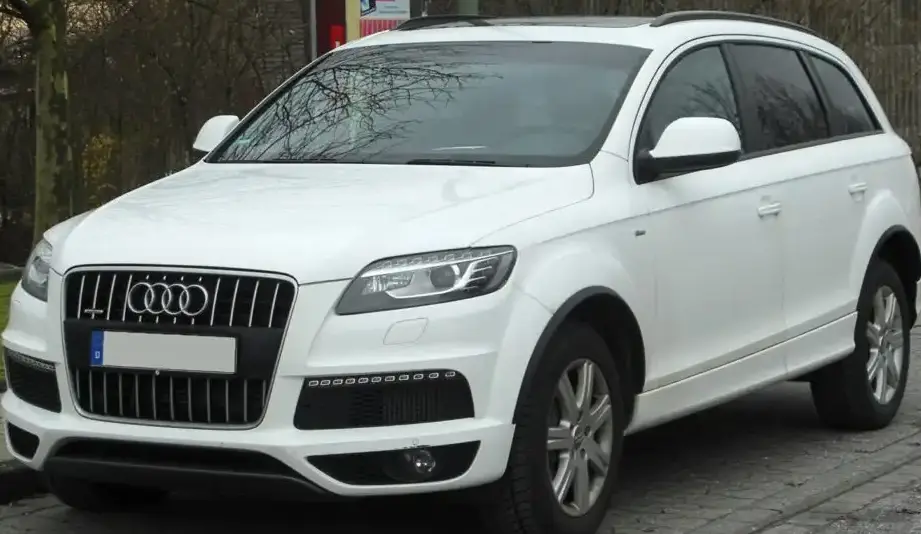
The Audi Q7 3.0 TDI quattro 8 Tiptronic represented a compelling option for buyers seeking a luxurious, capable, and relatively efficient seven-passenger SUV. Introduced as part of the Typ 4L facelift in 2009, production of this specific variant ran from 2010 to 2012. It slotted into the Q7 lineup between the entry-level 3.0 TDI with a manual transmission and the more powerful 4.2 TDI models. The Q7, as Audi’s first SUV, was designed to compete with established players like the BMW X5 and Mercedes-Benz GL-Class, offering a blend of on-road refinement and off-road capability thanks to its quattro all-wheel-drive system.
Powertrain & Engine Architecture
At the heart of this Q7 variant lies the 3.0-liter V6 diesel engine, designated as the CATA engine code. This engine is a member of Audi’s modular engine family, known for its robust construction and advanced technology. The engine utilizes a common rail direct injection system, delivering fuel at extremely high pressure for optimized combustion. A single turbocharger with an intercooler provides forced induction, boosting power and torque. The engine features a double overhead camshaft (DOHC) valvetrain with four valves per cylinder, enhancing breathing and efficiency. The eight-speed Tiptronic automatic transmission is a torque converter type, offering smooth and responsive shifts. It allows for both fully automatic operation and manual gear selection via steering wheel-mounted paddles or the gear selector. The transmission’s eight forward gears contribute to improved fuel economy and reduced engine noise at highway speeds.
Driving Characteristics
The 3.0 TDI with the Tiptronic transmission delivers a comfortable and refined driving experience. While not as overtly sporty as some of its competitors, it provides ample power for everyday driving and highway cruising. The 225 hp and 405.66 lb.-ft. of torque are readily available, providing strong acceleration from a standstill and effortless overtaking capability. The Tiptronic transmission is well-tuned, offering smooth gear changes and a willingness to downshift when needed. Compared to the six-speed manual version of the 3.0 TDI, the Tiptronic prioritizes comfort and ease of use over outright performance. The eight-speed transmission’s closer gear ratios help to keep the engine in its optimal power band, maximizing efficiency. The quattro all-wheel-drive system provides excellent traction in all weather conditions, enhancing stability and confidence.
Equipment & Trim Levels
The 3.0 TDI quattro 8 Tiptronic 7-seat model came standard with a generous array of features. Interior appointments typically included leather upholstery, power-adjustable front seats with memory function, and tri-zone automatic climate control. Standard technology included a multi-media interface (MMI) system with a color display, a premium sound system, and Bluetooth connectivity. Safety features included anti-lock brakes (ABS), electronic stability control (ESC), and a comprehensive airbag system. Optional extras included a panoramic sunroof, adaptive cruise control, a rearview camera, and a navigation system. Higher trim levels offered additional luxury features such as upgraded leather, wood trim, and advanced driver-assistance systems.
Chassis & Braking
The Q7’s chassis is based on a robust platform designed to handle the vehicle’s weight and provide a comfortable ride. The front suspension utilizes a double wishbone configuration with coil springs and a transverse stabilizer bar. The rear suspension employs an independent multi-link setup, also with coil springs and a stabilizer bar. Air suspension was available as an option, providing adjustable ride height and enhanced comfort. Braking duties are handled by ventilated discs on all four wheels. The front brakes measure 350×34 mm, while the rear brakes are 330×28 mm. ABS and ESC are standard, providing enhanced braking performance and stability.
Market Reception & Comparison
The Audi Q7 3.0 TDI quattro 8 Tiptronic was generally well-received by automotive critics. It was praised for its luxurious interior, comfortable ride, and capable all-wheel-drive system. The 3.0 TDI engine was noted for its strong performance and relatively good fuel economy. Compared to the 4.2 TDI models, the 3.0 TDI offered a more balanced combination of performance and efficiency. The Tiptronic transmission was considered a good match for the engine, providing smooth and effortless shifting. However, some critics noted that the Q7 was a large and heavy vehicle, which could impact handling agility. Fuel economy figures of around 19.9 US mpg combined were competitive for its class, but not class-leading.
Legacy
The Audi Q7 3.0 TDI quattro 8 Tiptronic has proven to be a relatively reliable vehicle in the long term. The 3.0 TDI engine is known for its durability, and the Tiptronic transmission is generally robust. However, like any complex vehicle, it is susceptible to age-related issues such as wear and tear on suspension components and potential problems with the air suspension system (if equipped). On the used car market, these Q7s remain desirable due to their combination of luxury, practicality, and all-weather capability. Maintenance costs can be higher than those of some competitors, due to the vehicle’s complexity and the cost of Audi parts. However, the Q7’s strong build quality and reputation for reliability continue to make it a popular choice among discerning buyers.