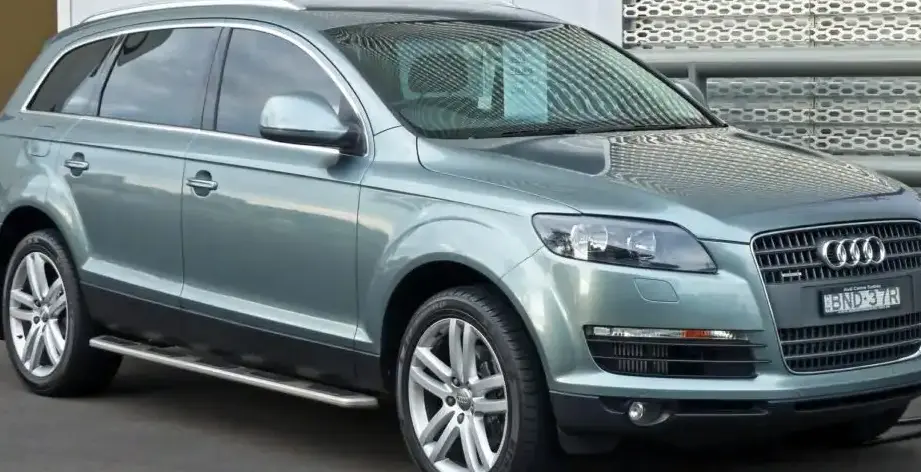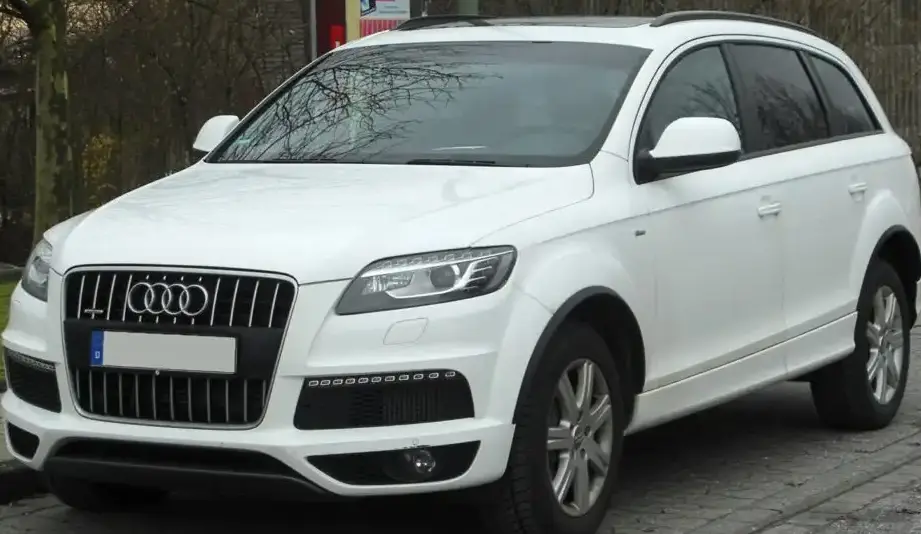
The Audi Q7 (Typ 4L, facelift 2009) 3.0 TFSI V6 (333 Hp) quattro tiptronic represents a significant iteration of Audi’s luxury SUV, produced from May 2010 to March 2015. This variant occupied a strong mid-to-upper position within the Q7 lineup, offering a compelling blend of performance, technology, and practicality. It built upon the foundation of the Typ 4L platform (shared with the Porsche Cayenne and Volkswagen Touareg) and benefited from the 2009 facelift, which included revised styling, enhanced interior appointments, and updated powertrain options. The 3.0 TFSI model was particularly important in markets like Europe and North America, where demand for efficient yet powerful luxury SUVs was high.
Technical Specifications
| Brand | Audi |
| Model | Q7 |
| Generation | Q7 (Typ 4L, facelift 2009) |
| Type (Engine) | 3.0 TFSI V6 (333 Hp) quattro tiptronic |
| Start of production | May, 2010 |
| End of production | March, 2015 |
| Powertrain Architecture | Internal Combustion engine |
| Body type | SUV |
| Seats | 5 |
| Doors | 5 |
| Fuel consumption (urban) | 14.4 l/100 km (16.3 US mpg, 19.6 UK mpg, 6.9 km/l) |
| Fuel consumption (extra urban) | 8.5 l/100 km (27.7 US mpg, 33.2 UK mpg, 11.8 km/l) |
| Fuel consumption (combined) | 10.7 l/100 km (22 US mpg, 26.4 UK mpg, 9.3 km/l) |
| CO2 emissions | 249 g/km |
| Fuel Type | Petrol (Gasoline) |
| Acceleration 0 – 100 km/h | 6.9 sec |
| Acceleration 0 – 62 mph | 6.9 sec |
| Acceleration 0 – 60 mph | 6.6 sec |
| Maximum speed | 243 km/h (150.99 mph) |
| Emission standard | Euro 5 |
| Weight-to-power ratio | 6.7 kg/Hp, 148.7 Hp/tonne |
| Weight-to-torque ratio | 5.1 kg/Nm, 196.4 Nm/tonne |
| Power | 333 Hp @ 5500-6500 rpm |
| Power per litre | 111.2 Hp/l |
| Torque | 440 Nm @ 2900-5300 rpm (324.53 lb.-ft. @ 2900-5300 rpm) |
| Maximum engine speed | 6500 rpm |
| Engine layout | Front, Longitudinal |
| Engine Model/Code | CJWB, CJTB, CNAA, CTWA |
| Engine displacement | 2995 cm3 (182.77 cu. in.) |
| Number of cylinders | 6 |
| Engine configuration | V-engine |
| Cylinder Bore | 84.5 mm (3.33 in.) |
| Piston Stroke | 89 mm (3.5 in.) |
| Compression ratio | 10.5:1 |
| Number of valves per cylinder | 4 |
| Fuel injection system | Direct injection |
| Engine aspiration | Supercharger, Intercooler |
| Valvetrain | DOHC |
| Engine oil capacity | 6.8 l (7.19 US qt | 5.98 UK qt) |
| Kerb Weight | 2240 kg (4938.35 lbs.) |
| Max. weight | 2965 kg (6536.71 lbs.) |
| Max load | 725 kg (1598.35 lbs.) |
| Trunk (boot) space – minimum | 775 l (27.37 cu. ft.) |
| Trunk (boot) space – maximum | 2035 l (71.87 cu. ft.) |
| Fuel tank capacity | 100 l (26.42 US gal | 22 UK gal) |
| Max. roof load | 100 kg (220.46 lbs.) |
| Permitted trailer load with brakes (8%) | 3500 kg (7716.18 lbs.) |
| Permitted trailer load with brakes (12%) | 3500 kg (7716.18 lbs.) |
| Permitted trailer load without brakes | 750 kg (1653.47 lbs.) |
| Permitted towbar download | 140 kg (308.65 lbs.) |
| Length | 5089 mm (200.35 in.) |
| Width | 1983 mm (78.07 in.) |
| Width including mirrors | 2177 mm (85.71 in.) |
| Height | 1737 mm (68.39 in.) |
| Wheelbase | 3002 mm (118.19 in.) |
| Front track | 1651 mm (65 in.) |
| Rear (Back) track | 1681 mm (66.18 in.) |
| Front overhang | 962 mm (37.87 in.) |
| Rear overhang | 1125 mm (44.29 in.) |
| Ride height (ground clearance) | 205 mm (8.07 in.) |
| Drag coefficient (Cd) | 0.37 |
| Minimum turning circle (turning diameter) | 12 m (39.37 ft.) |
| Approach angle | 21° |
| Departure angle | 23.4° |
| Ramp-over (brakeover) angle | 21.1° |
| Climb angle | 31° |
| Wading depth | 500 mm (19.69 in.) |
| Drivetrain Architecture | The Internal combustion engine (ICE) drives permanently the four wheels of the vehicle. |
| Drive wheel | All wheel drive (4×4) |
| Number of gears and type of gearbox | 8 gears, automatic transmission tiptronic |
| Front suspension | Coil spring, Double wishbone, Transverse stabilizer, Air Suspension – Optional |
| Rear suspension | Double wishbone, Transverse stabilizer, Coil spring, Air Suspension – Optional |
| Front brakes | Ventilated discs |
| Rear brakes | Ventilated discs |
| Assisting systems | ABS (Anti-lock braking system) |
| Steering type | Steering rack and pinion |
| Power steering | Hydraulic Steering |
| Tires size | 255/55 R18; 265/50 R19; 275/45 R20; 295/40 R20; 295/35 R21 |
| Wheel rims size | 8J x 18; 8.5J x 19; 9J x 20; 10J x 20; 10J x 21 |
Powertrain & Engine Architecture
At the heart of the Q7 3.0 TFSI lies the CJWB (and related codes like CJTB, CNAA, CTWA) 3.0-liter V6 engine. This engine is a masterpiece of German engineering, featuring direct fuel injection (FSI) and a mechanically driven supercharger. The supercharger provides instant boost at low engine speeds, eliminating turbo lag and delivering a responsive driving experience. The engine also incorporates an intercooler to cool the intake air, further enhancing performance. The DOHC valvetrain with four valves per cylinder optimizes airflow for increased power and efficiency. Paired with this engine is Audi’s eight-speed tiptronic automatic transmission. This transmission offers smooth and quick shifts, and allows the driver to manually select gears when desired. The quattro all-wheel-drive system distributes power between the front and rear axles, providing excellent traction in all weather conditions.
Driving Characteristics
The 333 horsepower and 324.53 lb-ft of torque produced by the 3.0 TFSI engine provide brisk acceleration. The 0-60 mph sprint takes approximately 6.6 seconds, making it a genuinely quick SUV for its size. The supercharger ensures strong low-end torque, making overtaking maneuvers effortless. The tiptronic transmission is well-tuned, offering seamless gear changes in automatic mode and responsive control in manual mode. Compared to the base 2.0 TFSI models, the 3.0 TFSI offers a significantly more engaging and powerful driving experience. While not as sporty as the Q7’s performance-oriented S-Line variants, it strikes a good balance between comfort and performance. The quattro all-wheel drive system inspires confidence on slippery roads and provides a secure feeling during spirited driving.
Equipment & Trim Levels
The Q7 3.0 TFSI typically came well-equipped as standard. Features included leather upholstery, tri-zone automatic climate control, a premium sound system, and parking sensors. Optional extras included a panoramic sunroof, adaptive cruise control, a navigation system, and upgraded interior trim packages. The Q7 offered a high level of customization, allowing buyers to tailor the vehicle to their specific preferences. The interior design was characterized by Audi’s signature attention to detail and high-quality materials.
Chassis & Braking
The Q7’s chassis is designed to provide a comfortable ride while maintaining good handling characteristics. The suspension setup typically consisted of coil springs and double wishbones at both the front and rear, with a transverse stabilizer bar to reduce body roll. Air suspension was available as an option, providing an even more refined ride quality and the ability to adjust the vehicle’s ride height. Braking duties were handled by ventilated discs on all four wheels, providing ample stopping power. The anti-lock braking system (ABS) and electronic stability control (ESC) further enhance safety.
Market Reception & Comparison
The Audi Q7 3.0 TFSI was generally well-received by automotive critics. It was praised for its powerful engine, comfortable ride, and luxurious interior. Fuel economy, while not exceptional, was considered reasonable for a vehicle of its size and performance. Compared to other SUVs in its class, such as the BMW X5 and Mercedes-Benz GL, the Q7 offered a compelling combination of features and value. The 3.0 TFSI variant was often seen as a sweet spot in the Q7 lineup, offering a significant performance upgrade over the base models without the higher price tag of the S-Line variants.
Legacy
The 3.0 TFSI engine has proven to be a reliable and durable powerplant. While some early models experienced issues with the timing chain tensioner, these were generally addressed through warranty repairs. Today, well-maintained Q7 3.0 TFSI models remain desirable on the used car market. Their combination of luxury, performance, and practicality makes them a popular choice for buyers seeking a capable and comfortable SUV. The engine’s supercharger, while adding complexity, has generally proven to be reliable, and parts availability remains good. The Q7 3.0 TFSI represents a high point in Audi’s SUV development, offering a refined and enjoyable driving experience that continues to appeal to enthusiasts today.