Technical Specifications
| Brand | Audi |
| Model | Q7 |
| Generation | Q7 (Typ 4L, facelift 2009) |
| Type (Engine) | 3.6 FSI V6 (280 Hp) quattro tiptronic |
| Start of production | 2009 |
| End of production | May, 2010 |
| Powertrain Architecture | Internal Combustion engine |
| Body type | SUV |
| Seats | 5 |
| Doors | 5 |
| Fuel consumption (urban) | 16.9 l/100 km (13.9 US mpg, 16.7 UK mpg, 5.9 km/l) |
| Fuel consumption (extra urban) | 9.3 l/100 km (25.3 US mpg, 30.4 UK mpg, 10.8 km/l) |
| Fuel consumption (combined) | 12.1 l/100 km (19.4 US mpg, 23.3 UK mpg, 8.3 km/l) |
| CO2 emissions | 289 g/km |
| Fuel Type | Petrol (Gasoline) |
| Acceleration 0 – 100 km/h | 8.5 sec |
| Acceleration 0 – 62 mph | 8.5 sec |
| Acceleration 0 – 60 mph | 8.1 sec |
| Maximum speed | 230 km/h (142.92 mph) |
| Emission standard | Euro 4 |
| Weight-to-power ratio | 8 kg/Hp, 125.3 Hp/tonne |
| Weight-to-torque ratio | 6.2 kg/Nm, 161.1 Nm/tonne |
| Power | 280 Hp @ 6200 rpm |
| Power per litre | 77.8 Hp/l |
| Torque | 360 Nm @ 2500-5000 rpm (265.52 lb.-ft. @ 2500-5000 rpm) |
| Engine layout | Front, Longitudinal |
| Engine Model/Code | BHK |
| Engine displacement | 3597 cm3 (219.5 cu. in.) |
| Number of cylinders | 6 |
| Engine configuration | V-engine |
| Cylinder Bore | 89 mm (3.5 in.) |
| Piston Stroke | 96.4 mm (3.8 in.) |
| Compression ratio | 12:1 |
| Number of valves per cylinder | 4 |
| Fuel injection system | Direct injection |
| Engine aspiration | Naturally aspirated engine |
| Valvetrain | DOHC |
| Engine oil capacity | 6.8 l (7.19 US qt | 5.98 UK qt) |
| Kerb Weight | 2235 kg (4927.33 lbs.) |
| Max. weight | 3030 kg (6680.01 lbs.) |
| Max load | 795 kg (1752.67 lbs.) |
| Trunk (boot) space – minimum | 775 l (27.37 cu. ft.) |
| Trunk (boot) space – maximum | 2035 l (71.87 cu. ft.) |
| Fuel tank capacity | 100 l (26.42 US gal | 22 UK gal) |
| Max. roof load | 100 kg (220.46 lbs.) |
| Permitted trailer load with brakes (8%) | 3200 kg (7054.79 lbs.) |
| Permitted trailer load with brakes (12%) | 3200 kg (7054.79 lbs.) |
| Permitted trailer load without brakes | 750 kg (1653.47 lbs.) |
| Permitted towbar download | 130 kg (286.6 lbs.) |
| Length | 5089 mm (200.35 in.) |
| Width | 1983 mm (78.07 in.) |
| Width including mirrors | 2177 mm (85.71 in.) |
| Height | 1737 mm (68.39 in.) |
| Wheelbase | 3002 mm (118.19 in.) |
| Front track | 1651 mm (65 in.) |
| Rear (Back) track | 1681 mm (66.18 in.) |
| Front overhang | 962 mm (37.87 in.) |
| Rear overhang | 1125 mm (44.29 in.) |
| Ride height (ground clearance) | 205 mm (8.07 in.) |
| Drag coefficient (Cd) | 0.37 |
| Minimum turning circle (turning diameter) | 12 m (39.37 ft.) |
| Drive wheel | All wheel drive (4×4) |
| Number of gears and type of gearbox | 6 gears, automatic transmission Tiptronic |
| Front suspension | Independent multi-link suspension |
| Rear suspension | Double wishbone |
| Front brakes | Ventilated discs |
| Rear brakes | Ventilated discs |
| Assisting systems | ABS (Anti-lock braking system) |
| Steering type | Steering rack and pinion |
| Power steering | Electric Steering |
| Tires size | 235/60 R18 |
| Wheel rims size | 7.5J x 18 |
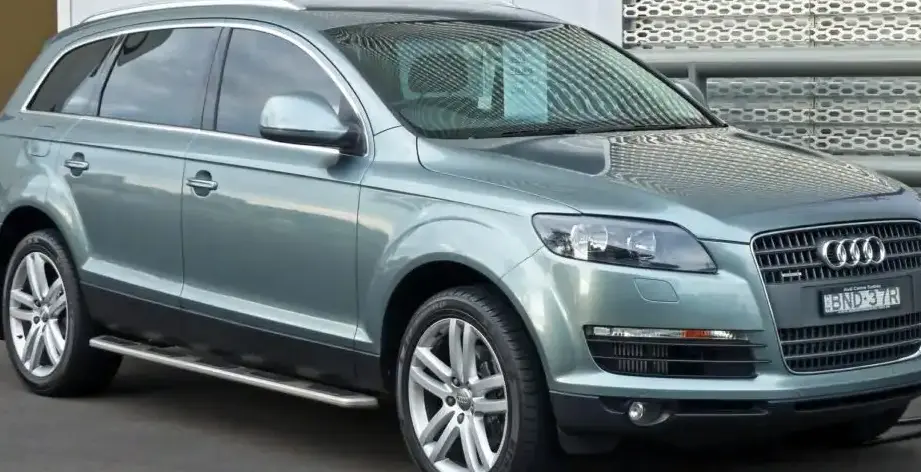
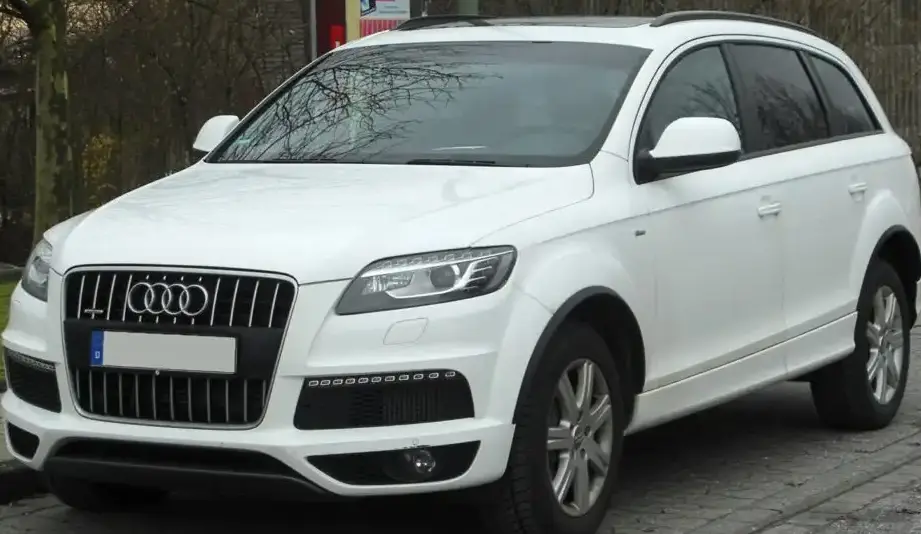
The Audi Q7 3.6 FSI quattro tiptronic, produced from 2009 to 2010 as part of the Typ 4L facelift generation, was a notable offering in the burgeoning luxury SUV market. Positioned as a mid-range option within the Q7 lineup, it aimed to strike a balance between the more economical 3.0 TDI models and the high-performance 4.2 FSI variants. This version combined a naturally aspirated 3.6-liter V6 gasoline engine with Audi’s signature quattro all-wheel-drive system and a six-speed tiptronic automatic transmission, targeting buyers who desired a blend of power, refinement, and practicality in both European and North American markets.
Powertrain & Engine Architecture
The core of the Q7 3.6 FSI was the BHK engine, a 3.6-liter naturally aspirated V6. Audi’s FSI (Fuel Stratified Injection) direct injection technology was central to its design, enabling precise fuel delivery and enhancing combustion efficiency. The engine featured a double overhead camshaft (DOHC) valvetrain with four valves per cylinder, contributing to its power output. The 3.6 FSI engine generated 280 horsepower at 6200 rpm and 360 Nm (265.52 lb-ft) of torque between 2500 and 5000 rpm. The six-speed tiptronic automatic transmission, a conventional torque converter unit, was calibrated to manage the engine’s output and deliver smooth gear changes. The ‘tiptronic’ mode allowed drivers to manually select gears, providing a degree of control, though the transmission primarily operated in automatic mode.
Driving Characteristics
The Q7 3.6 FSI delivered a comfortable and refined driving experience. While not as aggressively sporty as the 4.2 FSI, the 3.6-liter V6 provided sufficient power for everyday driving and highway travel. Acceleration from 0 to 60 mph took around 8.1 seconds, and the top speed was electronically limited to 142.92 mph. The tiptronic transmission, while generally smooth, wasn’t known for particularly rapid manual shifts. Compared to the diesel TDI variants, the 3.6 FSI offered a more linear power delivery and a willingness to rev higher. However, it lacked the substantial low-end torque characteristic of the TDI engines, which could make it feel less effortless in certain driving scenarios. The quattro all-wheel-drive system ensured excellent traction and stability in various weather conditions.
Equipment & Trim Levels
The Q7 3.6 FSI was typically well-equipped, reflecting its luxury SUV status. Standard features generally included leather upholstery, tri-zone automatic climate control, a premium audio system, and power-adjustable front seats. Optional extras commonly available included a navigation system, adaptive cruise control, a panoramic sunroof, and a range of upgraded interior trim options. The specific trim level could vary depending on the market and package selections, but the 3.6 FSI generally offered a solid balance of luxury and convenience features.
Chassis & Braking
The Q7’s chassis employed an independent multi-link suspension at the front and a double wishbone suspension at the rear, prioritizing ride comfort and handling. Ventilated disc brakes were fitted on all four wheels, providing adequate stopping power for the vehicle’s weight. The Q7 3.6 FSI’s curb weight of 2235 kg (4927.33 lbs) necessitated a robust braking system. An anti-lock braking system (ABS) was standard, enhancing safety and control during emergency braking maneuvers.
Market Reception & Comparison
The Audi Q7 3.6 FSI received generally positive reviews from automotive critics. It was praised for its spacious interior, comfortable ride quality, and overall refinement. However, some reviewers pointed out that its fuel economy was comparatively poor, especially when contrasted with the diesel alternatives. The 3.6 FSI catered to buyers who preferred the characteristics of a gasoline engine, offering a different driving experience than the TDI models. Compared to the more powerful 4.2 FSI, it provided a more accessible entry point into the Q7 range, albeit with a reduction in performance.
Legacy
The Audi Q7 3.6 FSI, despite its relatively short production run, remains a sought-after used SUV. The BHK engine is generally considered reliable, provided it receives regular maintenance. Potential issues can include oil leaks and occasional problems with the fuel injectors. The tiptronic transmission, when properly maintained, is also known for its durability. Today, these Q7s represent a good value for buyers seeking a spacious, comfortable, and well-equipped luxury SUV, combining Audi’s engineering expertise with the character of a naturally aspirated V6 engine.