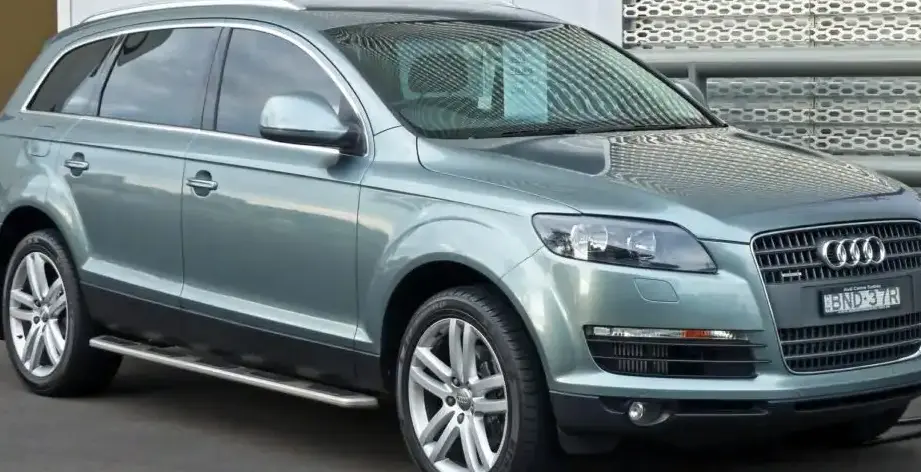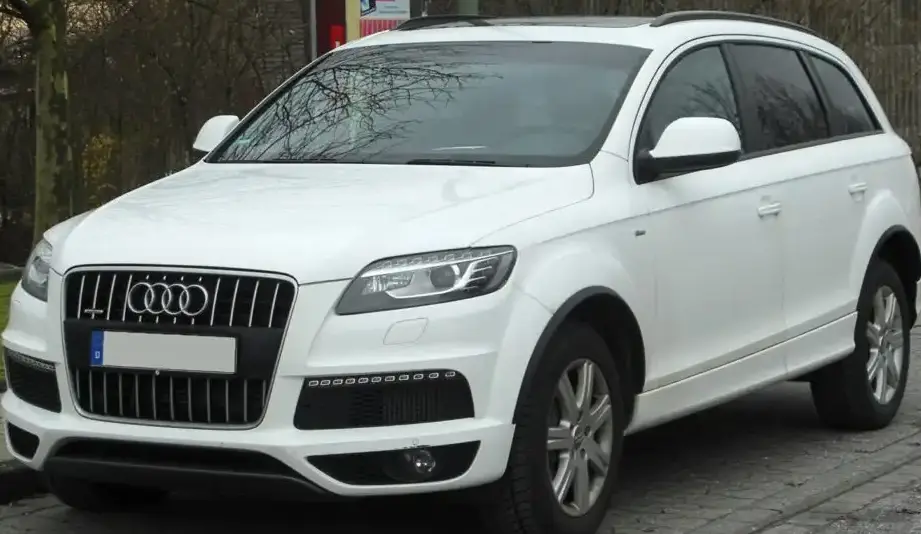
The Audi Q7 4.2 FSI quattro tiptronic, produced from 2009 to May 2010, represents a significant iteration of the Typ 4L Q7 generation following its mid-cycle facelift. Positioned as the flagship engine option, this variant combined a naturally aspirated 4.2-liter V8 engine with Audi’s renowned quattro all-wheel-drive system and a six-speed tiptronic automatic transmission. It catered to buyers seeking a blend of luxury, performance, and all-weather capability in a large SUV package. This model aimed to deliver a more refined and powerful experience compared to the lower-trim Q7s, while offering a different driving character than the diesel-powered variants popular in Europe.
Technical Specifications
| Brand | Audi |
| Model | Q7 |
| Generation | Q7 (Typ 4L, facelift 2009) |
| Type (Engine) | 4.2 FSI V8 (350 Hp) quattro tiptronic |
| Start of production | 2009 |
| End of production | May, 2010 |
| Powertrain Architecture | Internal Combustion engine |
| Body type | SUV |
| Seats | 5 |
| Doors | 5 |
| Fuel consumption (urban) | 17.5 l/100 km (13.4 US mpg, 16.1 UK mpg, 5.7 km/l) |
| Fuel consumption (extra urban) | 9.9 l/100 km (23.8 US mpg, 28.5 UK mpg, 10.1 km/l) |
| Fuel consumption (combined) | 12.7 l/100 km (18.5 US mpg, 22.2 UK mpg, 7.9 km/l) |
| CO2 emissions | 304 g/km |
| Fuel Type | Petrol (Gasoline) |
| Acceleration 0 – 100 km/h | 7.4 sec |
| Acceleration 0 – 62 mph | 7.4 sec |
| Acceleration 0 – 60 mph | 7 sec |
| Maximum speed | 248 km/h (154.1 mph) |
| Emission standard | Euro 4 |
| Weight-to-power ratio | 6.5 kg/Hp, 154.2 Hp/tonne |
| Weight-to-torque ratio | 5.2 kg/Nm, 193.8 Nm/tonne |
| Power | 350 Hp @ 6800 rpm |
| Power per litre | 84.1 Hp/l |
| Torque | 440 Nm @ 3500 rpm (324.53 lb.-ft. @ 3500 rpm) |
| Engine layout | Front, Longitudinal |
| Engine Model/Code | BAR |
| Engine displacement | 4163 cm3 (254.04 cu. in.) |
| Number of cylinders | 8 |
| Engine configuration | V-engine |
| Cylinder Bore | 84.5 mm (3.33 in.) |
| Piston Stroke | 92.8 mm (3.65 in.) |
| Compression ratio | 12.5:1 |
| Number of valves per cylinder | 4 |
| Fuel injection system | Direct injection |
| Engine aspiration | Naturally aspirated engine |
| Valvetrain | DOHC |
| Engine oil capacity | 9.1 l (9.62 US qt | 8.01 UK qt) |
| Kerb Weight | 2270 kg (5004.49 lbs.) |
| Max. weight | 3095 kg (6823.31 lbs.) |
| Max load | 825 kg (1818.81 lbs.) |
| Trunk (boot) space – minimum | 775 l (27.37 cu. ft.) |
| Trunk (boot) space – maximum | 2035 l (71.87 cu. ft.) |
| Fuel tank capacity | 100 l (26.42 US gal | 22 UK gal) |
| Max. roof load | 100 kg (220.46 lbs.) |
| Permitted trailer load with brakes (8%) | 3200 kg (7054.79 lbs.) |
| Permitted trailer load with brakes (12%) | 3200 kg (7054.79 lbs.) |
| Permitted trailer load without brakes | 750 kg (1653.47 lbs.) |
| Permitted towbar download | 130 kg (286.6 lbs.) |
| Length | 5089 mm (200.35 in.) |
| Width | 1983 mm (78.07 in.) |
| Width including mirrors | 2177 mm (85.71 in.) |
| Height | 1737 mm (68.39 in.) |
| Wheelbase | 3002 mm (118.19 in.) |
| Front track | 1651 mm (65 in.) |
| Rear (Back) track | 1681 mm (66.18 in.) |
| Front overhang | 962 mm (37.87 in.) |
| Rear overhang | 1125 mm (44.29 in.) |
| Ride height (ground clearance) | 205 mm (8.07 in.) |
| Drag coefficient (Cd) | 0.37 |
| Minimum turning circle (turning diameter) | 12 m (39.37 ft.) |
| Drive wheel | All wheel drive (4×4) |
| Number of gears and type of gearbox | 6 gears, automatic transmission Tiptronic |
| Front suspension | Independent multi-link suspension |
| Rear suspension | Double wishbone |
| Front brakes | Ventilated discs |
| Rear brakes | Ventilated discs |
| Assisting systems | ABS (Anti-lock braking system) |
| Steering type | Steering rack and pinion |
| Tires size | 255/55 R18 |
| Wheel rims size | 18 |
Powertrain & Engine Architecture
The heart of this Q7 variant is the 4.2-liter, naturally aspirated V8 engine, internally designated as the BAR code. This engine utilizes Audi’s FSI (Fuel Stratified Injection) direct injection technology, delivering fuel directly into the combustion chambers at high pressure. This system, combined with a 12.5:1 compression ratio, optimizes combustion efficiency and power output. The engine features a double overhead camshaft (DOHC) valvetrain with four valves per cylinder, further enhancing its breathing capabilities. The engine produces 350 horsepower at 6800 rpm and 440 Nm (324.53 lb-ft) of torque at 3500 rpm. The six-speed tiptronic automatic transmission, a torque converter-based unit, was specifically calibrated to handle the V8’s power and provide smooth, yet responsive shifts. Manual shift capability was offered via the “tiptronic” function, allowing drivers to select gears for more control.
Driving Characteristics
The 4.2 FSI Q7 offered a noticeably different driving experience compared to the four-cylinder and TDI models. The V8 provided strong, linear acceleration, with the tiptronic transmission offering quick and decisive gear changes. While not as fuel-efficient as the smaller engines, the 4.2 delivered a more effortless and refined driving experience, particularly during highway cruising and overtaking maneuvers. The quattro all-wheel-drive system provided excellent traction in all weather conditions, enhancing stability and confidence. The gear ratios were tuned for a balance between performance and comfort, prioritizing smooth operation over outright sportiness. Acceleration from 0-60 mph was achieved in approximately 7 seconds, making it a relatively quick SUV for its size and weight.
Equipment & Trim Levels
The 4.2 FSI quattro tiptronic typically came well-equipped, representing the higher end of the Q7 lineup. Standard features included leather upholstery, tri-zone automatic climate control, a premium sound system, power-adjustable front seats with memory function, and parking sensors. Optional extras included a panoramic sunroof, adaptive cruise control, a navigation system, and upgraded interior trim packages. The interior design featured Audi’s signature clean and modern aesthetic, with high-quality materials and a focus on ergonomics.
Chassis & Braking
The Q7’s chassis featured an independent multi-link suspension at the front and a double wishbone suspension at the rear, providing a comfortable and controlled ride. The suspension was tuned to balance handling and ride quality, minimizing body roll while absorbing bumps effectively. Braking duties were handled by ventilated discs on all four wheels, coupled with Audi’s ABS (Anti-lock Braking System) and electronic stability control. The braking system was adequately sized for the vehicle’s weight and performance, providing confident stopping power.
Market Reception & Comparison
The 4.2 FSI Q7 was generally well-received by automotive critics, who praised its powerful engine, refined ride, and luxurious interior. However, its relatively high fuel consumption was a common criticism. Compared to the 3.6L V6 Q7, the 4.2 offered significantly more power and a more premium driving experience, but at a higher price point. Against the diesel-powered TDI models, the 4.2 traded fuel efficiency for a more responsive and characterful engine. The TDI variants were often favored in Europe due to lower fuel costs and stricter emissions regulations.
Legacy
The 4.2 FSI V8 engine, while powerful and enjoyable to drive, has demonstrated a moderate level of long-term reliability. Common issues include carbon buildup on the intake valves (a characteristic of direct injection engines) and potential oil leaks. The tiptronic transmission, while generally robust, can require expensive repairs if neglected. Today, the 2009-2010 4.2 FSI Q7 represents a relatively affordable entry point into the luxury SUV market, but potential buyers should be aware of the potential maintenance costs associated with the V8 engine and automatic transmission. Well-maintained examples are sought after by enthusiasts who appreciate the combination of performance, luxury, and all-weather capability.