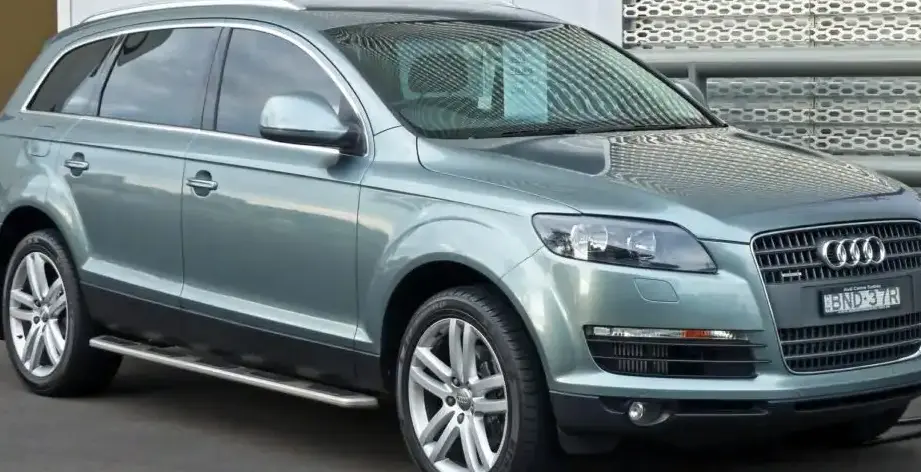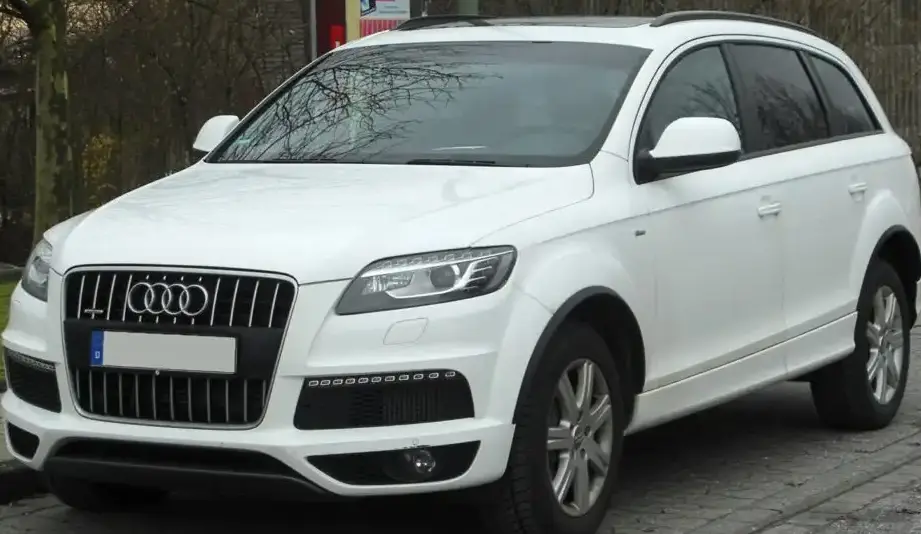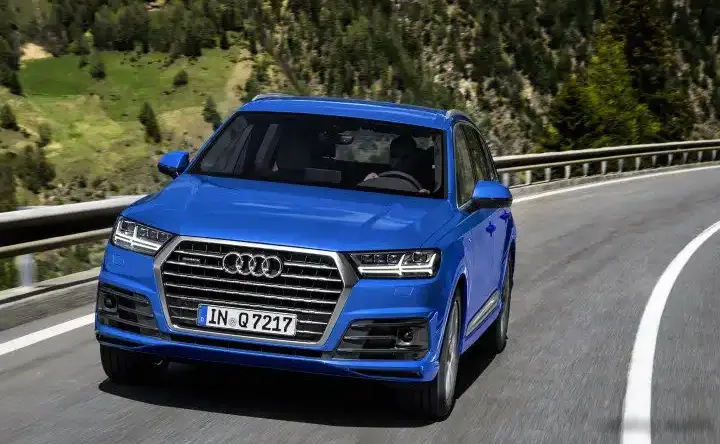
The Audi Q7 (Typ 4M) 2.0 TFSI quattro tiptronic 7-seat variant represents a significant entry point into the second-generation Q7 lineup, produced from 2016 to 2019. Positioned as a mainstream offering within the range, it aimed to deliver the Q7’s luxurious SUV experience with a more accessible price point and a focus on fuel efficiency compared to the higher-output engine options. This model utilized Audi’s established quattro all-wheel-drive system and a sophisticated 8-speed tiptronic automatic transmission, making it a popular choice for families prioritizing practicality and comfort. It was built on the Volkswagen Group’s MLB Evo platform (4M chassis code), shared with other premium SUVs like the Porsche Cayenne and Bentley Bentayga.
Technical Specifications
| Brand | Audi |
| Model | Q7 |
| Generation | Q7 (Typ 4M) |
| Type (Engine) | 2.0 TFSI (252 Hp) quattro tiptronic 7 Seat |
| Start of production | 2016 |
| End of production | 2019 |
| Powertrain Architecture | Internal Combustion engine |
| Body type | SUV |
| Seats | 7 |
| Doors | 5 |
| Fuel consumption (urban) | 8.8 l/100 km (26.7 US mpg, 32.1 UK mpg, 11.4 km/l) |
| Fuel consumption (extra urban) | 6.5 l/100 km (36.2 US mpg, 43.5 UK mpg, 15.4 km/l) |
| Fuel consumption (combined) | 7.3 l/100 km (32.2 US mpg, 38.7 UK mpg, 13.7 km/l) |
| Fuel Type | Petrol (Gasoline) |
| Acceleration 0 – 100 km/h | 6.9 sec |
| Acceleration 0 – 62 mph | 6.9 sec |
| Acceleration 0 – 60 mph | 6.6 sec |
| Maximum speed | 233 km/h (144.78 mph) |
| Weight-to-power ratio | 7.6 kg/Hp, 131.9 Hp/tonne |
| Weight-to-torque ratio | 5.2 kg/Nm, 193.7 Nm/tonne |
| Power | 252 Hp @ 5000-6000 rpm |
| Power per litre | 127 Hp/l |
| Torque | 370 Nm @ 1600-4500 rpm (272.9 lb.-ft. @ 1600-4500 rpm) |
| Engine layout | Front, Longitudinal |
| Engine Model/Code | EA888 / CYMC |
| Engine displacement | 1984 cm3 (121.07 cu. in.) |
| Number of cylinders | 4 |
| Engine configuration | Inline |
| Number of valves per cylinder | 4 |
| Fuel injection system | Direct injection |
| Engine aspiration | Turbocharger, Intercooler |
| Valvetrain | DOHC |
| Engine oil capacity | 5.2 l (5.49 US qt | 4.58 UK qt) |
| Coolant | 10 l (10.57 US qt | 8.8 UK qt) |
| Kerb Weight | 1910 kg (4210.83 lbs.) |
| Max. weight | 2680 kg (5908.39 lbs.) |
| Max load | 770 kg (1697.56 lbs.) |
| Trunk (boot) space – minimum | 770 l (27.19 cu. ft.) |
| Trunk (boot) space – maximum | 1955 l (69.04 cu. ft.) |
| Fuel tank capacity | 75 l (19.81 US gal | 16.5 UK gal) |
| Max. roof load | 100 kg (220.46 lbs.) |
| Permitted trailer load with brakes (8%) | 2000 kg (4409.25 lbs.) |
| Permitted trailer load with brakes (12%) | 2000 kg (4409.25 lbs.) |
| Permitted trailer load without brakes | 750 kg (1653.47 lbs.) |
| Permitted towbar download | 115 kg (253.53 lbs.) |
| Length | 5052 mm (198.9 in.) |
| Width | 1968 mm (77.48 in.) |
| Width including mirrors | 2212 mm (87.09 in.) |
| Height | 1741 mm (68.54 in.) |
| Wheelbase | 2994 mm (117.87 in.) |
| Front track | 1679 mm (66.1 in.) |
| Rear (Back) track | 1691 mm (66.5 in.) |
| Front overhang | 978 mm (38.5 in.) |
| Rear overhang | 1080 mm (42.52 in.) |
| Minimum turning circle | 12.4 m (40.68 ft.) |
| Drive wheel | All wheel drive (4×4) |
| Number of gears and type of gearbox | 8 gears, automatic transmission Tiptronic |
| Front suspension | Independent multi-link suspension |
| Rear suspension | Independent multi-link suspension |
| Front brakes | Ventilated discs |
| Rear brakes | Ventilated discs |
| Assisting systems | ABS (Anti-lock braking system) |
| Steering type | Steering rack and pinion |
| Power steering | Electric Steering |
| Tires size | 255/60 R18 |
| Wheel rims size | 8.0J x 18 |
Powertrain & Engine Architecture
The heart of the Q7 2.0 TFSI is the EA888 1.984-liter inline-four cylinder engine, specifically the CYMC variant. This engine is a turbocharged, direct-injection powerplant known for its blend of performance and efficiency. Direct injection allows for precise fuel delivery, optimizing combustion and reducing emissions. The turbocharger, coupled with an intercooler, provides a significant boost in power output. The engine utilizes a dual overhead camshaft (DOHC) valvetrain with four valves per cylinder, enhancing breathing and contributing to its responsive nature. Paired with this engine is Audi’s 8-speed tiptronic automatic transmission. This transmission offers smooth and quick shifts, and includes a manual shift mode for driver control. The quattro all-wheel-drive system distributes power between the front and rear axles as needed, providing excellent traction in various conditions.
Driving Characteristics
The 252 horsepower and 272.9 lb-ft of torque delivered by the 2.0 TFSI engine provide adequate performance for the Q7, achieving a 0-60 mph time of around 6.6 seconds. While not as quick as the supercharged 3.0-liter V6 models, the 2.0 TFSI offers a more than sufficient level of acceleration for everyday driving and highway merging. The tiptronic transmission is well-tuned, providing seamless gear changes and contributing to a comfortable driving experience. The gear ratios are optimized for both fuel efficiency and responsiveness. Compared to the manual transmission options available on other Q7 variants, the automatic prioritizes ease of use and convenience, making it ideal for drivers seeking a relaxed driving experience. The quattro all-wheel drive system provides confident handling and stability, particularly in inclement weather.
Equipment & Trim Levels
The 2.0 TFSI quattro tiptronic 7-seat model typically came standard with a generous array of features. These included tri-zone automatic climate control, leather upholstery, power-adjustable front seats, a panoramic sunroof, and Audi’s MMI infotainment system with a 7-inch display. Standard safety features included Audi pre sense basic, lane departure warning, and a rearview camera. Optional extras included a Bang & Olufsen sound system, adaptive cruise control, a head-up display, and various driver assistance packages. Interior trim options ranged from standard aluminum inlays to more luxurious wood veneers. The seven-seat configuration provided flexibility for families, with the third-row seats folding flat to maximize cargo space.
Chassis & Braking
The Q7 2.0 TFSI features an independent multi-link suspension on both the front and rear axles, providing a comfortable and controlled ride. The suspension is tuned to balance ride comfort with handling performance. The braking system consists of ventilated discs on all four wheels, providing ample stopping power. Anti-lock braking system (ABS) is standard, along with electronic brake-force distribution and brake assist. The Q7’s chassis is designed to accommodate the weight of the vehicle and its passengers while maintaining stability and handling precision. Stabilizer bars are used on both axles to reduce body roll during cornering.
Market Reception & Comparison
The Q7 2.0 TFSI was generally well-received by automotive critics as a practical and efficient entry point into the Q7 range. It was praised for its comfortable ride, spacious interior, and advanced technology. However, some reviewers noted that the 2.0 TFSI engine could feel strained when fully loaded or during aggressive driving. Compared to the 3.0-liter V6 models, the 2.0 TFSI offered better fuel economy but less overall performance. The 2.0 TFSI also represented a more affordable option than the diesel variants available in Europe, appealing to buyers who preferred gasoline engines. Reliability reports suggest that the EA888 engine is generally robust, although regular maintenance is crucial to prevent issues such as carbon buildup.
Legacy
The Audi Q7 (Typ 4M) 2.0 TFSI quattro tiptronic 7-seat remains a popular choice in the used car market. Its combination of luxury, practicality, and relatively good fuel economy makes it an attractive option for families. The EA888 engine has proven to be durable when properly maintained, and parts availability is generally good. However, potential buyers should be aware of the potential for carbon buildup on the intake valves, which can affect performance over time. Overall, this variant of the Q7 represents a well-rounded and capable SUV that continues to offer a compelling value proposition.