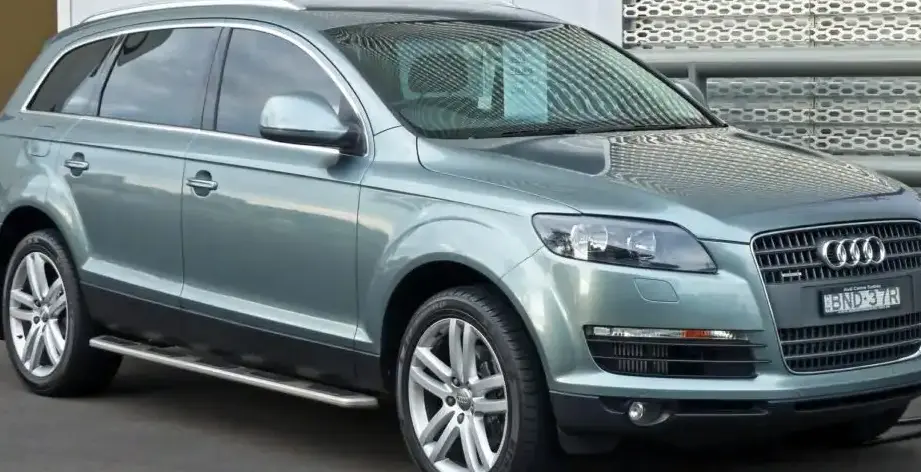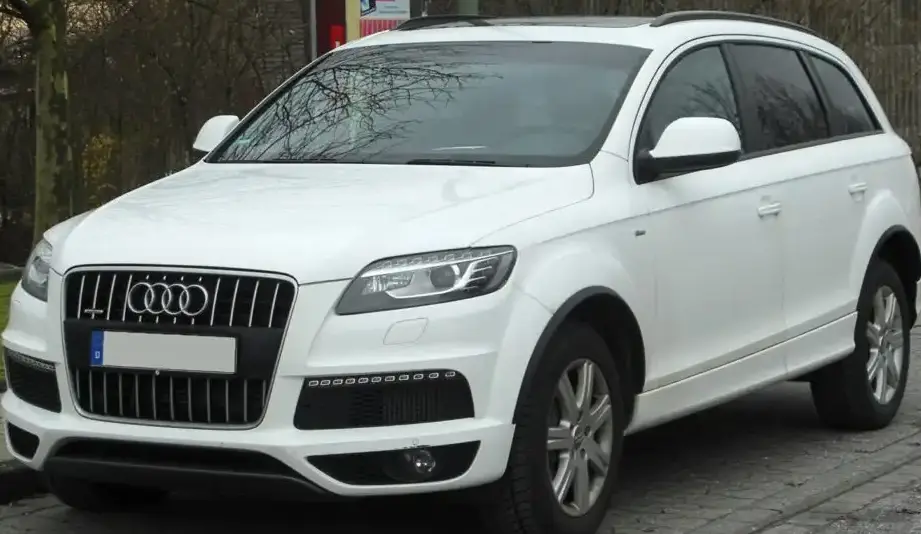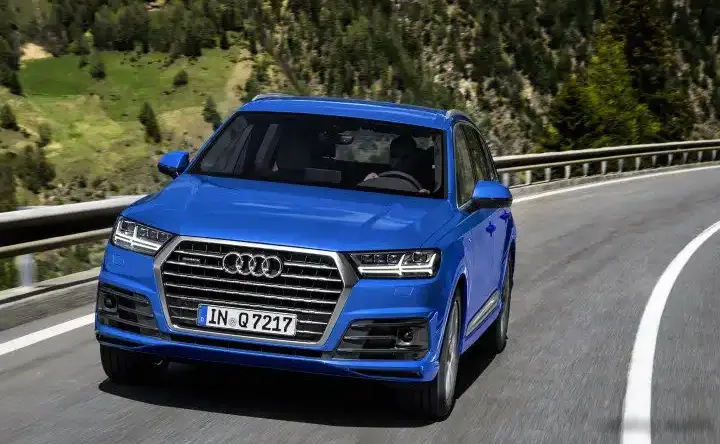
The Audi Q7 (Typ 4M) 3.0 TFSI V6 quattro tiptronic 7-seat variant represents a significant iteration of Audi’s popular luxury SUV, produced from 2015 to 2019. Positioned as a mid-to-high range offering within the second-generation Q7 lineup (Typ 4M, succeeding the Typ 4L), this model combined a potent supercharged V6 engine with Audi’s renowned quattro all-wheel-drive system and a smooth-shifting eight-speed automatic transmission. It aimed to deliver a blend of performance, luxury, and practicality for families seeking a premium SUV experience. This version was a key player in Audi’s strategy to compete with rivals like the BMW X5, Mercedes-Benz GLE, and Volvo XC90 in the North American and European markets.
Technical Specifications
| Brand | Audi |
| Model | Q7 |
| Generation | Q7 (Typ 4M) |
| Type (Engine) | 3.0 TFSI V6 (333 Hp) quattro tiptronic 7 Seat |
| Start of production | 2015 |
| End of production | 2019 |
| Powertrain Architecture | Internal Combustion engine |
| Body type | SUV |
| Seats | 7 |
| Doors | 5 |
| Fuel consumption (urban) | 9.6-10 l/100 km (24.5 – 23.5 US mpg) |
| Fuel consumption (extra urban) | 6.9-7.3 l/100 km (34.1 – 32.2 US mpg) |
| Fuel consumption (combined) | 7.9-8.3 l/100 km (29.8 – 28.3 US mpg) |
| CO2 emissions | 183-193 g/km |
| Fuel Type | Petrol (Gasoline) |
| Acceleration 0 – 100 km/h | 6.3 sec |
| Acceleration 0 – 62 mph | 6.3 sec |
| Acceleration 0 – 60 mph | 6 sec |
| Maximum speed | 250 km/h (155.34 mph) |
| Emission standard | Euro 6 |
| Weight-to-power ratio | 6.1 kg/Hp |
| Weight-to-torque ratio | 4.6 kg/Nm |
| Power | 333 Hp @ 5500-6500 rpm |
| Torque | 440 Nm @ 2900-5300 rpm (324.53 lb.-ft. @ 2900-5300 rpm) |
| Engine layout | Front, Longitudinal |
| Engine Model/Code | EA837 evo / CREC |
| Engine displacement | 2995 cm3 (182.77 cu. in.) |
| Number of cylinders | 6 |
| Engine configuration | V-engine |
| Cylinder Bore | 84.5 mm (3.33 in.) |
| Piston Stroke | 89 mm (3.5 in.) |
| Compression ratio | 10.8:1 |
| Number of valves per cylinder | 4 |
| Fuel injection system | Direct injection and Multi-port manifold injection |
| Engine aspiration | Supercharger, Intercooler |
| Valvetrain | DOHC |
| Engine oil capacity | 6.95 l (7.34 US qt | 6.12 UK qt) |
| Coolant | 13.2 l (13.95 US qt | 11.61 UK qt) |
| Kerb Weight | 2030 kg (4475.38 lbs.) |
| Max. weight | 2910 kg (6415.45 lbs.) |
| Max load | 880 kg (1940.07 lbs.) |
| Trunk (boot) space – minimum | 770 l (27.19 cu. ft.) |
| Trunk (boot) space – maximum | 1955 l (69.04 cu. ft.) |
| Fuel tank capacity | 85 l (22.45 US gal | 18.7 UK gal) |
| Max. roof load | 100 kg (220.46 lbs.) |
| Permitted trailer load with brakes (8%) | 2800 kg (6172.94 lbs.) |
| Permitted trailer load without brakes | 750 kg (1653.47 lbs.) |
| Length | 5052 mm (198.9 in.) |
| Width | 1968 mm (77.48 in.) |
| Height | 1741 mm (68.54 in.) |
| Wheelbase | 2994 mm (117.87 in.) |
| Front track | 1679 mm (66.1 in.) |
| Rear track | 1691 mm (66.57 in.) |
| Drag coefficient (Cd) | 0.325-0.333 |
| Minimum turning circle | 12.4 m (40.68 ft.) |
| Drivetrain | All wheel drive (4×4) |
| Number of gears | 8 |
| Gearbox type | automatic transmission tiptronic |
Powertrain & Engine Architecture
At the heart of the Q7 3.0 TFSI lies the EA837 evo engine, a 3.0-liter supercharged V6. This engine utilizes a twin-scroll turbocharger in conjunction with a mechanically driven supercharger (also known as a Roots-type supercharger) to provide instant boost and eliminate turbo lag. Direct injection and multi-point fuel injection work in tandem to optimize combustion efficiency and power delivery. The engine produces 333 horsepower at 5,500-6,500 rpm and 440 Nm (324.53 lb-ft) of torque between 2,900 and 5,300 rpm. The eight-speed tiptronic automatic transmission, a staple of Audi’s drivetrain offerings, provides smooth and responsive gear changes. This transmission features adaptive shift programs and manual control via steering wheel-mounted paddles. The quattro all-wheel-drive system employs a self-locking center differential and can dynamically distribute torque between the front and rear axles for optimal traction in various conditions.
Driving Characteristics
The 3.0 TFSI engine, paired with the eight-speed tiptronic, delivers brisk acceleration. The 0-60 mph sprint takes approximately 6 seconds, making it a competitive performer in its class. The supercharger provides immediate throttle response, while the turbocharger contributes to strong mid-range and top-end power. Compared to the base 2.0-liter four-cylinder Q7, the 3.0 TFSI offers a significantly more refined and powerful driving experience. While not as sporty as the SQ7 with its diesel V8, the 3.0 TFSI strikes a good balance between performance and fuel efficiency. The tiptronic transmission generally shifts smoothly, but some drivers may prefer the more engaging experience of a dual-clutch transmission. The quattro system provides excellent grip and stability, particularly in inclement weather.
Equipment & Trim Levels
The Q7 3.0 TFSI typically came well-equipped as standard. Features included leather upholstery, tri-zone automatic climate control, a power liftgate, a panoramic sunroof, and Audi’s MMI infotainment system with a central touchscreen display. Standard safety features included Audi pre sense basic, lane departure warning, and a rearview camera. Optional extras included adaptive cruise control, a head-up display, a premium sound system (Bang & Olufsen), and air suspension. Interior trim options varied, with choices in wood, aluminum, and carbon fiber accents. The seven-seat configuration was standard, offering flexible seating arrangements for families.
Chassis & Braking
The Q7 (Typ 4M) utilizes a fully independent suspension system, with a multi-link setup at both the front and rear. While steel springs were standard, optional air suspension was available, providing adjustable ride height and damping for enhanced comfort and off-road capability. The braking system consists of ventilated discs on all four wheels. ABS (Anti-lock Braking System) and electronic stability control are standard features. The steering system is a speed-sensitive electric power steering system, offering precise and responsive handling.
Market Reception & Comparison
The Audi Q7 3.0 TFSI was generally well-received by automotive critics. It was praised for its refined engine, comfortable ride, spacious interior, and advanced technology. Compared to the 2.0-liter Q7, the 3.0 TFSI offered a more satisfying driving experience, albeit at a higher price point. Fuel economy was considered reasonable for a vehicle of its size and performance, averaging around 28-29 mpg in combined driving. Reliability reports have been generally positive, although some owners have reported minor issues with the infotainment system and air suspension components.
Legacy
The Audi Q7 (Typ 4M) 3.0 TFSI V6 remains a popular choice in the used car market. Its combination of luxury, performance, and practicality continues to appeal to buyers seeking a premium SUV. The EA837 engine, while complex, has proven to be relatively durable when properly maintained. Regular oil changes and adherence to Audi’s recommended service intervals are crucial for long-term reliability. The eight-speed tiptronic transmission is also generally reliable, but it’s important to check for smooth shifting and any signs of hesitation. Overall, the Q7 3.0 TFSI represents a well-engineered and capable SUV that offers a compelling ownership experience.