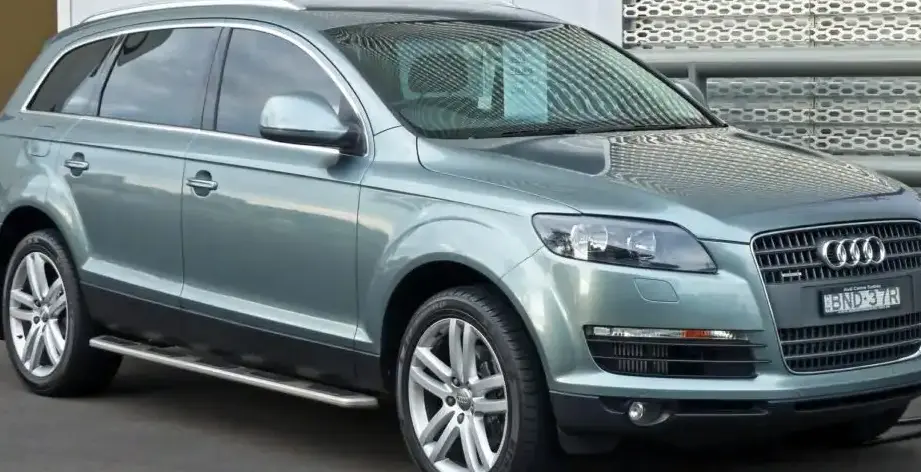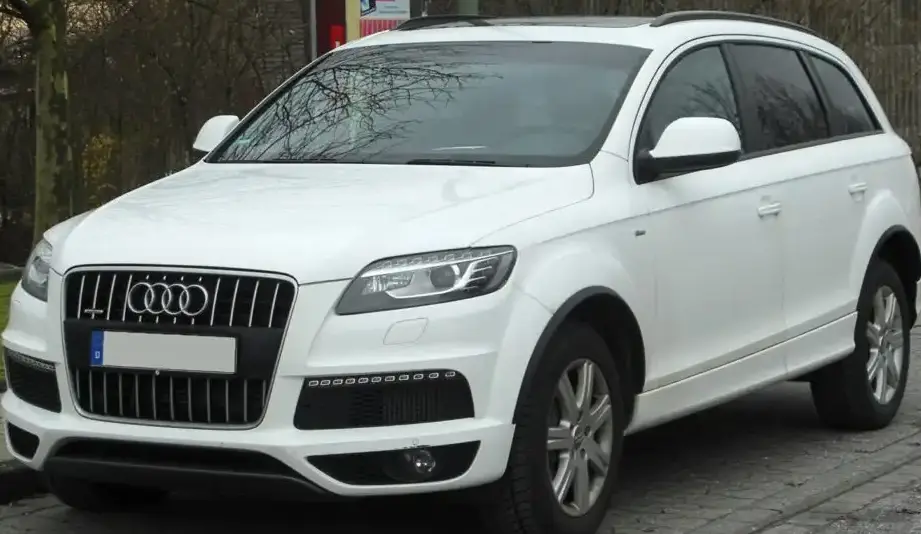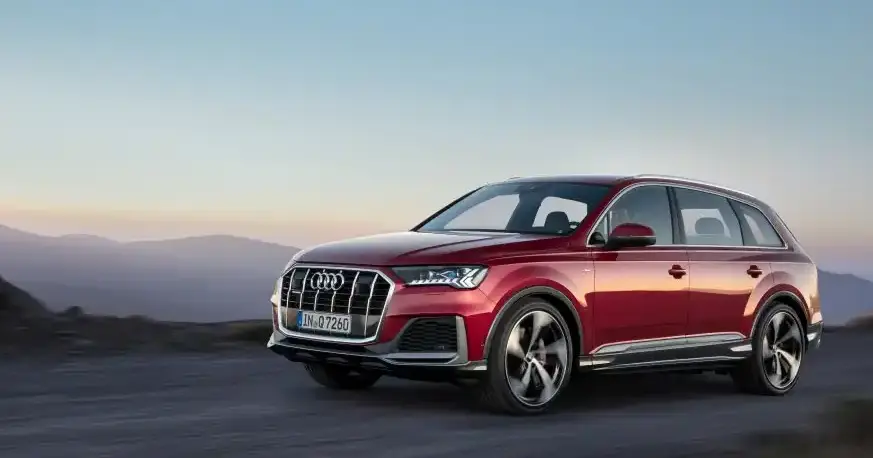
The Audi Q7 (Typ 4M, facelift 2019) 45 TDI V6, producing 231 horsepower, represents a significant iteration of Audi’s popular luxury SUV. Introduced in September 2019 and continuing through October 2020, this variant occupied a key position within the Q7 lineup, offering a balance between performance, efficiency, and technology. It’s characterized by its mild-hybrid powertrain and standard quattro all-wheel drive, appealing to buyers seeking a refined and capable SUV experience. This model falls within the broader Typ 4M generation, which received a substantial facelift in 2019, bringing updated styling, enhanced technology, and improved efficiency across the range.
Technical Specifications
| Brand | Audi |
| Model | Q7 |
| Generation | Q7 (Typ 4M, facelift 2019) |
| Type (Engine) | 45 TDI V6 (231 Hp) Mild Hybrid quattro tiptronic |
| Start of production | September, 2019 |
| End of production | October, 2020 |
| Powertrain Architecture | MHEV (Mild Hybrid Electric Vehicle) |
| Body type | SUV |
| Seats | 5 |
| Doors | 5 |
| Fuel consumption (urban) | 7.7 l/100 km (30.5 US mpg) |
| Fuel consumption (extra urban) | 6.3-6.4 l/100 km (37.3 – 36.8 US mpg) |
| Fuel consumption (combined) | 6.8-6.9 l/100 km (34.6 – 34.1 US mpg) |
| CO2 emissions | 179-182 g/km |
| Fuel Type | Diesel |
| Acceleration 0 – 100 km/h | 7.1 sec |
| Acceleration 0 – 62 mph | 7.1 sec |
| Acceleration 0 – 60 mph | 6.7 sec |
| Maximum speed | 229 km/h (142.29 mph) |
| Emission standard | Euro 6d-TEMP-EVAP-ISC |
| Weight-to-power ratio | 9 kg/Hp |
| Weight-to-torque ratio | 4.2 kg/Nm |
| Gross battery capacity | 0.5 kWh |
| Battery voltage | 48 V |
| Battery technology | Lithium-ion (Li-Ion) |
| Recuperation output | 8 kW |
| Power | 231 Hp @ 3250-4750 rpm |
| Torque | 500 Nm @ 1750-3250 rpm (368.78 lb.-ft.) |
| Engine layout | Front, Longitudinal |
| Engine Model/Code | EA897evo2 / DHXC |
| Engine displacement | 2967 cm3 (181.06 cu. in.) |
| Number of cylinders | 6 |
| Engine configuration | V-engine |
| Cylinder Bore | 83 mm (3.27 in.) |
| Piston Stroke | 91.4 mm (3.6 in.) |
| Compression ratio | 16:1 |
| Number of valves per cylinder | 4 |
| Fuel injection system | Diesel Commonrail |
| Engine aspiration | Turbocharger, Intercooler |
| Valvetrain | DOHC |
| Engine oil capacity | 6.1 l (6.45 US qt | 5.37 UK qt) |
| Coolant | 15 l (15.85 US qt | 13.2 UK qt) |
| Kerb Weight | 2090 kg (4607.66 lbs.) |
| Max. weight | 2830 kg (6239.08 lbs.) |
| Max load | 740 kg (1631.42 lbs.) |
| Trunk (boot) space – minimum | 865 l (30.55 cu. ft.) |
| Trunk (boot) space – maximum | 2050 l (72.4 cu. ft.) |
| Fuel tank capacity | 75 l (19.81 US gal | 16.5 UK gal) |
| AdBlue tank | 24 l (6.34 US gal | 5.28 UK gal) |
| Max. roof load | 100 kg (220.46 lbs.) |
| Permitted trailer load with brakes (8%) | 2700 kg (5952.48 lbs.) |
| Permitted trailer load without brakes | 750 kg (1653.47 lbs.) |
| Length | 5063 mm (199.33 in.) |
| Width | 1970 mm (77.56 in.) |
| Height | 1741 mm (68.54 in.) |
| Wheelbase | 2994 mm (117.87 in.) |
| Front track | 1679 mm (66.1 in.) |
| Rear track | 1691 mm (66.57 in.) |
| Drag coefficient (Cd) | 0.34 |
| Minimum turning circle | 12.5 m (41.01 ft.) |
| Front suspension | Independent multi-link suspension, Air Suspension – Optional |
| Rear suspension | Independent multi-link suspension, Air Suspension – Optional |
| Front brakes | Ventilated discs |
| Rear brakes | Ventilated discs |
| Number of gears | 8 |
| Gearbox type | automatic transmission tiptronic |
INTRODUCTION
The Audi Q7 45 TDI V6 Mild Hybrid quattro tiptronic, launched in late 2019, is a diesel-powered luxury SUV that builds upon the foundation of the second-generation Q7 (Typ 4M). This variant specifically targets buyers who prioritize fuel efficiency and a smooth driving experience without sacrificing the Q7’s inherent luxury and capability. The introduction of mild-hybrid technology, coupled with the proven 3.0-liter TDI engine, aimed to meet increasingly stringent emissions regulations while maintaining a competitive level of performance. Positioned within the Q7 range, the 45 TDI served as a mid-range offering, slotting below the more powerful 50 TDI and above the entry-level 40 TDI.
Powertrain & Engine Architecture
At the heart of the Q7 45 TDI lies the EA897evo2 3.0-liter V6 turbocharged diesel engine, designated with the code DHXC. This engine benefits from advanced technologies such as a common rail direct injection system operating at extremely high pressures, and a variable geometry turbocharger (VGT) for optimized performance across the rev range. The engine produces 231 horsepower at 3250-4750 rpm and a substantial 500 Nm (368.78 lb.-ft.) of torque between 1750-3250 rpm. The mild-hybrid system, a 48V setup, incorporates a belt-driven starter-generator (BSG) and a small lithium-ion battery. This system allows for extended start-stop functionality, regenerative braking to recoup energy, and a slight power assist during acceleration. The engine is paired with an eight-speed tiptronic automatic transmission, known for its smooth and responsive shifts. This transmission is designed to handle the engine’s torque output efficiently and contributes to the Q7’s refined driving experience.
Driving Characteristics
The Q7 45 TDI delivers a composed and comfortable driving experience. While not as overtly sporty as some of its competitors, the 231 hp and 500 Nm of torque provide ample power for everyday driving and confident overtaking maneuvers. The eight-speed tiptronic transmission is well-tuned, offering seamless gear changes and contributing to a relaxed cruising experience. Acceleration from 0-60 mph takes approximately 6.7 seconds. The quattro all-wheel-drive system provides excellent traction in various conditions, enhancing stability and control. Compared to the higher-output 50 TDI, the 45 TDI offers slightly less outright performance, but its lower engine speed and mild-hybrid assistance contribute to improved fuel economy. The gear ratios are optimized for both fuel efficiency and responsiveness, with lower gears providing strong acceleration and higher gears enabling relaxed highway cruising.
Equipment & Trim Levels
The Q7 45 TDI typically came well-equipped as standard. Features included Audi’s Virtual Cockpit digital instrument cluster, a large infotainment touchscreen with navigation, leather upholstery, tri-zone automatic climate control, and a suite of driver-assistance systems such as adaptive cruise control, lane departure warning, and automatic emergency braking. Optional extras included air suspension, a panoramic sunroof, premium sound systems (Bang & Olufsen), and various interior trim upgrades. The interior design is characterized by Audi’s signature minimalist aesthetic, with high-quality materials and a focus on ergonomics. Trim levels varied slightly depending on the market, but generally offered packages that bundled popular options together.
Chassis & Braking
The Q7 45 TDI utilizes a robust chassis featuring independent multi-link suspension on both the front and rear axles. Air suspension was available as an option, providing adjustable ride height and enhanced comfort. The standard braking system consists of ventilated discs on all four wheels, providing ample stopping power. Anti-lock braking system (ABS), electronic stability control (ESC), and traction control are standard features. The Q7’s suspension is tuned to prioritize comfort and stability, offering a smooth ride even on uneven surfaces. Stabilizer bars are fitted to both axles to minimize body roll during cornering.
Market Reception & Comparison
The Audi Q7 45 TDI V6 Mild Hybrid quattro tiptronic was generally well-received by automotive critics. It was praised for its refined driving experience, comfortable interior, and fuel efficiency. Compared to the 50 TDI, the 45 TDI offered a more affordable entry point into the Q7 range, while still providing a luxurious and capable SUV experience. Fuel economy figures of 6.8-6.9 l/100 km (34.6 – 34.1 US mpg) were competitive within its segment. Reliability reports have generally been positive, with the EA897 engine family proving to be durable and dependable. However, as with any modern diesel, potential owners should be aware of the complexities of the emissions control systems.
Legacy
The Q7 45 TDI V6 Mild Hybrid quattro tiptronic represents a transitional point in Audi’s SUV lineup, embracing mild-hybrid technology to improve efficiency and reduce emissions. The EA897 engine, in its various iterations, has proven to be a reliable and long-lasting powerplant. On the used car market, these Q7s are generally sought after for their blend of luxury, practicality, and fuel economy. Maintenance costs are comparable to other premium SUVs, and the availability of parts is generally good. The integration of the 48V mild-hybrid system adds a layer of complexity to the powertrain, but has not been associated with widespread reliability issues.