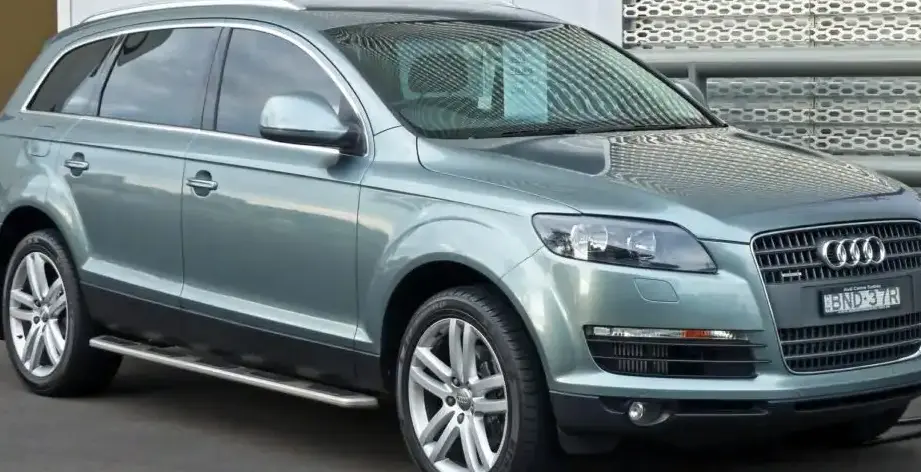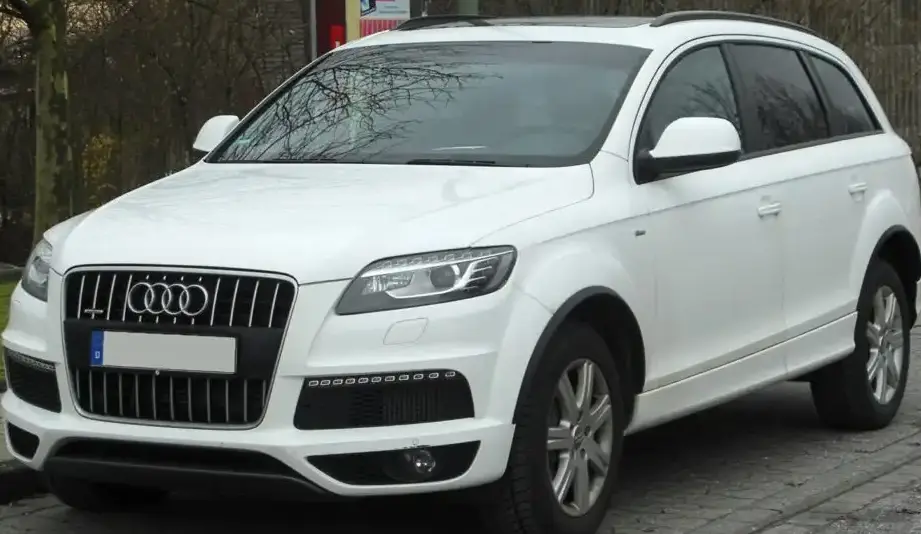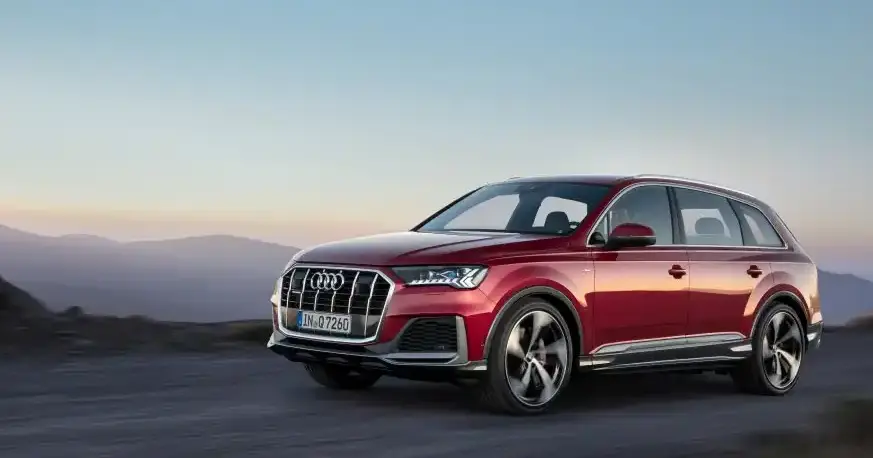
The Audi Q7 (Typ 4M, facelift 2019) 45 TDI V6 represents a significant iteration of Audi’s popular luxury SUV, produced from September 2019 to October 2020. This variant, equipped with a 3.0-liter turbocharged diesel V6 engine producing 231 horsepower and paired with a seven-speed tiptronic automatic transmission and quattro all-wheel drive, occupied a key position in the Q7 lineup as a balance between performance, efficiency, and practicality. The “45 TDI” designation reflects Audi’s internal naming convention, not necessarily the engine’s literal displacement. It’s built on the MLB Evo platform, shared with other Volkswagen Group vehicles, and incorporates mild hybrid technology for improved fuel economy and reduced emissions.
Technical Specifications
| Brand | Audi |
| Model | Q7 |
| Generation | Q7 (Typ 4M, facelift 2019) |
| Type (Engine) | 45 TDI V6 (231 Hp) Mild Hybrid quattro tiptronic 7 seats |
| Start of production | September, 2019 |
| End of production | October, 2020 |
| Powertrain Architecture | MHEV (Mild Hybrid Electric Vehicle) |
| Body type | SUV |
| Seats | 7 |
| Doors | 5 |
| Fuel consumption (urban) | 7.9-8.0 l/100 km (29.8 – 29.4 US mpg) |
| Fuel consumption (extra urban) | 6.4-6.5 l/100 km (36.8 – 36.2 US mpg) |
| Fuel consumption (combined) | 6.9-7.1 l/100 km (34.1 – 33.1 US mpg) |
| CO2 emissions | 183-186 g/km |
| Fuel Type | Diesel |
| Acceleration 0 – 100 km/h | 7.3 sec |
| Acceleration 0 – 62 mph | 7.3 sec |
| Acceleration 0 – 60 mph | 6.9 sec |
| Maximum speed | 229 km/h (142.29 mph) |
| Emission standard | Euro 6d-TEMP-EVAP-ISC |
| Weight-to-power ratio | 9.4 kg/Hp |
| Weight-to-torque ratio | 4.3 kg/Nm |
| Gross battery capacity | 0.5 kWh |
| Battery voltage | 48 V |
| Battery technology | Lithium-ion (Li-Ion) |
| Recuperation output | 8 kW |
| Power | 231 Hp @ 3250-4750 rpm |
| Torque | 500 Nm @ 1750-3250 rpm (368.78 lb.-ft.) |
| Engine layout | Front, Longitudinal |
| Engine Model/Code | EA897evo2 / DHXC |
| Engine displacement | 2967 cm3 (181.06 cu. in.) |
| Number of cylinders | 6 |
| Engine configuration | V-engine |
| Cylinder Bore | 83 mm (3.27 in.) |
| Piston Stroke | 91.4 mm (3.6 in.) |
| Compression ratio | 16:1 |
| Number of valves per cylinder | 4 |
| Fuel injection system | Diesel Commonrail |
| Engine aspiration | Turbocharger, Intercooler |
| Valvetrain | DOHC |
| Engine oil capacity | 6.1 l (6.45 US qt | 5.37 UK qt) |
| Coolant | 15 l (15.85 US qt | 13.2 UK qt) |
| Kerb Weight | 2165 kg (4773.01 lbs.) |
| Max. weight | 3015 kg (6646.94 lbs.) |
| Max load | 850 kg (1873.93 lbs.) |
| Trunk (boot) space – minimum | 740 l (26.13 cu. ft.) |
| Trunk (boot) space – maximum | 1925 l (67.98 cu. ft.) |
| Fuel tank capacity | 75 l (19.81 US gal | 16.5 UK gal) |
| AdBlue tank | 24 l (6.34 US gal | 5.28 UK gal) |
| Max. roof load | 100 kg (220.46 lbs.) |
| Permitted trailer load with brakes (8%) | 3500 kg (7716.18 lbs.) |
| Permitted trailer load without brakes | 750 kg (1653.47 lbs.) |
| Length | 5063 mm (199.33 in.) |
| Width | 1970 mm (77.56 in.) |
| Height | 1740 mm (68.5 in.) |
| Wheelbase | 2994 mm (117.87 in.) |
| Front track | 1679 mm (66.1 in.) |
| Rear track | 1691 mm (66.57 in.) |
| Drag coefficient (Cd) | 0.34 |
| Minimum turning circle | 12.5 m (41.01 ft.) |
| Front suspension | Independent multi-link suspension, Air suspension |
| Rear suspension | Independent multi-link suspension, Air suspension |
| Front brakes | Ventilated discs |
| Rear brakes | Ventilated discs |
| Number of gears | 8 |
| Type of gearbox | automatic transmission tiptronic |
Powertrain & Engine Architecture
The heart of the Q7 45 TDI is the EA897evo2 3.0-liter V6 diesel engine. This engine utilizes a sophisticated common-rail direct injection system, delivering fuel at extremely high pressures for optimized combustion. The engine benefits from a variable geometry turbocharger (VGT) and intercooler, enhancing both low-end torque and peak power. The DOHC (Double Overhead Camshaft) valvetrain, with four valves per cylinder, further contributes to efficient engine breathing. The “evo2” designation signifies an evolution of the EA897 family, incorporating improvements in fuel efficiency and emissions reduction. The mild hybrid system, utilizing a 48V lithium-ion battery and a belt-driven starter-generator, allows for extended start-stop operation, regenerative braking, and a slight power boost during acceleration. The seven-speed tiptronic automatic transmission is known for its smooth shifts and responsive performance. It features adaptive shift programs that adjust to the driver’s style and road conditions.
Driving Characteristics
The 231 horsepower and 369 lb-ft of torque delivered by the 45 TDI powertrain provide ample power for comfortable and confident driving. While not as overtly sporty as higher-output Q7 variants, the 45 TDI offers a relaxed and refined driving experience. The tiptronic transmission is well-matched to the engine’s torque curve, providing smooth and timely gear changes. Acceleration from 0-60 mph takes approximately 6.9 seconds. Compared to the more powerful 45 TDI variants, the 45 TDI prioritizes fuel economy and a more linear power delivery. The quattro all-wheel-drive system provides excellent traction in all weather conditions, enhancing stability and control. The air suspension, standard on many trims, contributes to a comfortable ride quality, absorbing bumps and imperfections in the road surface.
Equipment & Trim Levels
The Q7 45 TDI typically came well-equipped, even in base trim. Standard features often included leather upholstery, tri-zone automatic climate control, a panoramic sunroof, and a premium sound system. Audi’s MMI infotainment system, with its touchscreen display and intuitive interface, was also standard. Optional extras included adaptive cruise control, a head-up display, massaging front seats, and a rear-seat entertainment system. Trim levels varied by market, but generally offered increasing levels of luxury and technology. The 45 TDI often served as a stepping stone between the base Q7 models and the more performance-oriented variants.
Chassis & Braking
The Q7 45 TDI features a fully independent suspension system, with multi-link setups at both the front and rear. The optional air suspension provides adjustable ride height and damping, allowing drivers to tailor the ride to their preferences. Ventilated disc brakes are fitted on all four wheels, providing ample stopping power. Anti-lock braking system (ABS), electronic stability control (ESC), and traction control are standard safety features. The Q7’s chassis is designed to provide a balance between comfort and handling, offering a stable and predictable driving experience.
Market Reception & Comparison
The Audi Q7 45 TDI was generally well-received by automotive critics. It was praised for its comfortable ride, spacious interior, and refined powertrain. Fuel economy was also a strong point, particularly compared to gasoline-powered rivals. Compared to the Q7 50 TDI, the 45 TDI offered a more affordable entry point into the Q7 range, albeit with slightly less performance. Against competitors like the BMW X5 and Mercedes-Benz GLE, the Q7 45 TDI stood out for its sophisticated interior and advanced technology.
Legacy
The EA897evo2 engine family has proven to be relatively reliable, although diesel particulate filter (DPF) issues can occur, particularly with vehicles primarily used for short trips. Regular maintenance, including oil changes and DPF regeneration, is crucial for long-term reliability. The Q7 45 TDI remains a popular choice in the used car market, offering a compelling combination of luxury, practicality, and fuel efficiency. Its mild hybrid technology, while not as advanced as full hybrid systems, represents a step towards greater sustainability. The Q7’s continued presence on roads today is a testament to its build quality and enduring appeal.