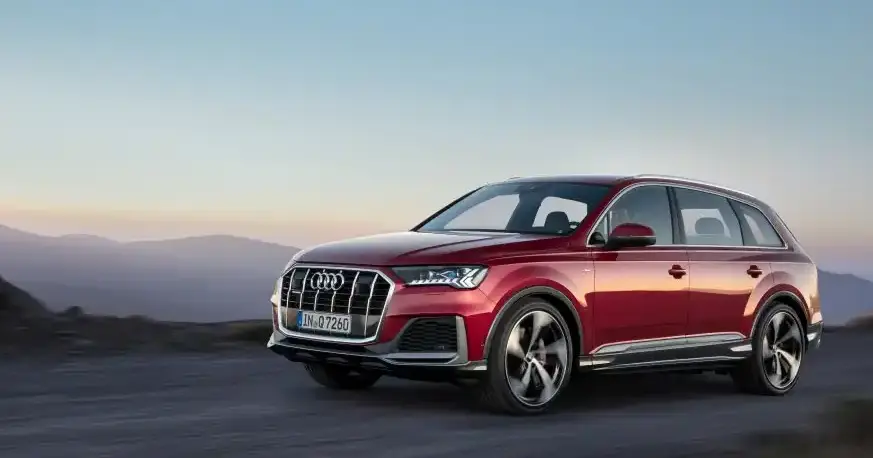
The Audi Q7 55 TFSI V6, produced from September 2019 through 2024, represents a significant iteration of the Typ 4M Q7 generation, benefitting from a mid-cycle facelift. This variant positions itself as a performance-oriented offering within the Q7 lineup, blending substantial power with Audi’s renowned quattro all-wheel-drive system and mild-hybrid technology. It caters to buyers seeking a luxurious, spacious SUV with spirited acceleration and improved fuel efficiency compared to earlier, non-hybridized models. The 55 TFSI designation signifies a power output level within Audi’s naming convention, and this particular configuration quickly became a popular choice in markets where larger, premium SUVs are in high demand, particularly in Europe and North America.
Technical Specifications
| Brand | Audi |
| Model | Q7 |
| Generation | Q7 (Typ 4M, facelift 2019) |
| Type (Engine) | 55 TFSI V6 (340 Hp) Mild Hybrid quattro tiptronic |
| Start of production | September, 2019 |
| End of production | 2024 |
| Powertrain Architecture | MHEV (Mild Hybrid Electric Vehicle) |
| Body type | SUV |
| Seats | 5 |
| Doors | 5 |
| Fuel consumption (urban) | 10.9-11.0 l/100 km (21.6 – 21.4 US mpg) |
| Fuel consumption (extra urban) | 7.4-7.7 l/100 km (31.8 – 30.5 US mpg) |
| Fuel consumption (combined) | 8.7-8.9 l/100 km (27 – 26.4 US mpg) |
| CO2 emissions | 199-204 g/km |
| Fuel Type | Petrol (Gasoline) |
| Acceleration 0 – 100 km/h | 5.9 sec |
| Acceleration 0 – 62 mph | 5.9 sec |
| Acceleration 0 – 60 mph | 5.6 sec |
| Maximum speed | 250 km/h (155.34 mph) |
| Emission standard | Euro 6d – TEMP – EVAP – ISC |
| Weight-to-power ratio | 6 kg/Hp |
| Weight-to-torque ratio | 4.1 kg/Nm |
| Power | 340 Hp @ 5000-6400 rpm |
| Torque | 500 Nm @ 1370-4500 rpm (368.78 lb.-ft.) |
| Engine layout | Front, Longitudinal |
| Engine Model/Code | DCBD |
| Engine displacement | 2995 cm3 (182.77 cu. in.) |
| Number of cylinders | 6 |
| Engine configuration | V-engine |
| Cylinder Bore | 84.5 mm (3.33 in.) |
| Piston Stroke | 89 mm (3.5 in.) |
| Compression ratio | 11.2:1 |
| Number of valves per cylinder | 4 |
| Fuel injection system | Direct injection |
| Engine aspiration | Turbocharger, Intercooler |
| Engine oil capacity | 7.6 l (8.03 US qt | 6.69 UK qt) |
| Coolant capacity | 13.7 l (14.48 US qt | 12.05 UK qt) |
| Kerb Weight | 2055 kg (4530.5 lbs.) |
| Max. weight | 2800 kg (6172.94 lbs.) |
| Max load | 745 kg (1642.44 lbs.) |
| Trunk (boot) space – minimum | 865 l (30.55 cu. ft.) |
| Trunk (boot) space – maximum | 2050 l (72.4 cu. ft.) |
| Fuel tank capacity | 85 l (22.45 US gal | 18.7 UK gal) |
| Max. roof load | 100 kg (220.46 lbs.) |
| Permitted trailer load with brakes (8%) | 2700 kg (5952.48 lbs.) |
| Permitted trailer load without brakes | 750 kg (1653.47 lbs.) |
| Length | 5063 mm (199.33 in.) |
| Width | 1970 mm (77.56 in.) |
| Width including mirrors | 2212 mm (87.09 in.) |
| Height | 1741 mm (68.54 in.) |
| Wheelbase | 2994 mm (117.87 in.) |
| Front track | 1679 mm (66.1 in.) |
| Rear track | 1691 mm (66.57 in.) |
| Drag coefficient (Cd) | 0.34 |
| Minimum turning circle | 12.5 m (41.01 ft.) |
| Drive wheel | All wheel drive (4×4) |
| Number of gears | 8 |
| Gearbox type | Automatic transmission Tiptronic |
| Front suspension | Independent multi-link suspension |
| Rear suspension | Independent multi-link suspension |
| Front brakes | Ventilated discs |
| Rear brakes | Ventilated discs |
Powertrain & Engine Architecture
At the heart of the Q7 55 TFSI lies the DCBD engine, a 3.0-liter V6 gasoline engine. This engine utilizes a single twin-scroll turbocharger and direct fuel injection to deliver a potent 340 horsepower and 368.78 lb-ft of torque. The engine’s architecture incorporates Audi’s Valvelift system, which allows for variable valve lift on the intake side, optimizing performance and efficiency across a wider range of engine speeds. Crucially, this variant features a 48-volt mild-hybrid system. This system employs a belt-driven starter-generator (BSG) and a small lithium-ion battery to enable features like extended engine-off coasting, smoother start-stop operation, and a slight power boost during acceleration. The transmission is an eight-speed Tiptronic automatic, known for its smooth shifts and responsive behavior. This transmission is specifically tuned to handle the engine’s substantial torque output and provides a balance between comfort and performance.
Driving Characteristics
The Q7 55 TFSI offers a compelling driving experience. The combination of the turbocharged V6 and the eight-speed automatic results in brisk acceleration, with a 0-60 mph time of around 5.6 seconds. The quattro all-wheel-drive system provides excellent traction in all weather conditions, enhancing stability and confidence. Compared to the base 2.0-liter four-cylinder Q7, the 55 TFSI delivers significantly more power and a more refined driving experience. While not as overtly sporty as some competitors, the Q7 prioritizes comfort and composure, making it an excellent long-distance cruiser. The mild-hybrid system contributes to improved fuel economy, particularly in city driving, without sacrificing performance.
Equipment & Trim Levels
The Q7 55 TFSI typically came well-equipped as standard. Features included leather upholstery, a panoramic sunroof, a premium sound system, and a comprehensive suite of driver-assistance technologies such as adaptive cruise control, lane-keeping assist, and automatic emergency braking. The MMI touch response system, with its dual touchscreen displays, controlled infotainment and vehicle settings. Optional extras included massaging front seats, a rear-seat entertainment system, and various cosmetic enhancements. Trim levels beyond the base model often added features like upgraded interior trim materials, unique exterior styling elements, and more advanced driver-assistance features.
Chassis & Braking
The Q7’s chassis features an independent multi-link suspension at both the front and rear, providing a comfortable and controlled ride. The suspension is tuned to balance handling and comfort, and air suspension was often available as an option, further enhancing ride quality and allowing for adjustable ride height. Braking duties are handled by ventilated discs on all four wheels, providing ample stopping power. The electronic stability control (ESC) system works in conjunction with the quattro all-wheel-drive system to maintain stability and control in challenging driving conditions.
Market Reception & Comparison
The Audi Q7 55 TFSI V6 was generally well-received by automotive critics. It was praised for its powerful engine, comfortable ride, spacious interior, and advanced technology. Compared to other trims in the Q7 lineup, the 55 TFSI offered a significant performance upgrade, making it a popular choice for buyers who prioritized power and acceleration. Fuel economy was considered competitive for its class, particularly given the vehicle’s size and performance. Reliability reports have been generally positive, although, as with any complex vehicle, preventative maintenance is crucial.
Legacy
The Q7 55 TFSI V6 represents a pivotal step in Audi’s implementation of mild-hybrid technology in its SUV lineup. The DCBD engine, while no longer in production, has proven to be a robust and reliable powerplant when properly maintained. On the used car market, these Q7s hold their value relatively well, due to their combination of luxury, performance, and technology. Prospective buyers should prioritize vehicles with a documented service history and be mindful of potential maintenance costs associated with the advanced technology features.