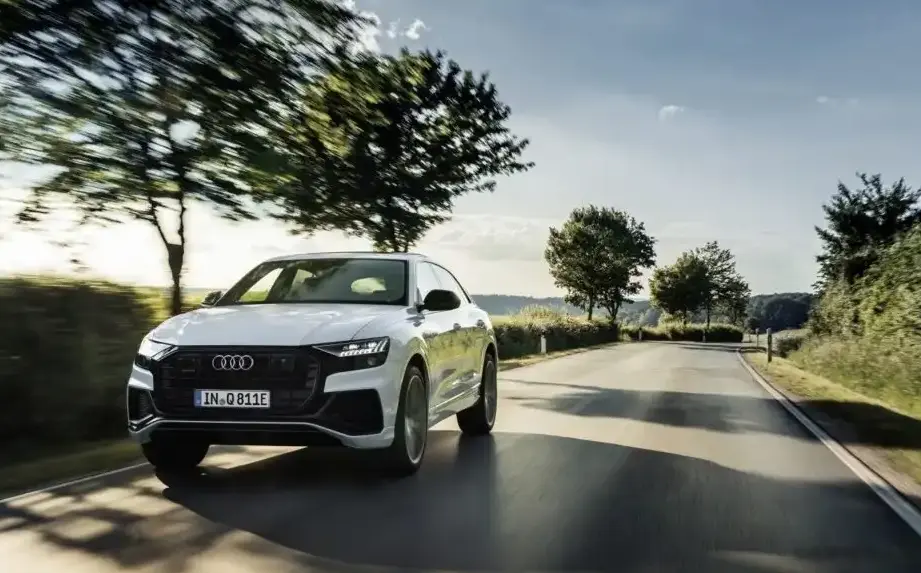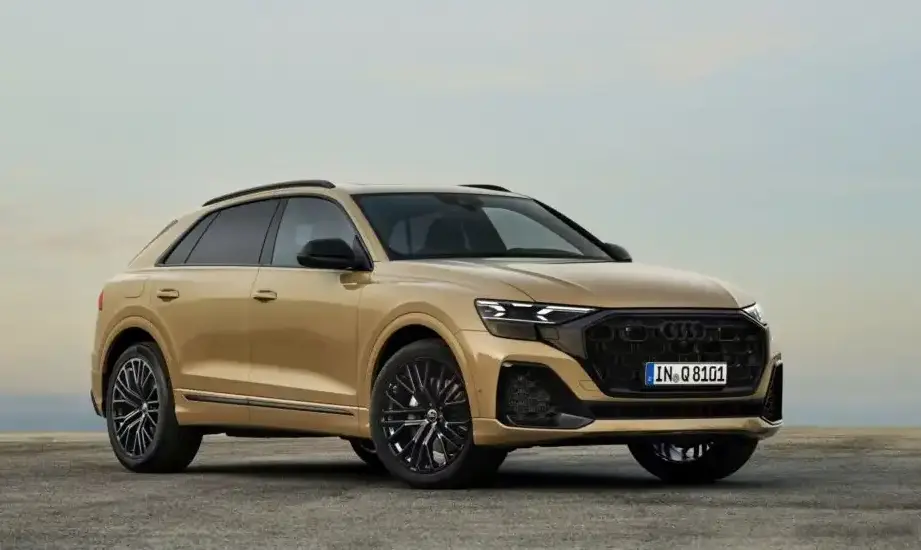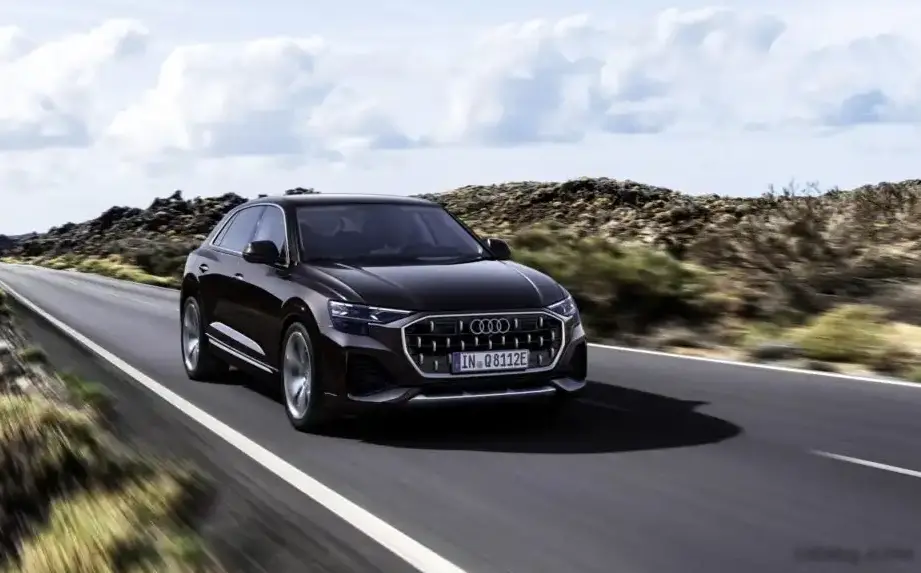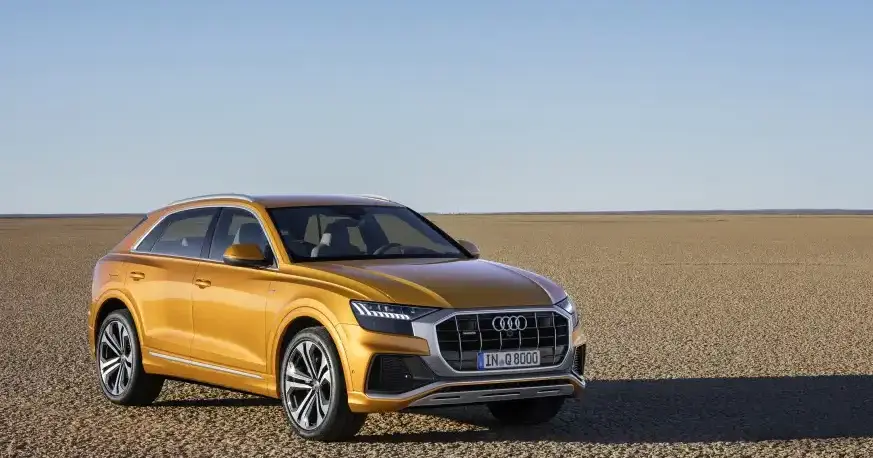
The Audi Q8 (4M) 45 TDI quattro Mild Hybrid tiptronic represents a compelling blend of luxury, performance, and efficiency within the Q8 lineup. Introduced in October 2020 and continuing through September 2023, this variant occupied a significant position as a mid-range offering, bridging the gap between the entry-level 40 TDI and the higher-performance 50 TDI and SQ8 models. Built on the MLB Evo platform, shared with other Volkswagen Group SUVs, the Q8 aimed to deliver a more sporting driving experience than the traditional Q7, while maintaining the practicality expected of a large SUV. This specific configuration, pairing a 3.0-liter turbocharged diesel engine with a mild-hybrid system and an eight-speed automatic transmission, was particularly popular in European markets where diesel engines remained prevalent.
Technical Specifications
| Brand | Audi |
| Model | Q8 |
| Generation | Q8 (4M) |
| Type (Engine) | 45 TDI (231 Hp) quattro Mild Hybrid tiptronic |
| Start of production | October, 2020 |
| End of production | September, 2023 |
| Powertrain Architecture | MHEV (Mild Hybrid Electric Vehicle) |
| Body type | SUV |
| Seats | 5 |
| Doors | 5 |
| Combined fuel consumption (WLTP) | 8.0-8.8 l/100 km (29.4 – 26.7 US mpg) |
| CO2 emissions (WLTP) | 210-230 g/km |
| Fuel consumption (urban) | 8.5-8.8 l/100 km (27.7 – 26.7 US mpg) |
| Fuel consumption (extra urban) | 5.9-6.3 l/100 km (39.9 – 37.3 US mpg) |
| Fuel consumption (combined) | 6.9-7.2 l/100 km (34.1 – 32.7 US mpg) |
| CO2 emissions (NEDC) | 182-190 g/km |
| Fuel Type | Diesel |
| Acceleration 0 – 100 km/h | 7.1 sec |
| Acceleration 0 – 62 mph | 7.1 sec |
| Acceleration 0 – 60 mph | 6.7 sec |
| Maximum speed | 226 km/h (140.43 mph) |
| Emission standard | Euro 6d-ISC-FCM |
| Weight-to-power ratio | 9.4 kg/Hp |
| Weight-to-torque ratio | 4.3 kg/Nm |
| Power | 231 Hp @ 3500-5000 rpm |
| Torque | 500 Nm @ 1500-3000 rpm (368.78 lb.-ft.) |
| Engine layout | Front, Longitudinal |
| Engine Model/Code | DPXB |
| Engine displacement | 2967 cm3 (181.06 cu. in.) |
| Number of cylinders | 6 |
| Engine configuration | V-engine |
| Cylinder Bore | 83 mm (3.27 in.) |
| Piston Stroke | 91.4 mm (3.6 in.) |
| Compression ratio | 16.3:1 |
| Number of valves per cylinder | 4 |
| Fuel injection system | Diesel Commonrail |
| Engine aspiration | Turbocharger, Intercooler |
| Engine oil capacity | 6.1 l (6.45 US qt | 5.37 UK qt) |
| Coolant capacity | 16.1 l (17.01 US qt | 14.17 UK qt) |
| Kerb Weight | 2160 kg (4761.98 lbs.) |
| Max. weight | 2890 kg (6371.36 lbs.) |
| Max load | 730 kg (1609.37 lbs.) |
| Trunk (boot) space – minimum | 605 l (21.37 cu. ft.) |
| Trunk (boot) space – maximum | 1755 l (61.98 cu. ft.) |
| Fuel tank capacity | 75 l (19.81 US gal | 16.5 UK gal) |
| AdBlue tank capacity | 24 l (6.34 US gal | 5.28 UK gal) |
| Max. roof load | 100 kg (220.46 lbs.) |
| Permitted trailer load (brakes 8%) | 2800 kg (6172.94 lbs.) |
| Permitted trailer load (brakes 12%) | 2800 kg (6172.94 lbs.) |
| Permitted trailer load (no brakes) | 750 kg (1653.47 lbs.) |
| Permitted towbar download | 115 kg (253.53 lbs.) |
| Length | 4986 mm (196.3 in.) |
| Width | 1995 mm (78.54 in.) |
| Width including mirrors | 2190 mm (86.22 in.) |
| Height | 1705 mm (67.13 in.) |
| Wheelbase | 2995 mm (117.91 in.) |
| Front track | 1679 mm (66.1 in.) |
| Rear track | 1691 mm (66.57 in.) |
| Drag coefficient (Cd) | 0.34 |
| Minimum turning circle | 13.3 m (43.64 ft.) |
| Front suspension | Independent multi-link |
| Rear suspension | Independent multi-link |
| Front brakes | Ventilated discs |
| Rear brakes | Ventilated discs |
| Gearbox | 8 gears, automatic transmission tiptronic |
Powertrain & Engine Architecture
At the heart of the Q8 45 TDI lies the DPXB engine, a 3.0-liter V6 turbocharged diesel. This engine is a member of the Volkswagen Group’s modular engine family, known for its robust construction and refined operation. The engine utilizes a common-rail direct injection system, delivering fuel at extremely high pressures for optimized combustion. A single turbocharger, coupled with an intercooler, provides ample boost, contributing to the engine’s 500 Nm (368.78 lb.-ft.) of torque available from 1500 to 3000 rpm. The 231 horsepower peak is achieved between 3500 and 5000 rpm. The ‘45 TDI’ designation doesn’t directly correlate to engine displacement, but rather represents a performance level within Audi’s naming convention. Crucially, this engine incorporates a 48-volt mild-hybrid system. This system features a belt starter generator (BSG) that recovers energy during deceleration and stores it in a small battery. This stored energy can then assist the engine during acceleration, improving efficiency and responsiveness. The eight-speed tiptronic automatic transmission is a torque-converter type, known for its smooth shifts and adaptability. It’s programmed to prioritize fuel economy in normal driving conditions but can quickly downshift for more aggressive acceleration.
Driving Characteristics
The Q8 45 TDI tiptronic offers a comfortable and refined driving experience. While not as overtly sporty as the higher-powered variants, the 231 hp and 500 Nm of torque provide ample power for everyday driving and highway cruising. Acceleration from 0-60 mph takes approximately 6.7 seconds, making it adequately quick for most situations. The eight-speed transmission contributes to relaxed cruising, with well-chosen gear ratios keeping the engine within its optimal power band. The mild-hybrid system provides a subtle boost during acceleration, enhancing responsiveness. Compared to the manual transmission versions of the same engine, the tiptronic offers greater convenience, particularly in urban environments. However, it may feel slightly less engaging for drivers who prefer more control. The quattro all-wheel-drive system provides excellent traction in all weather conditions, enhancing stability and confidence.
Equipment & Trim Levels
The Q8 45 TDI quattro Mild Hybrid tiptronic typically came well-equipped as standard. Features included Audi’s Virtual Cockpit digital instrument cluster, a touchscreen infotainment system with navigation, leather upholstery, tri-zone automatic climate control, and a suite of driver-assistance systems such as lane departure warning and automatic emergency braking. Optional extras included adaptive air suspension, a panoramic sunroof, premium sound systems (Bang & Olufsen), and various interior trim upgrades. The interior design emphasized a minimalist aesthetic with high-quality materials and a focus on technology. Trim levels varied slightly by market, but generally offered packages that added features like upgraded wheels, exterior styling enhancements, and more advanced driver-assistance technologies.
Chassis & Braking
The Q8’s chassis features an independent multi-link suspension at both the front and rear, providing a comfortable ride and good handling characteristics. The suspension is tuned to balance comfort and control, offering a composed ride even on uneven surfaces. Braking duties are handled by ventilated discs on all four wheels, providing ample stopping power. The electronic stability control (ESC) system works in conjunction with the quattro all-wheel-drive system to maintain stability and prevent skidding. The steering is electrically assisted, offering a precise and responsive feel.
Market Reception & Comparison
The Q8 45 TDI quattro Mild Hybrid tiptronic was generally well-received by automotive critics. It was praised for its comfortable ride, refined engine, and spacious interior. Fuel economy was also a strong point, with the mild-hybrid system contributing to improved efficiency. Compared to the higher-output 50 TDI, the 45 TDI offered a more affordable entry point into the Q8 range, albeit with slightly less performance. Compared to the petrol-powered Q8 variants, the 45 TDI offered superior fuel economy and torque, making it a more practical choice for long-distance driving. Reliability reports have been generally positive, with the DPXB engine proving to be a durable and dependable unit.
Legacy
The Audi Q8 45 TDI quattro Mild Hybrid tiptronic represents a significant step in Audi’s SUV development. Its combination of diesel efficiency, mild-hybrid technology, and luxurious features made it a popular choice in European markets. On the used car market, these models continue to hold their value, thanks to their reputation for reliability and refinement. The DPXB engine, while subject to the ongoing scrutiny of diesel emissions regulations, remains a capable and efficient powerplant. The Q8’s success paved the way for further expansion of Audi’s SUV lineup, solidifying its position as a leading premium automotive brand.