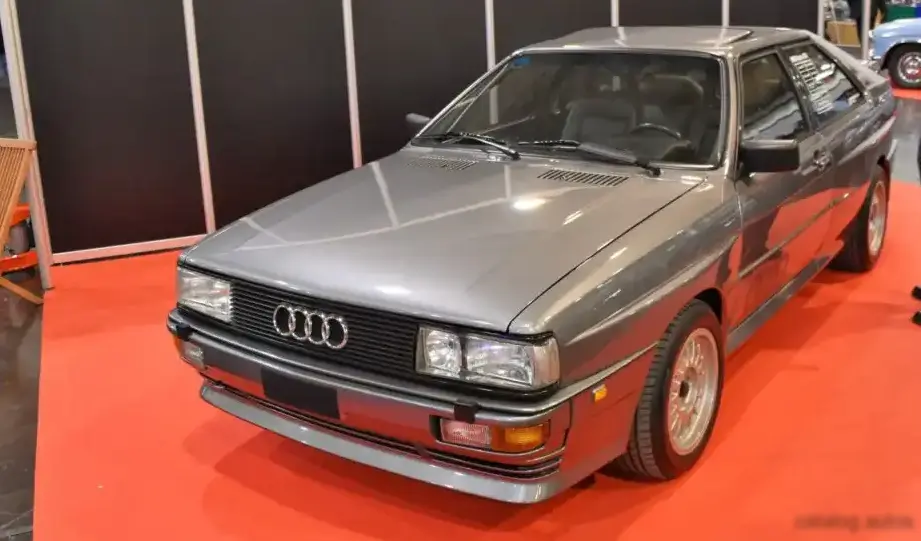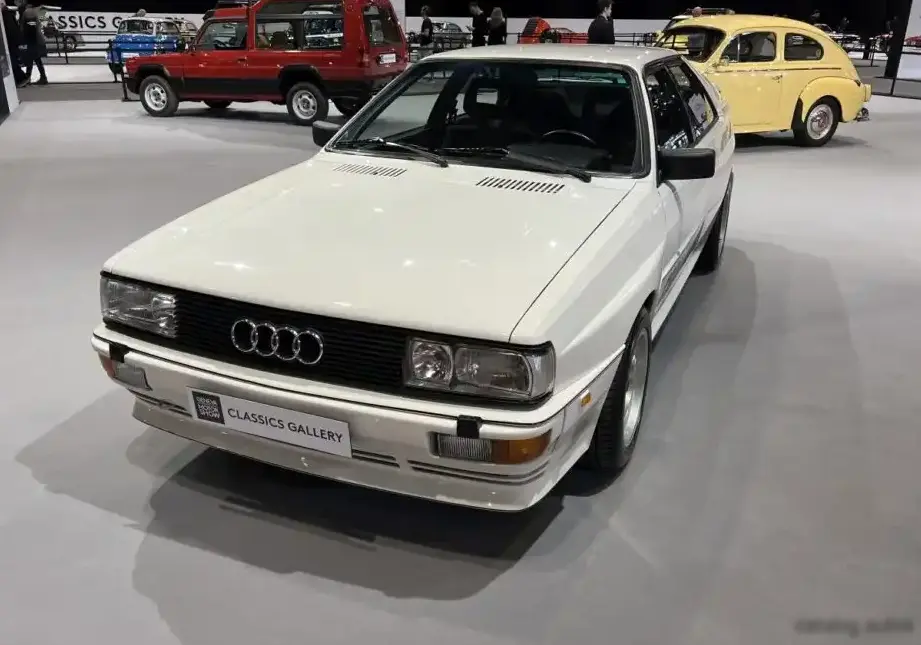
The Audi Quattro (Typ 85) 2.2 Turbo, produced from August 1987 to July 1989, represented a significant evolution of Audi’s iconic all-wheel-drive coupe. Positioned as the performance flagship of the Typ 85 range, it built upon the success of the original Quattro by introducing a turbocharged 2.2-liter inline-five engine. This variant aimed to deliver substantially increased power and torque compared to the naturally aspirated models, solidifying the Quattro’s reputation as a technologically advanced and capable grand tourer. It was a key model in establishing Audi’s quattro four-wheel drive system as a performance differentiator in the automotive market, particularly in Europe where it competed with Porsche and other high-performance coupes.
Technical Specifications
| Brand | Audi |
| Model | Quattro |
| Generation | Quattro (Typ 85) |
| Type (Engine) | 2.2 Turbo (200 Hp) |
| Start of production | August, 1987 |
| End of production | July, 1989 |
| Powertrain Architecture | Internal Combustion engine |
| Body type | Coupe |
| Seats | 5 |
| Doors | 3 |
| Fuel consumption (economy) – urban | 13.4-14.4 l/100 km (17.6 – 16.3 US mpg, 21.1 – 19.6 UK mpg, 7.5 – 6.9 km/l) |
| Fuel consumption (economy) – extra urban | 7.6-9.7 l/100 km (30.9 – 24.2 US mpg, 37.2 – 29.1 UK mpg, 13.2 – 10.3 km/l) |
| Fuel Type | Petrol (Gasoline) |
| Acceleration 0 – 100 km/h | 6.7 sec |
| Acceleration 0 – 62 mph | 6.7 sec |
| Acceleration 0 – 60 mph | 6.4 sec |
| Maximum speed | 222 km/h (137.94 mph) |
| Weight-to-power ratio | 6.5 kg/Hp, 153.8 Hp/tonne |
| Weight-to-torque ratio | 4.8 kg/Nm, 207.7 Nm/tonne |
| Power | 200 Hp @ 5800 rpm |
| Power per litre | 89.8 Hp/l |
| Torque | 270 Nm @ 3000 rpm (199.14 lb.-ft. @ 3000 rpm) |
| Engine layout | Front, Longitudinal |
| Engine Model/Code | MB |
| Engine displacement | 2226 cm3 (135.84 cu. in.) |
| Number of cylinders | 5 |
| Engine configuration | Inline |
| Cylinder Bore | 81 mm (3.19 in.) |
| Piston Stroke | 86.4 mm (3.4 in.) |
| Compression ratio | 8.6:1 |
| Number of valves per cylinder | 2 |
| Fuel injection system | Multi-port manifold injection |
| Engine aspiration | Turbocharger, Intercooler |
| Valvetrain | SOHC |
| Engine oil capacity | 4.5 l (4.76 US qt | 3.96 UK qt) |
| Coolant | 9.3 l (9.83 US qt | 8.18 UK qt) |
| Kerb Weight | 1300 kg (2866.01 lbs.) |
| Max. weight | 1760 kg (3880.14 lbs.) |
| Max load | 460 kg (1014.13 lbs.) |
| Trunk (boot) space – minimum | 330 l (11.65 cu. ft.) |
| Fuel tank capacity | 90 l (23.78 US gal | 19.8 UK gal) |
| Max. roof load | 75 kg (165.35 lbs.) |
| Permitted trailer load with brakes (12%) | 1500 kg (3306.93 lbs.) |
| Permitted trailer load without brakes | 600 kg (1322.77 lbs.) |
| Length | 4404 mm (173.39 in.) |
| Width | 1723 mm (67.83 in.) |
| Height | 1344 mm (52.91 in.) |
| Wheelbase | 2524 mm (99.37 in.) |
| Front track | 1461 mm (57.52 in.) |
| Rear (Back) track | 1494 mm (58.82 in.) |
| Ride height (ground clearance) | 115 mm (4.53 in.) |
| Minimum turning circle (turning diameter) | 11.3 m (37.07 ft.) |
| Drivetrain Architecture | The Internal combustion engine (ICE) drives permanently the four wheels of the vehicle. |
| Drive wheel | All wheel drive (4×4) |
| Number of gears and type of gearbox | 5 gears, manual transmission |
| Front suspension | Independent, type McPherson with coil spring and anti-roll bar |
| Rear suspension | Independent coil spring, Wishbone |
| Front brakes | Ventilated discs |
| Rear brakes | Disc |
| Assisting systems | ABS (Anti-lock braking system) |
| Steering type | Steering rack and pinion |
| Power steering | Hydraulic Steering |
| Tires size | 215/50 R15 |
| Wheel rims size | 8J x 15 |
Powertrain & Engine Architecture
The heart of the 2.2 Turbo Quattro was the MB engine code, a 2226 cc inline-five cylinder gasoline engine. This engine featured a single overhead camshaft (SOHC) valvetrain with two valves per cylinder. Crucially, it was equipped with a Garrett T25 turbocharger and an intercooler, boosting power output to 200 horsepower at 5800 rpm and 270 Nm (199 lb-ft) of torque at 3000 rpm. The fuel system utilized Bosch multi-port fuel injection, carefully managing the air-fuel mixture for optimal performance and efficiency. The engine was mounted longitudinally in the front of the vehicle, driving all four wheels through a robust five-speed manual transmission. This transmission was specifically tuned to handle the increased torque output of the turbocharged engine.
Driving Characteristics
The 2.2 Turbo Quattro offered a significantly different driving experience compared to the naturally aspirated versions. The turbocharger provided a noticeable surge of power, delivering strong acceleration from around 3000 rpm. While not as immediate in response as modern turbocharged engines, the power delivery was substantial and rewarding. The 0-60 mph time of approximately 6.4 seconds was impressive for the late 1980s. The quattro all-wheel-drive system provided exceptional grip and stability, particularly in adverse weather conditions. The five-speed manual transmission allowed for precise control, but the turbo lag required drivers to anticipate and manage gear changes effectively. Compared to the later 20-valve versions, the MB engine offered a more linear power delivery, but lacked the ultimate top-end performance.
Equipment & Trim Levels
The 2.2 Turbo Quattro was generally well-equipped, reflecting its position as the range-topping model. Standard features included power windows, central locking, and a high-quality stereo system. The interior typically featured sport seats upholstered in cloth or leather, depending on the options selected. Optional extras included a sunroof, air conditioning, and upgraded audio systems. The dashboard layout was typical of Audi in the late 1980s, with a functional and ergonomic design. The exterior was distinguished by subtle styling cues, such as a rear spoiler and unique alloy wheels.
Chassis & Braking
The chassis of the 2.2 Turbo Quattro featured independent suspension all around, with McPherson struts at the front and a semi-trailing arm setup at the rear. This suspension configuration provided a good balance between ride comfort and handling performance. The car was equipped with ventilated disc brakes at the front and solid discs at the rear, providing adequate stopping power. An anti-lock braking system (ABS) was standard, enhancing safety and control. The steering was a rack-and-pinion system with hydraulic power assistance, offering precise and responsive steering feel.
Market Reception & Comparison
The Audi Quattro 2.2 Turbo was generally well-received by automotive critics. It was praised for its performance, handling, and all-weather capability. However, some reviewers noted the turbo lag and the relatively high price. Compared to the naturally aspirated Quattros, the 2.2 Turbo offered a significant performance upgrade, but at a higher cost. It competed with other high-performance coupes of the era, such as the Porsche 944 and BMW 6 Series. Fuel economy was reasonable for a performance car of its time, but not exceptional. Reliability was generally good, but the turbocharger and fuel injection system required regular maintenance.
Legacy
The Audi Quattro 2.2 Turbo remains a highly sought-after classic car today. Its combination of performance, technology, and iconic styling has made it a favorite among enthusiasts. The MB engine, while not without its quirks, is generally considered to be a robust and reliable unit when properly maintained. Parts availability can be a challenge, but a dedicated aftermarket supports the Typ 85 Quattro. The 2.2 Turbo represents a pivotal moment in Audi’s history, solidifying the brand’s reputation for innovation and performance. Well-maintained examples command high prices in the used car market, reflecting their rarity and desirability.