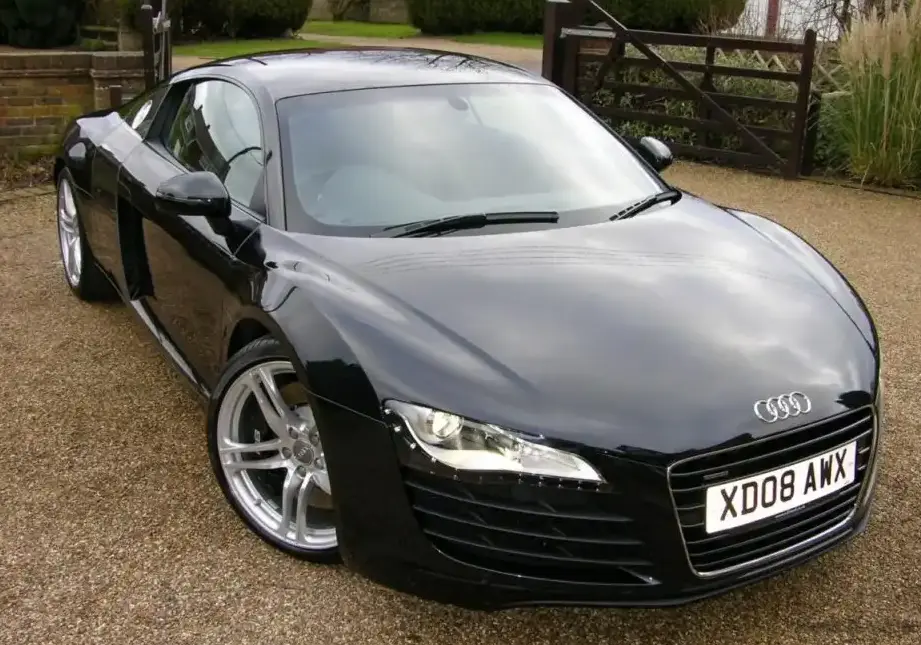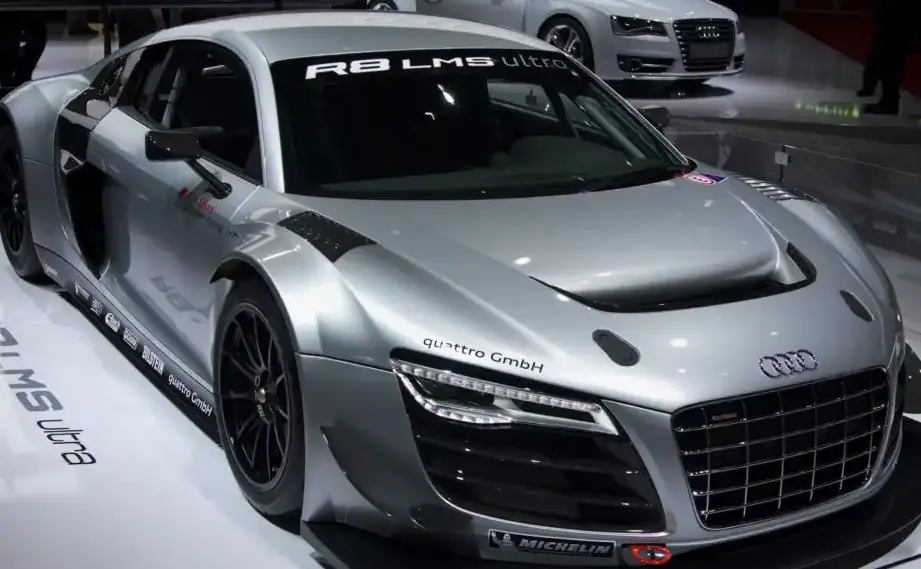
The Audi R8 LMS ultra 5.2 FSI V10, produced between 2012 and 2015, represents a significant evolution in Audi’s motorsport program. Built as a dedicated race car based on the road-going R8, the LMS ultra was designed to be lighter, more aerodynamic, and more competitive than its predecessor, the original R8 LMS. It competed in a variety of GT racing series globally, including the FIA GT3 European Championship, the Blancpain Sprint Series, and various national championships. The “ultra” designation signified a comprehensive weight reduction program and further refinement of the already potent 5.2-liter V10 engine. This model was a direct response to evolving regulations and the increasing competitiveness of the GT3 class.
Technical Specifications
| Brand | Audi |
| Model | R8 |
| Generation | R8 LMS ultra |
| Type (Engine) | 5.2 FSI V10 (570 Hp) |
| Start of production | 2012 |
| End of production | 2015 |
| Powertrain Architecture | Internal Combustion engine |
| Body type | Coupe |
| Seats | 2 |
| Doors | 2 |
| Fuel Type | Petrol (Gasoline) |
| Weight-to-power ratio | 2.2 kg/Hp, 456 Hp/tonne |
| Weight-to-torque ratio | 2.5 kg/Nm, 400 Nm/tonne |
| Power | 570 Hp |
| Power per litre | 109.6 Hp/l |
| Torque | 500 Nm / 368.78 lb.-ft. |
| Engine layout | Rear, Longitudinal |
| Engine displacement | 5200 cm3 / 317.32 cu. in. |
| Number of cylinders | 10 |
| Engine configuration | V-engine |
| Number of valves per cylinder | 4 |
| Fuel injection system | Direct injection |
| Engine aspiration | Naturally aspirated engine |
| Valvetrain | DOHC |
| Kerb Weight | 1250 kg / 2755.78 lbs. |
| Trunk (boot) space – minimum | 120 l / 4.24 cu. ft. |
| Length | 4620 mm / 181.89 in. |
| Width | 1994 mm / 78.5 in. |
| Height | 1195 mm / 47.05 in. |
| Drivetrain Architecture | The Internal combustion engine (ICE) drives the rear wheels of the vehicle. |
| Drive wheel | Rear wheel drive |
| Number of gears and type of gearbox | 6 gears, manual transmission |
| Assisting systems | ABS (Anti-lock braking system) |
| Wheel rims size | 12J x 18; 13J x 18 |
Powertrain & Engine Architecture
The heart of the R8 LMS ultra is the 5.2-liter naturally aspirated V10 engine, designated as the CFG code. This engine is a direct descendant of the unit found in the road-going R8, but heavily modified for racing purposes. Key changes included a revised crankshaft, connecting rods, and pistons to improve durability and responsiveness. The engine utilizes a direct fuel injection (FSI) system, delivering fuel directly into the combustion chamber for increased efficiency and power. The dual overhead camshafts (DOHC) control four valves per cylinder, optimizing airflow. Unlike the road car, the LMS ultra features a dry-sump lubrication system, ensuring consistent oil supply during high-G cornering. The engine’s 570 horsepower and 500 Nm (368.78 lb-ft) of torque are delivered through a sequential six-speed manual gearbox, optimized for quick shifts and precise control. The gearbox features a limited-slip differential to maximize traction.
Driving Characteristics
The R8 LMS ultra’s driving characteristics are defined by its balance, responsiveness, and raw power. The lightweight construction, achieved through extensive use of carbon fiber and aluminum, contributes to a nimble and agile feel. The sequential gearbox allows for incredibly fast upshifts and downshifts, crucial for maintaining momentum on the track. The naturally aspirated V10 delivers a linear power curve, providing predictable and controllable acceleration. Compared to a road-going R8, the LMS ultra has significantly stiffer suspension and more aggressive aerodynamics, resulting in a much firmer ride and increased downforce. The car’s braking performance is exceptional, thanks to large-diameter carbon ceramic brakes and a sophisticated ABS system. While the road car offers a degree of driver assistance, the LMS ultra is a pure racing machine, demanding a high level of skill and precision from the driver.
Equipment & Trim Levels
As a dedicated race car, the R8 LMS ultra’s “trim level” is largely dictated by racing regulations and team preferences. The interior is stripped down to the essentials, featuring a roll cage, racing seats with six-point harnesses, and a digital display providing critical information such as lap times, oil pressure, and water temperature. The steering wheel is a multi-functional unit, allowing the driver to adjust various settings on the fly. The car is equipped with a fire suppression system and a fuel cell for safety. Optional extras included different aerodynamic packages, suspension setups, and data logging systems. The focus is entirely on performance and safety, with no concessions made to comfort or luxury.
Chassis & Braking
The R8 LMS ultra’s chassis is a steel space frame, reinforced with carbon fiber for increased rigidity and reduced weight. The suspension utilizes adjustable dampers and springs, allowing teams to fine-tune the car’s handling characteristics to suit different tracks and conditions. The front suspension features double wishbones, while the rear utilizes a multi-link setup. Braking is handled by large-diameter carbon ceramic discs with six-piston calipers at the front and four-piston calipers at the rear. The ABS system is specifically tuned for racing, providing optimal braking performance without compromising control. The car rides on 18-inch wheels, typically fitted with racing slicks for maximum grip.
Market Reception & Comparison
The Audi R8 LMS ultra was widely praised by racing teams and drivers for its performance, reliability, and drivability. It quickly became a front-runner in GT3 racing, achieving numerous victories and championships around the world. Compared to its predecessor, the original R8 LMS, the ultra offered significant improvements in weight, aerodynamics, and engine performance. It was also considered to be more user-friendly and easier to set up, making it a popular choice for both professional and amateur racing teams. Competitors included the Porsche 911 GT3 R, the Mercedes-Benz SLS AMG GT3, and the BMW Z4 GT3. The R8 LMS ultra consistently proved to be a competitive force against these rivals.
Legacy
The Audi R8 LMS ultra played a crucial role in establishing Audi as a major player in GT racing. Its success on the track helped to enhance the brand’s image and attract new customers. The knowledge and technology gained from the development of the LMS ultra were also applied to future Audi road cars, improving their performance and handling. Today, the R8 LMS ultra remains a popular choice for historic racing and track days. Its robust construction and readily available parts supply ensure that it will continue to be enjoyed by racing enthusiasts for years to come. The car represents a high point in Audi’s motorsport history, showcasing the company’s engineering prowess and commitment to racing excellence.