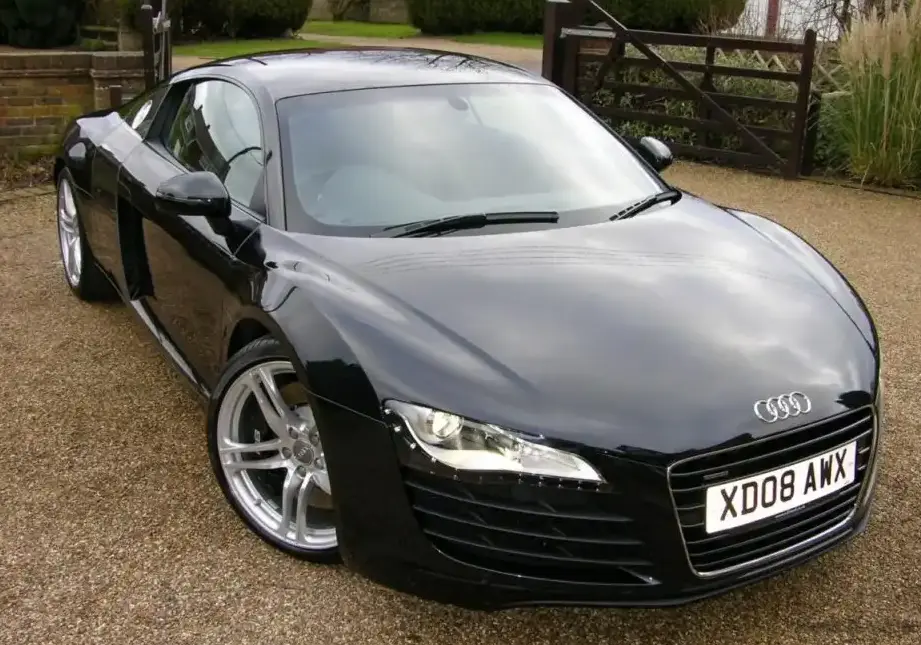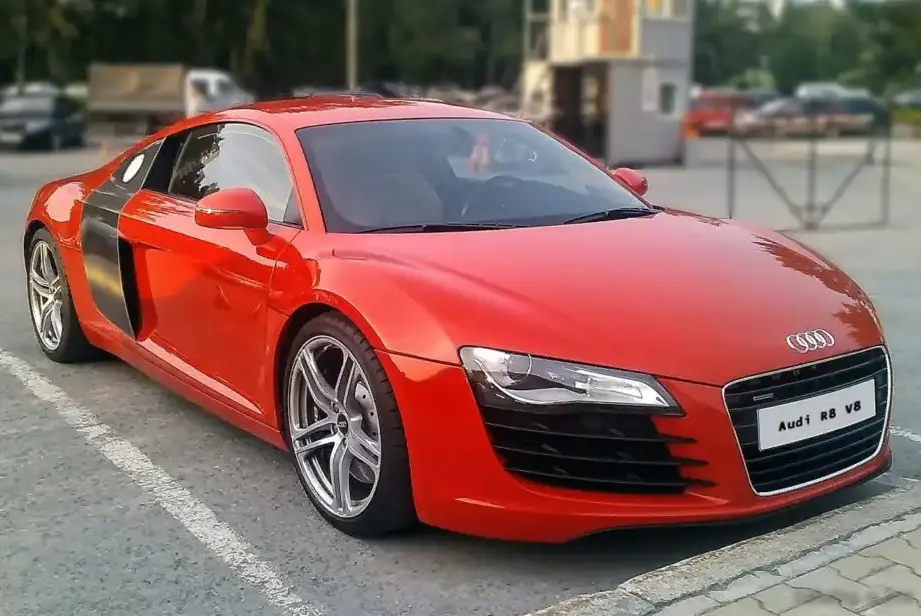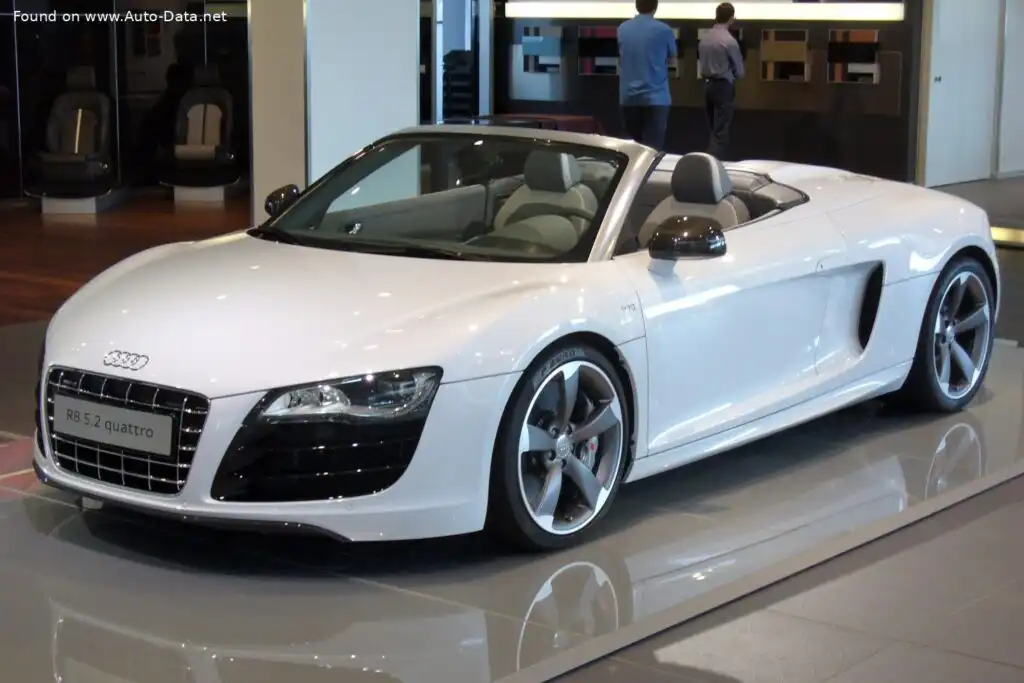
The Audi R8 Spyder (42) 5.2 FSI V10 quattro, produced from 2010 to October 2012, represents the open-top variant of Audi’s flagship supercar. Falling within the first generation (42) of the R8, the Spyder offered the exhilarating performance of the coupe but with the added experience of open-air driving. This particular iteration, equipped with the 5.2-liter naturally aspirated V10 engine producing 525 horsepower, positioned itself as the top-tier performance option within the Spyder lineup, offering a more intense driving experience than the base V8 models. It competed directly with other high-end roadsters like the Porsche 911 Turbo Cabriolet and the Ferrari California.
Technical Specifications
| Brand | Audi |
| Model | R8 |
| Generation | R8 Spyder (42) |
| Type (Engine) | 5.2 FSI V10 (525 Hp) quattro |
| Start of production | 2010 |
| End of production | October, 2012 |
| Powertrain Architecture | Internal Combustion engine |
| Body type | Cabriolet |
| Seats | 2 |
| Doors | 2 |
| Fuel consumption (economy) – urban | 22.2 l/100 km (10.6 US mpg, 12.7 UK mpg, 4.5 km/l) |
| Fuel consumption (economy) – extra urban | 10.7 l/100 km (22 US mpg, 26.4 UK mpg, 9.3 km/l) |
| Fuel consumption (economy) – combined | 14.9 l/100 km (15.8 US mpg, 19 UK mpg, 6.7 km/l) |
| CO2 emissions | 349 g/km |
| Fuel Type | Petrol (Gasoline) |
| Acceleration 0 – 100 km/h | 4.1 sec |
| Acceleration 0 – 62 mph | 4.1 sec |
| Acceleration 0 – 60 mph | 3.9 sec |
| Maximum speed | 313 km/h (194.49 mph) |
| Emission standard | Euro 5 |
| Weight-to-power ratio | 3.3 kg/Hp, 305.2 Hp/tonne |
| Weight-to-torque ratio | 3.2 kg/Nm, 308.1 Nm/tonne |
| Power | 525 Hp @ 8000 rpm |
| Power per litre | 100.9 Hp/l |
| Torque | 530 Nm @ 6500 rpm (390.91 lb.-ft. @ 6500 rpm) |
| Engine layout | Rear, Longitudinal |
| Engine Model/Code | BUJ |
| Engine displacement | 5204 cm3 (317.57 cu. in.) |
| Number of cylinders | 10 |
| Engine configuration | V-engine |
| Cylinder Bore | 84.5 mm (3.33 in.) |
| Piston Stroke | 92.8 mm (3.65 in.) |
| Compression ratio | 12.5:1 |
| Number of valves per cylinder | 4 |
| Fuel injection system | Direct injection |
| Engine aspiration | Naturally aspirated engine |
| Valvetrain | DOHC |
| Engine oil capacity | 8.3 l (8.77 US qt | 7.3 UK qt) |
| Kerb Weight | 1720 kg (3791.95 lbs.) |
| Max. weight | 2020 kg (4453.34 lbs.) |
| Max load | 300 kg (661.39 lbs.) |
| Trunk (boot) space – minimum | 100 l (3.53 cu. ft.) |
| Fuel tank capacity | 80 l (21.13 US gal | 17.6 UK gal) |
| Length | 4434 mm (174.57 in.) |
| Width | 1904 mm (74.96 in.) |
| Width including mirrors | 2029 mm (79.88 in.) |
| Height | 1244 mm (48.98 in.) |
| Wheelbase | 2650 mm (104.33 in.) |
| Front track | 1638 mm (64.49 in.) |
| Rear (Back) track | 1595 mm (62.8 in.) |
| Front overhang | 999 mm (39.33 in.) |
| Rear overhang | 785 mm (30.91 in.) |
| Drag coefficient (Cd) | 0.37 |
| Minimum turning circle (turning diameter) | 11.8 m (38.71 ft.) |
| Drive wheel | All wheel drive (4×4) |
| Number of gears and type of gearbox | 6 gears, manual transmission |
| Front suspension | Independent, type McPherson with coil spring and anti-roll bar |
| Rear suspension | Independent multi-link spring suspension with stabilizer |
| Front brakes | Ventilated discs |
| Rear brakes | Ventilated discs |
| Assisting systems | ABS (Anti-lock braking system) |
| Steering type | Steering rack and pinion |
| Power steering | Hydraulic Steering |
| Tires size | 235/35 R19; 295/30 R19 |
| Wheel rims size | 8.5J x 19; 11J x 19 |
Powertrain & Engine Architecture
At the heart of the R8 Spyder 5.2 FSI quattro lies the BUJ engine code, a 5.2-liter naturally aspirated V10. This engine is a direct descendant of the V10 used in the Lamborghini Gallardo, showcasing Audi’s close ties with its Italian sister company. The “FSI” designation indicates the use of direct fuel injection, a technology that improves both power and fuel efficiency by injecting fuel directly into the combustion chamber. The engine features a double overhead camshaft (DOHC) valvetrain with four valves per cylinder, optimizing airflow for high-revving performance. The 6-speed manual transmission was standard, providing a direct connection between the driver and the engine. The quattro all-wheel-drive system, a hallmark of Audi performance vehicles, distributes power between all four wheels, enhancing traction and stability, particularly during acceleration and cornering.
Driving Characteristics
The 525 horsepower and 390 lb-ft of torque delivered by the 5.2 FSI V10 engine translate into breathtaking acceleration. The 0-60 mph sprint takes just 3.9 seconds, and the car reaches a top speed of 194.49 mph. The manual transmission offers precise gear changes, allowing drivers to fully exploit the engine’s powerband. Compared to the V8-equipped R8 Spyder, the V10 model provides a significantly more visceral and engaging driving experience, with a higher redline and a more responsive throttle. While the V10 offers superior performance, the manual transmission requires a skilled driver to maximize its potential. The quattro all-wheel drive system provides immense grip, inspiring confidence in various driving conditions.
Equipment & Trim Levels
The R8 Spyder 5.2 FSI quattro came generously equipped as standard. Interior features included leather upholstery, power-adjustable seats, a premium sound system, and automatic climate control. The dashboard featured a clean, driver-focused design with aluminum trim accents. Optional extras included carbon fiber interior trim, upgraded navigation systems, and a Bang & Olufsen sound system. Exterior options included various wheel designs and paint colors. The Spyder’s soft top was fully automatic, raising and lowering in a matter of seconds, allowing for quick transitions between open-air motoring and coupe-like comfort.
Chassis & Braking
The R8 Spyder’s chassis is constructed primarily of aluminum, contributing to its relatively lightweight construction. The suspension utilizes independent McPherson struts at the front and a multi-link setup at the rear, providing a balance between ride comfort and handling precision. Stabilizer bars are fitted to both axles to reduce body roll during cornering. The braking system features ventilated discs at all four corners, providing ample stopping power. Anti-lock braking system (ABS) is standard, enhancing safety and control. The steering is a hydraulic rack and pinion system, offering precise and responsive steering feel.
Market Reception & Comparison
The Audi R8 Spyder 5.2 FSI quattro was widely praised by automotive critics for its stunning performance, sophisticated design, and luxurious interior. However, its relatively high price tag and fuel consumption were noted drawbacks. Compared to the V8-equipped R8 Spyder, the V10 model was considered the more desirable choice for enthusiasts seeking the ultimate driving experience. Fuel economy, at 15.8 US mpg combined, was typical for a high-performance supercar but significantly lower than that of the V8 model. Reliability was generally good, although maintenance costs were high due to the complexity of the engine and drivetrain.
Legacy
The Audi R8 Spyder 5.2 FSI quattro remains a highly sought-after vehicle in the used car market. Its combination of performance, luxury, and exclusivity continues to appeal to collectors and enthusiasts. The 5.2-liter V10 engine is known for its durability and longevity, provided it receives regular maintenance. While parts and service can be expensive, the R8 Spyder’s enduring appeal and iconic status ensure its place as a modern classic. The R8 Spyder helped establish Audi as a serious contender in the supercar segment, paving the way for future high-performance models.