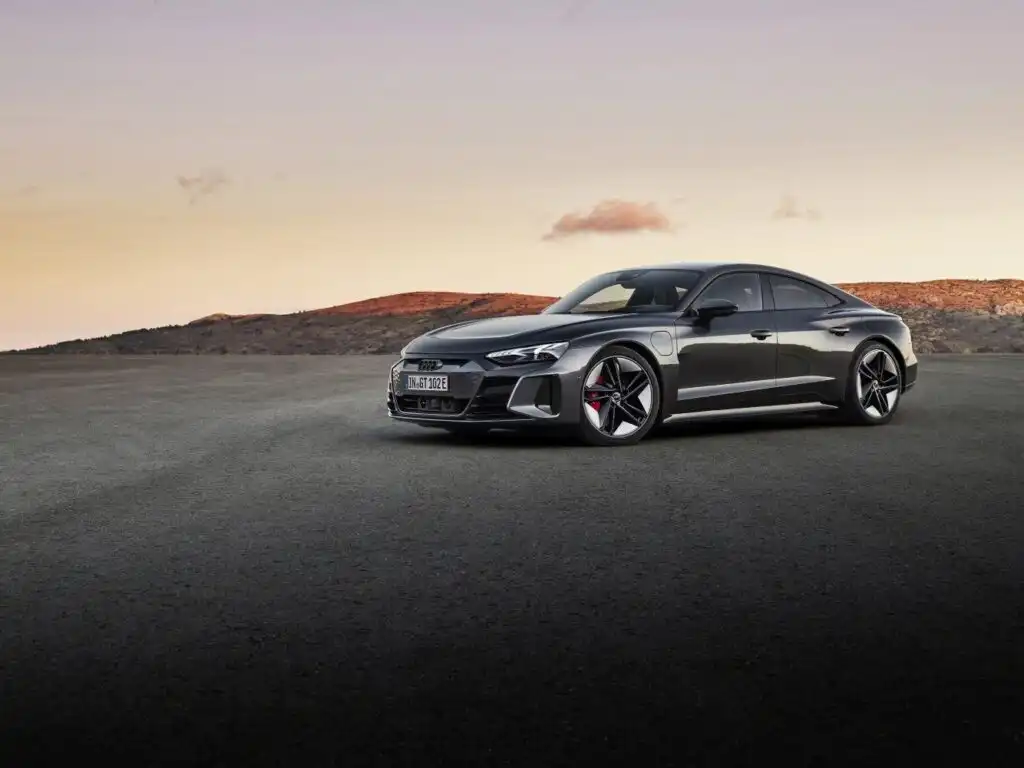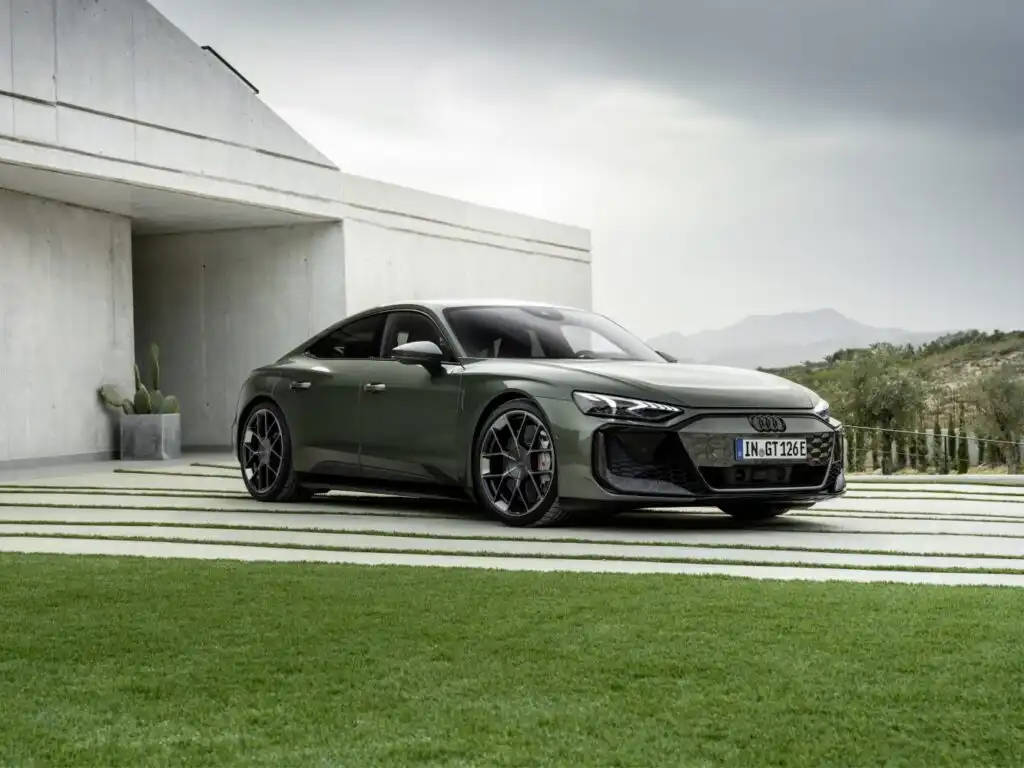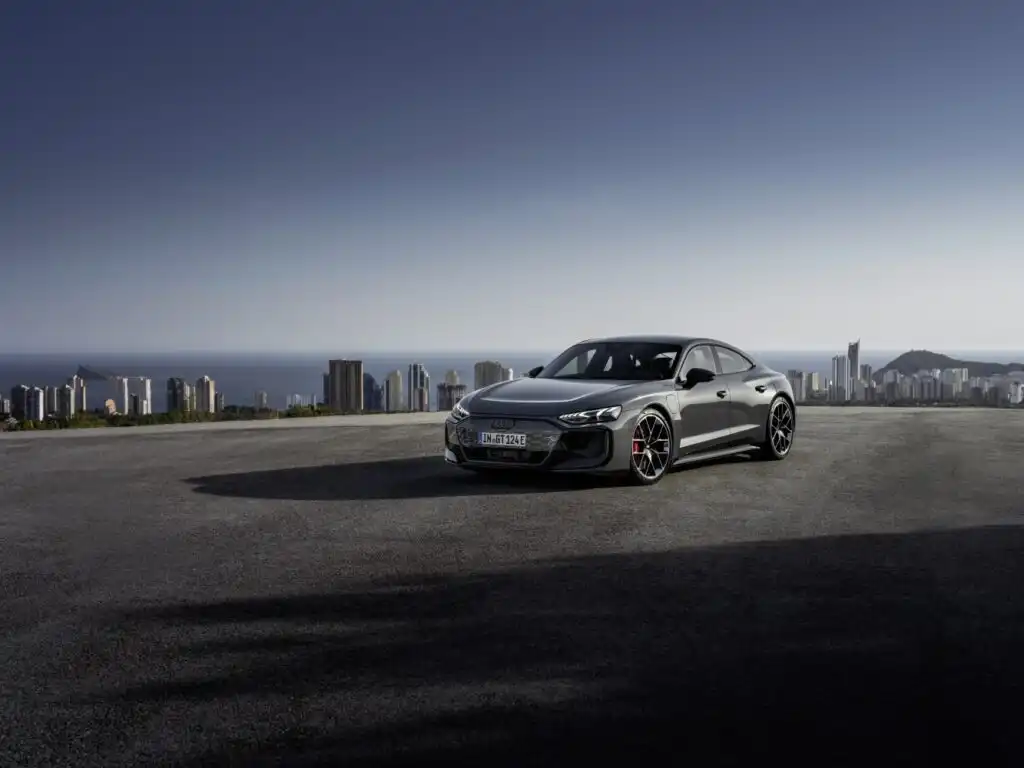
The Audi RS e-tron GT, particularly the facelifted 2024 model with the 105 kWh battery pack delivering 856 horsepower, represents Audi’s flagship all-electric performance vehicle. Introduced in June 2024, this variant builds upon the foundation laid by the initial e-tron GT, pushing the boundaries of electric grand touring. It’s positioned as a direct competitor to the Porsche Taycan, sharing its J1 platform architecture, but offering a distinctly Audi aesthetic and driving experience. The RS e-tron GT aims to deliver supercar-level acceleration and handling within a luxurious and practical four-door grand tourer package.
Technical Specifications
| Brand | Audi |
| Model | RS e-tron GT |
| Generation | RS e-tron GT (facelift 2024) |
| Type (Engine) | 105 kWh (856 Hp) quattro |
| Start of production | June, 2024 |
| Powertrain Architecture | BEV (Electric Vehicle) |
| Body type | Grand Tourer |
| Seats | 5 |
| Doors | 4 |
| Fuel Type | Electricity |
| Acceleration 0 – 100 km/h | 2.8 sec |
| Acceleration 0 – 62 mph | 2.8 sec |
| Acceleration 0 – 60 mph | 2.7 sec |
| Maximum speed | 250 km/h (155.34 mph) |
| Weight-to-power ratio | 2.7 kg/Hp, 369 Hp/tonne |
| Weight-to-torque ratio | 2.7 kg/Nm, 372.8 Nm/tonne |
| Gross battery capacity | 105 kWh |
| Net (usable) battery capacity | 97 kWh |
| Battery voltage | 800 V |
| Battery technology | Lithium-ion (Li-Ion) |
| Battery weight | 625 kg (1377.89 lbs) |
| Battery location | Below the floor |
| Recuperation output | 400 kW |
| All-electric range (WLTP) | 527-598 km (327.46 – 371.58 mi) |
| Average Energy consumption (WLTP) | 18.4-21.1 kWh/100 km (29.61 – 33.96 kWh/100 mi) |
| Average Energy consumption (MPGe) | 114 – 99 |
| Average Energy consumption (km/kWh) | 5.4 – 4.7 |
| Average Energy consumption (mi/kWh) | 3.4 – 2.9 |
| Kerb Weight | 2320 kg (5114.72 lbs) |
| Max. weight | 2860 kg (6305.22 lbs) |
| Max load | 540 kg (1190.5 lbs) |
| Trunk (boot) space – minimum | 350 l (12.36 cu. ft) |
| Max. roof load | 75 kg (165.35 lbs) |
| Length | 4997 mm (196.73 in) |
| Width | 1964 mm (77.32 in) |
| Width including mirrors | 2158 mm (84.96 in) |
| Height | 1369-1402 mm (53.9 – 55.2 in) |
| Wheelbase | 2900 mm (114.17 in) |
| Front track | 1702 mm (67.01 in) |
| Rear (Back) track | 1667 mm (65.63 in) |
| Drag coefficient (Cd) | 0.25 |
| Minimum turning circle | 11.6 m (38.06 ft) |
| Approach angle | 12° |
| Departure angle | 14.4° |
| Drivetrain Architecture | One electric motor drives the front wheels, one electric motor drives the rear wheels. |
| Drive wheel | All wheel drive (4×4) |
| Number of gears | 2 gears, automatic transmission |
| Front suspension | Double wishbone, Air suspension |
| Rear suspension | Independent multi-link suspension, Air suspension |
| Front brakes | Ventilated discs, 410 mm |
| Rear brakes | Ventilated discs, 365 mm |
| Tires size (Front) | 245/45 R20; 265/35 R21 |
| Tires size (Rear) | 285/40 R20; 305/30 R21 |
| Wheel rims size (Front) | 9J x 20; 9.5J x 21 |
| Wheel rims size (Rear) | 11J x 20; 11.5J x 21 |
Powertrain & Engine Architecture
The 2024 RS e-tron GT utilizes a dual-motor, all-wheel-drive (quattro) powertrain. The front motor produces 239 horsepower and 305 Nm (224.96 lb.-ft.) of torque, while the rear motor generates a substantial 564 horsepower and 590 Nm (435.16 lb.-ft.) of torque. Combined, these motors deliver a system output of 856 horsepower and 865 Nm (637.99 lb.-ft.) of torque. Both motors are permanently excited synchronous motors, chosen for their efficiency and power density. The 105 kWh battery pack, featuring 800-volt architecture, allows for rapid charging – capable of adding approximately 180 miles of range in around 22.5 minutes at a DC fast-charging station. The battery is positioned low in the vehicle floor to optimize the center of gravity. The car employs a two-speed automatic transmission on each axle, providing both strong acceleration and efficient high-speed cruising. The recuperation system can regenerate up to 400 kW of power, maximizing energy recovery during deceleration.
Driving Characteristics
The RS e-tron GT’s performance is truly remarkable. Its 0-60 mph acceleration time of 2.7 seconds places it firmly in supercar territory. The instant torque delivery characteristic of electric motors provides exhilarating acceleration in all situations. The dual-motor setup and sophisticated torque vectoring system contribute to exceptional handling and stability. The air suspension provides a comfortable ride quality, while also allowing for adjustable ride height and stiffness. Compared to the standard e-tron GT, the RS version offers a more aggressive driving experience, with sharper throttle response and more direct steering feel. The two-speed transmission on each axle allows for quick launches and efficient highway cruising. While the immense power is readily available, managing it effectively requires careful throttle control, especially in wet or slippery conditions.
Equipment & Trim Levels
The RS e-tron GT comes standard with a comprehensive suite of features, including a premium interior with leather upholstery, carbon fiber trim, and heated/ventilated front seats. Standard technology includes Audi’s virtual cockpit digital instrument cluster, a large touchscreen infotainment system with navigation, and a premium sound system. Available options include a head-up display, massaging seats, and a panoramic sunroof. Exterior features include RS-specific styling cues, such as a unique front fascia, rear diffuser, and large alloy wheels. The interior is focused on a minimalist design, emphasizing high-quality materials and advanced technology.
Chassis & Braking
The RS e-tron GT features a double-wishbone front suspension and an independent multi-link rear suspension, both incorporating air suspension with adaptive damping control. This system allows for adjustable ride height and stiffness, optimizing both comfort and handling. Large ventilated disc brakes (410mm front, 365mm rear) provide exceptional stopping power. The car also includes ABS, electronic stability control, and a sophisticated torque vectoring system. Available options include carbon ceramic brakes for even greater stopping performance. The steering system is electric power-assisted, providing precise and responsive steering feel. The car also features four-wheel steering, enhancing agility and maneuverability.
Market Reception & Comparison
The RS e-tron GT has been widely praised by automotive critics for its stunning performance, luxurious interior, and advanced technology. It’s often compared to the Porsche Taycan, with which it shares its platform. While the Taycan is generally considered to be more focused on outright performance, the RS e-tron GT offers a more comfortable and refined driving experience. The RS e-tron GT’s range is competitive with other high-performance electric vehicles, but it’s not class-leading. Fuel economy, expressed as MPGe, is estimated between 99-114, depending on driving conditions. Reliability data is still emerging, but Audi has a generally good reputation for build quality and reliability.
Legacy
The Audi RS e-tron GT represents a significant step forward in electric vehicle technology and performance. It demonstrates Audi’s commitment to electrification and its ability to create compelling electric vehicles that rival traditional gasoline-powered sports cars. The 800-volt architecture and rapid charging capabilities set a new standard for electric vehicle infrastructure. As the electric vehicle market continues to evolve, the RS e-tron GT is likely to be remembered as a pioneering vehicle that helped to accelerate the adoption of electric vehicles.