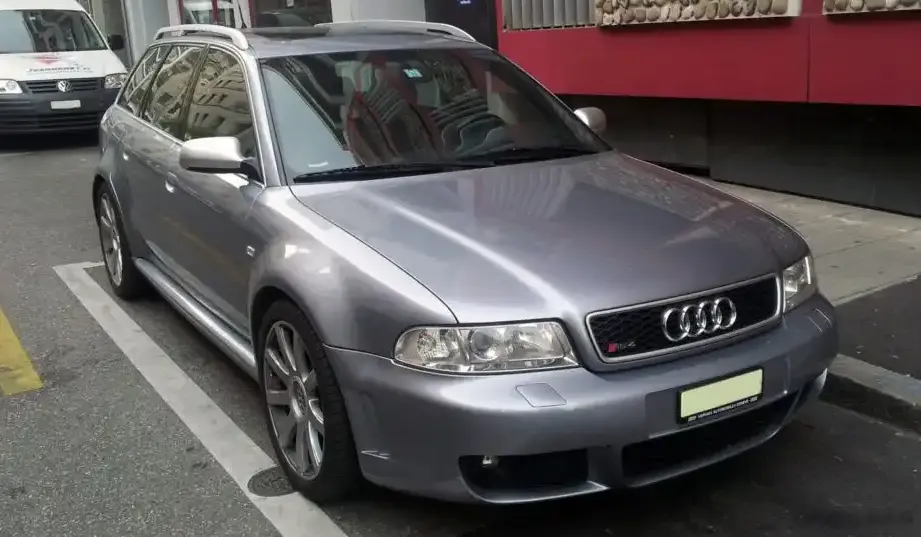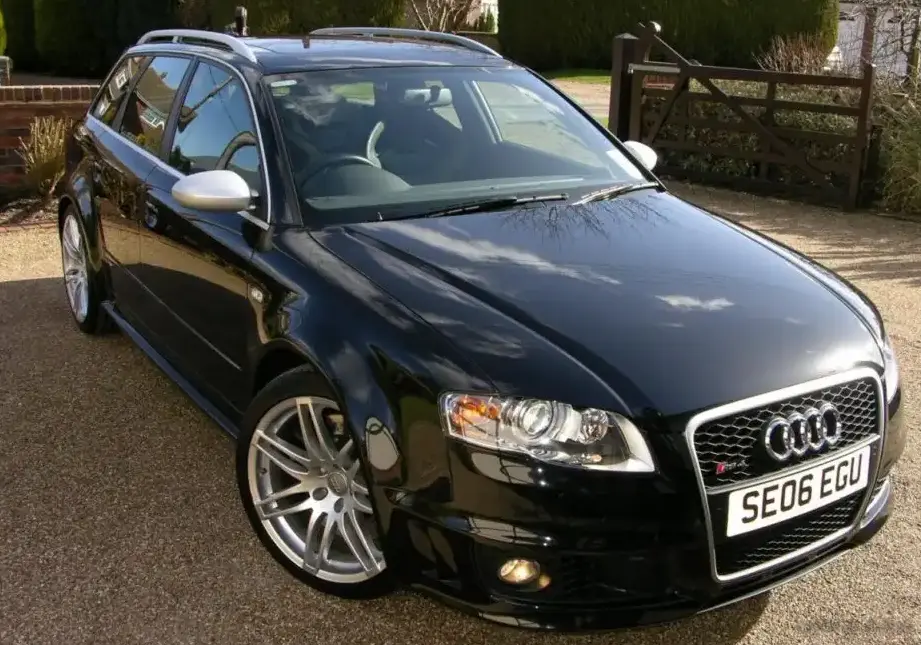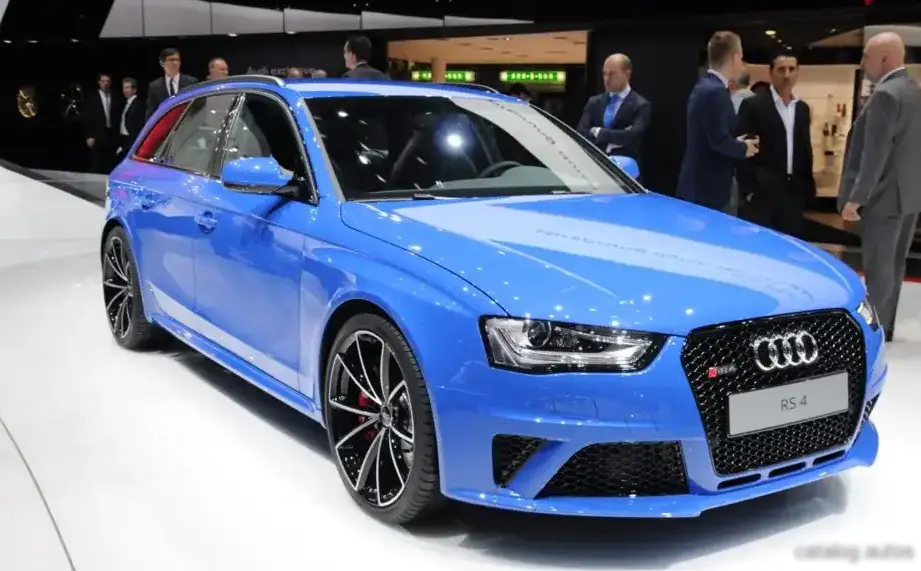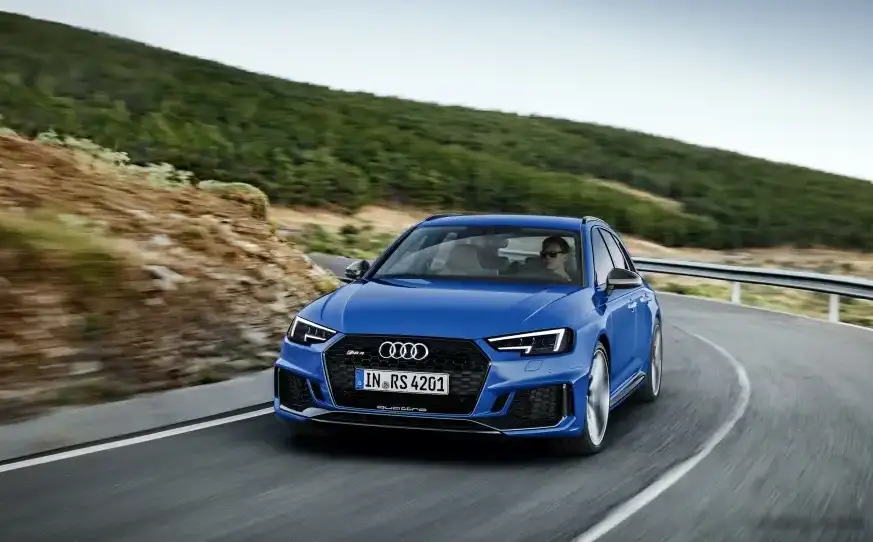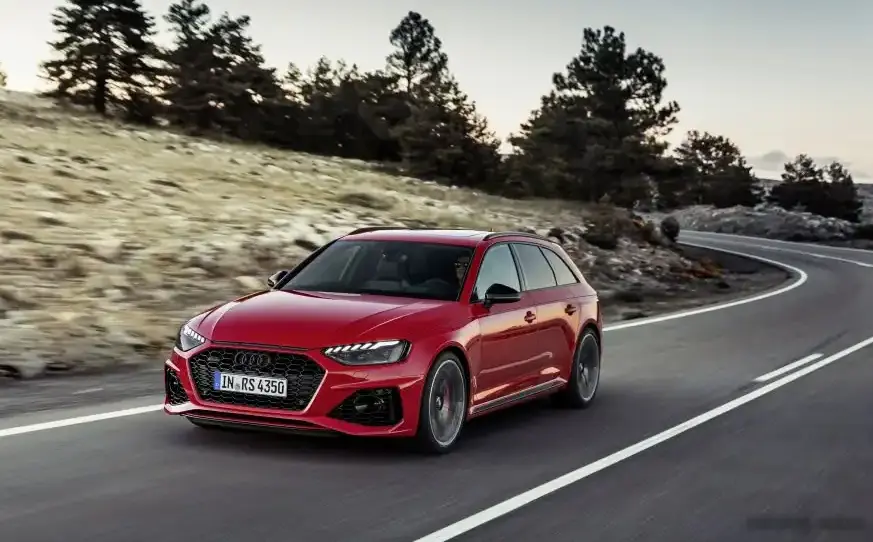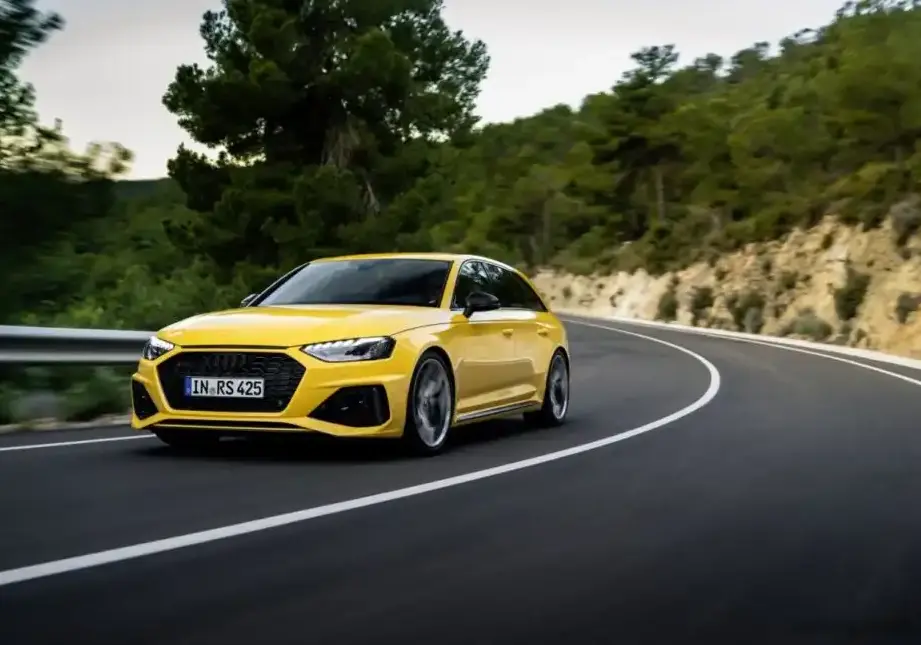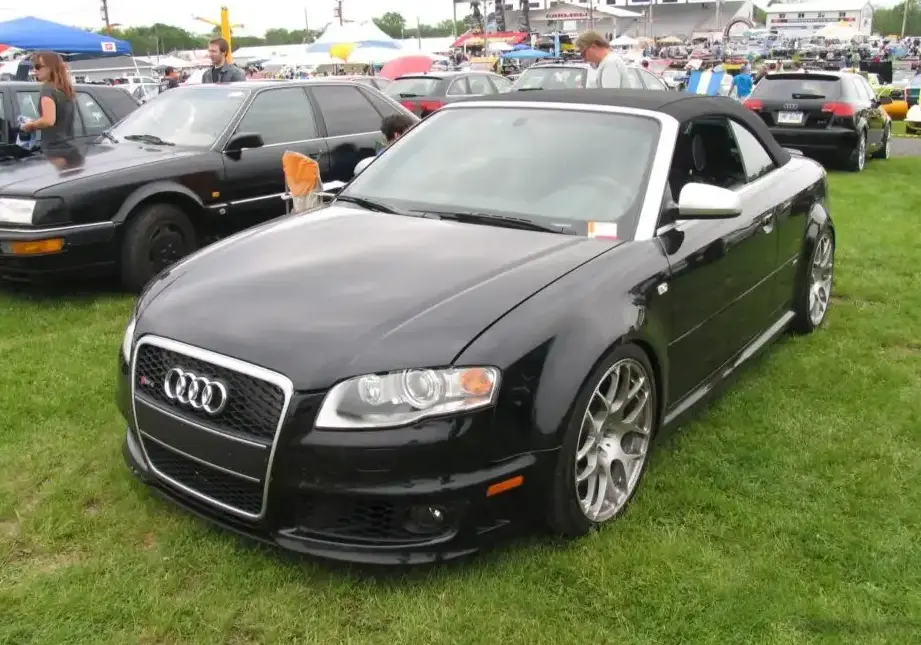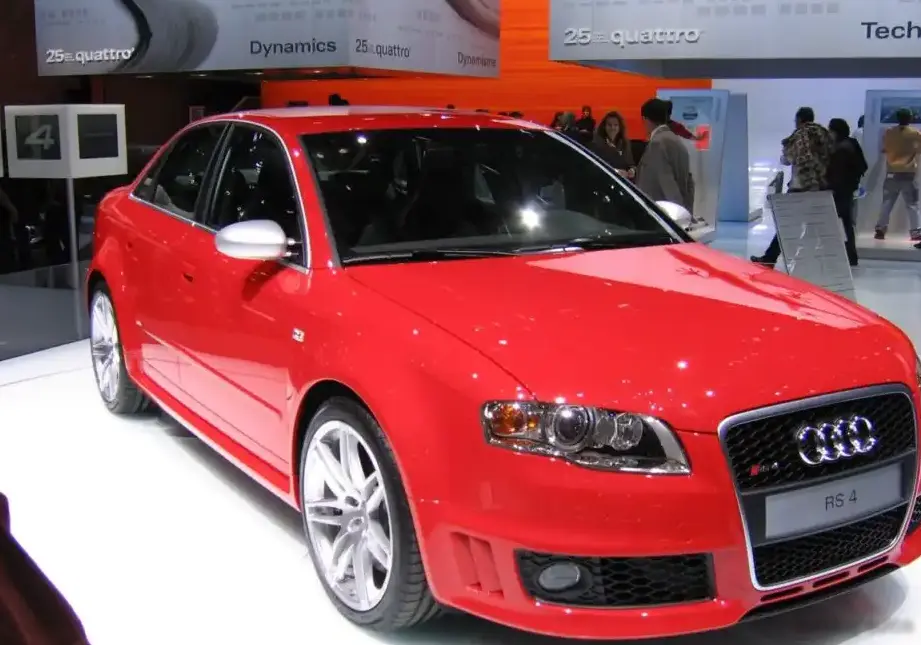
The Audi RS4 Saloon (8E, B7), produced from November 2005 to 2009, represents a high-performance iteration of the Audi A4 saloon. Positioned as the flagship of the B7 A4 range, the RS4 aimed to deliver uncompromising performance and a more engaging driving experience than its standard counterparts. It was a key model in Audi’s strategy to expand its “RS” (RennSport – racing sport) line, offering a direct competitor to BMW’s M3 and Mercedes-Benz’s AMG C-Class. The RS4 was exclusively offered as a saloon (Avant/wagon versions were available in some markets, but not the US). It utilized Audi’s quattro all-wheel-drive system and a naturally aspirated 4.2-liter V8 engine, setting it apart from turbocharged competitors.
Technical Specifications
| Brand | Audi |
| Model | RS4 |
| Generation | RS4 Saloon (8E, B7) |
| Type (Engine) | 4.2 FSI V8 32V (420 Hp) quattro |
| Start of production | November, 2005 |
| End of production | 2009 |
| Powertrain Architecture | Internal Combustion engine |
| Body type | Sedan |
| Seats | 5 |
| Doors | 4 |
| Fuel consumption (economy) – urban | 19.7 l/100 km (11.9 US mpg, 14.3 UK mpg, 5.1 km/l) |
| Fuel consumption (economy) – extra urban | 10.1 l/100 km (23.3 US mpg, 28 UK mpg, 9.9 km/l) |
| Fuel consumption (economy) – combined | 13.7 l/100 km (17.2 US mpg, 20.6 UK mpg, 7.3 km/l) |
| CO2 emissions | 329 g/km |
| Fuel Type | Petrol (Gasoline) |
| Acceleration 0 – 100 km/h | 4.8 sec |
| Acceleration 0 – 62 mph | 4.8 sec |
| Acceleration 0 – 60 mph | 4.6 sec |
| Acceleration 0 – 200 km/h | 16.6 sec |
| Maximum speed | 250 km/h (155.34 mph) |
| Emission standard | Euro 4 |
| Weight-to-power ratio | 3.9 kg/Hp, 254.5 Hp/tonne |
| Weight-to-torque ratio | 3.8 kg/Nm, 260.6 Nm/tonne |
| Power | 420 Hp @ 7800 rpm |
| Power per litre | 100.9 Hp/l |
| Torque | 430 Nm @ 5500 rpm (317.15 lb.-ft. @ 5500 rpm) |
| Engine layout | Front, Longitudinal |
| Engine Model/Code | BNS |
| Engine displacement | 4163 cm3 (254.04 cu. in.) |
| Number of cylinders | 8 |
| Engine configuration | V-engine |
| Cylinder Bore | 84.5 mm (3.33 in.) |
| Piston Stroke | 92.8 mm (3.65 in.) |
| Compression ratio | 12.5:1 |
| Number of valves per cylinder | 4 |
| Fuel injection system | Direct injection |
| Engine aspiration | Naturally aspirated engine |
| Valvetrain | DOHC |
| Engine oil capacity | 9.6 l (10.14 US qt, 8.45 UK qt) |
| Coolant | 12 l (12.68 US qt, 10.56 UK qt) |
| Kerb Weight | 1650 kg (3637.63 lbs.) |
| Max. weight | 2260 kg (4982.45 lbs.) |
| Max load | 610 kg (1344.82 lbs.) |
| Trunk (boot) space – minimum | 460 l (16.24 cu. ft.) |
| Trunk (boot) space – maximum | 720 l (25.43 cu. ft.) |
| Fuel tank capacity | 63 l (16.64 US gal, 13.86 UK gal) |
| Max. roof load | 75 kg (165.35 lbs.) |
| Length | 4589 mm (180.67 in.) |
| Width | 1816 mm (71.5 in.) |
| Height | 1415 mm (55.71 in.) |
| Wheelbase | 2648 mm (104.25 in.) |
| Front track | 1559 mm (61.38 in.) |
| Rear (Back) track | 1569 mm (61.77 in.) |
| Drag coefficient (Cd) | 0.31 |
| Minimum turning circle | 11.10 m (36.42 ft.) |
| Drive wheel | All wheel drive (4×4) |
| Number of gears and type of gearbox | 6 gears, manual transmission |
| Front suspension | Independent multi-link suspension |
| Rear suspension | Independent on trapezoidal lever |
| Front brakes | Ventilated discs |
| Rear brakes | Ventilated discs |
| Assisting systems | ABS (Anti-lock braking system) |
| Steering type | Steering rack and pinion |
| Tires size | 255/40 R18 |
| Wheel rims size | 8.5J X 18 |
Powertrain & Engine Architecture
The heart of the RS4 is the 4.2-liter, naturally aspirated V8 engine, designated BNS. This engine is a significant departure from the turbocharged engines becoming increasingly common at the time. It features a 90-degree V-angle, four valves per cylinder, and a high 12.5:1 compression ratio. The engine utilizes Audi’s FSI (Fuel Stratified Injection) direct injection technology, which improves fuel efficiency and power output. The valvetrain is a double overhead camshaft (DOHC) design, optimizing airflow into and out of the cylinders. The engine produces 420 horsepower at 7800 rpm and 317 lb-ft of torque at 5500 rpm. The sole transmission option was a six-speed manual gearbox, chosen for its robustness and driver engagement. The quattro all-wheel-drive system employs a Torsen center differential, distributing torque between the front and rear axles as needed, enhancing traction and stability.
Driving Characteristics
The RS4’s driving experience is defined by its responsive engine, precise steering, and tenacious grip. The naturally aspirated V8 delivers a linear power curve, building to a thrilling crescendo at high RPMs. While not possessing the low-end grunt of a turbocharged engine, the RS4’s engine encourages the driver to explore the upper reaches of the tachometer. The six-speed manual transmission is well-matched to the engine, offering precise shifts and a satisfying mechanical feel. The quattro all-wheel-drive system provides exceptional traction, allowing for confident cornering and acceleration in all weather conditions. Compared to the standard A4, the RS4’s suspension is firmer and lower, reducing body roll and improving handling. However, it remains reasonably comfortable for everyday driving. The RS4 is noticeably quicker than the A4 3.2 FSI, offering a significantly more visceral and engaging driving experience.
Equipment & Trim Levels
The RS4 came generously equipped, reflecting its premium positioning. Standard features included sport seats upholstered in Nappa leather, a three-spoke sport steering wheel, and unique RS4 badging throughout the interior and exterior. Bi-Xenon headlights, a premium sound system, and automatic climate control were also standard. Optional extras included carbon fiber interior trim, a sunroof, and a navigation system. The interior design was largely similar to the standard A4, but with distinctive RS4-specific touches, such as aluminum pedals and a revised instrument cluster with unique graphics. The exterior featured aggressive styling cues, including a unique front bumper with large air intakes, flared wheel arches, and a rear spoiler.
Chassis & Braking
The RS4’s chassis was extensively modified compared to the standard A4. The suspension was lowered and stiffened, with revised dampers and springs. The front suspension utilized a multi-link design, while the rear suspension employed a trapezoidal link setup. Larger stabilizer bars were fitted to reduce body roll. The braking system featured ventilated discs on all four wheels, providing ample stopping power. The RS4 also benefited from Audi’s ABS (Anti-lock Braking System) and Electronic Stability Program (ESP), enhancing safety and control. The tires were specifically chosen for high performance, typically 255/40 R18 size.
Market Reception & Comparison
The Audi RS4 was generally well-received by automotive critics, praised for its powerful engine, engaging driving dynamics, and understated styling. It was often compared favorably to its rivals, the BMW M3 and Mercedes-Benz C55 AMG. While the M3 was often considered the more agile and balanced car, the RS4 offered a more comfortable ride and a unique character thanks to its V8 engine and all-wheel-drive system. Fuel economy was a common criticism, with the RS4 consuming a significant amount of fuel, reflecting its high-performance nature. Reliability was generally good, although some owners reported issues with the timing chain tensioners.
Legacy
The Audi RS4 (B7) remains a highly sought-after performance saloon in the used car market. Its combination of power, handling, and practicality has made it a favorite among enthusiasts. The 4.2-liter V8 engine is known for its durability, although regular maintenance is essential. The RS4’s legacy lies in its ability to deliver a thrilling driving experience without sacrificing everyday usability. It represents a high point in Audi’s RS lineage and continues to be appreciated for its unique character and performance capabilities. Well-maintained examples command premium prices, reflecting their desirability and rarity.