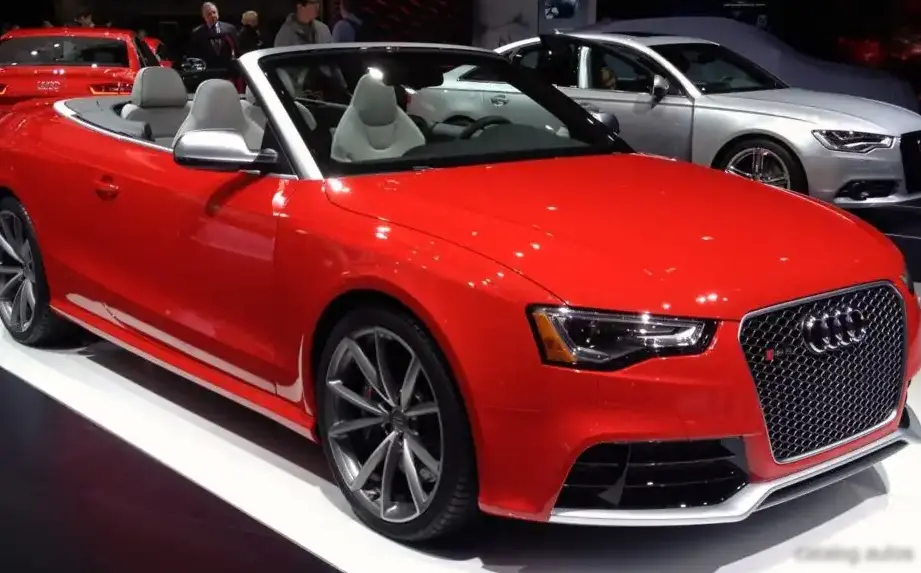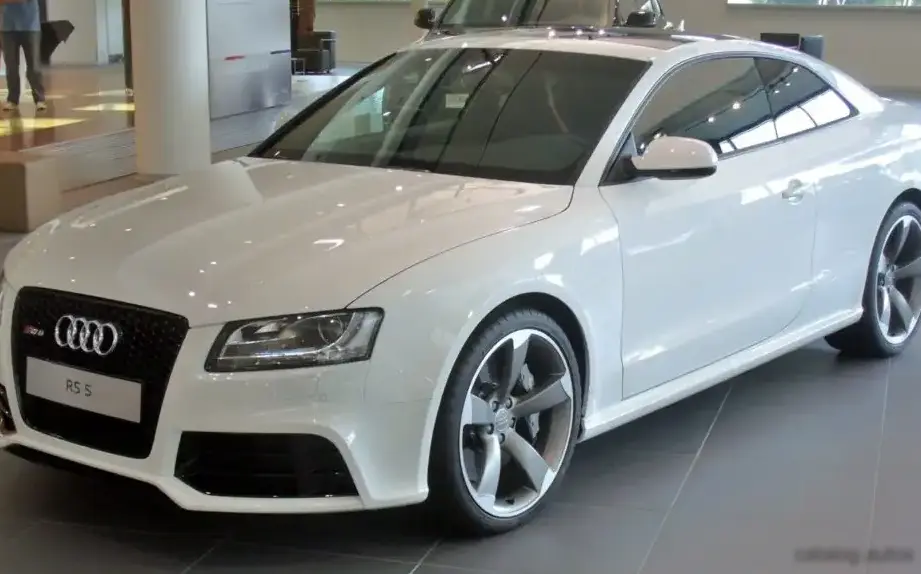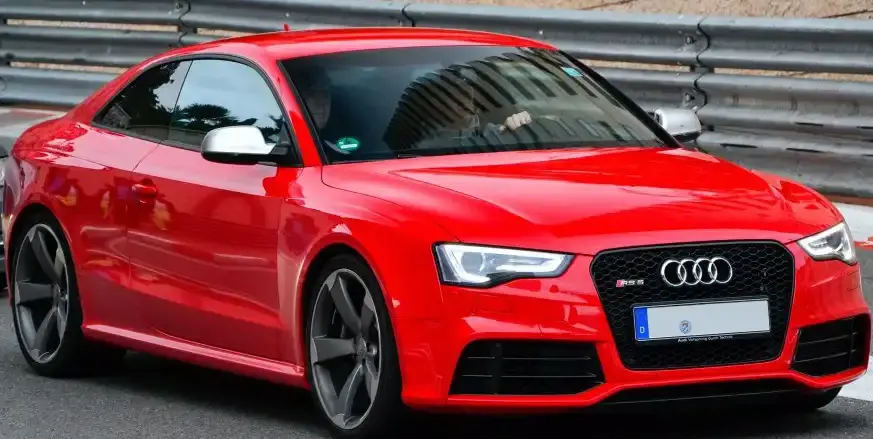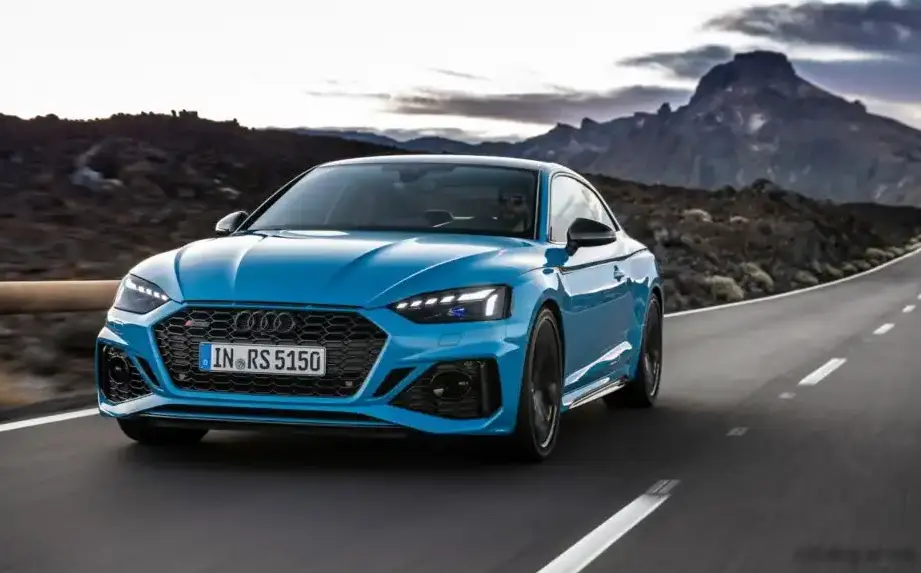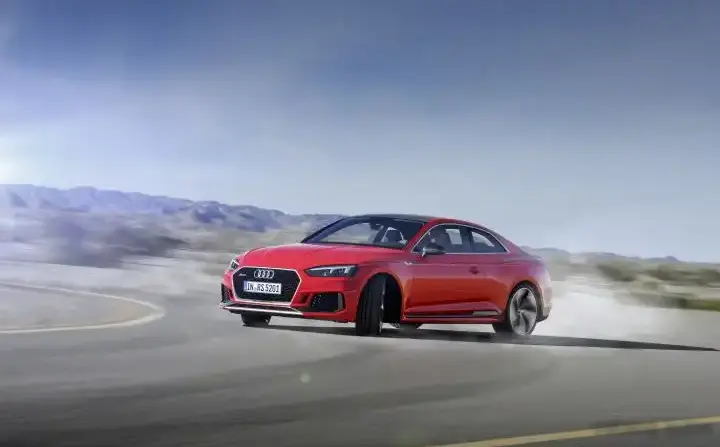
The Audi RS 5 Coupe II (F5) 2.9 TFSI quattro tiptronic represents the second generation of Audi’s high-performance coupe, produced from 2017 to 2018. Positioned as the flagship of the RS 5 lineup, this variant combined a potent 2.9-liter turbocharged V6 engine with Audi’s renowned quattro all-wheel-drive system and an eight-speed tiptronic automatic transmission. It served as a direct successor to the previous RS 5, building upon its performance credentials while incorporating updated technology and design elements. The F5 generation RS 5 was built on the MLB Evo platform, shared with other Audi and Volkswagen group vehicles.
Technical Specifications
| Brand | Audi |
| Model | RS5 |
| Generation | RS5 Coupe II (F5) |
| Type (Engine) | 2.9 TFSI (450 Hp) quattro tiptronic |
| Start of production | 2017 |
| End of production | 2018 |
| Powertrain Architecture | Internal Combustion engine |
| Body type | Coupe |
| Seats | 4 |
| Doors | 2 |
| Fuel consumption (economy) – urban | 11.5 l/100 km (20.5 US mpg, 24.6 UK mpg, 8.7 km/l) |
| Fuel consumption (economy) – extra urban | 7.1 l/100 km (33.1 US mpg, 39.8 UK mpg, 14.1 km/l) |
| Fuel consumption (economy) – combined | 8.7 l/100 km (27 US mpg, 32.5 UK mpg, 11.5 km/l) |
| CO2 emissions | 197 g/km |
| Fuel Type | Petrol (Gasoline) |
| Acceleration 0 – 100 km/h | 3.9 sec |
| Acceleration 0 – 62 mph | 3.9 sec |
| Acceleration 0 – 60 mph | 3.7 sec |
| Maximum speed | 250 km/h (155.34 mph) |
| Emission standard | Euro 6 |
| Weight-to-power ratio | 3.7 kg/Hp, 271.9 Hp/tonne |
| Weight-to-torque ratio | 2.8 kg/Nm, 362.5 Nm/tonne |
| Power | 450 Hp @ 5700-6700 rpm |
| Power per litre | 155.5 Hp/l |
| Torque | 600 Nm @ 1900-5000 rpm (442.54 lb.-ft. @ 1900-5000 rpm) |
| Engine layout | Front, Longitudinal |
| Engine Model/Code | DECA |
| Engine displacement | 2894 cm3 (176.6 cu. in.) |
| Number of cylinders | 6 |
| Engine configuration | V-engine |
| Number of valves per cylinder | 4 |
| Fuel injection system | Direct injection |
| Engine aspiration | Turbocharger, Intercooler |
| Engine oil capacity | 7.6 l (8.03 US qt | 6.69 UK qt) |
| Kerb Weight | 1655 kg (3648.65 lbs.) |
| Max. weight | 2195 kg (4839.15 lbs.) |
| Max load | 540 kg (1190.5 lbs.) |
| Trunk (boot) space – minimum | 465 l (16.42 cu. ft.) |
| Fuel tank capacity | 58 l (15.32 US gal | 12.76 UK gal) |
| Max. roof load | 75 kg (165.35 lbs.) |
| Permitted towbar download | 75 kg (165.35 lbs.) |
| Length | 4723 mm (185.94 in.) |
| Width | 1861 mm (73.27 in.) |
| Width including mirrors | 2029 mm (79.88 in.) |
| Height | 1360 mm (53.54 in.) |
| Wheelbase | 2766 mm (108.9 in.) |
| Front track | 1598 mm (62.91 in.) |
| Rear (Back) track | 1588 mm (62.52 in.) |
| Front overhang | 918 mm (36.14 in.) |
| Rear overhang | 1039 mm (40.91 in.) |
| Minimum turning circle | 11.7 m (38.39 ft.) |
| Drive wheel | All wheel drive (4×4) |
| Number of gears and type of gearbox | 8 gears, automatic transmission tiptronic |
| Front suspension | Independent multi-link suspension |
| Rear suspension | Independent multi-link suspension |
| Front brakes | Ventilated discs |
| Rear brakes | Ventilated discs |
| Assisting systems | ABS (Anti-lock braking system) |
| Steering type | Steering rack and pinion |
| Power steering | Electric Steering |
| Tires size | 265/35 R19 98 Y |
| Wheel rims size | 9J x 19 |
Powertrain & Engine Architecture
At the heart of the RS 5 Coupe II (F5) 2.9 TFSI lies the DECA engine, a 2.9-liter twin-turbocharged V6. This engine is a significant departure from the naturally aspirated 4.2-liter V8 used in the previous generation RS 5. The DECA engine utilizes a 90-degree V-angle, contributing to a smoother power delivery and reduced vibrations. It features direct fuel injection, ensuring precise fuel metering and optimized combustion. The twin-scroll turbochargers, positioned within the V of the engine, minimize turbo lag and provide a broad torque curve. The engine produces 450 horsepower at 5,700-6,700 rpm and a substantial 442.5 lb-ft of torque between 1,900 and 5,000 rpm. The eight-speed tiptronic automatic transmission is specifically tuned for performance, offering quick and precise shifts. It features a torque converter lockup clutch that engages early to improve efficiency and responsiveness. Audi’s quattro all-wheel-drive system distributes power between the front and rear axles as needed, providing exceptional traction and stability in all conditions.
Driving Characteristics
The 2.9 TFSI engine paired with the tiptronic transmission delivers a markedly different driving experience compared to the previous generation RS 5. While the V8 offered a more visceral sound and immediate throttle response, the turbocharged V6 provides a broader, more accessible powerband. The tiptronic transmission shifts quickly and smoothly, but some enthusiasts prefer the more engaging control offered by a manual gearbox. The quattro all-wheel-drive system provides immense grip, allowing the RS 5 to accelerate confidently even on less-than-ideal surfaces. The car feels planted and stable during cornering, inspiring confidence in spirited driving. The steering is precise and well-weighted, providing good feedback to the driver. Compared to the standard A5 Coupe, the RS 5 benefits from a sport-tuned suspension, which reduces body roll and improves handling. However, the ride quality is firmer, which may be less comfortable for everyday driving.
Equipment & Trim Levels
The RS 5 Coupe II (F5) 2.9 TFSI quattro tiptronic came generously equipped as standard. Interior features included sport seats upholstered in Nappa leather with diamond stitching, a flat-bottom steering wheel wrapped in Alcantara, and carbon fiber trim accents. Standard technology included Audi’s virtual cockpit, a fully digital instrument cluster, and a premium Bang & Olufsen sound system. Optional extras included a head-up display, adaptive cruise control, and a panoramic sunroof. Exterior features included a distinctive RS honeycomb grille, a rear diffuser, and large oval exhaust outlets. Customers could also choose from a range of exterior colors and wheel designs.
Chassis & Braking
The RS 5 Coupe II (F5) features a sophisticated chassis designed for high performance. The front suspension utilizes a five-link independent setup, while the rear suspension employs a multi-link design. Both ends of the car are equipped with RS-specific dampers and stabilizer bars, which are stiffer than those found in the standard A5 Coupe. The braking system consists of ventilated discs at all four corners, with large calipers providing ample stopping power. RS-branded brake calipers are visually distinctive. The car’s electronic stability control (ESC) system is calibrated to allow for a degree of wheel slip in RS mode, enhancing driving enjoyment.
Market Reception & Comparison
The RS 5 Coupe II (F5) 2.9 TFSI quattro tiptronic was generally well-received by automotive critics. Reviewers praised the car’s powerful engine, responsive transmission, and exceptional handling. The switch to a turbocharged V6 was initially met with some skepticism, but the DECA engine proved to be a capable and refined performer. Compared to the previous generation RS 5, the F5 model offered improved fuel economy and a broader powerband. However, some critics noted that the car lacked the raw emotional connection of its V8 predecessor. Compared to rivals such as the BMW M4 Coupe and Mercedes-AMG C63 Coupe, the RS 5 offered a unique blend of performance, luxury, and technology.
Legacy
The 2.9 TFSI engine has proven to be a reliable and durable powertrain. While some early models experienced minor software glitches, these were addressed through software updates. The tiptronic transmission is also generally considered to be reliable, provided it is properly maintained. Today, the RS 5 Coupe II (F5) 2.9 TFSI quattro tiptronic remains a desirable used car, commanding a premium price due to its performance and exclusivity. Its combination of power, handling, and luxury continues to appeal to enthusiasts seeking a high-performance coupe.