Technical Specifications
| Brand | Audi |
| Model | RS5 |
| Generation | RS5 Coupe II (F5, facelift 2020) |
| Type (Engine) | 2.9 TFSI V6 (450 Hp) quattro tiptronic |
| Start of production | 2020 |
| Powertrain Architecture | Internal Combustion engine |
| Body type | Coupe |
| Seats | 5 |
| Doors | 2 |
| Combined fuel consumption (WLTP) | 9.2-9.7 l/100 km (25.6 – 24.2 US mpg, 30.7 – 29.1 UK mpg, 10.9 – 10.3 km/l) |
| CO2 emissions (WLTP) | 209-220 g/km |
| Fuel consumption (urban) | 12.1 l/100 km (19.4 US mpg, 23.3 UK mpg, 8.3 km/l) |
| Fuel consumption (extra urban) | 7.4 l/100 km (31.8 US mpg, 38.2 UK mpg, 13.5 km/l) |
| Fuel consumption (combined) | 9.1 l/100 km (25.8 US mpg, 31 UK mpg, 11 km/l) |
| CO2 emissions | 208 g/km |
| Fuel Type | Petrol (Gasoline) |
| Acceleration 0 – 100 km/h | 3.9 sec |
| Acceleration 0 – 62 mph | 3.9 sec |
| Acceleration 0 – 60 mph | 3.7 sec |
| Maximum speed | 250 km/h (155.34 mph) |
| Weight-to-power ratio | 3.8 kg/Hp, 263.6 Hp/tonne |
| Weight-to-torque ratio | 2.8 kg/Nm, 351.5 Nm/tonne |
| Power | 450 Hp @ 5700-6700 rpm |
| Power per litre | 155.5 Hp/l |
| Torque | 600 Nm @ 1900-5000 rpm (442.54 lb.-ft. @ 1900-5000 rpm) |
| Engine layout | Front, Longitudinal |
| Engine Model/Code | DECA |
| Engine displacement | 2894 cm3 (176.6 cu. in.) |
| Number of cylinders | 6 |
| Engine configuration | V-engine |
| Cylinder Bore | 84.5 mm (3.33 in.) |
| Piston Stroke | 86 mm (3.39 in.) |
| Compression ratio | 10:1 |
| Number of valves per cylinder | 4 |
| Fuel injection system | Direct injection |
| Engine aspiration | BiTurbo, Intercooler |
| Engine oil capacity | 7.6 l (8.03 US qt | 6.69 UK qt) |
| Coolant | 14.7 l (15.53 US qt | 12.93 UK qt) |
| Kerb Weight | 1707 kg (3763.29 lbs.) |
| Max. weight | 2207 kg (4865.6 lbs.) |
| Max load | 500 kg (1102.31 lbs.) |
| Trunk (boot) space – minimum | 410 l (14.48 cu. ft.) |
| Fuel tank capacity | 58 l (15.32 US gal | 12.76 UK gal) |
| Max. roof load | 75 kg (165.35 lbs.) |
| Length | 4723 mm (185.94 in.) |
| Width | 1866 mm (73.46 in.) |
| Width including mirrors | 2029 mm (79.88 in.) |
| Height | 1372 mm (54.02 in.) |
| Wheelbase | 2766 mm (108.9 in.) |
| Front track | 1598 mm (62.91 in.) |
| Rear (Back) track | 1588 mm (62.52 in.) |
| Front overhang | 918 mm (36.14 in.) |
| Rear overhang | 1039 mm (40.91 in.) |
| Drag coefficient (Cd) | 0.32 |
| Minimum turning circle | 11.7 m (38.39 ft.) |
| Approach angle | 17° |
| Departure angle | 12.6° |
| Drive wheel | All wheel drive (4×4) |
| Number of gears and type of gearbox | 8 gears, automatic transmission tiptronic |
| Front suspension | Independent multi-link suspension |
| Rear suspension | Independent multi-link suspension |
| Front brakes | Ventilated discs |
| Rear brakes | Ventilated discs |
| Assisting systems | ABS (Anti-lock braking system) |
| Steering type | Steering rack and pinion |
| Power steering | Electric Steering |
| Tires size | 265/35 ZR19 98Y XL |
| Wheel rims size | 9J x 19 |
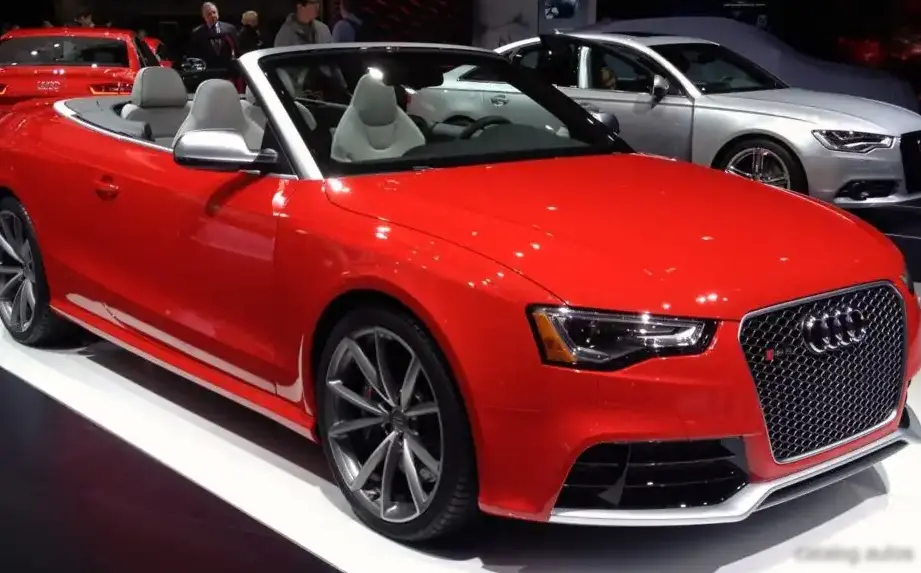
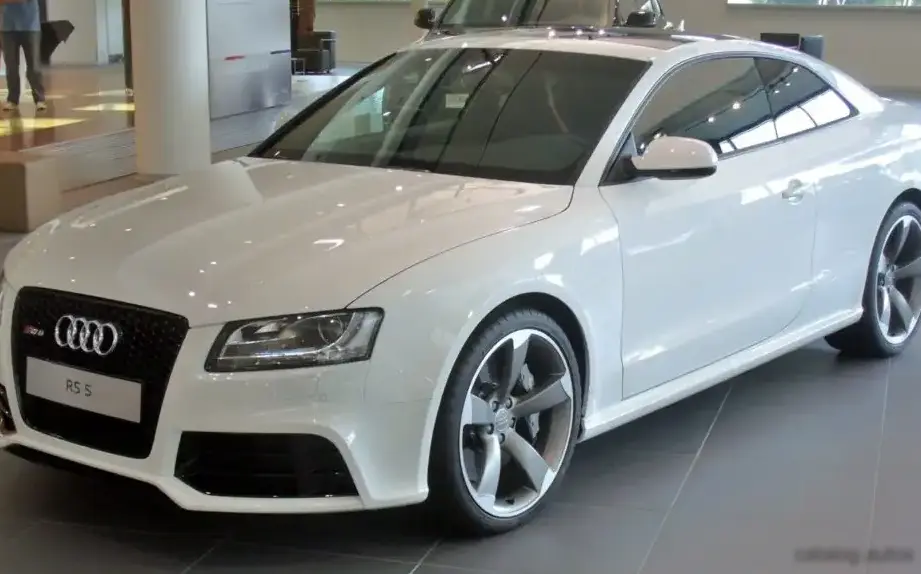
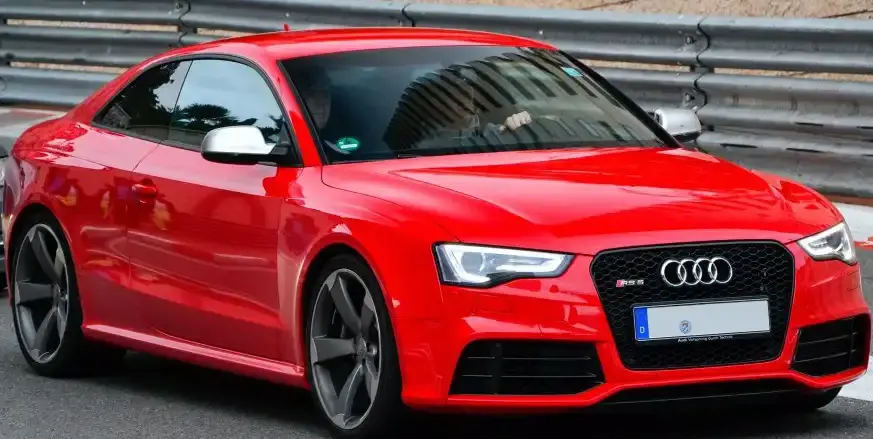
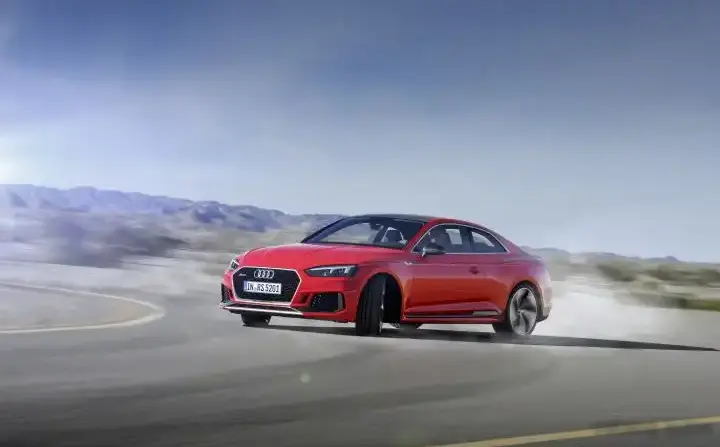
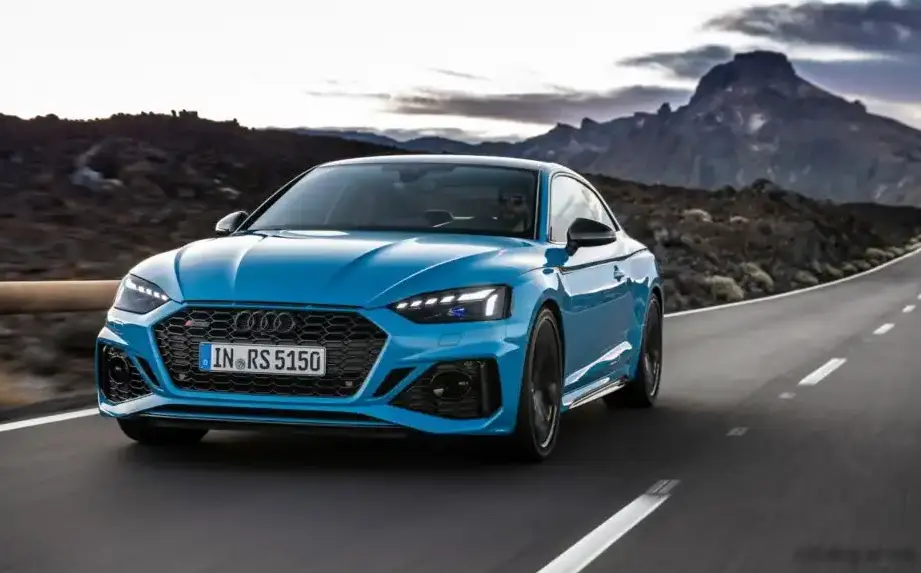
The 2020 Audi RS 5 Coupe, powered by the 2.9 TFSI V6 engine and equipped with the eight-speed tiptronic automatic transmission, represents a significant evolution of Audi’s high-performance coupe. Built on the F5 platform – the second generation of the RS 5 – this facelifted model aimed to refine the driving experience and enhance the car’s aesthetic appeal. The RS 5 Coupe occupies a unique position in the luxury performance segment, competing with vehicles like the BMW M4 Coupe and Mercedes-AMG C 63 Coupe. This particular variant, with its automatic transmission, was designed to broaden the RS 5’s appeal to drivers who prioritize ease of use and smooth power delivery over the engagement of a manual gearbox.
Powertrain & Engine Architecture
At the heart of the RS 5 Coupe is the 2.9-liter twin-turbocharged V6 engine, designated as the DECA engine code. This engine is a marvel of engineering, featuring a 90-degree V-angle for optimal balance and smoothness. The engine utilizes a direct injection system, delivering fuel directly into the combustion chambers for improved efficiency and power. Each cylinder is equipped with four valves, contributing to the engine’s high volumetric efficiency. The twin-scroll turbochargers, positioned within the V of the engine, minimize turbo lag and provide a broad torque curve. The 8-speed tiptronic automatic transmission is specifically tuned for the RS 5, offering quick and precise shifts. It features a torque converter lockup clutch that engages early to improve efficiency and responsiveness. The transmission also includes a sport program and paddle shifters for manual control.
Driving Characteristics
The 450 horsepower and 442.54 lb-ft of torque delivered by the 2.9 TFSI V6 engine, coupled with the quick-shifting tiptronic transmission and quattro all-wheel drive, result in exhilarating performance. Acceleration from 0 to 60 mph is achieved in approximately 3.7 seconds, and the car can reach a top speed of 155.34 mph (electronically limited). The tiptronic transmission provides smooth and seamless gear changes, making the RS 5 a comfortable and refined grand tourer. While not as engaging as a manual transmission for some enthusiasts, the automatic offers convenience and ease of use, particularly in traffic. The quattro all-wheel-drive system provides exceptional traction and stability, allowing the RS 5 to confidently navigate challenging road conditions. The suspension is tuned for a balance between comfort and performance, providing a firm but controlled ride.
Equipment & Trim Levels
The 2020 RS 5 Coupe came standard with a comprehensive list of features, including a panoramic sunroof, leather upholstery, heated and ventilated front seats, a premium sound system, and a suite of advanced driver-assistance systems. Optional extras included carbon fiber trim, RS sport exhaust system, dynamic ride control (adjustable dampers), and a head-up display. The interior featured a flat-bottom steering wheel, RS-specific gauges, and aluminum pedal caps. The infotainment system included a 10.1-inch touchscreen display with Audi’s MMI touch response system.
Chassis & Braking
The RS 5 Coupe features a sophisticated chassis designed to maximize performance and handling. The front suspension utilizes a five-link independent setup, while the rear suspension employs a multi-link design. Both ends of the car are equipped with ventilated disc brakes, providing ample stopping power. The RS 5 also features Audi’s electronic stability control (ESC) system, which helps to maintain control in challenging driving situations. The standard wheel and tire combination is 9J x 19 with 265/35 ZR19 tires, providing excellent grip and handling.
Market Reception & Comparison
The 2020 Audi RS 5 Coupe was generally well-received by automotive critics, who praised its powerful engine, refined handling, and luxurious interior. The tiptronic automatic transmission was noted for its smoothness and responsiveness, although some reviewers expressed a preference for a manual gearbox. Compared to the pre-facelift F5 RS 5, the 2020 model offered improved styling, updated technology, and a slightly more refined driving experience. Fuel economy was typical for a high-performance coupe, with combined fuel consumption ranging from 9.2 to 9.7 l/100 km. Reliability has been generally good, although some owners have reported minor issues with the infotainment system.
Legacy
The 2.9 TFSI V6 engine has proven to be a robust and reliable powerplant, and the eight-speed tiptronic transmission has also demonstrated good durability. On the used car market, the 2020 RS 5 Coupe holds its value well, reflecting its performance capabilities and luxurious features. The combination of power, refinement, and all-weather capability makes it a desirable choice for enthusiasts seeking a high-performance coupe that can be enjoyed year-round. The F5 generation RS 5, and particularly this facelifted variant, represents a high point in Audi’s performance car lineage.