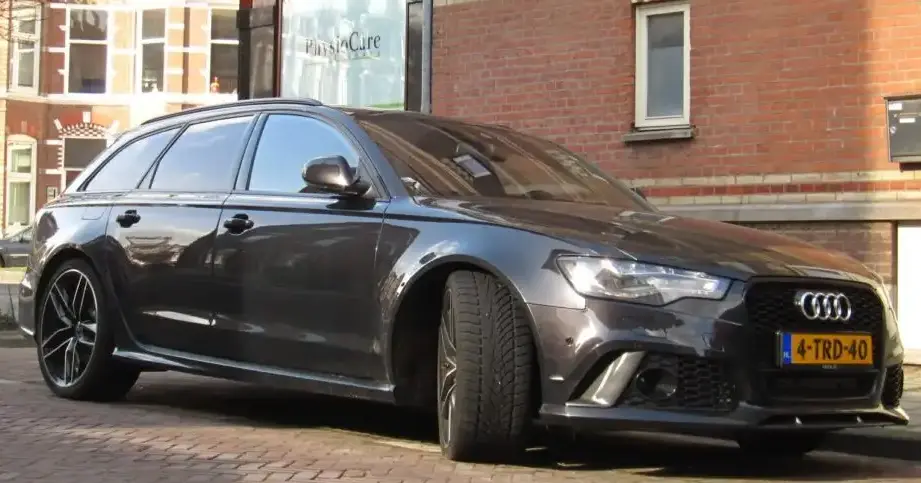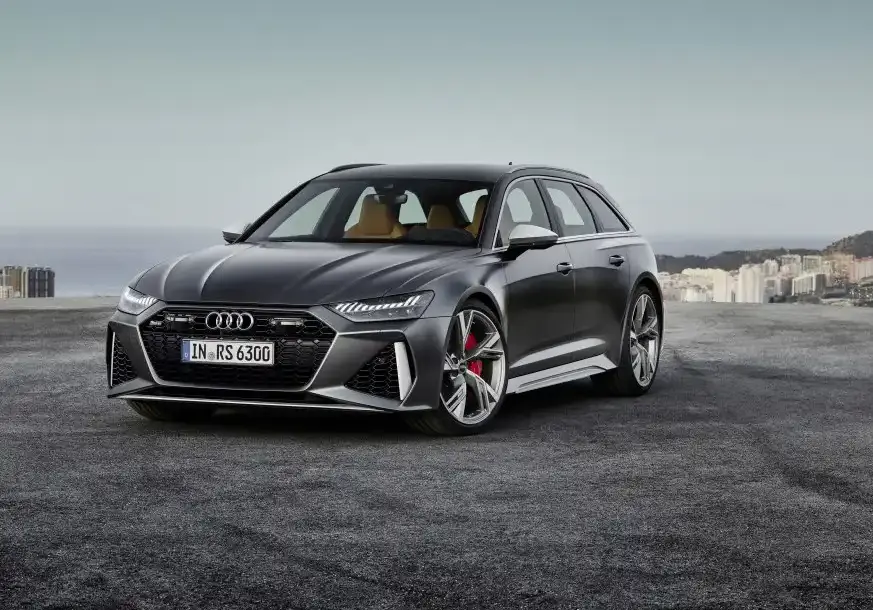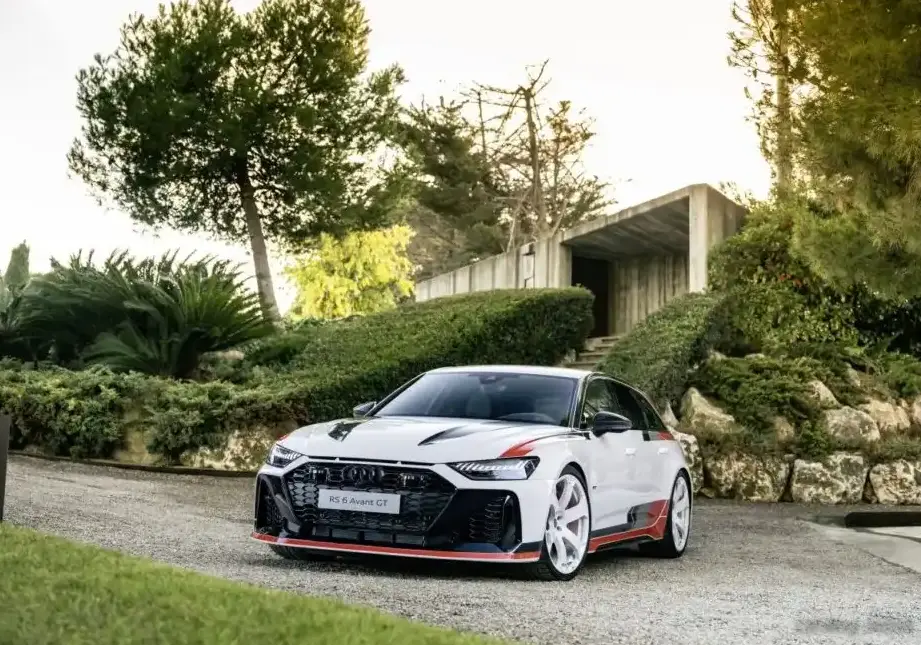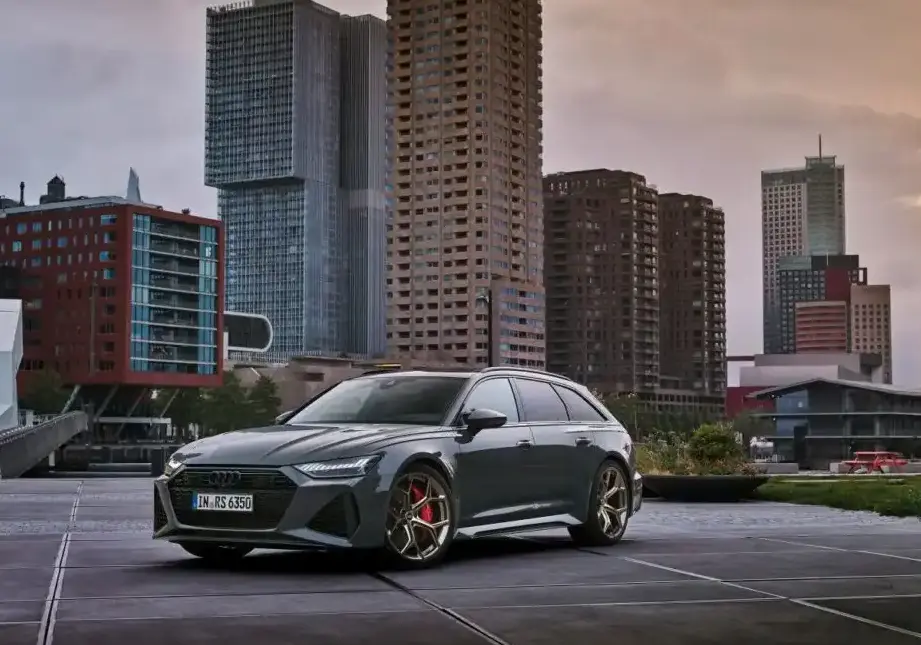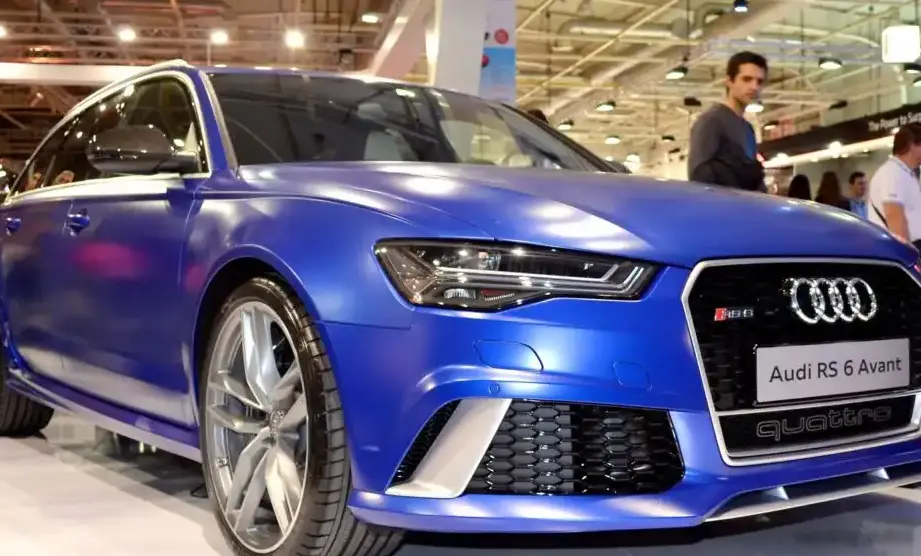
The Audi RS6 Avant (C7, facelift 2014) represents the pinnacle of high-performance station wagons, blending practicality with exhilarating speed. Introduced in September 2014 and continuing through April 2018, this iteration of the RS6 Avant built upon the already impressive C7 generation, offering a refined aesthetic and a potent powertrain. Specifically, the 4.0 TFSI V8 variant, producing 560 horsepower and paired with the eight-speed tiptronic automatic transmission and quattro all-wheel drive, became a flagship model, appealing to drivers seeking both luxury and uncompromising performance. It occupied the top tier of the RS6 Avant lineup, offering a significant step up in power and refinement compared to lower-spec models.
Technical Specifications
| Brand | Audi |
| Model | RS6 |
| Generation | RS6 Avant (C7, facelift 2014) |
| Type (Engine) | 4.0 TFSI V8 (560 Hp) quattro tiptronic |
| Start of production | September, 2014 |
| End of production | April, 2018 |
| Powertrain Architecture | Internal Combustion engine |
| Body type | Station wagon (estate) |
| Seats | 5 |
| Doors | 5 |
| Fuel consumption (economy) – urban | 13.4 l/100 km (17.6 US mpg, 21.1 UK mpg, 7.5 km/l) |
| Fuel consumption (economy) – extra urban | 7.4 l/100 km (31.8 US mpg, 38.2 UK mpg, 13.5 km/l) |
| Fuel consumption (economy) – combined | 9.6 l/100 km (24.5 US mpg, 29.4 UK mpg, 10.4 km/l) |
| CO2 emissions | 223 g/km |
| Fuel Type | Petrol (Gasoline) |
| Acceleration 0 – 100 km/h | 3.9 sec |
| Acceleration 0 – 62 mph | 3.9 sec |
| Acceleration 0 – 60 mph | 3.7 sec |
| Maximum speed | 250 km/h (155.34 mph), Electronically limited |
| Emission standard | Euro 6 |
| Weight-to-power ratio | 3.5 kg/Hp, 287.2 Hp/tonne |
| Weight-to-torque ratio | 2.8 kg/Nm, 359 Nm/tonne |
| Power | 560 Hp @ 5700-6600 rpm |
| Power per litre | 140.2 Hp/l |
| Torque | 700 Nm @ 1750-5500 rpm (516.29 lb.-ft. @ 1750-5500 rpm) |
| Engine layout | Front, Longitudinal |
| Engine Model/Code | CRDB, CWUB |
| Engine displacement | 3993 cm3 (243.67 cu. in.) |
| Number of cylinders | 8 |
| Engine configuration | V-engine |
| Cylinder Bore | 84.5 mm (3.33 in.) |
| Piston Stroke | 89 mm (3.5 in.) |
| Compression ratio | 9.3:1 |
| Number of valves per cylinder | 4 |
| Fuel injection system | Direct injection |
| Engine aspiration | BiTurbo, Intercooler |
| Valvetrain | DOHC |
| Engine oil capacity | 8.3 l (8.77 US qt | 7.3 UK qt) |
| Coolant | 13 l (13.74 US qt | 11.44 UK qt) |
| Kerb Weight | 1950 kg (4299.01 lbs.) |
| Max. weight | 2580 kg (5687.93 lbs.) |
| Max load | 630 kg (1388.91 lbs.) |
| Trunk (boot) space – minimum | 565 l (19.95 cu. ft.) |
| Trunk (boot) space – maximum | 1680 l (59.33 cu. ft.) |
| Fuel tank capacity | 65 l (17.17 US gal | 14.3 UK gal) |
| Max. roof load | 100 kg (220.46 lbs.) |
| Permitted trailer load with brakes (8%) | 2100 kg (4629.71 lbs.) |
| Permitted trailer load with brakes (12%) | 2100 kg (4629.71 lbs.) |
| Permitted trailer load without brakes | 750 kg (1653.47 lbs.) |
| Permitted towbar download | 85 kg (187.39 lbs.) |
| Length | 4979 mm (196.02 in.) |
| Width | 1936 mm (76.22 in.) |
| Width including mirrors | 2086 mm (82.13 in.) |
| Height | 1461 mm (57.52 in.) |
| Wheelbase | 2915 mm (114.76 in.) |
| Front track | 1662 mm (65.43 in.) |
| Rear (Back) track | 1663 mm (65.47 in.) |
| Front overhang | 939 mm (36.97 in.) |
| Rear overhang | 1125 mm (44.29 in.) |
| Drag coefficient (Cd) | 0.352 |
| Minimum turning circle (turning diameter) | 11.9 m (39.04 ft.) |
| Drivetrain Architecture | The Internal combustion engine (ICE) drives permanently the four wheels of the vehicle. |
| Drive wheel | All wheel drive (4×4) |
| Number of gears and type of gearbox | 8 gears, automatic transmission tiptronic |
| Front suspension | Independent multi-link suspension, Transverse stabilizer, Air suspension |
| Rear suspension | Independent on trapezoidal lever, Air suspension, Transverse stabilizer |
| Front brakes | Ventilated discs |
| Rear brakes | Ventilated discs |
| Assisting systems | ABS (Anti-lock braking system) |
| Steering type | Steering rack and pinion |
| Power steering | Electric Steering |
| Tires size | 275/35 R20 |
| Wheel rims size | 9.5J x 20 |
Powertrain & Engine Architecture
At the heart of the RS6 Avant (C7, facelift 2014) 4.0 TFSI lies the CRDB or CWUB engine code, a 3,993 cc (243.67 cu. in.) twin-turbocharged V8 engine. This engine utilizes a direct injection system, delivering fuel directly into the combustion chambers for improved efficiency and power. The valvetrain employs double overhead camshafts (DOHC) with four valves per cylinder, optimizing airflow for enhanced performance. The twin-turbocharger setup, coupled with an intercooler, minimizes turbo lag and provides a broad, flat torque curve. The eight-speed tiptronic automatic transmission, a staple of Audi’s performance models, offers both fully automatic operation and manual gear selection via steering wheel-mounted paddles. This transmission is specifically tuned for rapid shifts and efficient power delivery, complementing the engine’s characteristics.
Driving Characteristics
The 560 horsepower and 700 Nm (516.29 lb.-ft.) of torque, available from a low 1750 rpm, translate into breathtaking acceleration. The 0-60 mph sprint is dispatched in approximately 3.7 seconds, and the car is electronically limited to a top speed of 155.34 mph (250 km/h). The tiptronic transmission, while incredibly capable, doesn’t offer the same level of engagement as a manual gearbox. However, its quick and smooth shifts contribute to the overall performance. The quattro all-wheel-drive system provides exceptional traction, particularly in adverse weather conditions, allowing the RS6 Avant to put its power down effectively. Compared to lower-powered RS6 variants, this 4.0 TFSI model delivers a significantly more visceral driving experience, with a more responsive throttle and a more aggressive exhaust note.
Equipment & Trim Levels
The RS6 Avant (C7, facelift 2014) 4.0 TFSI came standard with a comprehensive array of luxury and performance features. Interior appointments typically included Valcona leather upholstery, heated and ventilated front sport seats, and carbon fiber trim accents. Standard technology included Audi’s MMI navigation plus system with a touchscreen display, a Bang & Olufsen sound system, and advanced driver-assistance systems such as adaptive cruise control and blind-spot monitoring. Optional extras included ceramic brakes, a sport exhaust system, and a variety of customization options for the interior and exterior.
Chassis & Braking
The RS6 Avant features a sophisticated suspension system designed to balance performance and comfort. An air suspension system is standard, allowing the ride height to be adjusted for different driving conditions. The suspension geometry is optimized for handling, and a transverse stabilizer bar helps to reduce body roll. Braking duties are handled by ventilated discs on all four wheels, providing ample stopping power. The ABS (Anti-lock braking system) ensures stability during hard braking maneuvers.
Market Reception & Comparison
The RS6 Avant (C7, facelift 2014) 4.0 TFSI was widely praised by automotive critics for its exceptional performance, luxurious interior, and practicality. It was often compared favorably to other high-performance wagons, such as the Mercedes-Benz E63 AMG Estate and the BMW M5 Touring (though the latter was not officially sold in the US). Fuel economy, while not a priority for buyers in this segment, was respectable for a vehicle of this performance level, averaging around 24.5 US mpg in combined driving. Reliability was generally good, although the complex twin-turbocharged engine and advanced technology could potentially lead to higher maintenance costs compared to simpler models.
Legacy
The Audi RS6 Avant (C7, facelift 2014) 4.0 TFSI remains a highly sought-after vehicle in the used car market. Its combination of performance, luxury, and practicality has made it a favorite among enthusiasts. The 4.0 TFSI engine has proven to be relatively robust, although regular maintenance is essential to ensure long-term reliability. The car’s enduring appeal is a testament to Audi’s engineering prowess and its ability to create a truly exceptional performance wagon.