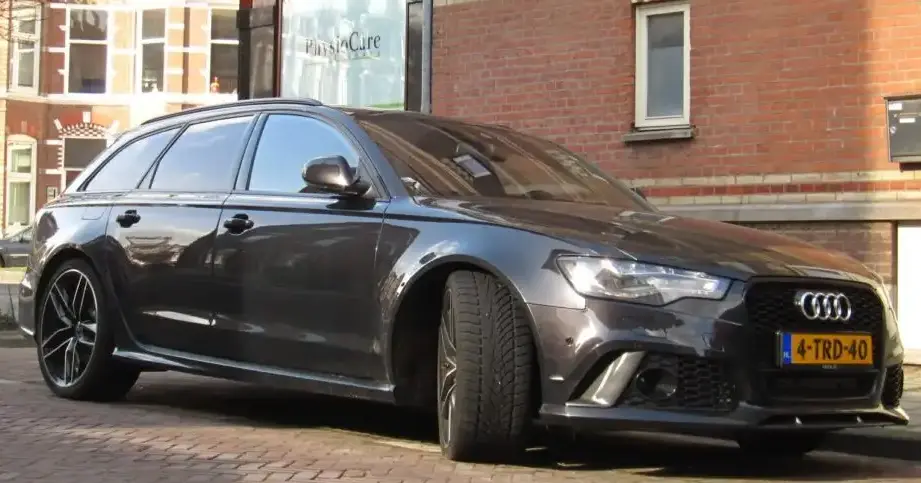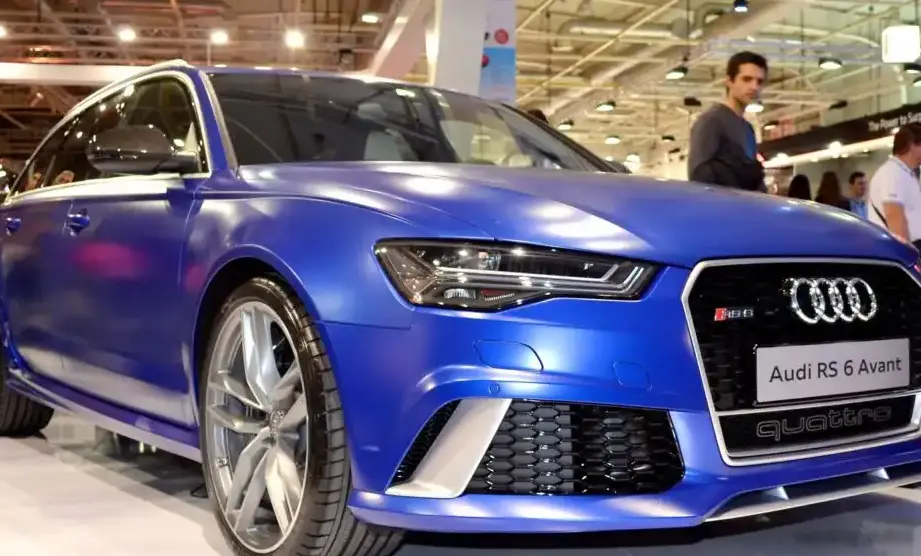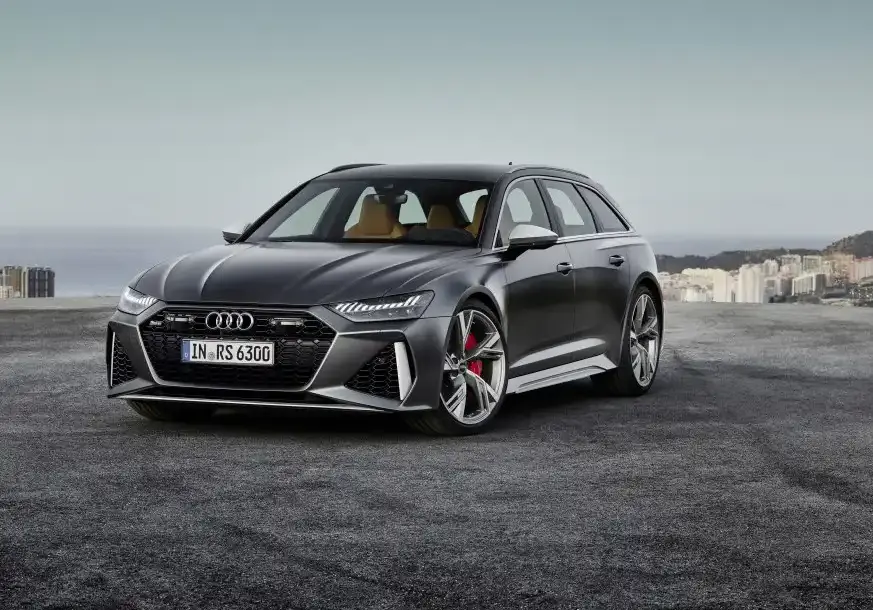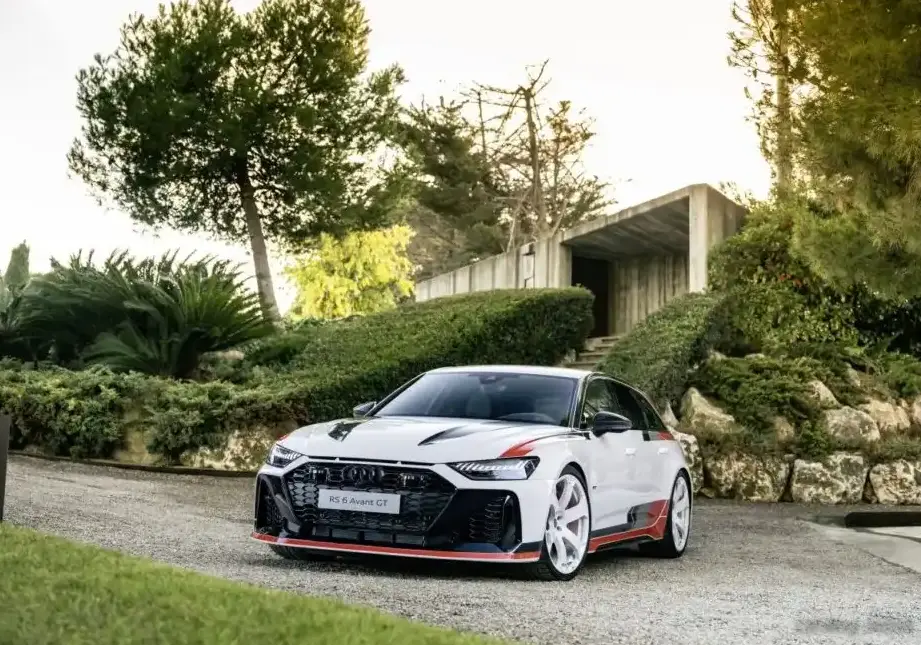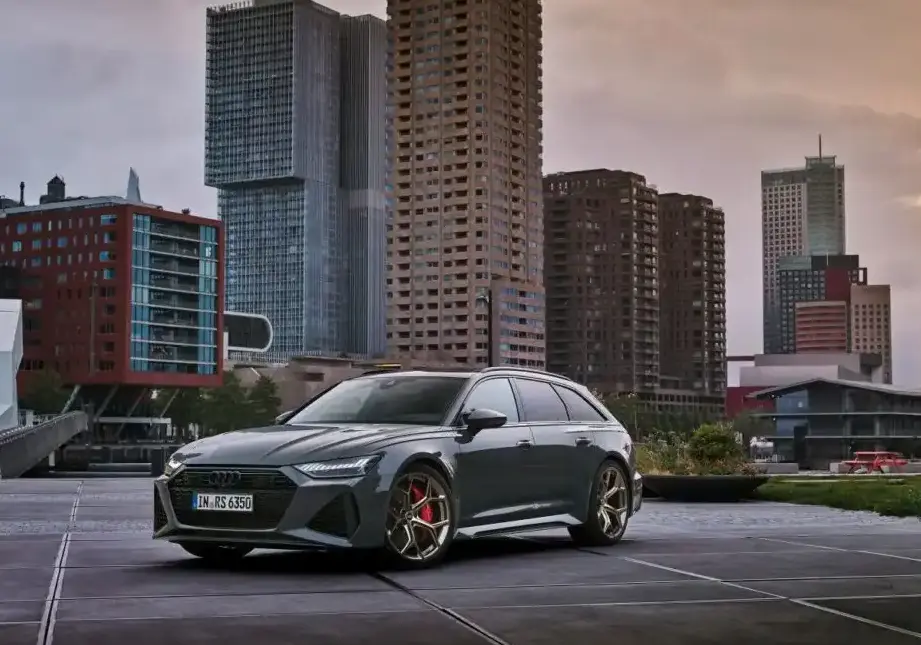
The Audi RS6 Avant (C8) performance 4.0 TFSI V8, produced from November 2022 to May 2025, represents the pinnacle of performance within the fourth generation (C8) of Audi’s iconic high-performance wagon. Positioned as the top-tier variant of the RS6 Avant lineup, it combines blistering speed with the practicality of a five-door station wagon. This model builds upon the already potent RS6, enhancing its capabilities with a mild-hybrid system and a focus on maximizing both power and driving engagement. It primarily targets affluent buyers seeking a vehicle capable of both daily usability and exceptional performance on the road or track.
Technical Specifications
| Brand | Audi |
| Model | RS6 |
| Generation | RS6 Avant (C8) |
| Type | performance 4.0 TFSI V8 (630 Hp) Mild Hybrid quattro tiptronic |
| Start of production | November, 2022 |
| End of production | May, 2025 |
| Powertrain Architecture | MHEV (Mild Hybrid Electric Vehicle) |
| Body type | Station wagon (estate) |
| Seats | 5 |
| Doors | 5 |
| Combined fuel consumption (WLTP) | 12.2-12.7 l/100 km (19.3 – 18.5 US mpg, 23.2 – 22.2 UK mpg, 8.2 – 7.9 km/l) |
| CO2 emissions (WLTP) | 277-289 g/km |
| Fuel Type | Petrol (Gasoline) |
| Acceleration 0 – 100 km/h | 3.4 sec |
| Acceleration 0 – 62 mph | 3.4 sec |
| Acceleration 0 – 60 mph | 3.2 sec |
| Maximum speed | 280 km/h (173.98 mph), Electronically limited |
| Emission standard | Euro 6d-ISC-FCM |
| Weight-to-power ratio | 3.3 kg/Hp, 303.6 Hp/tonne |
| Weight-to-torque ratio | 2.4 kg/Nm, 409.6 Nm/tonne |
| Battery voltage | 48 V |
| Battery technology | Lithium-ion (Li-Ion) |
| Battery location | Under the trunk |
| Power | 630 Hp @ 6000 rpm |
| Power per litre | 157.7 Hp/l |
| Torque | 850 Nm @ 2300-4500 rpm (626.93 lb.-ft. @ 2300-4500 rpm) |
| Engine layout | Front, Longitudinal |
| Engine displacement | 3996 cm3 (243.85 cu. in.) |
| Number of cylinders | 8 |
| Engine configuration | V-engine |
| Cylinder Bore | 86 mm (3.39 in.) |
| Piston Stroke | 86 mm (3.39 in.) |
| Compression ratio | 9.7:1 |
| Number of valves per cylinder | 4 |
| Fuel injection system | Direct injection |
| Engine aspiration | 2 x Twin-scroll turbo, Intercooler |
| Valvetrain | DOHC |
| Engine oil capacity | 9.5 l (10.04 US qt | 8.36 UK qt) |
| Coolant | 12.1 l (12.79 US qt | 10.65 UK qt) |
| Kerb Weight | 2075 kg (4574.59 lbs.) |
| Max. weight | 2740 kg (6040.67 lbs.) |
| Max load | 665 kg (1466.07 lbs.) |
| Trunk (boot) space – minimum | 548 l (19.35 cu. ft.) |
| Trunk (boot) space – maximum | 1658 l (58.55 cu. ft.) |
| Fuel tank capacity | 73 l (19.28 US gal | 16.06 UK gal) |
| Max. roof load | 100 kg (220.46 lbs.) |
| Permitted trailer load with brakes (8%) | 2100 kg (4629.71 lbs.) |
| Permitted trailer load with brakes (12%) | 2100 kg (4629.71 lbs.) |
| Permitted trailer load without brakes | 750 kg (1653.47 lbs.) |
| Permitted towbar download | 95 kg (209.44 lbs.) |
| Length | 4995 mm (196.65 in.) |
| Width | 1951 mm (76.81 in.) |
| Width including mirrors | 2110 mm (83.07 in.) |
| Height | 1487 mm (58.54 in.) |
| Wheelbase | 2929 mm (115.31 in.) |
| Front track | 1668 mm (65.67 in.) |
| Rear (Back) track | 1650 mm (64.96 in.) |
| Front overhang | 959 mm (37.76 in.) |
| Rear overhang | 1107 mm (43.58 in.) |
| Drag coefficient (Cd) | 0.35 |
| Minimum turning circle (turning diameter) | 12.1 m (39.7 ft.) |
| Approach angle | 11.2° |
| Departure angle | 16.6° |
| Drive wheel | All wheel drive (4×4) |
| Number of gears and type of gearbox | 8 gears, automatic transmission tiptronic |
| Front suspension | Independent multi-link suspension |
| Rear suspension | Independent multi-link suspension |
| Front brakes | Ventilated discs, 420 mm |
| Rear brakes | Ventilated discs, 370 mm |
| Tires size | 275/35 R21 |
| Wheel rims size | 10.5J x 21 |
Powertrain & Engine Architecture
At the heart of the RS6 Avant performance lies the 4.0-liter twin-turbocharged V8 engine, designated internally as the 4.0 TFSI. This engine produces 630 horsepower at 6000 rpm and a substantial 850 Nm (626.93 lb-ft) of torque available from 2300 to 4500 rpm. The engine utilizes a direct injection fuel system and employs two twin-scroll turbochargers to minimize turbo lag and maximize power delivery. A key feature of this variant is its 48V mild-hybrid system. This system incorporates a belt alternator-starter (BAS) and a lithium-ion battery, enabling features like extended engine-off coasting, smoother start-stop operation, and a slight power boost during acceleration. The engine’s longitudinal layout contributes to balanced weight distribution. The eight-speed tiptronic automatic transmission is specifically tuned for rapid and precise gear changes, complementing the engine’s performance characteristics.
Driving Characteristics
The RS6 Avant performance delivers exhilarating acceleration, achieving 0-60 mph in approximately 3.2 seconds and a limited top speed of 174 mph. The automatic transmission is programmed for both comfortable cruising and aggressive downshifts, offering a range of driving modes to suit different preferences. Compared to lower-powered RS6 variants, the performance model exhibits significantly stronger acceleration throughout the rev range. The quattro all-wheel-drive system provides exceptional traction, particularly in adverse weather conditions. While the suspension is firm, it remains compliant enough for everyday driving, offering a good balance between performance and comfort. The exhaust note is aggressive and distinctive, further enhancing the driving experience.
Equipment & Trim Levels
The RS6 Avant performance comes standard with a comprehensive array of features, including Audi’s virtual cockpit digital instrument cluster, a premium Bang & Olufsen sound system, and leather upholstery with RS-specific detailing. Standard exterior features include a distinctive RS honeycomb grille, large oval exhaust outlets, and 21-inch alloy wheels. Optional extras include carbon fiber trim elements, RS sport seats with integrated headrests, and a head-up display. The interior is characterized by high-quality materials and meticulous attention to detail, reflecting the vehicle’s premium positioning.
Chassis & Braking
The RS6 Avant performance features a fully independent multi-link suspension system at both the front and rear, optimized for handling and stability. The suspension is electronically controlled, allowing drivers to adjust the damping characteristics to suit their preferences. Large, ventilated disc brakes with RS-branded calipers provide exceptional stopping power. Front brakes measure 420mm, while rear brakes are 370mm. The standard quattro all-wheel-drive system utilizes a self-locking center differential to distribute torque between the front and rear axles, enhancing traction and stability. Available options include dynamic ride control, which utilizes active roll stabilization to minimize body roll during cornering.
Market Reception & Comparison
The RS6 Avant performance was widely praised by automotive critics for its exceptional performance, practicality, and luxurious interior. It was often compared favorably to other high-performance wagons, such as the Mercedes-AMG E63 S Wagon and the Porsche Panamera Sport Turismo. While fuel economy is not a primary concern for buyers in this segment, the RS6 Avant performance achieves a combined fuel consumption of 12.2-12.7 l/100 km. Compared to the standard RS6 Avant, the performance model offers a noticeable improvement in acceleration and handling, justifying its higher price tag for enthusiasts seeking the ultimate driving experience.
Legacy
The Audi RS6 Avant (C8) performance 4.0 TFSI V8 is expected to be a highly sought-after vehicle in the used car market. The 4.0 TFSI engine has proven to be relatively reliable, although regular maintenance is essential. The mild-hybrid system adds a layer of complexity, but early reports suggest it has been durable. The RS6 Avant’s combination of performance, practicality, and luxury has cemented its status as a modern classic, and the performance variant represents the pinnacle of this iconic model line. Its lasting appeal will likely be driven by its rarity, performance capabilities, and the enduring desirability of the RS6 nameplate.